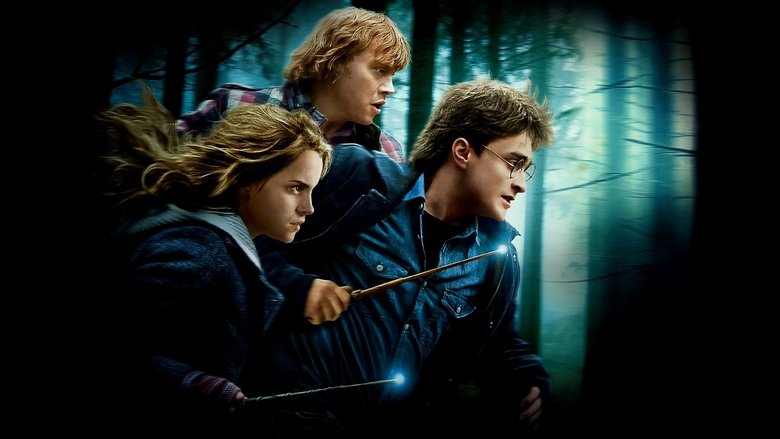
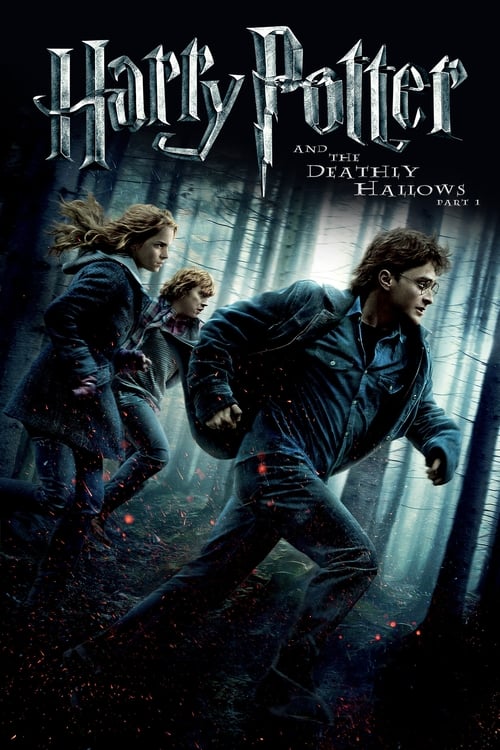
Harry Potter and the Deathly Hallows: Part 1
"Nowhere is safe."
Overview
Harry, Ron, and Hermione leave Hogwarts behind to embark on a perilous mission to track down and destroy the secret to Voldemort's immortality: the Horcruxes. Without the guidance of their professors or the protection of Dumbledore, the three friends must rely on one another more than ever. Their journey takes them into the wilderness, where they are hunted by Death Eaters and Snatchers while struggling to decipher the cryptic clues left by their late headmaster.
As the Dark Lord's power grows, infiltrating the Ministry of Magic and terrorizing the wizarding world, the bond between the trio is tested by the corrupting influence of the Horcrux they carry. Jealousy and fear threaten to tear them apart. Meanwhile, Harry uncovers an ancient legend about the Deathly Hallows—three powerful magical objects that could rival the Horcruxes in significance, leading him to question Dumbledore's past and his own destiny.
Core Meaning
The film deconstructs the hero's journey, stripping away the glamorous trappings of magic to reveal the gritty endurance required to survive a totalitarian regime. At its heart, it explores the painful transition from adolescence to adulthood, where one must learn to operate without mentors, question authority figures (even loved ones like Dumbledore), and find hope in a world that seems entirely abandoned by light.
Thematic DNA
Isolation and Displacement
Unlike previous films centered on the warm, communal hub of Hogwarts, this entry thrusts the characters into the cold, indifferent wilderness. The tent becomes a symbol of their homelessness and isolation, emphasizing that their only true home now is their loyalty to one another.
Trust and Faith
Harry struggles with his faith in Dumbledore as revelations about the headmaster's dark past surface. The film examines the difficulty of trusting a mentor's plan when they are no longer there to explain it, mirroring the loss of childhood certainty.
The Corrupting Nature of Power
Through the locket Horcrux, the film physically manifests how fear and insecurity can corrupt the soul. It amplifies Ron's deepest insecurities, showing that the battle is not just against external monsters but internal demons.
Mortality and Sacrifice
Death is no longer a distant threat but a constant companion. From the opening death of Hedwig to the tragic loss of Dobby, the film underscores the real, permanent cost of war, contrasting the selfless sacrifice of friends with the Death Eaters' pursuit of immortality.
Character Analysis
Harry Potter
Daniel Radcliffe
Motivation
To destroy the Horcruxes and end Voldemort's reign, driven by the weight of those who have died for him.
Character Arc
Harry moves from a guided student to an independent leader. He wrestles with doubt about Dumbledore's integrity but ultimately chooses to continue the mission on faith, deciding to bury Dobby without magic as a sign of his maturing humanity.
Ron Weasley
Rupert Grint
Motivation
To protect his family and friends, though constantly battling his own feelings of inadequacy.
Character Arc
Ron faces the hardest test of loyalty. Lacking the natural resilience of Harry or the logic of Hermione, he succumbs to the despair of the locket but returns to face his fears, destroying the Horcrux and redeeming himself.
Hermione Granger
Emma Watson
Motivation
To see the mission through and protect Harry, sacrificing her own safety and emotional well-being.
Character Arc
She sacrifices her entire past by erasing her parents' memories to protect them. She becomes the glue holding the group together, maintaining focus and logic even when heartbroken by Ron's departure.
Symbols & Motifs
Slytherin's Locket
Represents the physical and psychological burden of the quest. It symbolizes the toxicity of negative emotions—jealousy, paranoia, and despair—that can weigh down even the strongest friendships.
The trio takes turns wearing it, and it visibly drains their energy and mood, directly leading to Ron's departure.
The Silver Doe
A symbol of enduring love, guidance, and hope in the darkest of times. It represents a benevolent force watching over Harry even when he feels most abandoned.
It appears to Harry in the Forest of Dean, leading him to the Sword of Gryffindor beneath the frozen ice.
The Snitch
Symbolizes the acceptance of destiny and death. The inscription 'I open at the close' foreshadows that the ultimate understanding comes only at the end of the journey.
Dumbledore leaves it to Harry in his will; Harry carries it throughout the film, unable to open it yet.
The Three Brothers Animation
An allegorical representation of the different approaches to mortality: avoiding it, reversing it, or greeting it as an old friend.
Hermione reads the tale at the Lovegood house, visualized through a unique shadow-puppet animation style.
Memorable Quotes
These are dark times, there is no denying. Our world has perhaps faced no greater threat than it does today.
— Rufus Scrimgeour
Context:
Opening monologue, close-up shot of the Minister for Magic addressing the press.
Meaning:
Sets the grim, political tone of the film, acknowledging that the war has openly begun and the government is struggling to maintain control.
Such a beautiful place, to be with friends. Dobby is happy to be with his friend, Harry Potter.
— Dobby
Context:
Spoken by Dobby as he dies in Harry's arms on the beach after saving them from Malfoy Manor.
Meaning:
Highlights the film's core theme: that love and friendship are the ultimate counter to Voldemort's power and hatred. It emphasizes the tragedy of innocent loss.
Dobby never meant to kill. Dobby only meant to maim, or seriously injure.
— Dobby
Context:
Dobby defending Harry against Bellatrix Lestrange in Malfoy Manor.
Meaning:
Showcases Dobby's unique moral code and loyalty, providing a moment of dark humor and triumph before his tragic end.
You are a fool, Harry Potter, and you will lose everything.
— Voldemort (Vision)
Context:
Harry's vision/nightmare while wearing the locket Horcrux.
Meaning:
Voldemort's taunt (voiced through the locket/visions) attacks Harry's greatest fear: that his actions will lead to the death of everyone he loves.
Philosophical Questions
Does the end justify the means?
The film explores this through Dumbledore's past (revealed by Rita Skeeter and Aunt Muriel). Harry must grapple with the fact that his moral compass, Dumbledore, may have sacrificed his own sister or flirted with dark domination 'for the greater good,' forcing Harry to decide if he should trust the mission despite the flaw of its architect.
Is death a master or a friend?
Through the Tale of the Three Brothers, the film posits three views on death: avoiding it (power), reversing it (attachment), or accepting it. The film suggests that true mastery over death is not immortality (Voldemort's goal) but the acceptance of mortality (the third brother's choice).
Alternative Interpretations
Some critics view the film as a political allegory for life under a fascist regime, with the 'Muggle-born Registration Commission' mirroring historical ethnic cleansing and the radio broadcasts symbolizing resistance movements. Others interpret the 'road trip' structure not just as a plot device, but as a psychological purgatory where the characters must shed their childhood identities (symbolized by the destruction of Harry's wand and the loss of Hedwig) before they can be reborn as adults capable of winning the war.
Cultural Impact
Deathly Hallows: Part 1 significantly impacted the film industry by popularizing the trend of splitting final book adaptations into two movies (seen later in Twilight, The Hunger Games, and Divergent). Culturally, it marked a maturation of the franchise, moving firmly into the war drama genre. Critics praised it for its emotional depth and cinematography, though some audiences initially found the pacing slow compared to previous entries. It grossed nearly a billion dollars, proving the audience's willingness to follow a slower, character-driven narrative.
Audience Reception
The film received generally positive reviews, holding a 77% on Rotten Tomatoes. Praised: The emotional performances (especially Grint and Watson), the dark and beautiful cinematography by Eduardo Serra, and the animation of the 'Three Brothers'. Criticized: The pacing was the main complaint, with some viewers finding the 'camping sequences' tedious and lacking the magical whimsy of Hogwarts. Verdict: It is widely considered a necessary, emotionally rich setup that pays off effectively in Part 2.
Interesting Facts
- The 'Seven Harrys' scene was incredibly complex to film, requiring over 90 takes for a single shot to capture Daniel Radcliffe's performance as multiple characters.
- The 'Tale of the Three Brothers' sequence was directed by Ben Hibon and animated in a shadow-puppet style to differentiate it from the live-action reality.
- Filming of the 'Seven Harrys' scene was where stunt double David Holmes was tragically paralyzed during a rehearsal.
- Actress Evanna Lynch (Luna Lovegood) improvised the dance moves she performs with her father at Bill and Fleur's wedding.
- This was the first Harry Potter film where J.K. Rowling was a producer.
- Cinematographer Eduardo Serra chose a 'road movie' aesthetic, using more handheld cameras and natural lighting to emphasize the characters' lack of stability.
- The film ends at roughly the 24th chapter of the book, creating a cliffhanger that split the final novel into two cinematic parts—a trend that other franchises later copied.
Easter Eggs
Equus Poster
In the café scene where the trio fights the Death Eaters, a poster for the play Equus is visible on the wall. This is a nod to Daniel Radcliffe, who starred in the stage production.
Domhnall Gleeson as Bill Weasley
Bill Weasley is played by Domhnall Gleeson, the real-life son of Brendan Gleeson, who played Mad-Eye Moody in the series.
Radio Broadcasts
The radio Harry plays in the tent lists names of missing wizards, mirroring real-world WWII broadcasts, reinforcing the atmosphere of a resistance movement fighting a totalitarian regime.
Hermione's Middle Name
In Dumbledore's will, Hermione is referred to as 'Hermione Jean Granger'. In the books, her middle name was originally 'Jane', but Rowling changed it to 'Jean' (likely to avoid association with Dolores Jane Umbridge), and the movie keeps this consistency.
⚠️ Spoiler Analysis
Click to reveal detailed analysis with spoilers
Frequently Asked Questions
Explore More About This Movie
Dive deeper into specific aspects of the movie with our detailed analysis pages
Comments (0)
No comments yet. Be the first to share your thoughts!