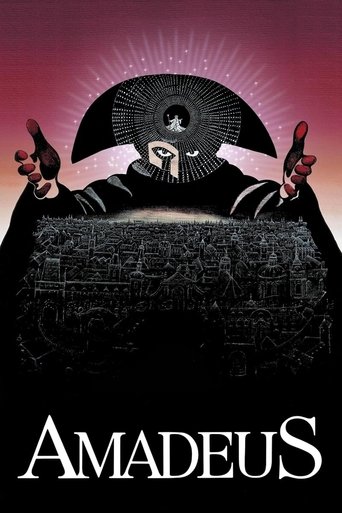

The Color Purple
"It's about life. It's about love. It's about us."
Overview
Spanning forty years in the early 20th-century South, the film follows the life of Celie Harris, a young African-American woman who suffers extreme abuse and bigotry at the hands of her father and later her husband, whom she knows only as "Mister." Separated from her beloved sister Nettie and her children, Celie exists in a state of quiet servitude, believing herself to be ugly and worthless.
Her life begins to change with the arrival of the fiercely independent blues singer Shug Avery and the defiant Sofia. Through her relationships with these women, Celie gradually discovers her own self-worth, inner strength, and voice. The narrative weaves together their struggles against the patriarchal and racist structures of the time, culminating in a powerful journey toward independence and forgiveness.

Core Meaning
The film is a profound exploration of resilience and the redemptive power of love. Spielberg and Walker present a world where the human spirit can triumph over systemic oppression and personal trauma through female solidarity. It posits that dignity is an inherent right, not a privilege, and that even in the darkest circumstances, one can find beauty and God—not in a church, but in the world itself and within one's own existence.
Thematic DNA
The Power of Sisterhood
The bond between women is the primary source of strength in the film. Celie's survival is anchored in her love for Nettie, and her awakening is catalyzed by her relationships with Shug and Sofia. These connections provide the emotional safety net that allows the characters to resist male domination.
Cyclical Abuse and Emancipation
The film depicts abuse as a cycle passed down through generations of men who themselves feel powerless in a racist society. However, the narrative focuses on breaking this cycle. Celie's journey from victimhood to autonomy represents the physical and psychological emancipation of the black female spirit.
Voice and Identity
Celie starts as a character who is literally and metaphorically silenced, told to "never tell nobody but God." The central arc of the film is her finding her voice—first through letters, then through whispers to Shug, and finally in her defiant declaration of existence at the dinner table.
Spirituality and Nature
The film shifts the concept of God from a white, patriarchal figure to a pantheistic presence found in nature and beauty. Shug teaches Celie that God is found in the fields and the color purple, moving spirituality from an oppressive tool to a source of joy and liberation.
Character Analysis
Celie Harris
Whoopi Goldberg
Motivation
To survive her abusive reality and reunite with her sister Nettie and her lost children.
Character Arc
She begins as a passive victim of incest and domestic abuse, believing she has no value. Through the love of Shug and the discovery of Nettie's letters, she transforms into an independent woman who curses her abuser and reclaims her life.
Shug Avery
Margaret Avery
Motivation
To live freely and be loved on her own terms, defying societal expectations of women.
Character Arc
Initially the mistress of Celie's husband and a source of jealousy, she becomes Celie's lover and mentor. She helps Celie discover her sexuality and self-worth, while also seeking reconciliation with her own preacher father.
Sofia
Oprah Winfrey
Motivation
To demand respect and refuse submission to any man, black or white.
Character Arc
She starts as a physically strong, defiant woman who refuses to be beaten. Her spirit is nearly broken by white society and imprisonment, but she is slowly nursed back to a quieter, dignified strength by Celie and her community.
Albert / Mister
Danny Glover
Motivation
To maintain control and dominance, masking his own insecurities and father-issues.
Character Arc
He is a cruel, abusive husband who perpetuates the cycle of violence. After Celie leaves him and curses him, he descends into ruin but eventually seeks redemption by helping reunite Celie with her family.
Symbols & Motifs
The Color Purple
It represents the miracle of life, beauty, and God's presence in the everyday world. It is a symbol of noticing and appreciating the good that exists despite suffering.
Shug Avery explains to Celie in a field of flowers: "I think it pisses God off if you walk by the color purple in a field somewhere and don't notice it."
The Mailbox
A symbol of connection and hope. It represents the bridge between Celie and her lost sister, holding the truth that has been hidden from her.
For years, Celie checks the mailbox only to find nothing, until she discovers Mister has been hiding Nettie's letters. Retrieving the letters becomes a key act of rebellion.
Pants
Clothing symbolizes liberation and breaking gender roles. By making and wearing pants, Celie claims a freedom of movement and identity typically reserved for men.
Celie begins sewing pants for herself and others, turning a domestic skill into a business that grants her financial independence and confidence.
The Letter Opener
Represents suppressed rage and the potential for violence. It shows how close Celie comes to killing her oppressor before choosing a different path.
In a tense shaving scene, as Celie holds the razor to Mister's throat, the film cross-cuts to African initiation rituals, linking her internal rage to a primal, blood-bound struggle.
Memorable Quotes
I'm poor, black, I may even be ugly, but dear God, I'm here! I'm here!
— Celie
Context:
Celie shouts this at Mister as she leaves him, driving away in a car to start her new life.
Meaning:
The film's ultimate declaration of self-worth and existence. It is Celie asserting her right to take up space in the world.
Everything you done to me, already done to you.
— Celie
Context:
Celie delivers this line with two fingers pointed at Mister, cursing him as she departs the farm.
Meaning:
A powerful curse that reflects the concept of karma. It signifies that Mister creates his own hell through his actions.
I think it pisses God off if you walk by the color purple in a field somewhere and don't notice it.
— Shug Avery
Context:
Shug and Celie are walking in a field of purple flowers, discussing the nature of God and happiness.
Meaning:
Encapsulates the film's theological message: God is not a punisher, but a creator who wants us to enjoy the beauty of existence.
All my life I had to fight. I had to fight my daddy. I had to fight my uncles. I had to fight my brothers. A girl child ain't safe in a family of mens.
— Sofia
Context:
Sofia explains to Celie why she physically fights back against Harpo's attempts to beat her.
Meaning:
Highlights the ubiquity of male violence against women and the necessity of female resistance.
Until you do right by me, everything you think about is gonna crumble.
— Celie
Context:
Said by Celie to Mister during the dinner table confrontation scene.
Meaning:
A prophetic warning that asserts Celie's spiritual power over her abuser. It marks the shift of power from him to her.
Philosophical Questions
Does suffering have a redemptive purpose?
The film explores whether Celie's immense suffering was a test of faith that led to her spiritual awakening, or simply senseless cruelty that she survived in spite of.
Can one find God outside of religion?
Through Shug Avery, the film challenges organized religion (represented by her father's church) and proposes a pantheistic spirituality where God is found in nature, pleasure, and the self, rather than in scripture or dogma.
Is forgiveness necessary for freedom?
Celie's journey suggests that while she must physically escape her abuser, her true psychological freedom comes when she releases her hatred, allowing Mister to fade into irrelevance rather than defining her life.
Alternative Interpretations
The "Sanitized" Adaptation: Many critics and scholars interpret the film as a "Disneyfied" version of Alice Walker's novel. They point to the softening of the lesbian relationship between Celie and Shug—reduced to kisses rather than a full sexual awakening—and the sentimental ending as evidence of Spielberg making the story more palatable for white, mainstream audiences.
Mister's Redemption: The film offers a redemption arc for Mister (Albert) that is largely absent from the book. Some view this as Spielberg's attempt to humanize the villain and offer a message of universal forgiveness, while others see it as undermining the severity of his abuse and the necessity of Celie's complete break from him.
Cultural Impact
The Color Purple was a cultural phenomenon that sparked intense debate. While it was a massive box office success and brought the stories of black women to the mainstream, it faced severe criticism from groups like the NAACP and black male critics for its negative portrayal of black men. Critics argued it reinforced stereotypes of black men as violent abusers. Conversely, it was celebrated by many black women and feminists for giving visibility to the trauma of domestic abuse and the power of sisterhood. It paved the way for black actresses like Whoopi Goldberg and Oprah Winfrey to become Hollywood icons. The film remains a touchstone in discussions about representation, the responsibility of white directors telling black stories, and the intersection of racism and sexism.
Audience Reception
Praised: Audiences and critics universally acclaimed the acting, particularly Whoopi Goldberg's heartbreakingly subtle performance and Oprah Winfrey's powerhouse debut. The emotional impact, cinematography, and Quincy Jones's score were also major points of praise.
Criticized: The film polarized audiences regarding its depiction of black men. Many viewers felt the male characters were one-dimensional villains. Some critics also felt Spielberg's sentimental, melodramatic style clashed with the gritty realism of the subject matter.
Verdict: Despite the lack of Oscar wins, it is widely considered a classic and a tear-jerker that resonates deeply with audiences for its message of hope.
Interesting Facts
- Whoopi Goldberg was cast after Steven Spielberg saw her one-woman show on Broadway; this was her film debut.
- Oprah Winfrey made her film debut as Sofia; she was so desperate for the role she auditioned under the code name 'Moonong'.
- This was the first Steven Spielberg film not scored by John Williams; the music was produced by Quincy Jones.
- Despite receiving 11 Academy Award nominations, the film famously won zero Oscars, tying a record for most snubs with 'The Turning Point'.
- Whoopi Goldberg's daughter, Alex Martin, has a small cameo as one of the children in the Easter sequence.
- Spielberg was initially hesitant to direct the film, feeling a black director should tell the story, but Quincy Jones convinced him that the story's emotions were universal.
- The field of purple flowers was actually cultivated specifically for the movie; the production team planted purple flowers to ensure the visual impact.
- Alice Walker, the author of the novel, was a consultant on the film and helped ensure the dialect and setting felt authentic.
Easter Eggs
Alex Martin Cameo
Whoopi Goldberg's real-life daughter, Alex Martin, appears as one of the children in the Easter church sequence, marking a personal connection for the lead actress.
Cinematic Homage to 'The Searchers'
Spielberg uses framing that references John Ford's The Searchers, particularly in shots framed through doorways, linking Celie's isolation to the visual language of classic American cinema.
Birth of a Nation Cross-cutting
The editing during the shaving scene, which cross-cuts between Celie's razor and the African scarification ritual, mirrors the technique used in D.W. Griffith's films, ironically re-appropriating a technique from a historically racist film to empower a black protagonist.
⚠️ Spoiler Analysis
Click to reveal detailed analysis with spoilers
Frequently Asked Questions
Explore More About This Movie
Dive deeper into specific aspects of the movie with our detailed analysis pages
Comments (0)
No comments yet. Be the first to share your thoughts!