Skip to content
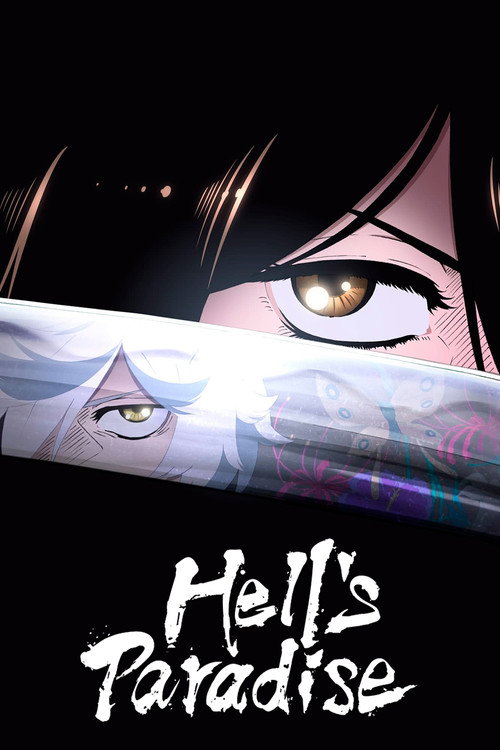
Hell's Paradise
A visceral dark-fantasy descent where blooming botanical beauty bleeds into existential body horror, navigating the fragile threshold between human devotion and monstrous decay through a tempest of blood, petals, and spiritual awakening.
Hell's Paradise

Hell's Paradise

地獄楽

"Nothing will ever be allowed to have any say in how we live...not even death itself."

01 April 2023 — 29 March 2026 Japan 1 season 25 episode Ended 8.2 (500)

Cast: Chiaki Kobayashi, Yumiri Hanamori, Ryohei Kimura, Rie Takahashi, Tetsu Inada

Animation Sci-Fi & Fantasy Action & Adventure Acceptance of Vulnerability and Duality (Yin & Yang) The Illusion of Morality and Justice Transience vs. The Curse of Immortality Identity, Autonomy, and Breaking Chains Found Family and Unlikely Camaraderie

Overview

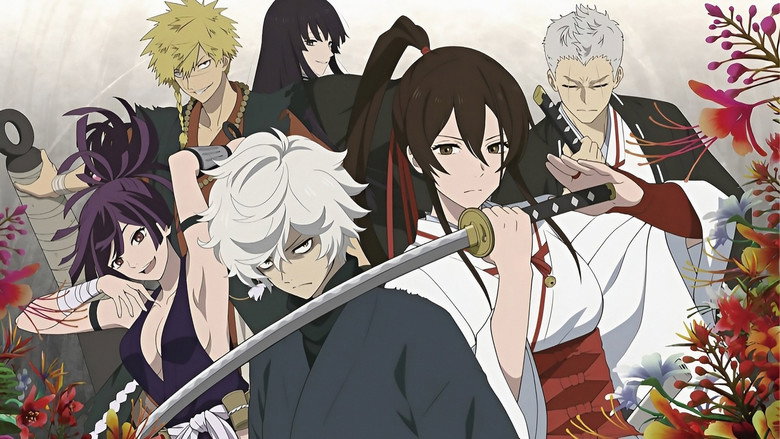
Set during the late Edo period in Japan, Hell’s Paradise follows Gabimaru the Hollow, an elite assassin from the ruthless Iwagakure ninja clan. Sentenced to death after being betrayed by his village leader, Gabimaru miraculously survives every gruesome execution attempt due to an unconscious will to live rooted in love for his wife, Yui. Recognizing his inner conviction, the female royal executioner Yamada Asaemon Sagiri offers him a royal pardon and full immunity under one condition: he must travel to the uncharted, supernatural island known as Shinsenkyo (Kotaku) and retrieve the legendary Elixir of Immortality for the Shogun.

The expedition is structured as a lethal gamble: a cadre of Japan's most notorious death-row convicts is dispatched to the island, each tethered to an assigned Yamada Asaemon executioner charged with executing them if they step out of line. Upon arrival, the expedition quickly turns into a nightmarish battle for survival as the cast discovers the island is not a divine paradise, but a grotesque realm populated by bizarre hybrid abominations, unnatural flora, and the immortal rulers of the land known as the Lord Tensen.

Over the course of the narrative, the initial battle-royale dynamic between prisoners and executioners dissolves into fragile alliances. To survive against godlike entities and unravel the island's dark esoteric energy (Tao), the surviving humans must transcend rigid social roles, reconcile their internal conflicts, and confront both the horrors of the island and the sinister forces planning to harvest their life essence.
Core Meaning

At its core, Hell’s Paradise is an exploration of the duality of human nature and the necessity of balance. The series rejects absolute dichotomies—such as virtue versus sin, strength versus weakness, and life versus death—proposing instead that true strength and enlightenment stem from accepting the full spectrum of one’s identity. Through the Taoist philosophy of Yin and Yang, the creators illustrate that emotional attachment and vulnerability are not fatal flaws, but the ultimate drivers of human resilience and moral evolution.

Thematic DNA

Acceptance of Vulnerability and Duality (Yin & Yang) 30%
The Illusion of Morality and Justice 25%
Transience vs. The Curse of Immortality 20%
Identity, Autonomy, and Breaking Chains 15%
Found Family and Unlikely Camaraderie 10%

Acceptance of Vulnerability and Duality (Yin & Yang)

The central thematic engine of the story is the power of paradox. Gabimaru believes he is an emotionless killer ('the Hollow'), yet his love for his wife makes him invincible. Sagiri struggles with fear and guilt over executing people, only to realize that true swordsmanship requires holding both fear and resolve simultaneously. This is codified through the power system of Tao, which requires an individual to alternate between passive stillness (Yin) and active fury (Yang).

The Illusion of Morality and Justice

The boundary between 'righteous' samurai and 'evil' criminals is dismantled. The Shogunate and rigid traditionalists display cruel indifference to human life, while convicted killers demonstrate profound empathy, honour, and loyalty. Justice is shown to be a social construct weaponized by rulers to maintain subjugation.

Transience vs. The Curse of Immortality

The antagonists, the Tensen, have achieved physical immortality but live in perpetual stagnation, hubris, and spiritual decay. In contrast, human lives are fragile, brief, and constantly threatened, yet that very finitude imbues their relationships, personal sacrifices, and choices with meaning and beauty.

Identity, Autonomy, and Breaking Chains

Every major character is bound by societal or familial conditioning: Gabimaru by the ninja village brainwashing, Sagiri by patriarchal gender expectations in the executioner clan, and Nurugai by the cultural extermination of her people. The journey forces each person to dismantle indoctrinated roles and forge self-determined identities.

Found Family and Unlikely Camaraderie

Thrust into a hostile environment where individual survival is impossible, characters from opposing social strata—nobles, bandits, kunoichi, and executioners—form deep bonds of mutual trust and mutual protection that supersede feudal hierarchy.

Character Analysis

Gabimaru the Hollow

Chiaki Kobayashi

Archetype: Antihero / Reluctant Killer Key Trait: Emotional resilience fueled by devotion

Motivation

Driven by the singular goal to survive the expedition, secure a royal pardon, and return home to live a peaceful life with his wife, Yui.

Character Arc

Begins as a resigned, emotionally detached assassin who claims to feel nothing, only to embrace his profound love for his wife Yui; evolves into a leader who fights to reclaim his humanity and live a normal domestic life.

Yamada Asaemon Sagiri

Yumiri Hanamori

Archetype: Hero / Inquirer of Morality Key Trait: Moral introspection and unwavering resolve

Motivation

Seeking to prove her worth as an executioner, overcome her inner conflict over taking lives, and find the true path of her sword.

Character Arc

Starts riddled with self-doubt over societal discrimination against female executioners and the moral burden of killing; learns to accept both fear and compassion, achieving mastery over her blade and becoming the moral anchor of the group.

All 5 characters and cast

Symbols & Motifs

Flowers (Botanical Parasites)

Meaning:

Flowers in Shinsenkyo represent corruption disguised as divine beauty. Rather than blooming naturally, they sprout directly from corpses and living victims, consuming human Tao and turning mortals into grotesque flora ('flowerification').

Context:

Used throughout Shinsenkyo where parasitic botanical blooms erupt from victims, corpses, and the island's landscape to harvest vital energy.

The Yin-Yang & Tao

Meaning:

Symbolizes the dynamic equilibrium of opposing forces (light/dark, emotion/rationality, masculine/feminine, strength/weakness).

Context:

Visually represented in the characters' energetic flow and the dual-gender physiology of the Tensen.

Religious Iconography (Syncretic Statues & Temples)

Meaning:

Grotesque fusions of Buddhist, Taoist, and Shinto deities symbolize human perversion of spiritual dogma—using sacred forms to mask a tyrannical, parasitic meat grinder.

Context:

Dotting the landscape of the island in the form of grotesque hybrid statues and temple complexes.

Fire / Flames (Gabimaru’s Ninpo: Hiboushi)

Meaning:

Represents Gabimaru’s internal life-force, fierce love, and passion, contrasting his moniker 'the Hollow' and incinerating the cold, rigid nihilism forced upon him.

Context:

Manifested through Gabimaru's signature ninjutsu techniques during intense battles.

Executioner's Blade (Yamada Asaemon Sword)

Meaning:

A symbol of karmic weight, social duty, and the balance between taking life and preserving human dignity.

Context:

Carried and wielded by the Yamada Asaemon clan executioners as a tool of state execution and spiritual responsibility.

Memorable Quotes

迷うことは弱さではない。迷いを受け入れ、それでも前に進むことこそが強さだ。
— Yamada Asaemon Sagiri

Context

Season 1, Episode 1. Sagiri challenges Gabimaru's claim that he is 'hollow,' forcing him to acknowledge his underlying will to survive and his love for his wife.

Meaning

Emphasizes that acknowledging emotional vulnerability and inner conflict is not weakness, but the true foundation of strength.

俺は生き残って、妻の元へ帰る。その邪魔をする奴は、神だろうと仏だろうと皆殺しだ。
— Gabimaru the Hollow

Context

Gabimaru declares his singular driving motivation before unleashing full ninja arts against the island’s divine monsters.

Meaning

Encapsulates Gabimaru's absolute resolve and marital devotion as his primary source of strength against impossible odds.

All 5 quotes

Episode Highlights

The Death Row Convict and the Executioner

S1E1

Establishes Gabimaru’s invulnerability, his connection to Yui, and Sagiri's philosophical challenge regarding his hollow facade.

Significance:

Sets up the core emotional anchor, thematic premise, and main partnership of the entire series.

Weakness and Strength

S1E3

The expedition arrives at Shinsenkyo, where immediate slaughter showcases the horrifying nature of the island.

Significance:

Establishes the brutal narrative stakes by introducing the terrifying aesthetic collision of flowers, statues, and gore.

Heart and Reason

S1E6

Sagiri and Gabimaru confront the giant cannibal Rokurota in a desperate battle of wills and martial skill.

Significance:

Sagiri overcomes her imposter syndrome, executing a clean strike while in harmonious mental balance, proving the validity of her sword.

Student and Master

S1E8

Tenza, Nurugai, and Shion confront Lord Tensen (Zhu Jin), leading to a desperate struggle against an immortal foe.

Significance:

Tenza makes the ultimate sacrifice to ensure Nurugai and Shion survive, raising the narrative stakes by demonstrating that executioners are not immune to death.

Gods and People

S1E9

Gabimaru engages Zhu Jin in a high-octane confrontation to test the limits of mortal arts against immortal biology.

Significance:

Unveils the regeneration mechanisms of the Tensen and the fatal cost of pushing mortal life energy to the brink.

Two People and One Person

S1E13

Shion avenges Tenza by utilizing his understanding of Tao against the formidable Lord Tensen Mu Dan.

Significance:

The survivors form a unified vanguard, ending Season 1 on the revelation that they must master Tao cooperatively to have any hope of escape.

Chrysanthemum and Peach

S2E7

Disparate human factions launch a coordinated assault breaking into the inner sanctum of Horai.

Significance:

Marks the turning point where mortal fighters engage in synchronized elemental Tao clashes against multiple Tensen simultaneously.

Paradise and Hell

S2E12

The ultimate confrontation against Rien to halt the destruction of Japan and resolve the expedition.

Significance:

Serves as the series finale, resolving Gabimaru and Sagiri's arcs, bringing closure to the voyage, and answering whether Gabimaru can return to a peaceful life.

Philosophical Questions

Can a weapon retain a soul?

Explores whether an individual trained purely to kill from infancy can overwrite systemic conditioning through genuine love, empathy, and moral remorse.

Does immortality inevitably destroy empathy?

Examined through the Tensen, probing whether eliminating the threat of physical death inevitably erodes an entity's ability to appreciate beauty, art, and the dignity of mortal life.

Is absolute stoicism a form of cowardice?

Addressed via Sagiri's realization that detaching from emotional pain is merely 'looking away,' positing that genuine courage requires feeling grief, fear, and love while continuing to move forward.

Alternative Interpretations

The series supports multiple analytical readings:

Full ending explanation

Cultural Impact

Hell’s Paradise reflects late 2010s/early 2020s Japanese pop culture's pivot toward darker, psychologically complex shonen narratives where the boundary between heroes and villains is fundamentally blurred. Unlike classic tournament or battle-adventure anime, it explores adult themes of trauma, guilt, and existential dread through a historical Edo-period lens. The series has been widely praised for its nuanced female characters—particularly Sagiri, who refuses to sacrifice either her femininity or her martial strength in an explicitly patriarchal setting.

Audience Reception

Audiences and critics globally praised the dynamic chemistry between Gabimaru and Sagiri, the unique blend of body horror with East Asian spiritual lore, and the propulsive pacing. The series stood out for avoiding standard shonen tropes by having a happily married protagonist whose primary power is marital devotion.

The animation compositing in the middle episodes of Season 1 drew mixed reactions from sakuga enthusiasts, who noted inconsistent character models and blurred background integration during non-climax scenes compared to MAPPA's flagship titles like Jujutsu Kaisen. However, major fight sequences and narrative execution were consistently lauded.

Interesting Facts

  • Produced at studio MAPPA, the anime was directed by Kaori Makita (known for Kakegurui Twin and episode direction on Attack on Titan), who focused intensely on balancing ensemble drama with intimate character characterizations.
  • Manga creator Yuji Kaku was a former assistant to Tatsuki Fujimoto (Chainsaw Man). Alongside Jujutsu Kaisen and Chainsaw Man, Hell's Paradise was dubbed by the global anime community as part of the modern 'Shonen Dark Trio'.
  • The energetic, psychedelic opening theme 'WORK' was composed by kingpin producer Daiki Tsuneta (Millennium Parade) alongside legendary singer-songwriter Ringo Sheena, blending modern electronic beats with traditional Japanese brass and rock arrangements.
  • Studio MAPPA faced complex compositing hurdles to depict Shinsenkyo's dense, hyper-vibrant foliage and glowing bio-energies, intentionally blending 90s-inspired dark-fantasy grit with saturated pastel psychedelia.
  • Because the immortal Lord Tensen shift freely between Yin (female) and Yang (male) forms, MAPPA uniquely cast dual voice actors (e.g., Junichi Suwabe and Yuko Kaida) for the same character to deliver layered vocal transformations.

Easter Eggs

Yamada Asaemon Fuchi’s obsession with anatomical dissection

References the real-life historical Yamada clan, who practiced sword testing (Tameshigiri) on executed corpses and significantly contributed to early Japanese medical anatomy treatises (Kaitai Shinsho).

Island concentric structure and search for Tan

The layout of the island follows the classical Chinese alchemical macrocosm: outer ring (Eishu - wilderness), middle ring (Hojo - abandoned temples), and inner core (Horai - realm of immortals). The search for Tan (cinnabar elixir) mirrors historical expeditions by Emperor Qin Shi Huang's alchemist Xu Fu.

Syncretic monster designs mixing deities and mandalas

The visual designs of monsters explicitly mix Buddhist Bodhisattva faces, lotus flowers, Taoist talisman scripts, and Hindu mandalas, critiquing religious dogmatism by turning spiritual symbols into biomechanical nightmares.

Frequently Asked Questions

Explore More About This Movie

Dive deeper into specific aspects of the movie with our detailed analysis pages

Comments (0)

Leave a comment

No comments yet. Be the first to share your thoughts!

Similar Movies