Skip to content
Hierarchy
A sleek, noir-tinged teen melodrama drenched in grief and gilded claustrophobia, where aristocratic armor crumbles under relentless scrutiny like velvet drenched in gasoline and ignited by a brother's quiet fury.
Hierarchy

Hierarchy

하이라키

"The school of perfect order. Admire it or despise it."

07 June 2024 — 07 June 2024 South Korea 1 season 7 episode Ended 7.7 (183)

Cast: Roh Jeong-eui, Lee Chae-min, Kim Jae-won, Ji Hye-won, Lee Won-jeong

Drama Systemic Privilege and Class Oppression Vengeance vs. Moral Complicity The Burden of Chaebol Legacy and Parental Neglect Hidden Truths and the Illusion of Control

Overview

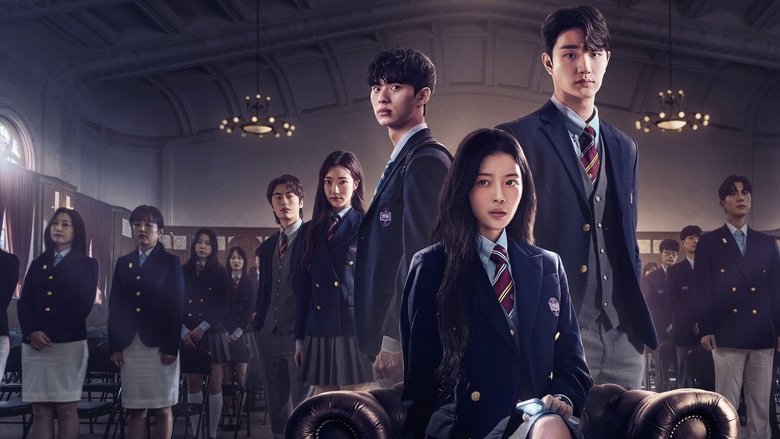
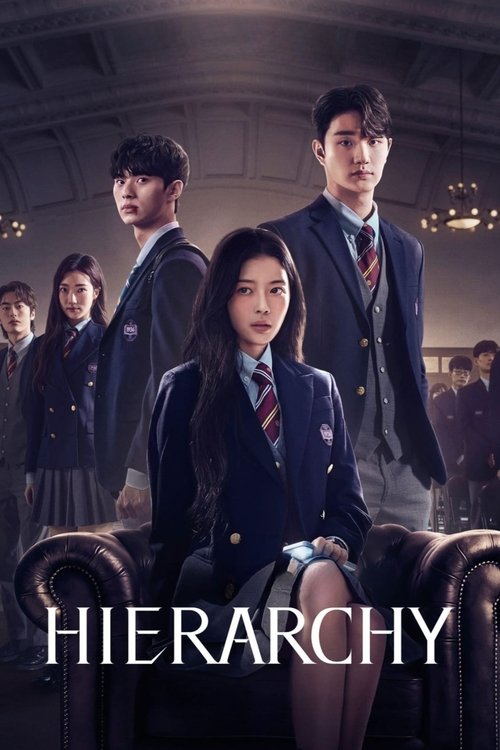
Hierarchy (하이라키) is a 2024 South Korean mystery-melodrama miniseries set inside Jooshin High School, a private academy established by the ultra-powerful Jooshin Group. In this fortress of wealth, the top 0.01% of society's heirs dictate laws and social hierarchy from birth, treating classmates and institutions as personal fiefdoms, while a nominal quota of scholarship students is admitted purely to project an image of philanthropic noblesse oblige.

The status quo is destabilized by the sudden enrollment of Kang Ha, a seemingly naive scholarship transfer student bearing a disarming smile. Beneath his compliant exterior, Kang Ha harbors an undercover mission: to investigate the circumstances surrounding the mysterious death of his fraternal twin brother, Kang In-han, a former Jooshin scholarship student whose fatal hit-and-run was quietly swept under the rug.

As Kang Ha penetrates the inner sanctum of the school's royalty—namely the "queen bee" Jung Jae-i and the school's undisputed ruler Kim Ri-an—the rigid boundaries governing class, romance, and complicity begin to fracture. Kang Ha's search exposes a web of blackmail, systemic abuse, parental neglect, and institutional cover-ups, forcing the student body and its administrators into a reckoning.


Core Meaning

Hierarchy examines how inherited privilege and systemic elitism corrupt adolescent innocence, creating institutions where emotional trauma and criminal negligence are normalized to maintain familial power. The series demonstrates that social hierarchies constructed on arbitrary wealth and pedigree are hollow façades; when unchecked, they trap both the marginalized (who face systemic cruelty) and the elite (who are crushed by parental expectations and emotional alienation) in mutual toxicity. The creator's underlying message is that genuine autonomy and justice require dismantling oppressive hierarchies and confronting accountability, even when the personal cost is total estrangement from power.

Thematic DNA

Systemic Privilege and Class Oppression 35%
Vengeance vs. Moral Complicity 25%
The Burden of Chaebol Legacy and Parental Neglect 20%
Hidden Truths and the Illusion of Control 20%

Systemic Privilege and Class Oppression

Explores the institutionalized division between Jooshin's legacy students and scholarship kids. The hierarchy functions as a microcosm of South Korea's socioeconomic stratification, showing how the ultra-wealthy use legal protection and financial dominance to silence dissent and avoid consequences.

Vengeance vs. Moral Complicity

Follows Kang Ha's initial pursuit of Hammurabi-style vengeance, which gradually shifts as he encounters the psychological vulnerability and passive complicity of the students around him. It illustrates how seeking justice in a corrupt ecosystem tests the moral boundaries between retribution and redemption.

The Burden of Chaebol Legacy and Parental Neglect

Deconstructs the lives of the elite students (Jae-i, Ri-an, Woo-jin, He-ra) as emotional casualties of ruthless corporate dynasties. Their erratic and abusive behaviors stem from transactional parenting, severe isolation, and the fear of losing status.

Hidden Truths and the Illusion of Control

The narrative revolves around secrets—unplanned pregnancies, illicit teacher-student affairs, and suppressed evidence. It highlights how characters sacrifice their humanity to preserve their public image, only to find that secrets inevitably destroy their perceived control.

Character Analysis

Kang Ha

Lee Chae-min

Archetype: The Avenger / Infiltrator Key Trait: Persistent, perceptive, emotionally conflicted

Motivation

Starts with pure retribution for his brother In-han; evolves into seeking systemic accountability and emotional resolution.

Character Arc

Transitions from a cheerful-looking trojan horse bent on total vengeance to an agent of truth who exposes systemic corruption and grants emotional closure.

Jung Jae-i

Roh Jeong-eui

Archetype: The Tragic Queen / Captive Royal Key Trait: Stoic, calculating, burdened

Motivation

Driven by survival and shielding Ri-an from her secrets; evolves toward seeking genuine independence and maternal connection.

Character Arc

Begins as the unapproachable queen of Jooshin hiding profound trauma and pregnancy-related blackmail; culminates in breaking free of familial control to find self-worth.

All 5 characters and cast

Symbols & Motifs

The Luxury Sports Cars and Racetrack

Meaning:

The cars represent speed, reckless self-destruction, and the emotional distance of characters who treat human intimacy like high-stakes corporate negotiations.

Context:

Introduced in the opening sequence where Jung Jae-i and Kim Ri-an settle their romantic relationship on a closed asphalt racetrack.

The Jooshin School Uniform

Meaning:

The bespoke blazers and neckties function as visual armor demarcating the caste system, asserting untouchability for the rich while marking scholarship students as targets.

Context:

Worn throughout the campus to visually distinguish social standing and facilitate systematic hazing rituals against outsiders.

Smartphones, Cameras, and Blackmail Footage

Meaning:

These devices symbolize the total absence of privacy at Jooshin, serving both as weapons of blackmail and instruments of truth.

Context:

Used continuously by students to monitor reputations, circulate rumors, and weaponize recorded indiscretions against rivals.

The Classical Statues and Marble Architecture

Meaning:

Visually symbolizes the illusion of high culture and ethical philosophy (noblesse oblige) masking raw cruelty and moral decay.

Context:

Prominently featured throughout Jooshin Academy's European-style pillars and manicured marble courtyards.

Blood on School Grounds

Meaning:

Symbolizes the violent human cost required to uphold the institution's manufactured silence.

Context:

Juxtaposed against the pristine campus setting during Kang In-han's hit-and-run and the shocking post-credits classroom discovery.

Memorable Quotes

너 흔들리는 것 같네, 김리안.
— Anonymous Sender

Context

An ominous anonymous text received by Kim Ri-an in the climactic post-credits scene of Episode 7 right after a dead student is discovered in the classroom.

Meaning

Shatters Kim Ri-an's regained peace and signals that the cycle of violence and blackmail at Jooshin High is far from over.

우리한테 룰은 없어. 우리가 곧 룰이니까.
— Kim Ri-an

Context

Kim Ri-an asserting the absolute dominance of Jooshin's top tier early in the series.

Meaning

Establishes the tyrannical class dynamic and untouchable authority that Kang Ha intends to bring down.

All 4 quotes

Episode Highlights

The Transfer Student

S1E1

Introduces Jooshin Academy's elite dynamic, Jae-i and Ri-an's racing match breakup, and Kang Ha's arrival. A high-tension opening reveals Kang In-han's fatal hit-and-run.

Significance:

Establishes the central murder mystery, the rigid school hierarchy, and Kang Ha's undercover entry into the school.

Cracks in the Empire

S1E2

Kang Ha boldly challenges Ri-an's authority by kissing Jae-i during a high-stakes party game.

Significance:

Shatters the calm of the established social order and initiates the open conflict between Kang Ha and Kim Ri-an.

Hidden Faces

S1E4

Flashbacks detail Kang In-han's severe bullying and his secret connection to Jung Jae-i.

Significance:

Reveals how In-han's friendship with Jae-i made him a marked target for the school's elite bullies.

The Unraveling

S1E5

Yoon He-ra uncovers Jae-i's secret pregnancy and uses it as leverage to seize status.

Significance:

Escalates interpersonal tensions and sets off catastrophic confrontations among the core elite group.

The Truth Exposed

S1E6

The teacher-student affair between Lee Woo-jin and Teacher Han Ji-soo comes to light.

Significance:

Unveils the pivotal secret that Kang In-han witnessed on the night of his death.

The Collapse of the Crown

S1E7

Han Ji-soo is arrested as In-han's killer; Ri-an and the elites face legal and social accountability; Jae-i walks away from her family. A mid/post-credits scene depicts a fresh classroom murder with a chilling text to Ri-an.

Significance:

Resolves In-han's murder while dismantling the elite circle's invulnerability, before leaving the narrative on an ominous cliffhanger.

Philosophical Questions

Can institutional privilege exist without active cruelty?

Jooshin Academy demonstrates that preserving extreme class superiority inherently requires marginalizing and suppressing those below to maintain the status quo.

Is passive complicity indistinguishable from active malice?

Ri-an and Jae-i did not physically strike the blow that killed In-han, but their protective silence and enabling culture made the tragedy inevitable.

Does revenge heal grief or merely perpetuate trauma?

Kang Ha's journey questions whether unmasking the elite provides true personal peace or simply leaves more shattered lives in its wake.

Alternative Interpretations

The narrative invites multiple interpretive angles regarding its ending:

Full ending explanation

Cultural Impact

Hierarchy directly mirrors contemporary South Korean anxieties regarding fixed socioeconomic status through the lens of the 'Spoon Class Theory' (수저계급론)—the concept that gold spoons inherit invulnerability while clay spoons bear systemic burdens. Furthermore, the drama arrived amid heightened domestic and global discourse surrounding school violence (Hakpok) and institutional accountability, echoing themes seen in The Glory and Weak Hero Class 1. Upon its June 7, 2024 release, the series rapidly entered Netflix's Global Top 10 Non-English TV charts, securing substantial viewership across Southeast Asia, Latin America, and Europe.

Audience Reception

Audience and critical reaction was polarized across several key aspects:

  • Praise: Viewers and critics lauded the production quality, high-fashion styling, sleek cinematography, and charismatic performances—especially Roh Jeong-eui's portrayal of Jung Jae-i and Kim Jae-won's screen presence.
  • Criticism: Common criticisms focused on the script's uneven pacing, cliché tropes borrowed from The Heirs and Elite, and Kang Ha's somewhat softened revenge trajectory in the final episodes.
  • Overall Verdict: Regarded as a visually captivating, binge-worthy guilty pleasure teen thriller that succeeded in entertainment value, even if its narrative ambitions occasionally fell short of deeper social critique.

Interesting Facts

  • The series was directed by Bae Hyun-jin, known for co-directing high-profile productions like Alchemy of Souls: Light and Shadow, Big Mouth, and Start-Up.
  • Penned by Chu Hye-mi, who previously wrote the fantasy melodrama About Time.
  • Produced under leading South Korean studio Studio Dragon, which aimed to create an elevated teen noir aesthetic.
  • Unlike standard 16-episode K-dramas, Hierarchy was produced as a condensed 7-episode run to emulate Western streaming thrillers.
  • The cast brought together prominent young Korean actors—Roh Jeong-eui (Our Beloved Summer), Lee Chae-min (Crash Course in Romance), and Kim Jae-won (King the Land).

Easter Eggs

Nod to Spanish and Western Teen Dramas (Elite, Gossip Girl)

The show incorporates deliberate structural references to Elite (scholarship student entering an untouchable school amidst a murder investigation) and Gossip Girl (anonymous threats, high-stakes party hazing, and luxury sports cars).

The 'Noblesse Oblige' Latin Inscription

The Latin motto engraved across Jooshin Academy's architecture serves as an ironic easter egg, mocking the students' total refusal of social responsibility.

K-pop Idol Cameo/Cast Inclusion

Former CLC member Kwon Eun-bin appears as Ye-ji, an elite Jooshin student, bridging mainstream K-pop culture with high-teen K-drama television.

Frequently Asked Questions

Explore More About This Movie

Dive deeper into specific aspects of the movie with our detailed analysis pages

Comments (0)

Leave a comment

No comments yet. Be the first to share your thoughts!

Similar Movies