Skip to content
The Brutalist
An austere, monumental post-war epic of ferocious grief and towering ambition, The Brutalist carves out the migrant soul like raw, unyielding concrete poured over the fractured ruins of the American Dream.
The Brutalist

The Brutalist

"Welcome to America."

20 December 2024 United Kingdom 215 min 6.9 (1,777)

Director: Brady Corbet

Cast: Adrien Brody, Felicity Jones, Guy Pearce, Joe Alwyn, Raffey Cassidy

Drama Immigrant Displacement & War Trauma Art, Modernism & Architectural Integrity Capitalism, Class & Patronage Exploitation Jewish Identity & Assimilation Physical Vulnerability & Addiction
Budget: $9,600,000
Box Office: $50,145,227

Overview

The Brutalist, directed by Brady Corbet and co-written with Mona Fastvold, chronicles three decades in the life of László Tóth (Adrien Brody), a Hungarian-Jewish Bauhaus-educated architect and Holocaust survivor who arrives penniless in the United States in 1947. Initially staying in Pennsylvania with his assimilated cousin Attila (Alessandro Nivola), László labors in relative obscurity, battling poverty, displacement, and the trauma of war while desperately trying to secure immigration visas for his ailing wife Erzsébet (Felicity Jones) and mute niece Zsófia (Raffey Cassidy).

László’s fortunes appear to change when he catches the attention of Harrison Lee Van Buren (Guy Pearce), an immensely wealthy and charismatic industrialist. Van Buren commissions László to design an ambitious, monumental community center and memorial chapel dedicated to Van Buren’s late mother. Thrilled by the opportunity to practice his radical modernist architecture on an unprecedented scale, László throws himself entirely into the commission.

However, the collaboration quickly exposes the volatile, transactional, and predatory dynamics between the European artist and the American plutocrat. Spanning 215 minutes and divided into two distinct acts with an overture, intermission, and epilogue, the film unfolds as a grand, novelistic inquiry into capitalism, physical and psychological endurance, exile, and the heavy price of legacy.


Core Meaning

The central thesis of The Brutalist is that American capitalism absorbs, exploits, and reshapes immigrant trauma under the guise of opportunity and benevolence. Corbet explores the paradoxical nature of artistic creation: László builds enduring, indestructible structures out of concrete and marble to resist historical erasure, yet the capital that finances his art demands absolute ownership and subjugation. The film presents the "American Dream" not as a sanctuary of freedom, but as a gilded cage governed by commodification, power imbalances, and subtle or overt violence.

Thematic DNA

Immigrant Displacement & War Trauma 30%
Art, Modernism & Architectural Integrity 25%
Capitalism, Class & Patronage Exploitation 20%
Jewish Identity & Assimilation 15%
Physical Vulnerability & Addiction 10%

Immigrant Displacement & War Trauma

László and Erzsébet carry the indelible physical and psychic scars of the Holocaust (Buchenwald and Dachau), finding that their survival requires constant reinvention and endurance in an indifferent new world.

Art, Modernism & Architectural Integrity

Brutalism represents raw, honest truth—eschewing decorative falsehoods in favor of bare materials and geometric utility as an answer to postwar catastrophe.

Capitalism, Class & Patronage Exploitation

The fraught dynamic between Harrison Lee Van Buren and László examines how wealthy patrons assert total control over artists, turning human vision into monuments to their own vanity.

Jewish Identity & Assimilation

Contrasts László’s stubborn preservation of his heritage against his cousin Attila’s desperate erasure of his Jewish identity to blend into Christian-dominated American society.

Physical Vulnerability & Addiction

László’s dependence on opiates to numb both physical pain (a broken nose suffered during transit) and emotional anguish reflects how bodily vulnerability persists despite intellectual brilliance.

Character Analysis

László Tóth

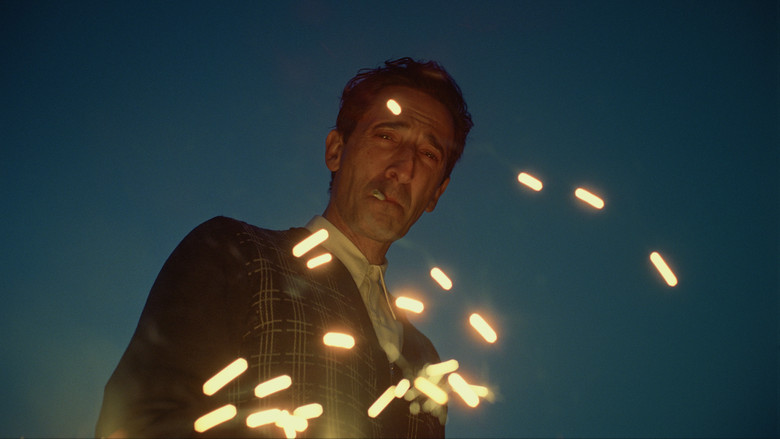
Adrien Brody

Archetype: Tragic Hero / Creator Key Trait: Unyielding artistic integrity paired with deep melancholy.

Motivation

To build permanent, uncompromising structures and reunite with his family in America.

Character Arc

Transitions from a shattered, impoverished refugee to an exploited master builder, enduring extreme physical and psychological degradation to leave behind an enduring architectural legacy.

Erzsébet Tóth

Felicity Jones

Archetype: The Moral Anchor / Truth-Teller Key Trait: Resolute moral courage and intellectual sharpness.

Motivation

To restore dignity, preserve family truth, and survive postwar bodily decline.

Character Arc

Overcomes debilitating illness to rejoin László in America, serving as his sharpest intellectual ally and fierce conscience who openly confronts Van Buren.

All 5 characters and cast

Symbols & Motifs

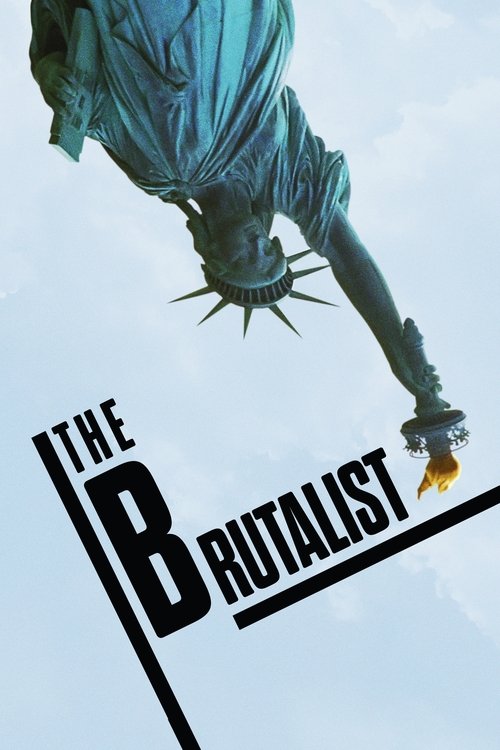
The Upside-Down Statue of Liberty

Meaning:

Subverts the traditional romanticized immigrant arrival, establishing America as a distorted, disorienting landscape rather than a promised haven.

Context:

Introduced in the opening sequence as László arrives by ship in the United States.

Raw Concrete (Béton Brut)

Meaning:

Symbolizes unvarnished truth, resilience, and postwar reconstruction; it refuses decorative compromise, mirroring László’s stubborn artistic ethos.

Context:

Used as the primary structural material in László's ambitious community center design.

Carrara Marble

Meaning:

Represents pure, unyielding luxury and classical vanity, contrasting with functional concrete; it becomes the battleground where Van Buren’s financial demands clash with László’s vision.

Context:

Featured during the overseas materials-sourcing trip to Italy.

The Community Center / Gymnasium / Chapel

Meaning:

The building stands as a physical manifestation of American contradictions—a hybrid space meant for spiritual worship, communal recreation, and the immortalization of an industrialist dynasty.

Context:

Commissioned by Van Buren in Doylestown, Pennsylvania, in honor of his late mother.

Opiates / Syringes

Meaning:

A motif signifying the lingering physical degradation of Europe's survivors and the desperate urge to escape waking reality.

Context:

Used by László to self-medicate his physical pain and trauma throughout his life in America.

Memorable Quotes

None are more hopelessly enslaved than those who falsely believe themselves free.
— László Tóth (quoting Goethe) / Voiceover

Context

Spoken in voiceover early in the film reflecting on postwar liberation and exile.

Meaning

Establishes the overarching thematic framework regarding Soviet liberation and the illusion of American safety and autonomy.

Is there a better description of a cube than that of its construction?
— László Tóth

Context

Spoken to Harrison Lee Van Buren when questioned on why he chose architecture.

Meaning

Summarizes the modernist philosophy of functionalism, geometric purity, and self-evident architectural truth.

All 4 quotes

Philosophical Questions

Can art created under coercive, abusive patronage ever truly belong to its creator?

The film investigates whether monumental architecture retains the intrinsic vision and soul of the architect or inevitably becomes a testament to the wealth and vanity of the financier who subjugated the creator.

Does aesthetic brutalism constitute an act of healing or an unhealed monument to trauma?

László builds stark, unadorned concrete structures to process postwar catastrophe, raising the question of whether architectural functionalism cures psychic grief or permanently freezes it into unyielding stone.

What is the true cost of survival in a capitalist society?

The narrative interrogates what essential parts of human identity—bodily autonomy, dignity, artistic truth, and cultural heritage—must be sacrificed when rebuilding a life from absolute destitution.

Alternative Interpretations

The film invites several key readings:

Full ending explanation

Cultural Impact

The Brutalist captures the post-1945 transition where the center of architectural innovation and global wealth shifted from war-ravaged Europe to corporate America. Hailed alongside masterworks like There Will Be Blood, The Godfather Part II, and The Fountainhead, the film is viewed as a landmark revitalization of the large-scale, serious auteur epic. It received widespread universal acclaim at Venice, Toronto, and New York film festivals, earning major awards praise for Corbet’s direction, Lol Crawley’s cinematography, and Adrien Brody's career-defining performance.

Audience Reception

The film received widespread critical acclaim and is widely regarded as a cinematic masterpiece of modern American cinema and a triumph of large-format visual storytelling. Audiences and critics universally lauded its monumental scope, exquisite 70mm VistaVision textures, Adrien Brody’s devastating performance, Daniel Blumberg’s score, and Corbet’s bold narrative pacing.

A minority of viewers and critics noted the deliberate, ponderous pacing across its 215-minute runtime and the jarring tonal shift in the second half. Intense debate was sparked by controversial narrative choices, specifically the graphic, shocking sexual assault scene in Carrara and the abrupt 1980 time-jump, which divided audiences regarding narrative subtlety versus visceral thematic impact.

Interesting Facts

  • The Brutalist was filmed in horizontal 8-perf 35mm VistaVision using vintage Leica-S lenses, marking one of the first major feature dramas to use the format since the 1960s.
  • Despite its epic 215-minute length, massive period sets, and international cast, the film was shot for a lean budget of approximately $10 million, predominantly on locations in Hungary standing in for mid-century Pennsylvania.
  • Brady Corbet won the Silver Lion for Best Director at the 81st Venice International Film Festival in September 2024.
  • Corbet shot the film's 1980s-set Venice Biennale epilogue in Venice back in September 2020 during early production windows before COVID delays.
  • The film incorporates classical theatrical roadshow conventions, featuring a musical overture, a built-in 15-minute intermission countdown, and an epilogue.
  • The industrial, brass-heavy score was composed by experimental musician Daniel Blumberg, integrating percussive metallic textures that echo building construction.
  • The production endured years of setbacks, including financing hurdles, the pandemic, geopolitical tensions in Eastern Europe, and lead cast pregnancies before wrapping.

Easter Eggs

Historical Namesake

The protagonist shares his name with the real-life László Tóth, a Hungarian-born geologist who famously attacked Michelangelo’s Pietà with a hammer in 1972 shouting "I am Jesus Christ," creating a dark historical irony regarding creators versus defacers of monuments.

Bauhaus Lineage

László references studying under modernist pioneers like Marcel Breuer and Walter Gropius, grounding his fictional biography within actual 20th-century architectural history.

Homage to 1950s Hollywood Epics

The deliberate VistaVision framing, bold title cards, and intermission structure directly evoke widescreen mid-century masterworks like Alfred Hitchcock's Vertigo and William Wyler's Ben-Hur.

The 'Miller & Sons' Sign

Attila's furniture business bears an Anglicized storefront name designed to hide foreign and Jewish ancestry, referencing the widespread practice of immigrant assimilation in mid-century America.

Frequently Asked Questions

Explore More About This Movie

Dive deeper into specific aspects of the movie with our detailed analysis pages

Comments (0)

Leave a comment

No comments yet. Be the first to share your thoughts!

Similar Movies