Skip to content
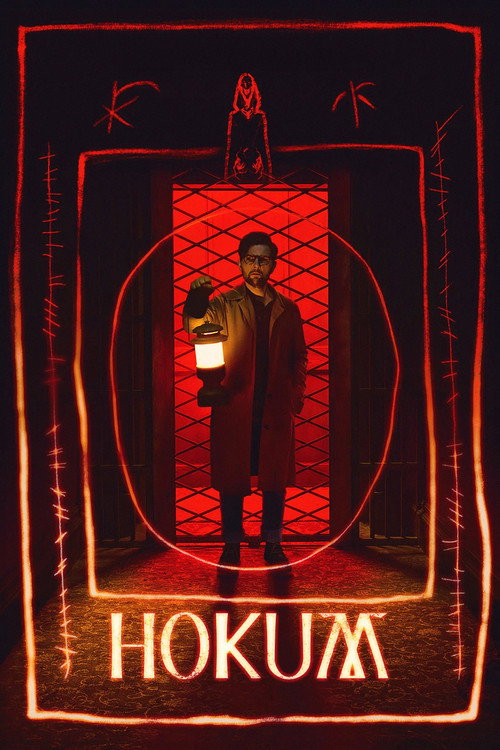
Hokum
A suffocating folk-horror nightmare drenched in icy grief, where ancient myths bleed through shadow-draped hotel halls, trapping a broken man inside the burning labyrinth of his own unatoned guilt.
Hokum

Hokum

"We've been expecting you."

29 April 2026 United States of America 108 min 6.9 (670)

Director: Damian McCarthy

Cast: Adam Scott, Peter Coonan, David Wilmot, Florence Ordesh, Will O'Connell

Horror The Burden of Unprocessed Guilt & Trauma Folklore as a Cloak for Human Evil Misanthropy and Cynicism as Emotional Shields Spiritual Atonement and Forgiveness
Budget: $5,000,000
Box Office: $24,117,049

Overview

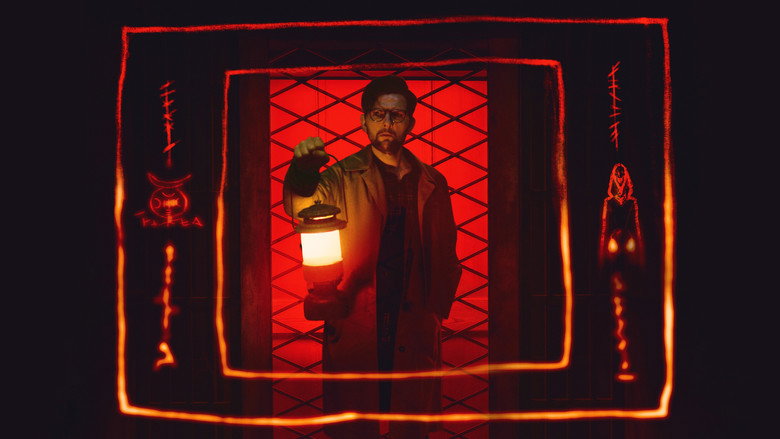
Hokum (2026) is a supernatural horror film written and directed by Irish filmmaker Damian McCarthy. The narrative follows Ohm Bauman (Adam Scott), an abrasive, cynical American horror novelist best known for his bleak "Conquistador" trilogy. Struggling with writer's block for the final installment and haunted by unresolved personal trauma, Ohm travels to the isolated Bilberry Woods Hotel in West Cork, Ireland, to scatter his deceased parents' ashes on the grounds where they honeymooned decades earlier.

Upon his arrival, Ohm is greeted by an eccentric hotel staff—including the elderly owner Mr. Cob, clerk Mal, groundskeeper Fergal, bellhop Alby, and friendly bartender Fiona. Dismissive of local customs, Ohm scoffs at tales told to local children about the Cailleach, an ancient witch allegedly trapped inside the hotel's permanently locked honeymoon suite. However, Ohm's cynical detachment fractures as disturbing apparitions begin appearing in his room, culminating in a sudden, life-threatening crisis that forces him to confront his deepest psychological scars.

When bartender Fiona unexpectedly vanishes shortly after a Halloween gathering, the local authorities and staff suspect Jerry, a mushroom-consuming hermit living in the adjacent woods. Driven by a need to uncover the truth, Ohm reluctantly teams up with Jerry to investigate the hotel’s restricted spaces. As night falls and the line between local superstition and violent reality collapses, Ohm finds himself trapped in a nightmare where human malice and ancient supernatural forces collide.
Core Meaning

Director Damian McCarthy uses Hokum to explore how unresolved guilt and repressed trauma isolate individuals, driving them into internal hells long before any external threat appears. The film's core thesis centers on the human tendency to weaponize mythology, folklore, and superstition ("hokum") as a smoke screen to mask tangible human evil and avoid personal accountability.

McCarthy posits that while true evil exists in both mortal and supernatural forms, the path to survival requires confronting one's past with emotional honesty. Rather than succumbing to fatalism or misanthropy, the film emphasizes that forgiveness—both given and received—is necessary to break cycles of self-destruction.

Thematic DNA

The Burden of Unprocessed Guilt & Trauma 35%
Folklore as a Cloak for Human Evil 25%
Misanthropy and Cynicism as Emotional Shields 20%
Spiritual Atonement and Forgiveness 20%

The Burden of Unprocessed Guilt & Trauma

Conveyed through Ohm's secret past—accidentally shooting his mother as a young boy—and his resulting self-loathing, suicidal ideation, and bleak literary endings. His healing begins only when he encounters his mother's forgiving ghost.

Folklore as a Cloak for Human Evil

Demonstrated by the hotel clerk Mal, who weaponizes the legend of the locked, witch-haunted suite to conceal his murder of the pregnant Fiona, relying on the staff's fear of the "cursed" room to prevent discovery.

Misanthropy and Cynicism as Emotional Shields

Reflected in Ohm’s abrasive interactions with the hotel staff and local residents. His mocking demeanor shields him from emotional vulnerability, preventing genuine human connection until crisis forces him to care.

Spiritual Atonement and Forgiveness

Illustrated through the spectral figures of Ohm's mother and Fiona. Rather than seeking revenge, these ghosts act as guardian figures, guiding Ohm out of danger and offering him a chance at emotional redemption.

Character Analysis

Ohm Bauman

Adam Scott

Archetype: Flawed Antihero / Troubled Writer Key Trait: Abrasive, deadpan cynicism masking severe guilt

Motivation

To lay his parents' ashes to rest and finish his trilogy.

Character Arc

Evolves from a bitter, suicidal, abrasive novelist running from his past into an empathetic survivor who chooses life and rewrites his bleak outlook.

Mal

Peter Coonan

Archetype: False Ally / Secret Antagonist Key Trait: Deceitful charm hiding sociopathic pragmatism

Motivation

To protect his marriage and reputation by eliminating Fiona after she became pregnant during their affair.

Character Arc

Shifts from an affable front-desk clerk to a desperate murderer who uses local superstitions to cover up his crime.

All 5 characters and cast

Symbols & Motifs

The Locked Honeymoon Suite / Metal Gate

Meaning:

Symbolizes suppressed secrets, avoided grief, and dark human impulses.

Context:

Acts as both a physical barrier in the hotel and a metaphor for Ohm's locked-away childhood memories.

The "Conquistador" Manuscript & Sand Desert

Meaning:

Serves as a framing device and motif for Ohm's fatalistic worldview, representing emotional isolation and his shifting personal transformation.

Context:

Used in the framing sequences and hotel room typing, where the shifting ending of the manuscript tracks Ohm's journey.

Mushroom-Laced Psychedelic Milk

Meaning:

Represents the bridge between rational perception and the spiritual realm.

Context:

Drunk by Jerry the hermit, allowing characters to perceive ghosts and hidden truths.

The Tape Recorder

Meaning:

Represents memory, truth, and conscience.

Context:

Used by Ohm for dictating horror stories; Fiona discovering it leads directly to saving Ohm's life.

Fergal’s Crossbow

Meaning:

Symbolizes unexpected earthly protection amidst supernatural terror.

Context:

Introduced early in the film, it plays a vital role in rescuing Ohm from the burning hotel during the climax.

Memorable Quotes

It's all complete hokum.
— Ohm Bauman

Context

Delivered at the hotel bar while discussing the legend of the locked honeymoon suite with Fiona and Alby.

Meaning

Encapsulates Ohm's rigid skepticism toward local folklore while providing the film's title.

If they could find a skull, it would mean hope.
— Ohm Bauman

Context

Heard during the opening desert sequence and typed in his hotel room.

Meaning

Establishes the literary motif of finding hope within a barren desert, echoing Ohm's internal emotional journey.

All 4 quotes

Philosophical Questions

Can an individual be held morally guilty for an accidental tragedy?

Explored through Ohm's lifelong burden after accidentally shooting his mother as a child.

Why do societies invent or sustain superstitions to explain away human evil?

Explored through Mal's use of the witch myth to mask his murder of Fiona.

Is misanthropy a rational response to suffering or an escape from vulnerability?

Explored through Ohm's abrasive behavior toward the hotel staff.

Is cosmic justice superior to mortal law?

Explored in Mal's fate, where he suffers supernatural punishment rather than facing legal trial.

Alternative Interpretations

Literal Folk-Horror Reading: The Cailleach witch is a genuine ancient entity bound to the hotel. She drags the murderer Mal to the underworld in chains while the benevolent ghosts of Ohm's mother and Fiona intervene to save Ohm.

Full ending explanation

Cultural Impact

Released in May 2026 by Neon, Hokum arrived during a resurgence in Irish folk horror. It marks McCarthy's first feature with an American lead actor while maintaining an authentic West Cork setting.

The film earned an 88–90% approval rating on Rotten Tomatoes and a score of 77 on Metacritic. Critics praised Scott's performance, McCarthy's atmosphere, and Joseph Bishara's score, while some noted pacing issues in the middle act.

Genre fans responded positively to the blend of true-crime mystery, earned jump scares, and folklore, turning the film into a box-office success.

Audience Reception

Praised Aspects: Dense gothic atmosphere, Adam Scott's lead performance, Joseph Bishara's unsettling score, earned scares, and effective integration of Irish folklore.

Main Points of Criticism: Disjointed act transitions, occasionally clunky dialogue, and a mid-film pacing slowdown during the honeymoon suite sequence.

Controversial Moments: The mid-movie reveal of Ohm's suicide attempt and the abrupt genre shift from classic ghost story to a true-crime murder mystery.

Overall Verdict: A well-crafted, eerie, and emotionally resonant entry in modern folk horror that expands Damian McCarthy's directorial scope.

Interesting Facts

  • Exterior shots of the Bilberry Woods Hotel were filmed at the Liss Ard Estate in Skibbereen, West Cork, Ireland, while interior sets were built at West Cork Film Studios.
  • Damian McCarthy cast Adam Scott after watching his performance in Severance, specifically seeking an actor who could balance dark comedic arrogance with vulnerability.
  • Adam Scott spent nearly three full weeks filming isolated scenes inside the dark honeymoon suite set, which he noted as the most physically and mentally demanding portion of production.
  • Produced on a modest $5 million budget, Hokum grossed over $24.1 million globally following its premiere at SXSW 2026.
  • In McCarthy's original script, Ohm died trapped inside the dumbwaiter. McCarthy rewrote the ending to provide a more hopeful, emotionally satisfying resolution.
  • The film reunited McCarthy with cinematographer Colm Hogan, editor Brian Philip Davis, and renowned composer Joseph Bishara (The Conjuring, Insidious).

Easter Eggs

Homage to The Shining

The eerie drive through the Irish countryside, low-angle hotel corridors, isolated seasonal setting, and a writer losing his mind in a locked room are direct nods to Stanley Kubrick's The Shining.

McCarthy Cinematic Universe Artifacts

Props hidden in the hotel's basement catacombs include wooden carvings styled similarly to the mannequin from McCarthy's Oddity (2024) and the drum-beating rabbit from Caveat (2020).

Austin Amelio Cameo

Actor Austin Amelio (The Walking Dead) makes a guest appearance as the Conquistador in the framing desert sequences.

The Cailleach Mythology

The witch legend relies on authentic Gaelic lore of the Cailleach, a divine hag associated with winter who guides souls through the underworld.

The Celtic Wild Man Trope

The character of Jerry embodies the traditional literary motif of Suibne Geilt (Mad Sweeney), a feral hermit living in nature who gains prophetic insight.

Frequently Asked Questions

Explore More About This Movie

Dive deeper into specific aspects of the movie with our detailed analysis pages

Comments (0)

Leave a comment

No comments yet. Be the first to share your thoughts!

Similar Movies