Skip to content
Holy Motors
A nocturnal, surrealist reverie of existential melancholy, Holy Motors unfurls like a velvet curtain parting over a kaleidoscopic hall of mirrors, where an exhausted shapeshifter bleeds across phantom lives for the fleeting grace of pure performance.
Holy Motors

Holy Motors

02 July 2012 Germany 116 min 7.0 (1,290)

Director: Leos Carax

Cast: Denis Lavant, Édith Scob, Eva Mendes, Kylie Minogue, Élise Lhomeau

Drama Fantasy Identity, Shapeshifting, and the Multiplicity of Self The Evolution, Mortality, and Mechanics of Cinema "La Beauté du Geste" / Art for Art’s Sake Alienation, Grief, and the Search for Intimacy The Obsolescence of the Physical and Mechanical Age
Budget: $4,000,000
Box Office: $641,100

Overview

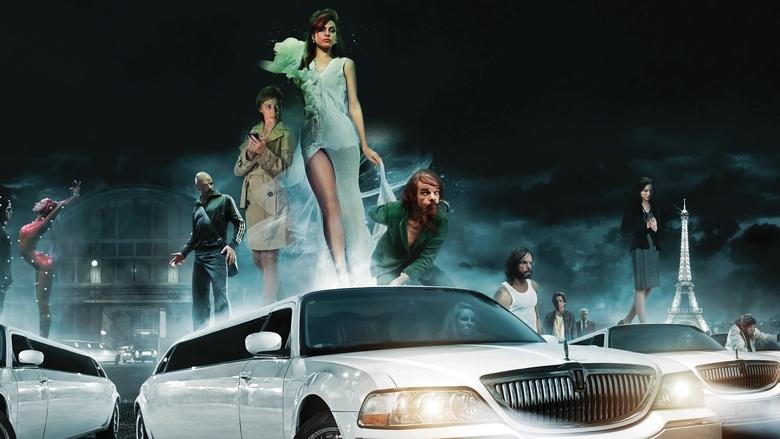
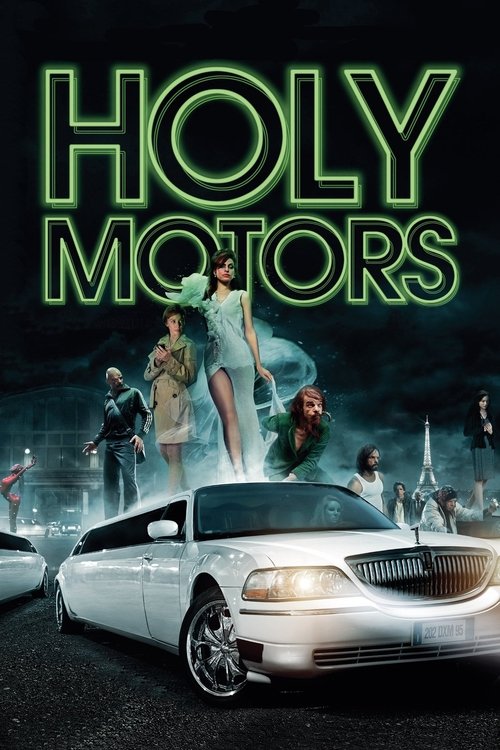
Holy Motors opens in a dream state: a slumbering man awakens in a room with arboreal wallpaper, locates a hidden lock, and steps through a doorway using a key melded into his finger, finding himself in the balcony of a darkened cinema populated by still, sleeping spectators. From this threshold, the film plunges into Paris daylight, introducing Monsieur Oscar, an enigmatic man driven through the city inside a gleaming, gargantuan white stretch limousine steered by his steadfast chauffeur, Céline.

Within the cavernous, illuminated dressing room of the limousine’s interior, Oscar reviews dossiers for scheduled "appointments". Throughout a single 24-hour cycle, he transforms himself entirely—using makeup, wigs, prosthetics, and costumes—into a radically divergent series of personas. He slips out into the city to inhabit each role with absolute dedication, drifting through disparate tonal registers that evoke multiple genres of cinema.

Oscar’s journeys occur without visible film cameras or an obvious audience, leaving the line between artificial staged theater and lived reality perpetually blurred. As day surrenders to twilight and night, Oscar's stamina wanes, revealing the physical and psychological toll of a life defined by perpetual metamorphosis, haunted by phantom memories and fleeting encounters with others trapped in the same peculiar trade.

Core Meaning

At its core, Holy Motors is director Leos Carax’s profound elegy for cinematic art, the physical craft of performance, and the fractured nature of modern identity. Confronting an era dominated by invisible digital miniaturization and disembodied virtual existence, Carax questions what becomes of the human body and the actor’s soul when the tangible mechanisms of cinema fade away.

The film’s central philosophical thesis is articulated in the phrase "pour la beauté du geste" ("for the beauty of the gesture"). In a world where cameras have grown so tiny that they cannot be seen, and where the original audience may be fast asleep or absent entirely, art and role-playing must persist not for external validation, commerce, or surveillance, but for the inherent, transcendent dignity of the act itself. Carax presents life as a continuous, compulsory masquerade, mourning the mechanical age while affirming that humanity's search for connection and meaning survives through the sheer poetry of performance.

Thematic DNA

Identity, Shapeshifting, and the Multiplicity of Self 30%
The Evolution, Mortality, and Mechanics of Cinema 25%
"La Beauté du Geste" / Art for Art’s Sake 20%
Alienation, Grief, and the Search for Intimacy 15%
The Obsolescence of the Physical and Mechanical Age 10%

Identity, Shapeshifting, and the Multiplicity of Self

Revealed through Oscar’s relentless transformations into nine distinct human (and subhuman) conditions—a beggar, a sewer monster, a dying patriarch, a corporate assassin, an accordion player, and a weary father. The film argues that modern human beings do not possess a single, cohesive identity; instead, identity is a fluid sequence of masks worn to navigate societal expectations, grief, survival, and social performance.

The Evolution, Mortality, and Mechanics of Cinema

Framed by the opening chronophotography of Étienne-Jules Marey and the silent cinema slumberers, each of Oscar's appointments embodies a distinct cinematic genre: early silent slapstick/melodrama, contemporary digital motion capture, horror, social realism, crime thriller, and musical. Carax chronicles the progression of cinema from heavy, mechanical contraptions to disembodied digital ones, questioning whether cinema is dying or merely mutating.

"La Beauté du Geste" / Art for Art’s Sake

During Oscar’s pivotal limousine discussion with the mysterious supervisor (Michel Piccoli), Oscar confesses his exhaustion and notes that cameras are no longer visible. Asked why he continues, Oscar answers that he does so for the beauty of the gesture itself. The theme establishes that artistic commitment must endure as a sacred, intrinsic imperative, even when detached from applause, comprehension, or spectators.

Alienation, Grief, and the Search for Intimacy

Woven throughout the narrative, particularly in Oscar's heartbreaking car ride with a withdrawn teenage daughter, his role beside a niece at an old man's deathbed, and his bittersweet reunion with his former companion Jean in the ruined La Samaritaine department store. The film portrays the profound loneliness of individuals separated by performance, where genuine intimacy is fleetingly grasped before the next assigned cue tears them apart.

The Obsolescence of the Physical and Mechanical Age

Highlighted by the limousines themselves, which serve as mobile shrines to mechanical engineering now cast adrift in an era of digital dematerialization. The final sequence shows the machines conversing among themselves in fear of being declared obsolete and abandoned by humanity, mirroring Carax's anxiety over the death of celluloid and physical craftsmanship.

Character Analysis

Monsieur Oscar

Denis Lavant

Archetype: The Shapeshifter / The Everyman / The Holy Performer Key Trait: Astonishing physical malleability, kinetic intensity, and emotional vulnerability.

Motivation

The unwavering commitment to complete his roster of assignments and keep the flame of performance alive "pour la beauté du geste".

Character Arc

Begins the day in weary luxury, throws his entire physical and psychic being into an escalating gauntlet of nine identities, experiences profound exhaustion and nostalgia, and eventually resigns himself to another absurd domestic assignment.

Céline

Édith Scob

Archetype: The Guardian / The Chauffeur / The Loyal Guide Key Trait: Stoic, maternal, dignified reserve and understated elegance.

Motivation

To protect Oscar, ensure punctuality across his grueling itinerary, and maintain the operational protocol of their organization.

Character Arc

Maintains steady, unflappable stewardship over Oscar's limousine schedule from dawn to dusk, serving as his confidante, timekeeper, and anchor, before stepping out into her own masked private reality.

All 5 characters and cast

Symbols & Motifs

The Stretch Limousine ("Holy Motors")

Meaning:

Acting as a mobile green room, sanctuary, and hearse, the limousine represents the vessel of cinema and transient human existence. It isolates the performer from the outside world while facilitating his re-creation between lives.

Context:

Used as the primary operational setting where Oscar travels through Paris and transforms between appointments.

The Key on the Finger

Meaning:

Symbolizes the artist's physical, organic integration with his medium—the filmmaker's body being the key that unlocks the collective subconscious.

Context:

Seen in the prologue, where director Leos Carax unlocks a portal into a darkened cinema hall.

The Motion Capture Suit

Meaning:

Symbolizes the disembodiment of modern digital art, where real bodily sweat and labor are converted into weightless computer-generated fantasies.

Context:

Oscar dons a black bodysuit dotted with reflective markers in a darkened studio, performing acrobatic, simulated sexual choreography alongside a female partner.

The White Mask

Meaning:

Signifies that off-duty life is merely another performance; shedding one role only exposes another layer of theatrical concealment.

Context:

At the conclusion, Céline dons a blank plastic mask as she departs the limousine depot to return home.

Monsieur Merde / The Red-Bearded Beast

Meaning:

Embodies untamed, grotesque id, primal chaos, and anti-bourgeois rebellion against sterile, curated societal aesthetics.

Context:

Emerges from the Parisian sewers into the Père Lachaise cemetery, eating flowers, biting fingers, and kidnapping a fashion model.

The Chimpanzee Family

Meaning:

Stands as a surreal satire of domestic normalcy, reminding us of humanity's primitive animal essence beneath cultural and artistic pretenses.

Context:

Oscar's ultimate "home" at the end of the day places him in an apartment with a mate and offspring who are chimpanzees.

The Derelict Department Store (La Samaritaine)

Meaning:

Serves as a poignant monument to decayed romanticism, lost architecture, and bygone eras of Paris.

Context:

The shell of the grand Parisian art deco emporium, destined for renovation into luxury accommodations, serves as the setting for Oscar and Jean's musical reunion.

Memorable Quotes

Pour la beauté du geste.
— Monsieur Oscar

Context

Oscar’s reply to the Man with the Birthmark when asked what keeps him performing despite his fatigue and the disappearance of visible cameras and spectators.

Meaning

The thematic axis of the entire film, asserting that artistic endeavor and human dedication possess intrinsic worth irrespective of outside audience or reward.

Qu'est-ce qui te fait continuer, Oscar ?
— The Man with the Birthmark (Michel Piccoli)

Context

Spoken inside the limousine during Oscar’s mid-day review.

Meaning

Represents the creator's inner crisis of faith, questioning the purpose of sustaining demanding artistic creation in a disconnected cultural landscape.

All 5 quotes

Philosophical Questions

What is the value of an action if there is no one to witness it?

The film tests the limits of artistic and ethical teleology: if the cameras are microscopic or nonexistent, and spectators are asleep, does performance retain its sanctity purely as an act of will?

Does a singular, authentic self exist beneath social personas?

Through Oscar's perpetual transformations, the film interrogates whether the core human identity is real or merely a void continuously dressed in transient social performances.

Can the "beauty of the gesture" justify human suffering?

Oscar repeatedly endures physical agony, grief, murder, and exhaustion for his roles; the narrative questions whether aesthetic transcendence can compensate for the existential drain of living.

What happens to humanity when tactile, mechanical friction is replaced by weightless digital code?

Contrasting the heavy flesh, grime, and mechanical engines with motion-capture sensors and digital simulations, the film examines the psychic cost of transitioning to a virtual existence.

How It Ends

Alternative Interpretations

The Cinephilic Allegory: Oscar is the embodiment of Cinema itself; Céline represents the enduring crew and production apparatus; the mysterious agency represents studios and producing bodies; the unseen, shrinking cameras reflect modern digital surveillance and mobile viewing; and the sleeping audience in the prologue represents the passive, disengaged modern viewer.

Full ending explanation

Cultural Impact

When Holy Motors debuted at the Cannes Film Festival in May 2012, Leos Carax had not released a feature film since the commercial and critical disaster of Pola X in 1999. His 13-year absence had turned him into an elusive legend of French Cinéma du look. The film's premiere caused an immediate critical sensation, jolting Cannes and prompting intense debate between critics who considered it a work of cinematic genius and those baffled by its defiant structure.

The cultural moment of 2012 coincided with the decisive death of 35mm projection and film negative production, as movie houses globally replaced mechanical projectors with digital systems, and digital cinema packages (DCPs) took over distribution. Holy Motors captured that specific anxiety, serving as an obituary for mechanical cinema while exploring how online culture and digital avatars were fracturing the human experience of reality.

The film went on to top the prestigious Sight & Sound critics' poll as the Best Film of 2012 and was named the best film of the year by Cahiers du Cinéma. It solidified Denis Lavant's stature as one of the preeminent physical actors of world cinema. It paved the way for subsequent meta-cinematic explorations of performance and identity across independent and international cinema throughout the 2010s and 2020s.

Audience Reception

Audiences and critics widely praised Denis Lavant’s astonishing performance, highlighting his acrobatic physicality, pathos, and chameleonic versatility across eleven different incarnations. The audacious, unpredictable tonal shifts moving effortlessly between slapstick comedy, body horror, tearful melodrama, and ecstatic musical performance were lauded, with the accordion intermission ("Entr'acte") widely cited as one of the most exhilarating musical sequences of 21st-century cinema, alongside the evocative, dreamlike cinematography of nighttime Paris.

Conversely, detractors leveled accusations of pretension, self-indulgence, and narrative incoherence, arguing that the film is an arbitrary sequence of arthouse vignettes that rejects conventional storytelling logic. The deliberate opacity of its central mystery—offering no exposition or definitive resolution regarding the agency, its clients, or its logic—also frustrated some viewers.

Controversial moments included Monsieur Merde’s segment (biting off fingers, chewing flowers and banknotes, and stripping naked with an erection beside Eva Mendes’s veiled character) and the sudden, surreal talking limousines sequence at the end, which divided viewers between those who found it poetic and those who considered it jarringly absurd. Overall, it stands as a polarizing cult masterpiece, hailed by critics and cinephiles while remaining challenging for mainstream audiences.

Interesting Facts

  • Leos Carax wrote the screenplay in an intense burst of creative frustration after several ambitious international, English-language projects stalled due to lack of financing, designing it to be filmed quickly and cheaply on digital cameras across Paris.
  • Carax declared that if Denis Lavant had declined the role, the film would never have been made, joking that the only alternatives capable of the role were Lon Chaney or Charlie Chaplin, both of whom were dead.
  • The character of Monsieur Merde was not created for Holy Motors; he originated in Carax’s contribution to the 2008 triptych omnibus film Tokyo!, relocated from Tokyo sewers to the Paris catacombs.
  • Kylie Minogue was introduced to Carax by French filmmaker Claire Denis; expecting to lip-sync to a pre-recorded track, Minogue was surprised when Carax insisted she sing her musical interlude live on set inside La Samaritaine with portable microphones.
  • Legendary French actor Michel Piccoli took the role of Oscar’s supervisor under the condition that he appear with a prominent port-wine stain facial prosthetic, intended originally to remain uncredited.
  • The film is dedicated to Russian actress Katerina Golubeva, Carax’s partner and star of Pola X, who died tragically in August 2011 shortly before/during production; the young girl waving at Oscar early on is their daughter Nastya Golubeva Carax.
  • Carax had historically resisted digital cinema, heavily favoring celluloid film stock, but financial and scheduling constraints forced him to shoot digitally, an experience he funneled directly into the film's meta-critique.
  • The exhilarating instrumental sequence inside Saint-Merri church features Denis Lavant and guest musicians performing a thunderous accordion version of R.L. Burnside’s "Let My Baby Ride" (arranged by Neil Hannon of The Divine Comedy) as a midpoint breathing space.

Easter Eggs

Leos Carax as "The Sleeper"

The director himself appears on screen in the opening prologue, wearing pajamas and wandering with his dog into an auditorium. His key-finger unlocking the theater screen pays tribute to Jean Cocteau’s surrealist classic The Blood of a Poet (1930).

Étienne-Jules Marey Chronophotography

The very first motion pictures projected on the theater screen in the opening sequence are Victorian-era chronophotographic movement studies by Étienne-Jules Marey, grounding the film in the primal origins of moving image mechanics.

Homage to Eyes Without a Face (1960)

In the final scene, Édith Scob takes out and dons an identical white oval mask to the one she famously wore as Christiane in Georges Franju’s horror masterpiece Les Yeux sans visage over fifty years earlier.

Anagrammatic Nomenclature

The names of Carax’s characters form an autobiographical signature: "Leos Carax" is an anagram formed from the filmmaker’s legal name, Alexandre Oscar Dupont. In his first three films, Lavant played "Alex"; here, he plays "Oscar".

The Ghost of Les Amants du Pont-Neuf

The location of Oscar’s musical reunion with Kylie Minogue, La Samaritaine, directly overlooks the Pont-Neuf, evoking Carax's legendarily troubled 1991 production set on that bridge.

Jacques Tati Architecture

The modern villa where Oscar is picked up at the start pays visual homage to the sterile modernist architecture of the Villa Arpel in Jacques Tati’s satire Mon Oncle (1958).

The Living Automobiles

The talking limousines in the final sequence reference anthropomorphic animation tropes (such as Pixar’s Cars), but subverted with Gallic fatalism and existential despair.

Frequently Asked Questions

Explore More About This Movie

Dive deeper into specific aspects of the movie with our detailed analysis pages

Comments (0)

Leave a comment

No comments yet. Be the first to share your thoughts!

Similar Movies