Once Upon a Studio
A nostalgic and heartfelt animated fantasy, this film is a whimsical love letter to a century of storytelling, blossoming like a time-lapse flower of cinematic history.
Once Upon a Studio

Once Upon a Studio

"100 years of Disney magic comes together."

24 September 2023 United States of America 9 min ⭐ 8.3 (403)
Director: Trent Correy Dan Abraham
Cast: Chris Diamantopoulos, Kaitlyn Robrock, Tony Anselmo, Bill Farmer, Jim Cummings
Animation Family Fantasy Comedy
Legacy and Nostalgia Unity and Collaboration The Magic of Animation Passing the Torch

Overview

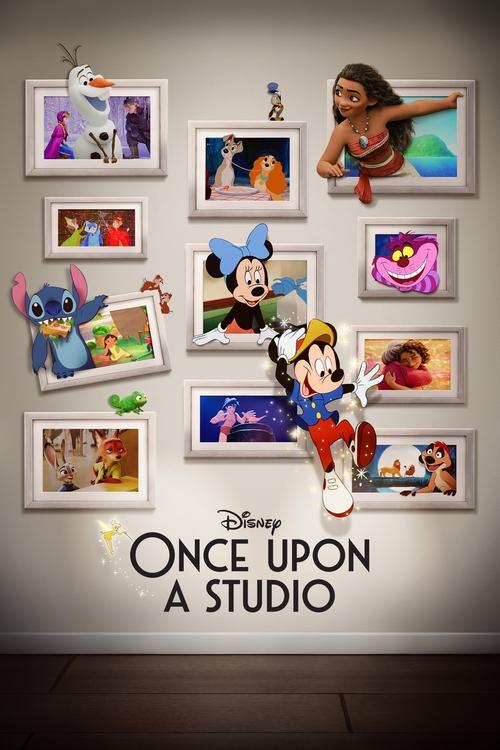
Created for the centennial of Walt Disney Animation Studios, "Once Upon a Studio" is a short film that brings the studio's beloved characters to life. After the employees of the Walt Disney Animation Studios in Burbank, California, leave for the day on October 16, 2023, Mickey Mouse and Minnie Mouse step out of a photograph. Their goal is to gather as many characters from the studio's history as possible for a group photo to commemorate the 100th anniversary.

What follows is a delightful and chaotic assembly of heroes, villains, princes, and princesses from over 85 feature films and shorts. Characters from different eras and animation styles interact with each other for the first time, navigating the real-world studio building. The film is a blend of live-action, traditional hand-drawn animation, and computer-generated imagery, creating a visually unique and nostalgic experience.

Core Meaning

The core meaning of "Once Upon a Studio" is a heartfelt celebration of the legacy and collaborative spirit of Walt Disney Animation Studios over its 100-year history. Directors Trent Correy and Dan Abraham intended the short to be a "love letter" to the studio and a "thank you" to the generations of artists and audiences who have connected with these stories. The film emphasizes the theme of unity, bringing together a diverse family of characters who, despite their different origins and stories, are all part of the same creative heritage. It underscores the idea that the magic of Disney is a timeless, ongoing collaboration between the creators and the viewers, and it pays tribute to the artists who brought these characters to life.

Thematic DNA

Legacy and Nostalgia 40%
Unity and Collaboration 30%
The Magic of Animation 20%
Passing the Torch 10%

Legacy and Nostalgia

The film is steeped in nostalgia, designed to evoke cherished childhood memories for viewers who grew up with Disney films. By featuring 543 characters from across the studio's century-long history, it serves as a powerful reminder of Disney's enduring cultural impact. The narrative arc, centered on commemorating a milestone, directly engages with the concept of legacy. A poignant moment where Mickey Mouse addresses a portrait of Walt Disney symbolizes a deep respect for the studio's origins and its creator's vision.

Unity and Collaboration

The central plot of gathering hundreds of disparate characters for a single group photograph is a powerful metaphor for unity. Heroes and villains, classic and modern characters all set aside their differences to come together. This theme is also reflected in the film's production, which required a massive collaborative effort, bringing back over 40 original voice actors and combining different animation styles (hand-drawn and CG) seamlessly within a live-action setting.

The Magic of Animation

The film's premise—of animated characters coming to life within their own studio—is a literal celebration of the art of animation. It showcases the evolution of the medium, blending 2D hand-drawn characters with 3D CG ones, all interacting within a real-world space. This artistic choice highlights the technical achievements of the studio over the decades and serves as a testament to the timeless appeal of bringing drawings to life.

Passing the Torch

The opening scene features Disney Legend Burny Mattinson, the studio's longest-serving employee, walking with a young intern. This moment was deliberately included to symbolize the tradition of passing knowledge and passion from one generation of artists to the next, ensuring the studio's creative spirit continues.

Character Analysis

Mickey Mouse

Chris Diamantopoulos

Archetype: The Leader / The Everyman Hero
Key Trait: Inspirational Leadership

Motivation

Mickey's primary motivation is to honor the studio's 100th anniversary by creating a lasting memento—a group photograph that brings the entire Disney family together. His drive is rooted in a sense of community, history, and appreciation for the legacy he represents.

Character Arc

Mickey's arc in the short is that of a determined and heartfelt leader. He initiates the idea of the group photo and takes on the responsibility of rallying the hundreds of characters. His journey is one of gentle persuasion and perseverance, culminating in a moment of quiet reflection and gratitude towards his creator, Walt Disney, before successfully uniting everyone for the final picture.

Minnie Mouse

Kaitlyn Robrock

Archetype: The Supportive Partner
Key Trait: Supportive and Enthusiastic

Motivation

Minnie is motivated by her partnership with Mickey and a shared desire to celebrate their collective home and family. She works alongside him to ensure the anniversary is properly commemorated.

Character Arc

Minnie acts as Mickey's primary supporter and co-organizer. She is the first to join his cause and enthusiastically helps in gathering the characters. Her role is crucial in transforming Mickey's idea into a collective effort, showcasing her as an equally important part of the studio's foundation.

Goofy

Bill Farmer

Archetype: The Lovable Jester
Key Trait: Clumsy yet Well-Intentioned

Motivation

Goofy's motivation is simple: to help his friends and successfully take the group picture. He is eager to contribute, even if his execution is flawed.

Character Arc

Goofy's arc provides the main comedic conflict. Tasked with setting up the old-fashioned camera, his characteristic clumsiness leads to the camera breaking, creating a moment of despair. However, this failure ultimately leads to a heartwarming moment of unity, as other characters step in to help, and he finally succeeds in taking the photo.

Burny Mattinson

Burny Mattinson (as himself)

Archetype: The Storyteller / The Elder
Key Trait: Wise and Reflective

Motivation

His motivation within the short is to reflect on the studio's history and legacy, passing on a sense of wonder to a younger intern.

Character Arc

Appearing in a live-action cameo, Burny Mattinson, Disney's longest-serving employee, provides the film's narrative framing. As he leaves the studio, he muses, "If these walls could talk..." which sets the magical events in motion. His presence serves as a poignant, real-world bookend to the animated fantasy, honoring his 70-year career and symbolizing the human element behind the animation. The film is dedicated to his memory.

Symbols & Motifs

The Group Photograph

Meaning:

The group photograph symbolizes the unity, history, and collective legacy of Walt Disney Animation Studios. It represents the culmination of 100 years of creativity, bringing together a vast and diverse family of characters into a single, celebratory frame.

Context:

The entire plot revolves around Mickey Mouse's effort to assemble all the characters for this photo. The challenge of getting everyone together, and the eventual triumphant shot, serves as the narrative's central driving force and emotional climax.

Walt Disney's Portrait

Meaning:

The portrait of Walt Disney represents the foundational vision and spirit of the studio. Mickey's moment of quiet acknowledgment and gratitude towards the portrait is a tribute to the man who started it all, symbolizing the enduring respect for his creative genius and legacy.

Context:

In a quiet, emotional scene, Mickey approaches the portrait, takes off his hat, and thanks Walt. The scene is underscored by the song "Feed the Birds" from Mary Poppins, known to be Walt Disney's favorite, adding a layer of deep personal significance.

The Roy E. Disney Animation Building

Meaning:

The building itself acts as a vessel for Disney's history and magic. It's the physical space where creativity has flourished for decades. In the film, its walls literally 'talk' by releasing the characters, symbolizing the studio as the living, breathing home of this vast universe of stories.

Context:

The short is set entirely within and just outside the Roy E. Disney Animation Building. The characters emerge from frames on the walls and interact with the real-world architecture of the studio, blending the magical and the mundane.

Memorable Quotes

If these walls could talk...

— Burny Mattinson

Context:

Spoken at the beginning of the short, as Burny Mattinson, the longest-serving Disney employee, is leaving the animation building with an intern. His reflection on the studio's 100-year history prompts the magic to begin.

Meaning:

This line serves as the catalyst for the entire film. It's a classic idiom given literal meaning, triggering the magic that allows the animated characters to come to life from the pictures on the studio walls. It bridges the real world with the fantasy world of animation.

Okay everybody, let's get a picture!

— Mickey Mouse

Context:

Mickey says this after he and Minnie have emerged from their picture frame and decided to gather everyone together. It is the beginning of the chaotic and heartwarming process of assembling all the characters.

Meaning:

This is the call to action that sets the plot in motion. It's a simple, declarative statement from Mickey that establishes the film's central goal: to unite the vast family of Disney characters for a 100th-anniversary photo. It showcases Mickey's role as the natural leader of the group.

Gotta go. But... thanks. On with the show.

— Mickey Mouse

Context:

Mickey speaks these lines softly while looking at a portrait of Walt Disney in an otherwise empty hallway. It's a personal, emotional beat before he rejoins the larger group, with the score playing Walt's favorite song, "Feed the Birds."

Meaning:

This quiet, poignant line is Mickey's tribute to his creator, Walt Disney. It's a moment of profound gratitude and acknowledgment of the legacy he is part of. The phrase "On with the show" is a classic showbiz saying that here signifies moving forward and continuing the legacy.

Philosophical Questions

What is the nature of a creative legacy?

The film explores the idea that a legacy is not a static historical record but a living, breathing entity. The characters, representing a century of creative output, are not confined to their original films but are an active, present-day family. Mickey's nod to Walt's portrait suggests that a legacy is built on the foundation of a creator's vision but is carried forward and kept alive by subsequent generations of artists and the enduring love of an audience.

Can art transcend its creators and its time?

By bringing together characters from 1937 to the present day and having them coexist and interact seamlessly, the film posits that these creations have achieved a timeless quality. They exist outside of their original contexts, speaking to new generations. The use of archival recordings for deceased actors further reinforces this idea, suggesting that the characters' spirits, and the performances that gave them life, are immortal.

How does nostalgia shape our collective cultural memory?

"Once Upon a Studio" is a powerful study in the mechanics of nostalgia. It demonstrates how shared stories and characters create a collective memory that spans generations. The film's emotional impact is almost entirely derived from the viewer's pre-existing relationship with these characters. It raises the question of whether this reliance on past sentiment is a celebration of a rich history or a barrier to creating genuinely new cultural touchstones.

Alternative Interpretations

While the dominant interpretation of "Once Upon a Studio" is that of a heartfelt and sincere celebration of Disney's legacy, some alternative readings exist. One critical perspective views the short as a sophisticated piece of corporate propaganda. From this viewpoint, the film is an exercise in nostalgia marketing, designed to reinforce brand loyalty and gloss over the more controversial aspects of the company's history by focusing solely on its most beloved creations. It can be seen as an eight-minute advertisement that leverages emotional connection to bolster the company's image during its centennial year.

Another interpretation focuses on what is absent from the celebration. Some viewers and critics have noted the exclusion of characters from more controversial films like Song of the South, pointing out that the short presents a curated, sanitized version of Disney's history rather than a complete one. This perspective suggests that while the film celebrates unity, it does so by omitting the parts of its legacy that do not fit neatly into a pristine, celebratory narrative.

Cultural Impact

"Once Upon a Studio" was released as the cornerstone of The Walt Disney Company's 100th-anniversary celebration, serving as a powerful piece of corporate and cultural self-reflection. It premiered at the Annecy International Animation Film Festival, where it received a standing ovation, and later aired on ABC and Disney+. The short was met with overwhelmingly positive reviews from critics and audiences, who praised its emotional weight, nostalgic power, and technical achievement in blending various animation styles.

Its primary impact was reaffirming the emotional connection millions of people have with Disney's characters and stories. In a period where the company faced criticism and some box-office disappointments, the short was seen by many as a return to form—a reminder of the "Disney magic" that defined its legacy. It served as a love letter not just to the characters, but to the animators and voice actors who created them, bridging a century of artistic evolution. The film's poignant tributes, such as the inclusion of Burny Mattinson and the archival audio of Robin Williams, were widely highlighted as moments of heartfelt respect for the studio's history. While some critics viewed it as a self-congratulatory advertisement, the general consensus was that it was a sincere and moving celebration that resonated deeply with fans across generations.

Audience Reception

Audience reception for "Once Upon a Studio" was overwhelmingly positive, with many viewers describing it as an emotional and deeply moving experience. Fans widely praised the short as a perfect tribute to Disney's 100-year legacy, celebrating its ability to evoke powerful feelings of nostalgia and joy. The sheer number of character cameos was a major point of praise, with viewers enjoying the challenge of spotting their favorites from different eras. The poignant moments, particularly Mickey's tribute to Walt Disney and the finale featuring the cast singing "When You Wish Upon a Star," were frequently cited as highlights that brought many to tears.

Criticism was minimal but tended to focus on two main points. Some viewers wished the short was longer, feeling that its nine-minute runtime didn't allow for enough meaningful interactions between the vast number of characters. A smaller contingent of critics viewed the film as overly sentimental or as a piece of corporate self-promotion, arguing it was more of an advertisement than a story. There were also minor critiques from some animation purists who felt certain character designs deviated slightly from their original models. Overall, however, the verdict from audiences was that the short was a beautiful and heartfelt love letter to Disney animation.

Interesting Facts

  • The short film features 543 characters from over 85 Disney feature films and shorts.
  • Over 40 original voice actors returned to reprise their roles, including Jodi Benson as Ariel, Paige O'Hara as Belle, Jeremy Irons as Scar, and Josh Gad as Olaf.
  • The film is dedicated to the memory of Burny Mattinson, the longest-serving employee in Disney's history (70 years), who makes a live-action cameo at the beginning and passed away before the short's release.
  • The score includes a new recording of "Feed the Birds" from Mary Poppins, which was known to be Walt Disney's favorite song. Disney Legend Richard Sherman, one of the original songwriters, returned to play the piece on the piano in Walt Disney's actual office for the film.
  • The voice of the Genie from Aladdin was recreated using archival, previously unheard recordings of Robin Williams, with the permission of his estate.
  • Directors Trent Correy and Dan Abraham developed the pitch for the short film in secret for about eight months during the COVID-19 pandemic before presenting it to Chief Creative Officer Jennifer Lee.
  • Approximately 80% of the characters featured in the short were animated using traditional hand-drawn techniques to remain true to their original designs.
  • The final group shot required animators to use heat maps to strategically place all 543 characters in the frame.

Easter Eggs

Oswald the Lucky Rabbit Cameo

As characters gather outside, Oswald the Lucky Rabbit, one of Walt Disney's earliest creations whose rights were lost by the company for decades, appears. Mickey politely says, "After you," a nod to Oswald's status as his predecessor in Disney history.

Robin Williams as a Lost Boy

In the scene where Olaf is sketching, an animated version of a young Robin Williams dressed as a Lost Boy flies by. This is a direct reference to "Back to Neverland," a short film starring Williams that was part of the animation tour attraction at Disney-MGM Studios.

Portraits of Disney Legends

The walls of the animation studio are adorned with portraits of real-life Disney animators and legends, such as Ub Iwerks, the co-creator of Mickey Mouse. This was a deliberate choice by the directors to honor the artists behind the characters.

Rare and Obscure Characters

The film is packed with cameos from characters from lesser-known Disney shorts and features, including Susie the Little Blue Coupe, Pecos Bill, the Reluctant Dragon, and Pedro the Plane. Their inclusion was a tribute to the deep and varied history of the studio beyond its most famous films.

Alan Tudyk as the Mad Hatter

Alan Tudyk, who has voiced numerous characters in modern Disney animated films (like King Candy in Wreck-It Ralph), voices the Mad Hatter in this short. This is a fun inside joke, as Tudyk is considered a "good luck charm" for the studio, having had a role in every Walt Disney Animation Studios film since 2012.

⚠️ Spoiler Analysis

Click to reveal detailed analysis with spoilers

Frequently Asked Questions

Explore More About This Movie

Dive deeper into specific aspects of the movie with our detailed analysis pages

Comments (0)

Leave a comment

No comments yet. Be the first to share your thoughts!