How to Make Millions Before Grandma Dies
A bittersweet family drama blossoming with gentle humor, this film captures the poignant transformation of a young man’s greed into genuine love at the twilight of his grandmother's life.
How to Make Millions Before Grandma Dies

How to Make Millions Before Grandma Dies

หลานม่า

"Never underestimate a grandma's love for her family."

04 April 2024 Thailand 126 min ⭐ 8.2 (306)
Director: Pat Boonnitipat
Cast: Putthipong Assaratanakul, Usha Seamkhum, Sanya Kunakorn, Sarinrat Thomas, Pongsatorn Jongwilas
Drama
The Commodification of Care vs. Genuine Love Family Duty and Generational Divide Mortality and The Value of Time Generational Bias and Unspoken Sacrifice
Budget: $1,000,000
Box Office: $73,800,000

Overview

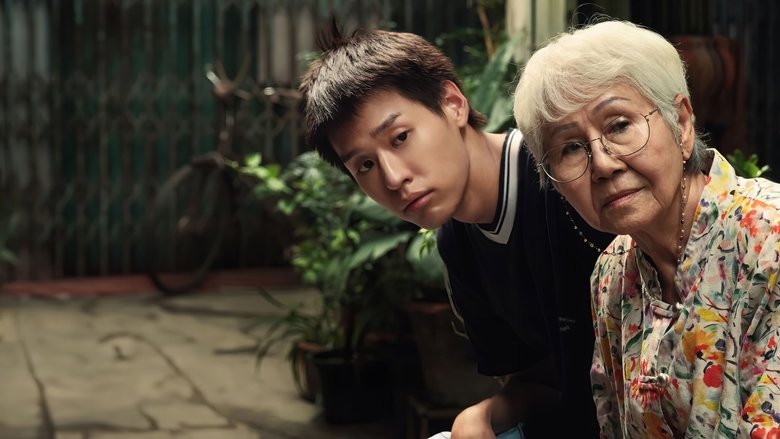
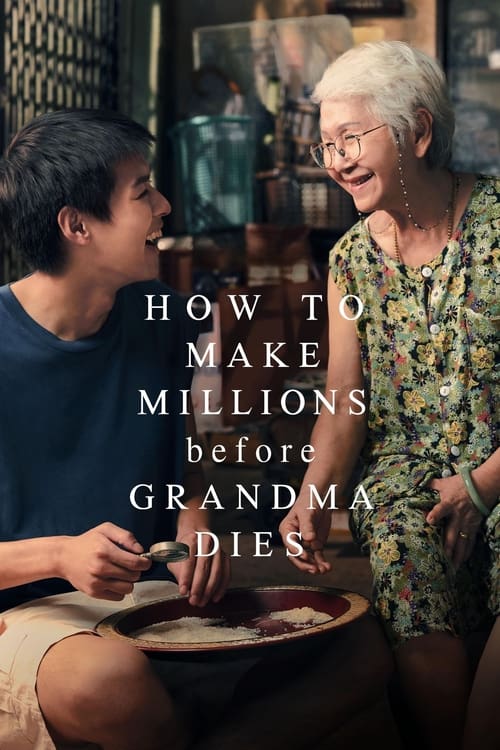
"How to Make Millions Before Grandma Dies" (original title: หลานม่า or Lahn Mah) is a 2024 Thai drama that resonated deeply with audiences across Asia. The story follows M, a university dropout and aspiring gamer who sees a cynical opportunity when his grandmother, Mengju (or Amah), is diagnosed with terminal cancer. Inspired by his cousin Mui, who inherited a large estate after caring for a dying relative, M volunteers to become his Amah's primary caregiver, secretly hoping to secure her house as his inheritance.

Initially, M struggles with the demanding and unfiltered nature of his grandmother, and their relationship is fraught with his ulterior motives and her suspicion. However, as they spend more time together—selling congee, going to hospital appointments, and simply living under the same roof—a genuine bond begins to form. M's superficial efforts slowly transform into sincere acts of love and care.

The film navigates the complexities of a multi-generational Thai-Chinese family, exploring the tensions between M's mother, Chew, and her two brothers, the wealthy but distant Kiang and the debt-ridden Soei. As M’s own motivations shift, he is forced to confront not only his grandmother’s mortality but also the true meaning of family, wealth, and legacy, leading to a profoundly moving and tear-jerking conclusion.


Core Meaning

The core meaning of "How to Make Millions Before Grandma Dies" is a poignant exploration of the idea that true wealth is found not in material inheritance but in the priceless value of time and genuine human connection. Director Pat Boonnitipat wanted to tell a story that felt personal and relatable, focusing on the complex, often unspoken dynamics within families. The film posits that the greatest regret is not lost fortune, but lost time with loved ones. It serves as a powerful reminder to cherish family bonds, understand the sacrifices of older generations, and recognize that small, daily acts of care are far more valuable than grand, self-serving gestures. Ultimately, the message is that love, empathy, and shared memories are the most significant legacy one can receive and leave behind.

Thematic DNA

The Commodification of Care vs. Genuine Love 35%
Family Duty and Generational Divide 30%
Mortality and The Value of Time 20%
Generational Bias and Unspoken Sacrifice 15%

The Commodification of Care vs. Genuine Love

The film's central conflict revolves around M's initial motivation: treating elderly care as a transactional means to an inheritance. This is contrasted with the eventual, selfless love that develops between him and his Amah. His journey from greed to genuine affection highlights the film's core argument that authentic connection cannot be bought or schemed for. The actions of his uncles, who also have financial interests, further underscore this theme.

Family Duty and Generational Divide

The film delves into traditional notions of filial piety common in East and Southeast Asian cultures, questioning what it means to be a responsible child or grandchild in the modern era. It portrays the communication gap and differing values between the younger generation, represented by M, and the older generation of Amah. The varying levels of commitment shown by Amah's three children explore the pressures, resentments, and sacrifices associated with familial obligations.

Mortality and The Value of Time

Amah's terminal diagnosis serves as the catalyst for the entire narrative, forcing every character to confront the reality of death and the limited time left with her. The film powerfully argues that the most valuable resource is time spent with loved ones. This theme is reinforced through M's transformation, as he gradually realizes that the moments he shares with his grandmother are more precious than the house he hopes to inherit.

Generational Bias and Unspoken Sacrifice

The film subtly critiques patriarchal traditions within the Thai-Chinese family structure. Amah shows a clear preference for her sons, a bias rooted in her own upbringing where her brother inherited the family wealth. This is poignantly summarized by M's mother, Chew, who remarks, "Sons get assets, daughters get cancer." Amah's own quiet sacrifices, like giving up beef to pray for her son's health, reveal a lifetime of love expressed through actions rather than words.

Character Analysis

M

Putthipong Assaratanakul (Billkin)

Archetype: Anti-hero / The Prodigal Grandson
Key Trait: Transformative

Motivation

Initially, his sole motivation is to secure his grandmother's house as an inheritance, inspired by his cousin's success. This evolves into a genuine desire to care for her and make her comfortable in her final days, driven by the bond they form.

Character Arc

M begins as a cynical, lazy university dropout whose motivations are entirely selfish. His decision to care for his dying grandmother is a calculated scheme to inherit her house. Through the daily routines of caregiving, he slowly develops genuine empathy and affection. His arc is a classic journey from greed to selflessness, culminating in the realization that his relationship with Amah is the true inheritance. He matures from a boy chasing easy money to a young man who understands the value of love and sacrifice.

Mengju / Amah

Usha Seamkhum

Archetype: The Matriarch / The Mentor
Key Trait: Resilient

Motivation

Her primary motivation is her deep-seated love for her family and her desire for them to remain united, even after her death. Despite disappointments from her children, she continues to make sacrifices for their well-being, such as wanting to give her house to her indebted son and hoping a large burial plot will bring them together.

Character Arc

Amah starts as a demanding, unfiltered, and seemingly cantankerous old woman, wary of M's sudden attentiveness. As the story unfolds, her tough exterior gives way to reveal a woman of immense strength, vulnerability, and deep, quiet love for her flawed family. Her character doesn't change so much as she is revealed to the audience and to M. She remains pragmatic and clear-eyed about her family's shortcomings but never stops loving them. Her arc is one of gradual opening-up and acceptance of her grandson's care.

Chew

Sarinrat Thomas

Archetype: The Dutiful Daughter
Key Trait: Long-suffering

Motivation

Her motivation is a quiet, unconditional love for both her mother and her son. She supports M's decision to care for Amah, despite knowing his initial intentions, and provides him with crucial perspective on the nature of family and sacrifice.

Character Arc

Chew is M's mother and Amah's only daughter. She embodies the archetype of the overlooked, sacrificial daughter in a patriarchal family structure. She cares for her mother without expectation of reward and understands the family's biased dynamics, poignantly stating, "Sons get assets, daughters get cancer." Her arc is less about transformation and more about providing a stable, emotional anchor and a moral compass for M.

Soei

Pongsatorn Jongwilas

Archetype: The Prodigal Son
Key Trait: Irresponsible

Motivation

His primary motivation is financial survival due to his gambling debts. He appears to love his mother but is often overwhelmed by his own problems, leading to selfish actions.

Character Arc

Soei is Amah's youngest son, perpetually in debt and often seen as a failure. He represents the child who causes the most trouble yet still receives his mother's grace. His arc involves a moment of desperation where he steals from his mother, yet he is the one she ultimately entrusts her house to, hoping to save him from his debts. This act highlights Amah's complex, forgiving love.

Kiang

Sanya Kunakorn

Archetype: The Distant Son
Key Trait: Pragmatic

Motivation

His motivation is to solve the "problem" of his mother's care with money, as he is too busy with his own life and family to provide personal care. He fulfills his duty financially but not emotionally.

Character Arc

Kiang is Amah's eldest and most successful son, a wealthy stockbroker. He is emotionally distant and approaches his mother's illness with a practical, monetary mindset, offering to pay M to be the caregiver. He represents the child who has achieved material success but has lost a deeper emotional connection with his parent. His character highlights the theme that money cannot replace time and presence.

Symbols & Motifs

Congee (Jok)

Meaning:

The congee that Amah sells symbolizes heritage, nurturing, and the simple, consistent acts of love. For Amah, it's her livelihood and a connection to her past. For M, learning to make it signifies his transformation from a passive observer to an active caregiver who has inherited a piece of her legacy—not of wealth, but of tradition and care.

Context:

Amah wakes up early every day to prepare and sell congee at her market stall. M initially helps her as part of his scheme but eventually comes to appreciate the craft. His ability to make the congee for her when she is too weak is a pivotal moment in his character arc.

The Pomegranate Tree

Meaning:

In Thai-Chinese tradition, a pomegranate tree planted in front of a house is meant to ensure prosperity for the children. In the film, it symbolizes Amah's deep, enduring love and hopes for her family, particularly for M. Her saving a pomegranate for him is a tangible expression of her affection.

Context:

Amah planted the tree when M was born. Throughout the film, she carefully wraps pomegranates in plastic bags on the tree. M learns later that she has been saving them for him since he was a child, a revelation that deepens his understanding of her quiet love.

The Burial Plot

Meaning:

The large, expensive burial plot Amah desires symbolizes her final wish to bring her fractured family together. She believes that a grand gravesite will encourage her children and grandchildren to visit her, and thus each other, after she is gone. It represents her longing for family unity, even in death.

Context:

Amah expresses her wish for a large burial plot early in the film. After she passes away, M uses the money she secretly saved for him his entire life to buy the plot, fulfilling her wish and demonstrating his ultimate transformation from being motivated by inheritance to honoring her legacy.

Amah's House

Meaning:

The house initially represents a purely monetary goal for M—the grand prize in his inheritance scheme. As the film progresses, it transforms into a symbol of home, memory, and Amah's entire life. The contrast between her modest home and her son Kiang's modern, spacious house highlights the emotional and economic distances within the family.

Context:

M lists the house for sale early on, anticipating his inheritance. Amah later discovers this but doesn't confront him, a moment of quiet forgiveness. Her ultimate decision to give the house deed to her indebted son, Soei, is a climactic event that forces M to confront his true feelings for her, separate from any financial gain.

Memorable Quotes

Sons get assets, daughters get cancer.

— Chew (M's mother)

Context:

Chew says this to M in a quiet, matter-of-fact conversation, explaining the unspoken rules of their family dynamics after Amah gives the house deed to her son, Soei, instead of M or Chew who have cared for her more.

Meaning:

This poignant line encapsulates the theme of generational and gender bias within the family. It's a bittersweet acknowledgment of her place as the dutiful daughter who expects nothing in return, while her brothers are prioritized for inheritance. It speaks to a wider cultural context of patriarchal traditions.

Amah, you're my number one.

— M

Context:

After Amah has passed away, M whispers this tearfully to her coffin as the family travels to the burial site he bought for her. It's his final, heartfelt admission of his true feelings.

Meaning:

This is the emotional climax of M's character arc. Having started his journey by trying to scheme his way into becoming Amah's "number one" favorite to get the inheritance, this declaration signifies his complete transformation. His love is no longer conditional or transactional; she has genuinely become the most important person to him.

You have taken good care of me. Very good, actually.

— Amah

Context:

This is Amah's response after M, feeling hurt and betrayed that she gave the house to his uncle, confronts her and asks, "Why am I not your number one?". Her reply bypasses his competitive framing and speaks directly to the love and care he has shown her.

Meaning:

Amah's simple, heartfelt validation of M's care is a crucial turning point. It's a moment of pure acknowledgment, devoid of any discussion of inheritance or favoritism. For M, who was obsessed with his ranking, this sincere praise from his usually gruff grandmother means more than any material reward.

Philosophical Questions

What is the true nature of inheritance?

The film fundamentally questions what we inherit from our families. It contrasts the tangible inheritance of property and money with the intangible inheritance of memories, values, traditions (like making congee), and love. M begins by pursuing the former but discovers the profound value of the latter. The film suggests that the most meaningful legacy is not what is written in a will, but what is passed down through shared experience and emotional connection.

Can a selfless act originate from a selfish motive?

M's entire journey is built on this question. He performs the acts of a loving grandson for purely selfish reasons. The film explores how the performance of care and empathy can, over time, foster the genuine emotions themselves. It suggests that motivations can be fluid and that through the process of acting selflessly, a person can be fundamentally transformed, blurring the line between the original intent and the final, sincere outcome.

Does unconditional love require overlooking deep flaws?

Amah's relationship with her children, especially her prodigal son Soei, explores the limits and complexities of parental love. She is fully aware of their shortcomings—one is distant, one is irresponsible, and her daughter is overlooked. Yet, her love remains steadfast, culminating in her giving the house to the son who seemingly deserves it least. The film raises the question of whether this is a noble act of unconditional love or an enabling behavior that perpetuates a cycle of irresponsibility.

Alternative Interpretations

While the film is largely interpreted as a heartwarming story of redemption, some viewers have offered more cynical or critical readings. One interpretation is that M’s transformation is less about pure love and more about finding a different kind of “profit”—emotional fulfillment and a sense of purpose he lacked. His final act of buying the grave could be seen as an attempt to assuage his guilt over his initial greed.

Another perspective focuses on the toxic family dynamics, arguing that the film, despite its feel-good ending, highlights a deeply problematic system of emotional manipulation and neglect. Amah's favoritism towards her sons, despite their failings, and the pressure placed on her daughter and grandson can be seen not as a touching reality, but as a perpetuation of harmful generational patterns. From this viewpoint, M's happy ending is an exception, and the film inadvertently papers over the harsh reality that many caregivers in similar situations are left with nothing but bitterness and exhaustion. Some audience discussions have pointed out that Amah is not a simple, cuddly grandmother but a complex, sometimes difficult person, and the film doesn't shy away from showing the frustrating aspects of caregiving, making M's journey one of enduring hardship as much as love.

Cultural Impact

"How to Make Millions Before Grandma Dies" became a cultural phenomenon in 2024, particularly across Southeast Asia. Released on April 4, 2024, in Thailand, it quickly became the country's highest-grossing film of the year and eventually the highest-grossing Thai film ever in international markets like Indonesia, Singapore, and Malaysia. Its success was fueled by its deeply relatable story, which tapped into the universal themes of family, filial piety, and elderly care that resonate strongly within Asian cultures. The film sparked widespread public discourse on intergenerational relationships, the duties of children to their aging parents, and the often-unspoken transactional nature of care within families.

The film's emotional weight led to a viral TikTok trend of audiences sharing videos of their tear-stained faces post-screening, turning the act of watching the movie into a shared, cathartic experience. Critics praised its heartfelt narrative, authentic performances (especially from first-time actress Usha Seamkhum), and the sensitive direction of Pat Boonnitipat. The movie's portrayal of a Thai-Chinese family, with dialogue in both Thai and Teochew, added a layer of cultural specificity that was celebrated for its authenticity. More broadly, the film's global success signaled a new era for Thai cinema, demonstrating its ability to produce stories with cross-cultural appeal that can compete on the world stage.

Audience Reception

Audience reception for "How to Make Millions Before Grandma Dies" was overwhelmingly positive and intensely emotional. The film became a box office sensation across Asia, largely driven by powerful word-of-mouth and social media trends. Viewers widely praised the movie for its heartfelt and relatable story, with many sharing personal anecdotes about their own relationships with their grandparents. The film's ability to evoke strong emotions became its defining feature, famously leading to a viral trend of people posting videos of themselves crying after the screening.

The performances of the lead actors, Putthipong Assaratanakul (M) and newcomer Usha Seamkhum (Amah), were lauded for their authenticity and chemistry. The main point of criticism, though minor, was directed at the film's predictability and its use of sentimental tropes common in family dramas. Some viewers also engaged in debates about the fairness of Amah's decisions regarding her inheritance, finding the family's dynamics frustratingly realistic. Overall, the verdict was that the film is a powerful, must-watch tearjerker that beautifully communicates a universal message about family and love.

Interesting Facts

  • The film is the feature directorial debut for Pat Boonnitipat.
  • Usha Seamkhum, who plays Amah, was 78 years old and had never acted in a feature film before this role. She was discovered by the assistant director through a modeling agency after she had participated in a seniors' dance competition.
  • The director, Pat Boonnitipat, drew heavily from his own life experiences, as his own maternal grandmother who helped raise him was diagnosed with late-stage cancer.
  • The film became a massive box office success, becoming the highest-grossing Thai-language film of all time by international gross and breaking records in numerous Southeast Asian countries.
  • The movie sparked a viral social media trend where viewers posted videos of themselves crying after watching the film, attesting to its powerful emotional impact.
  • Actor Putthipong Assaratanakul (M) lost weight and altered his walk and speech patterns to portray the character.
  • To help her remember her lines, Usha Seamkhum wrote them all out by hand.
  • A scene where one of the camera assistants began crying so much he couldn't keep his hand steady was how the director knew an emotional moment would work well for the audience.

⚠️ Spoiler Analysis

Click to reveal detailed analysis with spoilers

Frequently Asked Questions

Explore More About This Movie

Dive deeper into specific aspects of the movie with our detailed analysis pages

Comments (0)

Leave a comment

No comments yet. Be the first to share your thoughts!