Skip to content
Human
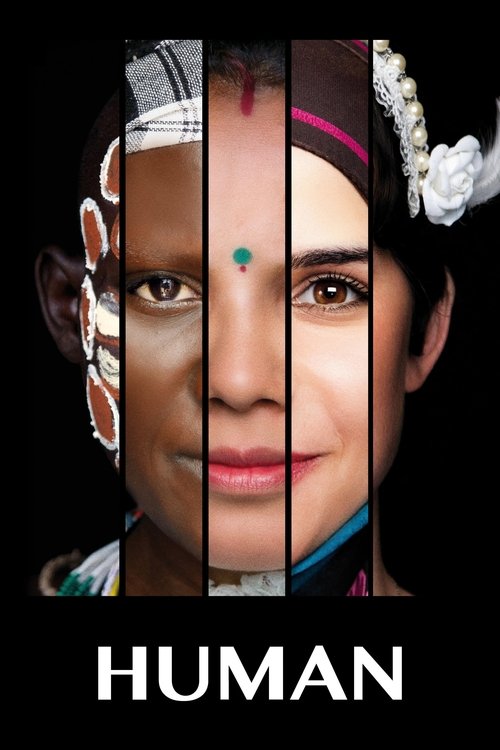
A cinematic meditation of monumental intimacy, Human balances quiet vulnerability with soaring earthscapes, reflecting humanity's collective soul as a mosaic of teardrops glistening across endless deserts.
Human

Human

12 September 2015 France 191 min 8.4 (313)

Director: Yann Arthus-Bertrand

Documentary Love, Connection, and Acceptance Violence, War, and Forgiveness Poverty, Inequality, and Human Labor Ecological Interconnection and Belonging Identity, Privilege, and the Meaning of Life
Budget: $15,483,821

Overview

Directed by renowned French photojournalist Yann Arthus-Bertrand, Human (2015) is an epic documentary project that investigates the essential question: what does it mean to be human? Rather than following a single linear protagonist or relying on voice-over narration, the film interweaves intimate first-person testimonials from over 2,000 people across 60 countries with breathtaking aerial landscape cinematography.

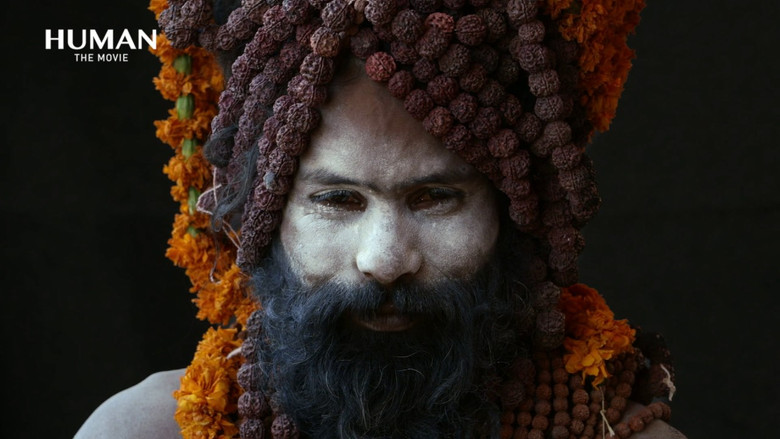
The documentary unfolds in thematic tapestries spanning three extended volumes or chapters. Testimonials are framed in close-up against uniform, dark backgrounds, stripping away geographic, class, and social signifiers to place all subjects on equal footing. Interviewees—ranging from Syrian refugees, American death row inmates, and Rwandan genocide survivors to former world leaders and subsistence farmers—share uninhibited truths about love, violence, forgiveness, poverty, migration, and the purpose of life.

Complementing these confessionals are grand, slow-motion aerial sequences set to an eclectic score composed by Armand Amar. These bird's-eye vistas capture natural landscapes, human toil, bustling megacities, and collective rituals, providing contemplative breathing space between deeply emotional personal accounts.
Core Meaning

The central thesis of Human is that emotional vulnerability and universal human feelings transcend all geographical, ideological, cultural, and socio-economic divisions. Arthus-Bertrand set out to bypass intellectual and political debate to communicate directly with the viewer's heart. The documentary argues that recognizing our shared frailty, capacity for empathy, and mutual interdependence is the only path toward collective survival and planetary harmony.

Thematic DNA

Love, Connection, and Acceptance 25%
Violence, War, and Forgiveness 25%
Poverty, Inequality, and Human Labor 20%
Ecological Interconnection and Belonging 15%
Identity, Privilege, and the Meaning of Life 15%

Love, Connection, and Acceptance

The film explores romantic devotion, maternal sacrifice, non-normative sexualities, and universal cravings for companionship as fundamental stabilizers of the human spirit.

Violence, War, and Forgiveness

Through accounts of soldiers, victims of genocide, and prisoners, the film juxtaposes humanity's capacity for cruelty against transformative acts of reconciliation and radical empathy.

Poverty, Inequality, and Human Labor

The documentary confronts systemic deprivation, economic injustice, modern slavery, and relentless physical toil, contrasting lavish privilege with the struggle for basic dignity.

Ecological Interconnection and Belonging

Reflecting Arthus-Bertrand's environmentalist ethos, the film highlights humanity's place as a fleeting yet disruptive inhabitant of the natural biosphere.

Identity, Privilege, and the Meaning of Life

Subjects from varied socioeconomic strata evaluate what constitutes a meaningful life, contrasting material wealth with spiritual and emotional fulfillment.

Character Analysis

José "Pepe" Mujica

Self (Former President of Uruguay)

Archetype: The Sage / Elder Statesman Key Trait: Profound humility and philosophic simplicity

Motivation

Imparting wisdom on escaping the trap of material hyper-consumption.

Character Arc

Reflects on spending over a decade in solitary confinement to advocate for modest living and freedom over consumerism.

Leonard Peltier

Self (Indigenous Rights Activist / Imprisoned Subject)

Archetype: The Enduring Outcast / Political Prisoner Key Trait: Unyielding resolve

Motivation

Seeking justice, spiritual resilience, and dignity in confinement.

Character Arc

Decades of incarceration have not stripped away his cultural pride or deep connection to his heritage and people.

All 4 characters and cast

Symbols & Motifs

The Black Studio Backdrop

Meaning:

This visual motif removes cultural hierarchies and wealth markers, transforming each person into an egalitarian avatar of humanity.

Context:

Every subject is filmed against an austere, featureless black background.

The Human Eye / Micro-expressions

Meaning:

Involuntary physiological responses symbolize unvarnished authenticity and the shared grammar of human emotion.

Context:

Extreme close-ups emphasize quivering lips, blinking eyes, and lingering tears.

Aerial Landscapes and Human Crowds

Meaning:

Symbolizes both humanity's collective insignificance against nature and our intricate interconnectedness.

Context:

Sweeping top-down views of vast deserts, winding rivers, agricultural terraces, and teeming crowds.

Traditional Middle Eastern and Global Choral Music

Meaning:

Symbolizes the harmonious fusion of diverse global cultures.

Context:

Armand Amar's score incorporates instruments such as the shakuhachi, duduk, and multi-ethnic chants.

Memorable Quotes

It's not the gender of the person I love that defines me; it's the quality of my loving that defines who I am.
— An Interviewee

Context

Delivered during an interview discussing romantic identity and love.

Meaning

Encapsulates the film's message that love is a fundamental human virtue beyond social categorization.

I think the only way to make people think is through emotions. Not through the brain — through the heart.
— Yann Arthus-Bertrand

Context

Director statement regarding the film's genesis and mission.

Meaning

Defines the directorial philosophy behind using unedited emotional confessionals rather than statistical arguments.

Philosophical Questions

Is true forgiveness possible after catastrophic violence, or does reconciliation demand an impossible erasure of justice?

The film explores this tension through the paired accounts of genocide victims and perpetrators who must inhabit the same spaces and achieve radical reconciliation.

Does modern material wealth enhance human liberty, or does hyper-consumerism imprison the soul?

Addressed through reflections of leaders like José Mujica and various subjects who evaluate material wealth against spiritual and emotional fulfillment.

Can universal empathy bridge geopolitical, cultural, and ideological divides without erasing cultural specificity?

Explored through the stripping away of national signifiers, testing whether raw emotion can connect viewers across vast political and cultural rifts.

Alternative Interpretations

The Universalist Humanist Perspective: The film demonstrates that underneath cultural and linguistic differences, all human beings share identical needs for love, freedom, and emotional acknowledgment.

Full ending explanation

Cultural Impact

Human debuted in late 2015 amid escalating global tensions, including the European migrant crisis, ongoing Syrian civil war, and heightened global debates over climate action ahead of COP21 in Paris.

Critics lauded the documentary as a visual triumph and a profoundly humanist document. The score by Armand Amar and the cinematographic scale received praise for evoking empathy on a global level. Some critics noted that its sheer length and rapid montage between disparate tragedies could overwhelm viewers or homogenize distinct political conflicts. Nevertheless, it remains a landmark achievement in participatory documentary filmmaking.

Audience Reception

Praised Aspects: The emotional honesty of the interviews, Armand Amar's score, the cinematography, and the egalitarian treatment of subjects without hierarchy.

Main Points of Criticism: The three-hour runtime (or 4.5 hours in the three-volume director's cut), the absence of contextual political analysis, and the emotional exhaustion induced by consecutive accounts of severe trauma.

Overall Verdict: Widely regarded as a moving and visually stunning documentary exploration of the contemporary human condition.

Interesting Facts

  • The production spanned three years, traveling to 60 countries and recording interviews with over 2,000 individuals in dozens of languages.
  • The film was produced non-commercially with funding from the Bettencourt Schueller Foundation and the GoodPlanet Foundation, ensuring it could be made available worldwide for free.
  • Human was premiered on September 12, 2015, simultaneously at the Venice Film Festival and before the United Nations General Assembly in New York.
  • All interviewees answered the same core set of 40 open-ended questions covering existential, ethical, and personal topics.
  • Google partnered with the production to release extended three-volume editions for free on YouTube across multiple languages alongside specialized virtual exhibitions on the Google Cultural Institute.
  • The director deliberately omitted name cards, ages, and country labels during the interviews to avoid triggering viewer biases.

Easter Eggs

High-Profile Cameos in Extended Cuts

While the theatrical cut focuses primarily on everyday people, the extended releases and companion archive feature interviews with prominent figures such as UN Secretary-General Ban Ki-moon, primatologist Jane Goodall, and actress Cameron Diaz.

Thematic Lineage to Home (2009)

The sweeping aerial aesthetics and ecological warnings directly reference Arthus-Bertrand's prior environmental film Home and his photography book The Earth from the Air.

Frequently Asked Questions

Explore More About This Movie

Dive deeper into specific aspects of the movie with our detailed analysis pages

Comments (0)

Leave a comment

No comments yet. Be the first to share your thoughts!

Similar Movies