Skip to content
I Swear
A raw, bittersweet biographical drama that punctures the suffocating fog of social isolation with fierce humor and deep vulnerability, framing one man's involuntary vocal outbursts as an unintentional war cry for human dignity.
I Swear

I Swear

"I blink. I twitch. I jump. I click. I whistle. I shout."

22 September 2025 United Kingdom 121 min 8.2 (461)

Director: Kirk Jones

Cast: Robert Aramayo, Maxine Peake, Peter Mullan, Shirley Henderson, Scott Ellis Watson

Drama History Neurodiversity vs. Societal Ignorance The Lifesaving Power of Found Family Resilience and Humor as Defiance Agency and Identity Beyond a Diagnosis
Budget: $3,730,000
Box Office: $15,564,404

Overview

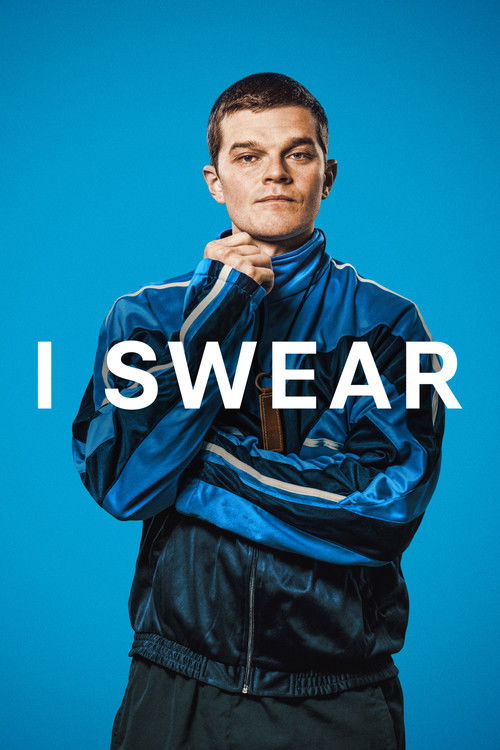
I Swear (2025), written and directed by Kirk Jones, is a British biographical comedy-drama charting the turbulent life and tireless advocacy of real-life Scottish campaigner John Davidson MBE. Growing up in Galashiels in the Scottish Borders during the early 1980s, John begins experiencing severe, unexplainable motor and vocal tics. At a time when Tourette syndrome is virtually unknown to teachers, peers, and medical practitioners alike, John is subjected to harsh disciplinary action, brutal bullying, and domestic estrangement, culminating in profound loneliness.

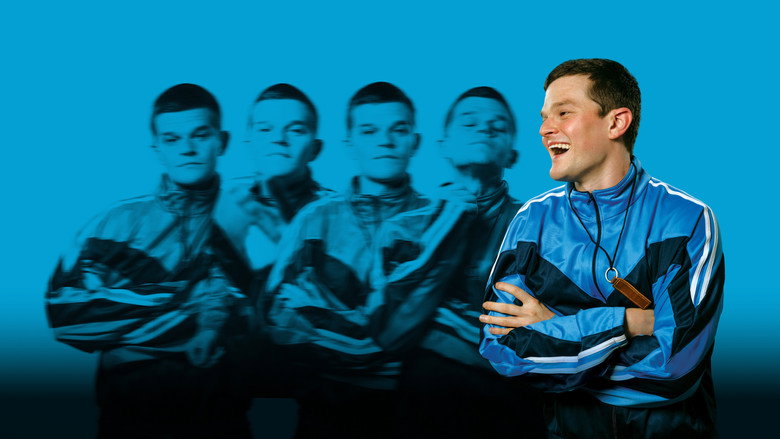
The narrative jumps forward into the 1990s as the adult John (Robert Aramayo) struggles under heavy sedation and social stigma. A serendipitous reunion with a childhood acquaintance brings John into contact with Dottie Achenbach (Maxine Peake), a retired mental health nurse facing her own terminal illness. Recognizing his humanity beneath the condition, Dottie takes John under her wing, helping him shed his numbing overmedication and integrating him into a local community centre under the guidance of Tommy (Peter Mullan).

Armed with renewed self-worth and sharp wit, John embarks on an unexpected path toward public education and activism. Balancing heartbreaking social realism with gut-busting, warm-hearted Scottish humor, I Swear highlights the burden of living with an unpredictable neurological condition while celebrating the transformative power of acceptance, friendship, and community.

Core Meaning

Director Kirk Jones uses John Davidson's life to dismantle the cultural caricature of Tourette syndrome as merely a punchline or profanity disorder. The core thesis is that the primary disability John faces is not his neurological condition, but society's intolerance and ignorance. The film argues that systemic cruelty often stems from a fear of what is not understood, and that genuine empathy requires confronting discomfort rather than demanding neurodivergent individuals hide themselves away.

Thematic DNA

Neurodiversity vs. Societal Ignorance 35%
The Lifesaving Power of Found Family 25%
Resilience and Humor as Defiance 20%
Agency and Identity Beyond a Diagnosis 20%

Neurodiversity vs. Societal Ignorance

Explores the catastrophic cost of medical and institutional ignorance in 1980s Britain, contrasting how institutions punish neurodivergent behavior with how education can bridge social divides.

The Lifesaving Power of Found Family

While John's biological family crumbles under misunderstanding, the unconventional bond formed with Dottie and Tommy demonstrates that unconditional acceptance often comes from unexpected mentors.

Resilience and Humor as Defiance

Rather than wallowing in misery, John weaponizes comedy and candid self-awareness to disarm fear and turn awkward social clashes into bridges of understanding.

Agency and Identity Beyond a Diagnosis

Highlights John's fight to be seen as an individual with passions, dreams, and flaws, rather than being reduced entirely to his tics and coprolalia.

Character Analysis

John Davidson

Robert Aramayo

Archetype: The Resilient Hero Key Trait: Unflinching honesty and infectious charisma.

Motivation

Driven by the need for dignity, self-determination, and purpose.

Character Arc

Transitions from a suicidal, chemically dulled recluse into an outspoken, charismatic national campaigner.

Young John

Scott Ellis Watson

Archetype: The Innocent Victim Key Trait: Vulnerability and bewilderment.

Motivation

Seeks understanding and relief from uncontrollable physical tics and harsh social alienation.

Character Arc

Moves from a carefree, athletic teenager to a bewildered, traumatized boy trapped in a malfunctioning body.

All 5 characters and cast

Symbols & Motifs

The Goalkeeper's Net

Meaning:

Represents John's initial sense of control and subsequent loss of bodily mastery and societal standing.

Context:

Early in the film, young John shines as a football goalkeeper—a position defined by solitary vigilance and catching what others cannot control. When his tics begin on the pitch, missing saves symbolizes his sudden loss of control over his body and societal standing.

The River / Water

Meaning:

Serves as a symbol of overwhelming despair, social suffocation, and subsequent rebirth.

Context:

Young John attempts to drown himself in cold Scottish waters under the weight of societal shame. His emergence from the water foreshadows his eventual rebirth through advocacy.

The Medicine Cabinet / Sedatives

Meaning:

Represents society's impulse to chemically suppress and hide neurodiversity rather than understand it.

Context:

Heavy psychotropic medications are prescribed to John to keep him housebound and sedated; Dottie helping him wean off them marks his reclamation of self-agency.

The Queen and Royal Formalities

Meaning:

Highlights the tension between rigid social decorum and unfiltered honesty.

Context:

Juxtaposed against elite British etiquette during the formal investiture scenes, contrasting polite social hypocrisy with involuntary coprolalic outbursts.

Car Rides

Meaning:

Represent safe, insular sanctuaries free from external judgment.

Context:

Extended vehicular scenes, such as an emotional ride sharing curses and mutual relief with a young girl with Tourette's, allow characters to exist freely without public scrutiny.

Memorable Quotes

It's like an impulse in my brain that tells me to do things or say things that I shouldn't.
— John Davidson (Robert Aramayo)

Context

Spoken as John attempts to explain his invisible daily mental battles to someone questioning why he cannot simply suppress his outbursts.

Meaning

Articulates the internal cognitive struggle of Tourette syndrome and refutes the notion that tics are simple willful disobedience.

Fuck the Queen.
— John Davidson (Robert Aramayo)

Context

Delivered during the formal ceremony scene, cutting through the high-stakes royal atmosphere.

Meaning

Encapsulates the uncontrollable nature of coprolalia in high-stakes environments where polite decorum is strictly enforced.

All 4 quotes

Philosophical Questions

What constitutes bodily and vocal autonomy?

The film examines the philosophical crisis of having conscious intent detached from involuntary motor and vocal actions, questioning what defines self-control.

Where does individual responsibility end and neurological impulse begin?

Explores society's reflexive tendency to attach moral culpability and punishment to involuntary transgressions of social decorum.

Is politeness prioritized over empathy?

Critiques how rigid social etiquette and institutional politeness are often weaponized to exclude neurodivergent individuals from public life.

Alternative Interpretations

While widely received as an inspiring triumph-of-the-human-spirit biopic, some interpretations highlight a bleaker reality: John's victory is primarily individual, leaving the systemic institutional, educational, and medical failures of the era largely unresolved.

Full ending explanation

Cultural Impact

In 1980s Britain, Tourette syndrome was heavily mischaracterized as deliberate insolence, severe attention-seeking, or psychiatric psychosis; John Davidson's advocacy helped reshape the UK's medical and cultural understanding of neurodiversity. Following its premiere at TIFF 2025 with critical acclaim, the film sparked broader discussions on disability representation. Public dialogue intensified during the 2026 awards circuit when the broadcast handling of John Davidson's audible tics at the BAFTA ceremony spurred debates regarding media accessibility and neurodivergent accommodations.

Audience Reception

I Swear garnered near-unanimous critical acclaim upon its festival debut, achieving a 100% score on Rotten Tomatoes during festival runs. Audiences and critics praised Robert Aramayo's dedicated physical performance and the grounded supporting turns from Maxine Peake and Peter Mullan. The script was lauded for crafting authentic Scottish humor without turning Tourette syndrome into a cheap comedic prop, with minor criticisms focusing solely on conventional biopic story beats and a fast-paced third-act transition.

Interesting Facts

  • Director Kirk Jones and his wife sold their home and borrowed heavily to self-finance and independently produce the film, ensuring complete creative freedom and casting autonomy.
  • John Davidson MBE served as an executive producer on the project and collaborated closely with Kirk Jones and Robert Aramayo during script development and rehearsals.
  • Kirk Jones met Robert Aramayo over Zoom and brought him directly to Galashiels to meet John Davidson, casting him without a formal script reading due to their natural rapport.
  • Robert Aramayo worked extensively with a movement coach to master the physical mechanics, respiratory spasms, and facial tics of Tourette syndrome without theatrical exaggeration.
  • The production was filmed on location in and around Galashiels and the Scottish Borders to maintain geographic and cultural authenticity.
  • Robert Aramayo won the BAFTA for Best Actor in a Leading Role, while Lauren Evans won for Best Casting.

Easter Eggs

The 1989 BBC Landmark

The storyline directly references and links to the landmark 1989 BBC Q.E.D. documentary John's Not Mad, which originally introduced teenage John Davidson to the British public.

British Social-Realism Homage

The cinematography and community framing pay explicit homage to British social-realist traditions seen in the works of Ken Loach as well as films like Billy Elliot and The Full Monty.

The Rings of Power Reunion

The co-starring dynamic between Robert Aramayo and Peter Mullan serves as an off-screen reunion for fans of The Lord of the Rings: The Rings of Power, where they portrayed Elrond and King Durin III, respectively.

Frequently Asked Questions

Explore More About This Movie

Dive deeper into specific aspects of the movie with our detailed analysis pages

Comments (0)

Leave a comment

No comments yet. Be the first to share your thoughts!

Similar Movies