
Skip to content
The Voice of Hind Rajab
A claustrophobic docudramatic vigil of unbearable heartbreak, where a fragile telephone wire stretches across darkness as the only lifeline between human solidarity and imperial slaughter.
The Voice of Hind Rajab

The Voice of Hind Rajab

صوت هند رجب

"The voices on the phone are real."

10 September 2025 France 89 min 8.0 (352)

Director: Kaouther Ben Hania

Cast: Hind Rajab, Motaz Malhees, Saja Kilani, Amer Hlehel, Clara Khoury

Drama History The Weaponization of Time and Bureaucracy Ethical Witness and the Sanctity of Memory Systemic Helplessness and Displaced Trauma The Destruction of Childhood and Innocence
Box Office: $5,058,441

Overview

Directed and written by Academy Award-nominated filmmaker Kaouther Ben Hania, The Voice of Hind Rajab is an 89-minute drama and docudrama co-produced between Tunisia and France. The film centers on the harrowing events of January 29, 2024, in the Tel al-Hawa neighborhood of Gaza City. After an evacuation order, a fleeing car carrying six members of the Hamadeh family and their young niece is caught under heavy Israeli military fire, sparking an emergency call to the Palestine Red Crescent Society (PRCS) dispatch center and initiating a desperate race against time.

The narrative unfolds primarily within the intense, confined environment of the emergency dispatch room. As dispatchers scramble to coordinate rescue efforts, they are confronted with a lethal matrix of military checkpoints, bureaucratic stalling, and blocked humanitarian corridors. To send an ambulance into an active combat zone, the medics are forced to seek pre-clearance and safe-passage permits through international intermediaries and Israeli military liaisons, losing critical minutes while a child pleads for help on an unstable telephone connection.

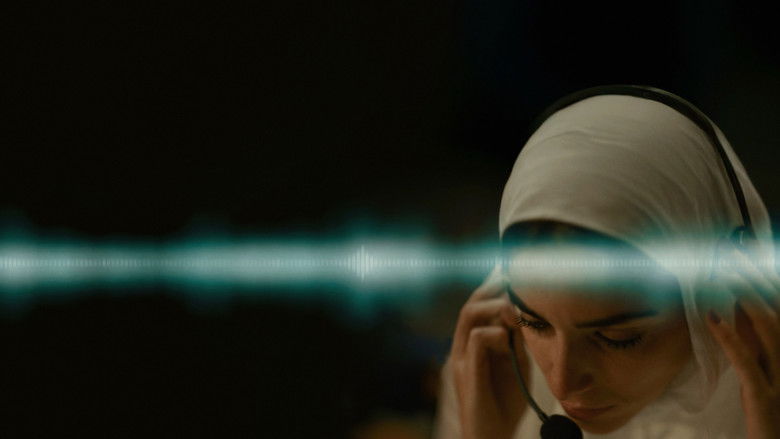
Rather than recreating violence as visual spectacle, Ben Hania constructs a hybrid cinematic work. The film uses authentic, archived audio recordings of the emergency call released by the Red Crescent, setting them against meticulous dramatic enactments of the dispatchers working the phones. The tension mounts second by second as professional duty, grief, and helplessness collide within a single room, creating an urgent, collective vigil.


Core Meaning

The core message of The Voice of Hind Rajab is that cinema must serve as an ethical instrument of witness and active listening rather than detached spectacle. Ben Hania specifically designed the film around Hind's genuine voice so that a real human life would never be reduced to an anonymous statistic, war footnote, or distant headline.

The director confronts the viewer with the weaponization of bureaucratic delay and the moral paralysis of the international community. The film insists that "the silence of the world is part of the violence" and reminds audiences that systemic complicity begins when the world chooses to look away from civilian slaughter, serving as a visceral memorial demanding accountability and empathy.

Thematic DNA

The Weaponization of Time and Bureaucracy 30%
Ethical Witness and the Sanctity of Memory 25%
Systemic Helplessness and Displaced Trauma 25%
The Destruction of Childhood and Innocence 20%

The Weaponization of Time and Bureaucracy

The film exposes how humanitarian protocols and military "coordination" act as deadly stalling mechanisms. Time is treated not merely as a dramatic device, but as ammunition: each second spent waiting for military clearance increases the fatal reality on the ground.

Ethical Witness and the Sanctity of Memory

Through hybrid documentary-fiction, the film examines the moral responsibility of listening. The act of keeping Hind on the telephone line becomes an existential struggle against erasure, asserting that her experience must be preserved.

Systemic Helplessness and Displaced Trauma

The dispatchers carry the emotional weight of listeners who can hear every breath and cry but are physically barred from intervening. The film explores the psychological toll exacted on first responders who operate under military occupation.

The Destruction of Childhood and Innocence

Through Hind's fragile childhood requests—her terror of the dark, her longing to be held, her confusion about why no one has arrived—the narrative underscores the absolute vulnerability of children trapped in modern warfare.

Character Analysis

Hind Rajab

Herself (archival audio recordings)

Archetype: The Innocent / The Voiceless Witness Key Trait: Heartbreaking childhood vulnerability and resilience

Motivation

Survival; the desire to be held, rescued, and returned to safety.

Character Arc

Transitions from initial confusion and terror after her relatives are killed beside her, to clinging to the dispatcher's soothing words, to ultimately fading in exhaustion and terror.

Omar

Motaz Malhees

Archetype: The Caregiver / The Helpless Guardian Key Trait: Empathic endurance masked beneath forced calm

Motivation

To keep the child calm and alive on the line until paramedics can physically reach her.

Character Arc

Begins with calm, standard crisis protocol before being stripped of all professional composure, grappling with panic and unmitigated grief while maintaining a steady voice for Hind.

All 5 characters and cast

Symbols & Motifs

The Telephone Wire / Headset

Meaning:

Symbolizes the frail, fragile umbilical cord connecting the trapped child to the living world, representing both human solidarity and agonizing physical separation.

Context:

Used continuously throughout the emergency calls between the dispatchers in the control room and Hind inside the car.

The Descending Darkness / Sunset

Meaning:

Serves as a metaphor for encroaching mortality and isolation, transforming the physical fall of night into an omen of dread.

Context:

Appears throughout the dispatch calls as dusk approaches and Hind repeatedly voices her deep terror of the dark.

The Coordination Map / Dispatch Monitor

Meaning:

Illustrates the surreal contrast between geographical proximity and insurmountable military blockade.

Context:

Viewed in the control room displaying the rescue ambulance only minutes away in geometric space while trapped behind military barriers.

The Number 335 (Bullet Count)

Meaning:

Symbolizes excessive, indiscriminate lethal force directed against a civilian vehicle.

Context:

Referenced in the post-investigations and epilogue examining the physical vehicle after the military withdrawal.

Memorable Quotes

تعالوا خذوني... عم بتطخوا علينا، الدبابة جنبي
— Layan Hamadeh / Hind Rajab

Context

The initial emergency cry received from the car by the dispatch center.

Meaning

Captures immediate mortal terror as tanks close in on a civilian vehicle.

الدنيا عم بتعتم وأنا خايفة من العتمة، أمانة تعالوا
— Hind Rajab

Context

Spoken hours into the emergency call as daylight fades.

Meaning

Underscores the innocence of a child whose primary fear shifts from artillery to the darkness of night.

All 5 quotes

Philosophical Questions

What is the ethical boundary of cinematic representation when portraying ongoing human devastation?

Explored through the director's decision to avoid graphic reenactments of child casualties, using raw audio and chamber drama to center witness and respect over spectacle.

Does international humanitarian law provide actual protection, or does it legitimize bureaucratic delay during war?

Explored through the depiction of the dispatch center's agonizing wait for safe-passage clearances and coordination permits while lives slip away.

What does it mean for an individual to bear witness to an atrocity they cannot stop?

Explored through the emotional fracturing of dispatchers Omar and Rana, whose professional duty forces them to listen attentively to trauma they are physically barred from halting.

Alternative Interpretations

The film invites multiple critical frameworks:

Full ending explanation

Cultural Impact

In early 2024, the emergency call of six-year-old Hind Rajab circulated globally across social media, becoming an emblem of civilian devastation in the Gaza Strip. The incident sparked international outrage and student protests worldwide, including the symbolic renaming of Columbia University's Hamilton Hall to "Hind's Hall".

Upon its festival release, the film earned widespread critical acclaim, holding a 93% critical score on Rotten Tomatoes. Distributed by Jour2Fête in Europe and Willa in the United States, it achieved strong specialized theatrical success by crossing $6 million in limited release before expanding through educational, community, and festival circuits.

Audience Reception

The film was universally commended for its restraint, its integration of real audio without resorting to exploitative melodrama, and the powerful dramatic performances of Saja Kilani and Motaz Malhees. Critics praised it as "fierce, urgent, and heart-shattering" (The Guardian) and "soul-stirring" (RogerEbert.com).

However, audiences and critics also described it as an agonizing, emotionally draining watch, with some noting that its unremitting despair offers no narrative catharsis. The premiere prompted debates regarding political cinema at international festivals, while pro-human-rights reviewers regarded the work as an indispensable document of contemporary history.

Interesting Facts

  • The production did not use a child actor to reenact Hind's dialogue in the car; director Kaouther Ben Hania used the raw, verified PRCS recordings of Hind Rajab's calls.
  • The project was produced in direct collaboration and consultation with Hind Rajab's mother, Wissam Hamada, and the Palestine Red Crescent Society.
  • The film was co-produced by Nadim Cheikhrouha alongside Oscar-winning producer Odessa Rae (Navalny) and British producer James Wilson (The Zone of Interest).
  • It premiered in the main competition of the 82nd Venice International Film Festival on September 3, 2025, receiving an extended standing ovation and the Grand Jury Prize.
  • The film was selected as Tunisia's official entry for Best International Feature Film at the Academy Awards, later advancing to the nomination list.
  • The dramatic portion was filmed predominantly as a single-location chamber drama, matching the dispatchers' exact spatial isolation and claustrophobia.
  • The production drew heavily on transcripts, GPS data, and spatial investigations conducted by international research bodies, including Forensic Architecture, regarding the location of the car and ambulance.

Easter Eggs

Real Dispatcher Cameos

In transition frames, archival photographs and silent visual inserts of the real dispatchers and paramedics appear alongside their onscreen actor counterparts.

Sound Design Echoing The Zone of Interest

With producer James Wilson on board, the film uses off-screen soundscapes—the distant rumble of tank treads, metallic clinking, and drone buzzes—to convey lethal military violence without depicting graphic gore.

Self-Referential Hybrid Form

The film mirrors the formal techniques of Kaouther Ben Hania's previous work, Four Daughters (2023), blending dramatic reconstruction and documentary realism to reflect on the nature of traumatic memory.

Frequently Asked Questions

Explore More About This Movie

Dive deeper into specific aspects of the movie with our detailed analysis pages

Comments (0)

Leave a comment

No comments yet. Be the first to share your thoughts!

Similar Movies