The narrative resolution clarifies the mystery behind Young-goon's true purpose. The grandmother's parting message, which Young-goon spent the entire film struggling to decipher from distorted memories, is revealed to be mundane yet profound: the grandmother simply intended to remind her that the purpose of existence is not predetermined by mechanical instructions, but discovered through life itself. In the climactic sequence, Young-goon and Il-soon sit together in a makeshift tent during a thunderstorm, holding a lightning rod upright into the turbulent sky to channel an electrical strike. When dawn breaks, they are miraculously unharmed, resting peacefully under a vivid rainbow. The ending purposefully blurs fantasy and reality: whether the lightning physically charged her or spared them entirely, the emotional charge has taken effect. Il-soon's acceptance of her reality has saved her life, ensuring that she eats and survives while remaining unapologetically herself.
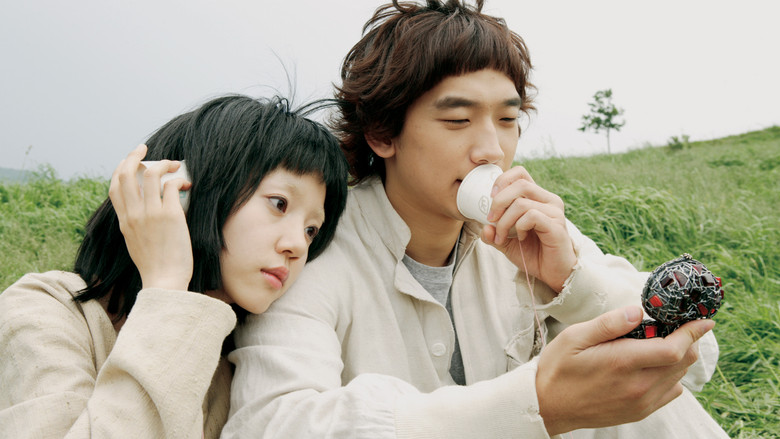
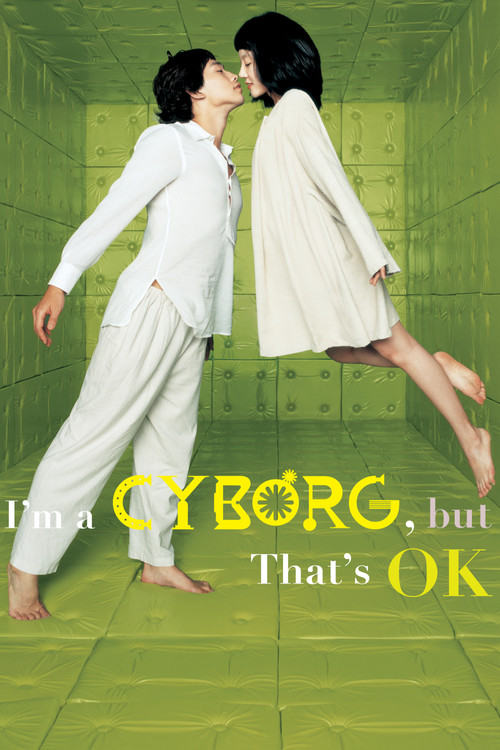
싸이보그지만 괜찮아
"She's crazy... He's crazy about her!"
Director: Park Chan-wook
Cast: Lim Soo-jung, Rain, Oh Dal-su, Lee Yeong-mi, Kim Chun-gi
I'm a Cyborg, But That's OK — Ending Explained
⚠️ Spoiler Analysis
Alternative Interpretations
While generally read as an eccentric romantic comedy about mutual healing, several critics interpret the film as a tragic allegory of terminal psychosomatic collapse. Under this darker lens, Il-soon's Rice Megatron does not represent sustainable medical recovery, but a loving hospice intervention where two patients shelter within shared psychosis because the external, capitalist society offers no real dignity or refuge. Another prominent feminist reading analyzes Young-goon's cyborg identity as a subversive strike against oppressive factory labor and patriarchal domesticity, choosing to become an unfeeling machine rather than remain an exploited body.
Explore More About This Movie
Dive deeper into specific aspects of the movie with our detailed analysis pages