The Departed
"Cops or criminals. When you’re facing a loaded gun, what’s the difference?"
Overview
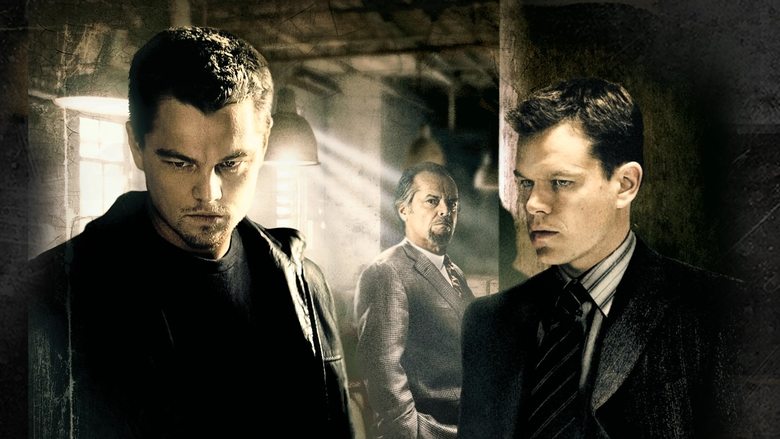
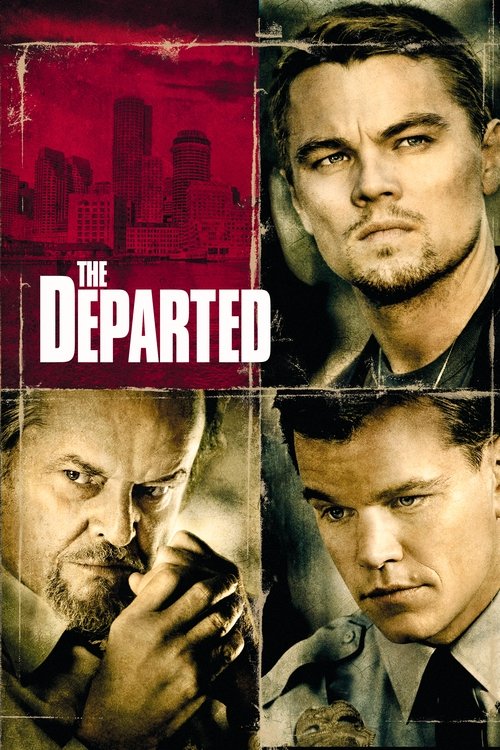
In the gritty underworld of South Boston, Irish Mob boss Frank Costello (Jack Nicholson) plants a mole, Colin Sullivan (Matt Damon), within the Massachusetts State Police. As Sullivan rises through the ranks, another young officer, Billy Costigan (Leonardo DiCaprio), is tasked with an equally dangerous mission: to go undercover and infiltrate Costello's inner circle.
Both men become consumed by their double lives, struggling to maintain their covers while gathering intelligence. The lines between right and wrong blur as they are pushed to their limits, each trying to uncover the other's identity before their own is revealed. The constant threat of exposure and the psychological toll of their deception lead to a tense and violent cat-and-mouse game where no one can be trusted.
As the stakes escalate, both the police and the mob realize they have a traitor in their midst, forcing a desperate and bloody race against time. The film explores the corrosive nature of deceit and the personal cost of living a lie in a world where betrayal is a means of survival.
Core Meaning
The core meaning of "The Departed" revolves around the malleability and ultimate erosion of identity in the face of pervasive corruption and deception. The film posits that in a morally compromised world, the distinctions between 'good' and 'evil' become dangerously blurred, and the self is a fragile construct. Director Martin Scorsese explores the psychological torment of living a double life, suggesting that such profound duplicity inevitably leads to self-destruction. The film serves as a cynical commentary on the illusion of justice and the idea that institutions, whether law enforcement or organized crime, are equally susceptible to corruption from within. Ultimately, "The Departed" is a tragic exploration of how the roles we play can consume us, leaving behind only the hollow shell of who we once were.
Thematic DNA
Identity vs. Duality
The central theme of the film is the struggle with identity as both Billy Costigan and Colin Sullivan lead double lives. Billy, the undercover cop, finds his true self eroding as he becomes more enmeshed in the criminal underworld, while Colin, the mob's mole, constructs a facade of legitimacy that he desperately tries to maintain. This duality is a source of immense psychological pressure for both characters, blurring the lines of who they are and who they are pretending to be.
Loyalty and Betrayal
Loyalty and betrayal are the driving forces of the narrative. Every major character is either betraying someone or being betrayed. Colin is loyal to Costello while betraying the police force, and Billy is loyal to the police while betraying the mob. This theme extends to personal relationships as well, creating a world where trust is a fatal liability and duplicity is a means of survival.
Corruption and Morality
The film presents a world where both the criminals and the law enforcers operate in a morally gray area. The lines between good and evil are constantly blurred, suggesting a systemic corruption that pervades all levels of society. Scorsese questions the very nature of justice in a world where the 'good guys' and 'bad guys' are often indistinguishable in their methods and motivations.
Father-Son Relationships
A recurring motif in Scorsese's work, the father-son dynamic is central to "The Departed." Frank Costello acts as a surrogate father to both Colin and, in a twisted way, Billy. He shapes Colin's life from a young age, while his presence looms large over Billy's undercover mission. This theme explores how powerful, and often corrupt, father figures can mold the identities and destinies of younger men.
Character Analysis
Billy Costigan
Leonardo DiCaprio
Motivation
Billy's primary motivation is to prove himself as a legitimate and honorable police officer, to break away from the shadow of his family's criminal past. He is driven by a desire to uphold justice, even at a great personal cost.
Character Arc
Billy begins as a troubled but ambitious police academy cadet who agrees to go undercover to escape his family's criminal reputation. As he descends deeper into Costello's world, the immense psychological strain and moral compromises take a heavy toll, leading to anxiety and a blurring of his own identity. His arc is a tragic one, as his attempts to do the right thing ultimately lead to his demise without his name ever being cleared.
Colin Sullivan
Matt Damon
Motivation
Colin is motivated by a desire for power, status, and the appearance of a perfect, legitimate life. He wants to have it all: the respectability of a high-ranking police officer and the benefits of his criminal connections.
Character Arc
Colin starts as a young boy taken under the wing of mob boss Frank Costello and is groomed to be his mole in the police force. He is ambitious and successful, but his life is built on a foundation of lies. His arc sees him become increasingly paranoid and ruthless as he tries to protect his carefully constructed identity, ultimately leading to his isolation and violent end.
Frank Costello
Jack Nicholson
Motivation
Costello is motivated by a lust for power, control, and the desire to shape his environment to his will. He enjoys the thrill of the criminal life and the manipulation of those around him, particularly the young men he takes under his wing.
Character Arc
Frank Costello is the charismatic and ruthless head of the Irish mob in Boston. He is a powerful and manipulative figure who sees himself as a kingmaker. His arc is one of an aging crime lord who, despite his cunning, becomes increasingly paranoid about a 'rat' in his organization, a paranoia that ultimately contributes to his downfall. It is also revealed that he himself is an FBI informant.
Sergeant Dignam
Mark Wahlberg
Motivation
Dignam is motivated by a strong, albeit aggressive, sense of justice and loyalty to his fellow officers, particularly Captain Queenan and Billy Costigan. He has a deep-seated hatred for corruption and those who betray the badge.
Character Arc
Dignam is an abrasive and foul-mouthed but fiercely loyal police sergeant. He is initially one of the few who knows Billy's true identity. After being forced out of the department, he disappears from the narrative, only to return at the very end to deliver his own form of justice, acting as an avenging force outside the corrupted system.
Symbols & Motifs
Rats
Rats are a blatant and recurring symbol of betrayal, duplicity, and the presence of informants within both the police force and the mob. The term 'rat' is used colloquially for a snitch, and the visual presence of rats, especially in the final shot, underscores the film's pervasive theme of corruption and untrustworthiness.
The film opens with a shot of a rat, and the final scene famously features a rat scurrying across Colin Sullivan's balcony railing, with the golden dome of the State House in the background. Frank Costello also speaks of a 'rat' in his organization, unaware that he is speaking to Billy, the actual informant.
The 'X' Motif
The letter 'X' is a recurring visual motif that foreshadows death. This is a direct homage to Howard Hawks' 1932 film "Scarface," where the 'X' was used to mark characters for death. Its presence throughout "The Departed" serves as a visual cue that a character is in mortal danger.
The 'X' appears in numerous scenes, often subtly. Examples include the cross-beam supports at the airport when Costigan is on the phone, the taped windows of the building Queenan is thrown from, and the pattern on the carpet in Sullivan's apartment building just before he is killed.
The Golden Dome of the Massachusetts State House
The golden dome symbolizes the legitimate power and ambition that Colin Sullivan craves. It represents a level of status and respectability that is in stark contrast to his corrupt and criminal allegiances. For Colin, the dome is a visual metaphor for the life he is trying to build, a life free from the underworld.
The golden dome is often seen in the background of shots featuring Colin Sullivan, most notably from the window of his apartment. The final shot of the film frames a rat on his balcony with the dome in the distance, suggesting that corruption has tainted his aspirations for legitimacy.
Memorable Quotes
I don't want to be a product of my environment. I want my environment to be a product of me.
— Frank Costello
Context:
This is part of Costello's opening voice-over narration as the film introduces the gritty world of South Boston. It sets the tone for the themes of ambition and power that run through the movie.
Meaning:
This opening line of the film encapsulates Costello's philosophy of power and control. It establishes his character as a man who refuses to be defined by his circumstances and instead seeks to dominate and shape the world around him.
When you're facing a loaded gun, what's the difference?
— Frank Costello
Context:
Costello says this to a young Colin Sullivan, illustrating his cynical worldview and beginning his process of grooming the boy to see the world through his morally flexible lens.
Meaning:
This quote highlights the film's theme of moral ambiguity. Costello suggests that in life-or-death situations, the traditional labels of 'cop' and 'criminal' become meaningless, and the lines between right and wrong are erased.
I'm the guy who does his job. You must be the other guy.
— Sergeant Dignam
Context:
Dignam delivers this line to a police technician who questions his authority. It's a memorable introduction to his character's confrontational style.
Meaning:
This line perfectly captures Dignam's abrasive personality and his contempt for incompetence. It's a blunt and humorous expression of his no-nonsense approach to police work.
We all are, act accordingly.
— Frank Costello
Context:
A man in a bar tells Costello that his mother is 'on her way out'. Costello's seemingly callous response reveals his detached and pragmatic philosophy on life and death.
Meaning:
This quote reflects a fatalistic and existential worldview. Costello acknowledges the inevitability of death and suggests that this awareness should guide one's actions, implying a life lived without fear of consequences.
Philosophical Questions
What is the nature of identity when one is forced to live a lie?
The film delves into existential questions about the self. Both Billy and Colin struggle to maintain their true identities while performing their undercover roles. The film explores how their assumed personas begin to merge with their real selves, raising the question of whether a person's identity is an inherent quality or something that is constructed and can be lost through deception.
Can true justice exist in a corrupt system?
"The Departed" presents a world where both law enforcement and organized crime are deeply corrupt. The film questions whether justice can be achieved through traditional channels when those channels are compromised. The ending, with Dignam acting as a vigilante, suggests that in such a world, justice may only be possible outside the confines of the law.
Is there an inherent difference between 'good' and 'evil'?
Through the parallel lives of Billy and Colin, the film explores the blurred lines between morality and immorality. Both characters are forced to commit acts that contradict their allegiances. The film suggests that good and evil are not absolute but are often a matter of perspective and circumstance, especially when survival is at stake.
Alternative Interpretations
One of the most discussed alternative interpretations revolves around the film's ending and the nature of justice. While Dignam's execution of Sullivan can be seen as a form of vigilante justice providing a satisfying conclusion, it can also be interpreted as a cynical statement that the only true justice comes from outside the corrupt system. This reading suggests that the institutions meant to uphold the law are ultimately ineffective.
Another interpretation concerns the final shot of the rat on Sullivan's balcony. While many see this as a heavy-handed metaphor for the pervasive corruption, others view it as a deliberately over-the-top, almost farcical, punctuation mark on the film's bleak and violent narrative, highlighting the absurdity of the characters' deadly ambitions. Additionally, the studio, Warner Bros., initially wanted a less bleak ending where one of the leads survived, in hopes of creating a franchise. Scorsese's insistence on the tragic conclusion fundamentally shaped the film's cynical and impactful message.
Cultural Impact
"The Departed" was a significant critical and commercial success, grossing over $291 million worldwide and winning four Academy Awards, including Best Picture. Its success brought mainstream attention to its source material, the Hong Kong film "Infernal Affairs." The film is often cited as one of the best of the 2000s and a high point in Martin Scorsese's celebrated career. Its complex narrative of dual identities and moral ambiguity has influenced numerous crime thrillers that followed. The film's sharp, profanity-laden dialogue has also become iconic, with many lines entering the pop culture lexicon. Furthermore, Scorsese finally winning the Best Director Oscar for this film was a major cultural moment in Hollywood, seen by many as a long-overdue recognition of his immense contribution to cinema.
Audience Reception
Audience reception for "The Departed" has been overwhelmingly positive. Viewers praised the film's intricate plot, sharp dialogue, and the stellar performances of the ensemble cast, particularly Leonardo DiCaprio, Matt Damon, Jack Nicholson, and Mark Wahlberg. The film's fast pace and shocking twists were also frequently highlighted as major strengths. Some of the main points of criticism from a minority of viewers include the film's brutal violence and the perceived heavy-handedness of the final shot of the rat, which some found to be too on-the-nose. There was also some debate among fans of the original Hong Kong film, "Infernal Affairs," about which version was superior. Overall, however, audiences embraced "The Departed" as a masterfully crafted and intense crime thriller.
Interesting Facts
- The Departed is a remake of the 2002 Hong Kong film "Infernal Affairs." Martin Scorsese has stated he did not watch the original before making his version.
- The character of Frank Costello is loosely based on the real-life Boston mob boss James 'Whitey' Bulger, who was also a secret FBI informant.
- Jack Nicholson improvised several of his scenes, including the moment where he pulls a real gun on Leonardo DiCaprio, which was not in the script.
- This was the film for which Martin Scorsese finally won the Academy Award for Best Director, after five previous nominations.
- Brad Pitt was originally slated to play Colin Sullivan but dropped out to produce the film through his company, Plan B Entertainment.
- Mark Wahlberg based his performance as the abrasive Sergeant Dignam on the police officers who had arrested him multiple times in his youth.
- Despite being set in Boston, much of the film's interior scenes were shot in New York City due to more favorable tax incentives at the time.
- Jack Nicholson, a devoted Los Angeles Lakers fan, refused to wear a Boston Red Sox cap for his character, opting for a New York Yankees cap instead.
Easter Eggs
The recurring 'X' motif.
Throughout the film, the letter 'X' appears in the frame shortly before a character's death. This is a deliberate homage by Scorsese to the 1932 film "Scarface," which used the same visual cue to foreshadow a character's demise. It serves as a subtle Easter egg for film enthusiasts.
The opera scene.
The opera Frank Costello attends is Gaetano Donizetti's "Lucia di Lammermoor." This is another nod to the original "Scarface," where the protagonist would whistle a tune from the same opera after killing someone.
⚠️ Spoiler Analysis
Click to reveal detailed analysis with spoilers
Frequently Asked Questions
Explore More About This Movie
Dive deeper into specific aspects of the movie with our detailed analysis pages
Comments (0)
No comments yet. Be the first to share your thoughts!