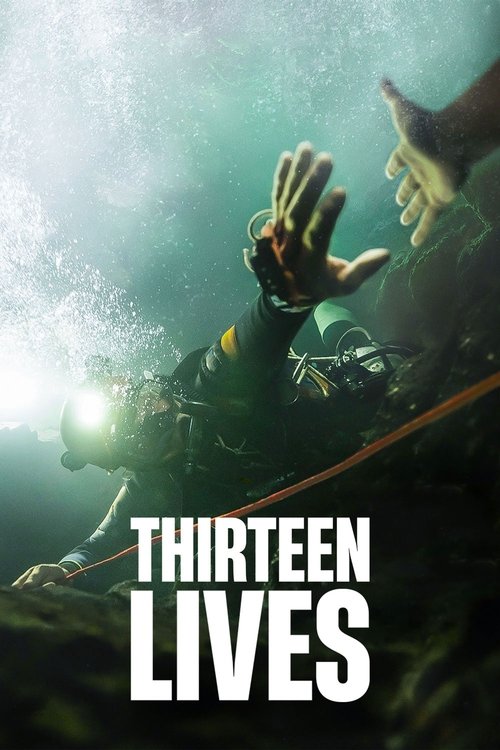
Thirteen Lives
A gripping thriller where the dark, claustrophobic embrace of a flooded cave holds the breath of the world, mirroring the flickering hope for thirteen young lives trapped within.
Thirteen Lives

Thirteen Lives

"5000 people, 17 countries, 1 miracle that united the world."

18 July 2022 United Kingdom 147 min ⭐ 7.9 (1,396)
Director: Ron Howard
Cast: Viggo Mortensen, Colin Farrell, Joel Edgerton, Tom Bateman, Paul Gleeson
Drama Thriller
Humanity's Collective Strength and International Collaboration Hope and Resilience in the Face of Despair Sacrifice and Selflessness Man vs. Nature
Budget: $55,000,000

Overview

"Thirteen Lives" recounts the harrowing true story of the 2018 Tham Luang cave rescue. When twelve boys from a junior football team and their assistant coach explore the Tham Luang cave in northern Thailand, they become trapped by a sudden and intense rainstorm that floods the cave system. What was supposed to be a short adventure after practice turns into a life-threatening ordeal as the water levels rise, cutting off their exit and leaving them deep within the mountain.

As news of the missing team spreads, a massive international rescue effort is launched. The film primarily follows a group of highly skilled and experienced British cave divers, Rick Stanton (Viggo Mortensen) and John Volanthen (Colin Farrell), who are called in to assist the Thai Navy SEALs. They, along with other international experts and thousands of volunteers, face the immense challenge of navigating the treacherous, submerged passages of the cave. The initial search is a race against time and the elements, with the hope of finding the boys alive dwindling with each passing day.

After the miraculous discovery of the boys and their coach alive on a small rock shelf miles from the entrance, the focus shifts to the seemingly impossible task of extracting them. The film meticulously details the unprecedented and ethically complex plan devised to bring the boys out, a dangerous feat that requires them to be sedated for the perilous underwater journey. "Thirteen Lives" is a testament to human ingenuity, collaboration, and the sheer will to survive against insurmountable odds.

Core Meaning

"Thirteen Lives" explores the profound power of global cooperation and selfless human spirit in the face of an impossible crisis. Director Ron Howard's message centers on the idea that unity, resilience, and shared humanity can triumph over nature's most formidable obstacles. The film deliberately avoids a 'white savior' narrative by highlighting the crucial contributions of the Thai people, from the government officials and military to the local farmers who sacrificed their crops to divert water. It's a celebration of quiet, methodical heroism, showcasing how ordinary people with extraordinary skills, when working together, can achieve the miraculous. The film posits that true heroism lies not in grand gestures, but in the painstaking, collaborative effort and the willingness to risk everything for the lives of strangers.

Thematic DNA

Humanity's Collective Strength and International Collaboration 35%
Hope and Resilience in the Face of Despair 30%
Sacrifice and Selflessness 20%
Man vs. Nature 15%

Humanity's Collective Strength and International Collaboration

The film's central theme is the remarkable power of people from different nations and backgrounds coming together for a singular, humanitarian goal. It showcases the massive, coordinated effort involving Thai authorities, British and Australian divers, American military personnel, and volunteers from across the globe. This theme is illustrated through scenes of shared problem-solving, cultural exchange, and mutual respect among the rescuers, emphasizing that such a monumental feat could not have been accomplished by any single group alone.

Hope and Resilience in the Face of Despair

"Thirteen Lives" is a powerful story of maintaining hope against overwhelming odds. This is seen in the unwavering determination of the rescuers, the prayers and vigils of the families, and the incredible resilience of the trapped boys and their coach. The coach's ability to keep the boys calm through meditation is a key aspect of this theme, highlighting mental fortitude as a vital survival tool. The film portrays hope not as a passive wish, but as an active force that fuels perseverance and ingenuity.

Sacrifice and Selflessness

The theme of sacrifice is woven throughout the narrative. It's embodied by the international divers who risk their lives in the treacherous underwater passages, and tragically, by Saman Kunan, the former Thai Navy SEAL who dies while delivering air tanks. It is also powerfully depicted through the local Thai farmers who willingly allow their fields to be flooded to divert water from the mountain, sacrificing their livelihood for the boys' survival. This underscores the idea that saving lives often requires immense personal cost.

Man vs. Nature

The film vividly portrays the raw and unforgiving power of nature. The flooded cave system is an antagonist in itself—a dark, claustrophobic, and unpredictable labyrinth. The rising monsoon waters create a constant, ticking clock, heightening the tension. The struggle is not against a villain, but against the primal forces of geology and weather, which makes the human effort to overcome it all the more compelling and audacious.

Character Analysis

Richard 'Rick' Stanton

Viggo Mortensen

Archetype: The Reluctant Hero / The Veteran Expert
Key Trait: Pragmatic

Motivation

His primary motivation is a sense of professional responsibility. As one of the few people in the world with the skills to navigate such a dangerous cave system, he feels a duty to try, even if he believes the effort is futile. This evolves into a personal mission to save the boys once he finds them alive.

Character Arc

Rick Stanton begins as a gruff, laconic, and highly specialized hobbyist who is cynical about the chances of success, even stating he didn't expect to find the boys alive. His arc is one of deepening commitment and emotional investment. While he remains pragmatic and focused on the seemingly impossible mechanics of the rescue, he slowly reveals a profound sense of duty and a grudging hope, culminating in his leadership of the dangerous extraction plan.

John Volanthen

Colin Farrell

Archetype: The Optimistic Hero / The Moral Compass
Key Trait: Compassionate

Motivation

Driven by a deep sense of empathy and a moral imperative to help, John's motivation is rooted in his role as a father and his fundamental belief in doing the right thing. He is compelled to act because he cannot stand by and do nothing while children's lives are at stake.

Character Arc

John Volanthen is presented as more of a family man and the more optimistic and outwardly compassionate of the two lead divers. His arc involves grappling with the immense moral weight of the rescue. He is the first to find the boys and offers them immediate, perhaps premature, reassurance. He champions the rescue effort with a steady determination, balancing Rick's cynicism with his own quiet faith in the possibility of success, even as he faces the ethical dilemmas of the rescue plan.

Dr. Richard 'Harry' Harris

Joel Edgerton

Archetype: The Specialist / The Ethical Guardian
Key Trait: Conscientious

Motivation

His motivation is the ethical conflict between his medical oath to "do no harm" and the stark reality that inaction will lead to certain death for the boys. He is ultimately motivated by the realization that the high-risk plan, however unethical in a normal context, is the only compassionate choice available.

Character Arc

Dr. Harris is an Australian anesthetist and cave diver who is brought in for the most critical and ethically fraught part of the mission: sedating the boys. His arc centers on overcoming his professional and ethical reservations. Initially, he calls the plan "insane" and "illegal," terrified of the consequences. He transforms from a horrified skeptic into a pivotal figure who accepts the immense responsibility, demonstrating immense courage by setting aside conventional medical protocols to give the boys their only chance of survival.

Governor Narongsak Osatanakorn

Sahajak Boonthanakit

Archetype: The Leader
Key Trait: Responsible

Motivation

His motivation is his duty to his people and his country. He is driven by a deep sense of responsibility for the thirteen lives in the cave and for managing the crisis effectively and honorably. He aims to unite the disparate rescue teams and volunteers towards a common goal, ensuring that everything possible is done.

Character Arc

Governor Narongsak is the public face of the rescue operation, tasked with managing a chaotic, multinational effort while under immense political and media pressure. His arc is about maintaining order and hope amidst chaos. He demonstrates grace under pressure, listens to the experts, and makes the brave and politically risky decision to trust the divers' unconventional plan, accepting full responsibility for any failure.

Symbols & Motifs

The Cave (Tham Luang)

Meaning:

The cave symbolizes both a tomb and a womb. Initially, it is a place of adventure that quickly becomes a near-certain tomb for the boys, representing the unforgiving power of nature and the fragility of life. However, it also becomes a space where humanity's best qualities—courage, ingenuity, and collaboration—are nurtured and ultimately triumph, leading to the boys' symbolic rebirth when they are brought back to the surface.

Context:

The cave is the central setting of the film. Its dark, flooded, and claustrophobic tunnels are depicted with harrowing realism throughout, serving as the primary obstacle for the rescuers and the prison for the thirteen boys and their coach.

The Guideline

Meaning:

The thin rope that the divers lay through the submerged tunnels symbolizes the precariousness of the rescue and the lifeline of hope. It is the only connection to the outside world and the path to safety. Losing the line means almost certain death. It represents order, planning, and the slender thread upon which the entire operation depends.

Context:

The guideline is a constant visual motif during all the underwater cave diving sequences. The divers meticulously lay it, follow it, and at times, tragically lose it, creating moments of intense suspense and demonstrating the extreme difficulty of their task.

Red Bracelets

Meaning:

The red bracelets, given by one of the boy's mothers and blessed by a monk, symbolize faith, spiritual protection, and the connection between the rescuers and the community they are serving. They represent a form of hope that transcends the technical and physical challenges of the rescue, embodying the spiritual and emotional strength of the Thai people.

Context:

Chai's mother gives the blessed bracelets to the divers, asking them to give them to the boys inside the cave. This small but significant act connects the foreign divers to the local culture and beliefs, and serves as a moment of shared humanity and trust amidst the crisis.

Memorable Quotes

You try to dive those kids the whole way, all you'd be bringing out is dead bodies.

— Rick Stanton

Context:

Spoken during an early planning session after the boys have been found alive. Stanton, with his blunt pragmatism, shuts down the idea of teaching the boys to dive, highlighting his expertise and the extreme danger of the situation.

Meaning:

This quote starkly establishes the stakes and the seemingly impossible nature of the rescue. It dismisses the conventional solution and forces the characters and the audience to confront the harsh reality that a standard rescue is not an option, paving the way for the extraordinary and risky plan that follows.

How many of you? Thirteen? Brilliant.

— John Volanthen

Context:

These are among the first words spoken to the trapped boys when John Volanthen and Rick Stanton surface in the chamber where they are stranded, miles inside the cave.

Meaning:

This is the iconic, emotionally charged moment of discovery. The word "Brilliant" is delivered with a mix of shock, relief, and the dawning realization of the enormous challenge ahead. It captures the miraculous nature of finding all thirteen alive after nine days.

It's insane. It's unethical. It's illegal... You'll kill them.

— Dr. Richard 'Harry' Harris

Context:

Dr. Harris's initial reaction upon hearing Rick Stanton's proposal to anesthetize the boys for the underwater extraction, voicing the enormous medical and moral risks involved.

Meaning:

This line encapsulates the immense ethical dilemma at the heart of the rescue plan. It highlights Dr. Harris's internal and professional conflict, as the proposed method of sedating the boys goes against every principle of his medical training. It frames the choice not as one between right and wrong, but between a terrible risk and certain death.

Fear is created in our minds.

— Coach Ekkaphon Chanthawong

Context:

The coach is explaining to the divers how he and the boys have managed to stay calm while being trapped in the darkness for so long, referencing the meditation techniques he taught them.

Meaning:

This quote reveals the source of the boys' resilience and calm. It speaks to the power of mindfulness and mental discipline, taught by their coach, as a crucial survival tool. It elevates the coach from a mere victim to a quiet hero who actively helped his team endure an unimaginable ordeal.

Philosophical Questions

What is the true definition of a 'calculated risk' when human lives are at stake?

The film delves deeply into this question through the character of Dr. Richard Harris. The plan to anesthetize the boys is, by any normal medical standard, reckless and unethical. The film forces the characters and the audience to weigh two impossible options: the near-certainty of death if they do nothing, versus the high probability of death from the rescue attempt itself. It explores the idea that in extreme circumstances, the ethical calculus must shift, and what is normally considered unacceptable can become the only moral choice. The film doesn't offer an easy answer but portrays the immense psychological burden of making such a life-or-death calculation.

Does faith, spiritual or otherwise, play a tangible role in survival?

"Thirteen Lives" juxtaposes the highly technical, scientific approach of the divers with the deep spiritual faith of the local Thai community. The film shows Buddhist monks praying, families holding vigils, and the symbolic use of blessed amulets. It also highlights the coach teaching the boys meditation to conserve energy and remain calm, a practical application of his spiritual training. The film doesn't didactically claim that faith saved the boys, but it presents it as an integral part of their resilience and the community's hope, suggesting that psychological and spiritual strength are as crucial to survival as oxygen tanks and diving gear.

Alternative Interpretations

While the film presents a fairly straightforward and factual account of the rescue, some critical interpretations have emerged. One perspective argues that despite the director's best efforts, the film still inherently centers the narrative on the white, Western divers, simply by virtue of casting well-known Hollywood actors like Viggo Mortensen and Colin Farrell in those roles. From this viewpoint, the focus on their psychological and physical journey inadvertently sidelines the equally compelling stories of the Thai Navy SEALs and other local heroes. Another interpretation focuses on the film as a critique of bureaucratic and political inertia. The initial chaos and conflicting opinions among different official bodies highlight the difficulties in mounting a swift response to an unprecedented crisis. Governor Narongsak's decision to trust the unconventional methods of the foreign hobbyist divers over more cautious, established protocols can be seen as a commentary on the need for flexible, expert-led decision-making in emergencies. The film could be read as a celebration of amateur experts whose specialized, non-institutional skills become indispensable when official systems fail.

Cultural Impact

"Thirteen Lives" serves as a powerful cinematic document of a recent historical event that captivated the globe in 2018. The film was created in the context of a world often defined by division, and its story of international unity struck a resonant chord with audiences. Director Ron Howard, known for docudramas like "Apollo 13," brought a level of realism and respect to the project, aiming to honor the real-life heroes rather than simply dramatize the events. The production was praised by critics for its sober, respectful tone and its conscious effort to avoid Hollywood tropes, particularly the 'white savior' narrative, by giving significant screen time and agency to the Thai characters and their crucial contributions. This approach was seen as a positive step in the representation of cross-cultural collaborations in mainstream cinema. The film was well-received by critics for its technical execution, particularly the claustrophobic and tense underwater cinematography, and its powerful, understated performances. While not a massive box office hit due to its limited theatrical run before streaming on Prime Video, it found a wide audience on the platform and generated renewed discussion about the incredible true story. It stands as a testament to a moment when the world came together, celebrating human ingenuity, sacrifice, and the profound will to live.

Audience Reception

Audiences generally praised "Thirteen Lives" for its gripping tension, emotional depth, and faithfulness to the true story. Many viewers found the film to be an inspiring and moving portrayal of human courage and collaboration, highlighting how it successfully created suspense despite the outcome being widely known. The performances of the cast, particularly Viggo Mortensen, Colin Farrell, and Joel Edgerton, were frequently commended for their understated and realistic portrayals of the divers. A significant point of praise was the film's authentic representation of Thai culture and the decision to include Thai actors speaking their native language, which added to the film's realism and respectfulness. The primary points of criticism from some viewers were the film's long runtime (nearly two and a half hours) and a feeling that the focus remained too heavily on the Western divers at the expense of developing the characters of the boys and their coach. Some felt that by concentrating so much on the mechanics of the rescue, the film missed opportunities for deeper emotional connection with the individuals who were trapped. Overall, however, the verdict was overwhelmingly positive, with many calling it a powerful and respectful tribute to an extraordinary real-life event.

Interesting Facts

  • The film is dedicated to Saman Kunan, a former Thai Navy SEAL who died during the rescue operation, and Beirut Pakbara, another SEAL who died later from a blood infection contracted during the rescue.
  • Viggo Mortensen, who plays Rick Stanton, insisted on performing his own diving stunts. The real-life divers were on set as technical advisors to ensure authenticity.
  • To achieve realism, the film was shot with the support of the Queensland government in Australia, with sets meticulously designed to replicate the claustrophobic conditions of the Tham Luang cave.
  • Director Ron Howard and screenwriter William Nicholson aimed for a journalistic, fact-based approach, focusing on the collaborative effort rather than creating a sensationalized Hollywood version of the events.
  • The filmmakers made a conscious effort to avoid a "white savior" narrative by prominently featuring the contributions of the Thai people, including the military, government officials, engineers, and local volunteers.
  • For authenticity, much of the dialogue spoken by the Thai characters is in their native language.
  • The real Rick Stanton noted that the biggest difference between the film and reality was the water's visibility; in the actual rescue, the divers could see almost nothing. This was changed for the film so the audience could see the action.
  • Four of the individuals rescued (three boys and the assistant coach) were stateless and were granted Thai citizenship after the ordeal.

⚠️ Spoiler Analysis

Click to reveal detailed analysis with spoilers

Frequently Asked Questions

Explore More About This Movie

Dive deeper into specific aspects of the movie with our detailed analysis pages

Comments (0)

Leave a comment

No comments yet. Be the first to share your thoughts!