Skip to content
Juvenile Justice
An unrelenting legal noir doused in cold, stark courtroom shadows, standardizing grief into righteous anger like a gavel striking unforgiving marble, forcing society to confront the fractured souls of its lost youth.
Juvenile Justice

Juvenile Justice

소년심판

"Young offenders sentenced as monsters."

25 February 2022 — 25 February 2022 South Korea 1 season 10 episode Canceled 8.1 (252)

Cast: Kim Hye-soo, Kim Moo-yul, Lee Sung-min, Lee Jung-eun, Lee Sang-hee

Drama Crime Systemic Law vs. Moral Accountability Environmental Determinism and Parental Responsibility Retribution vs. Rehabilitation The Lasting Echoes of Victimhood and Trauma Institutional Corruption and Bureaucratic Efficiency

Overview

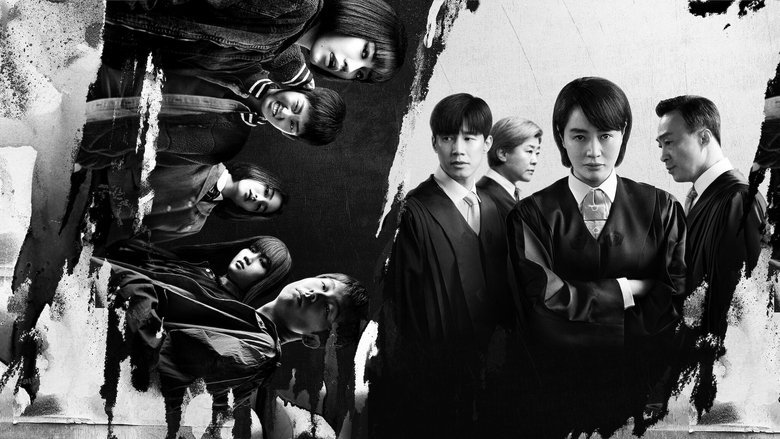
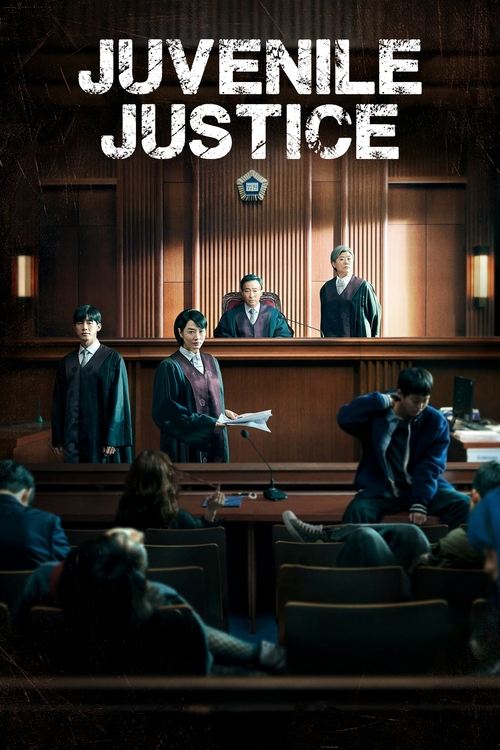
Juvenile Justice (Original Title: 소년심판 / Sonyeon Simpan) is a 2022 South Korean legal courtroom drama created by screenwriter Kim Min-seok and director Hong Jong-chan for Netflix. Set within the high-pressure environment of the Yeonhwa District Court’s Juvenile Criminal Division, the series follows Shim Eun-seok, an elite and stoic judge known for her deep-seated aversion to juvenile delinquents. Upon her transfer to the juvenile court, she challenges established judicial customs by actively investigating cases beyond the courtroom bench, pursuing maximum penalties, and refusing to let underage perpetrators exploit legal loopholes.

Throughout its 10-episode single season, the series explores the multifaceted spectrum of youth crime in South Korea—ranging from brutal homicides and domestic abuse to academic exam leaks and organized gang exploitation. Judge Shim’s harsh, uncompromising approach sharply contrasts with the philosophy of her colleague, Associate Judge Cha Tae-joo, who emphasizes rehabilitation, second chances, and empathetic guidance. As the judicial team tackles complex cases alongside Chief Judges Kang Won-joong and Na Geun-hee, the show unveils the heavy social, familial, and political machinery that shapes juvenile delinquency.


Core Meaning

The central thesis of Juvenile Justice is that juvenile crime does not occur in a moral or social vacuum. The creators convey that while underage offenders must be held strictly accountable for their choices, society, parents, and the legal system bear equal responsibility for the environment that fosters youth delinquency. The show argues that blind leniency under the guise of age-based protection breeds repeat offenders, while judicial indifference and rushed courtroom bureaucracy only create new victims. True justice requires a delicate, firm balance: imposing firm consequences so minors understand the gravity of their harm, alongside systemic adult accountability to repair broken homes and communities.

Thematic DNA

Systemic Law vs. Moral Accountability 30%
Environmental Determinism and Parental Responsibility 25%
Retribution vs. Rehabilitation 20%
The Lasting Echoes of Victimhood and Trauma 15%
Institutional Corruption and Bureaucratic Efficiency 10%

Systemic Law vs. Moral Accountability

The series heavily scrutinizes South Korea's Juvenile Act (specifically the chokbeop sonyeon provision protecting minors under 14 from criminal prosecution). It illustrates how cunning young offenders learn to game the system, treating legal protections as a shield for atrocity. The theme evolves from Judge Shim's initial rage against legal loopholes into a broader critique of how society uses statutory age limits as an excuse to avoid dealing with complex youth crime.

Environmental Determinism and Parental Responsibility

Across every case, the narrative demonstrates that troubled children are often the direct reflection of neglectful, abusive, or overly indulgent parents. From street runaways escaping domestic battery to wealthy students corrupted by parental pressure, the series shows how adult failures erode a child’s moral compass.

Retribution vs. Rehabilitation

Embodied by the ideological friction between Judge Shim Eun-seok and Judge Cha Tae-joo, this theme asks whether the primary goal of juvenile court should be punishment or salvation. Over the course of the show, both perspectives temper each other: Tae-joo learns that unchecked mercy enables recidivism, while Eun-seok demonstrates that maximum sentencing can itself be a form of tough-love rehabilitation that forces minors to face reality.

The Lasting Echoes of Victimhood and Trauma

Juvenile Justice gives voice to the often-forgotten victims of juvenile crime. It illustrates that while young perpetrators are given chances to start anew due to their age, victims and their families suffer lifelong psychological and physical scars.

Institutional Corruption and Bureaucratic Efficiency

Represented through Chief Judges Kang Won-joong and Na Geun-hee, the show highlights how judicial ambition, political aspirations, and quota-driven 'speed' in disposing of court cases degrade the quality of justice, turning courtroom decisions into mere administrative rubber stamps.

Character Analysis

Shim Eun-seok

Kim Hye-soo

Archetype: Stoic Antihero / Crusader Judge Key Trait: Relentless investigative determination and unyielding courtroom presence ("Judge Max")

Motivation

Ensuring juvenile criminals face real legal consequences so they comprehend their actions and do not create more victims.

Character Arc

Enters as a cold, seemingly heartless judge driven by hidden personal grief and an outward hatred for youth offenders. Through handling complex trials, her hostility transforms into a deeply disciplined crusade to deliver uncompromising accountability and force both parents and system administrators to take responsibility.

Cha Tae-joo

Kim Mu-yeol

Archetype: The Compassionate Idealist / Empathetic Mentor Key Trait: Deep empathy, emotional warmth, and patience

Motivation

To offer troubled youths the second chance he was once granted.

Character Arc

Having been a juvenile delinquent himself saved by a merciful judge, Tae-joo initially approaches every minor offender with unconditional sympathy and patience. As he witnesses repeat offenders exploit leniency, he adopts a more grounded perspective, realizing that boundary-setting and discipline are essential components of genuine reform.

All 4 characters and cast

Symbols & Motifs

The Courtroom Gavel

Meaning:

Symbolizes absolute legal authority and moral weight.

Context:

Judge Shim’s forceful, deliberate strikes of the gavel represent a declaration that youth does not grant immunity from justice.

The Brick

Meaning:

A recurring symbol of sudden, senseless violence and trauma.

Context:

It represents the pivotal backstory incident where a dropped brick killed Judge Shim's young son, illustrating how small, reckless actions by minors can shatter lives permanently.

Sneakers / Running Shoes

Meaning:

Associated with runaway youth gangs and shelter teens.

Context:

They symbolize children adrift in society—running away from abusive homes or running headlong into criminal networks.

The Stopwatch / Wall Clock

Meaning:

Frequently associated with Judge Na Geun-hee, who prides herself on resolving cases within minutes.

Context:

It symbolizes cold bureaucratic efficiency overriding human empathy and thorough investigation.

Physical Scars and Bruises

Meaning:

Seen on characters like Seo Yu-ri and Judge Cha Tae-joo.

Context:

They serve as visible markers of domestic violence, showing how trauma is carried physically from childhood into adulthood.

Memorable Quotes

나는 소년범을 혐오합니다.
— Judge Shim Eun-seok

Context

Season 1, Episode 1.

Meaning

Stated upon her assignment to the Yeonhwa District Court, defining her harsh posture against youth crime.

보셨죠? 만 14세 미만은 감옥 안 간다면서요? 신난다!
— Baek Seong-woo

Context

Season 1, Episode 1.

Meaning

The 13-year-old murderer laughs maniacally in court, demonstrating how minors exploit the chokbeop sonyeon age protection.

All 6 quotes

Episode Highlights

The Incheon Elementary Murder Case

S1E1

Establishes the series' dark tone. Shim Eun-seok investigates a gruesome child murder where 13-year-old Baek Seong-woo turns himself in. She uncovers that 16-year-old Han Ye-eun was the true mastermind who used Seong-woo’s age exemption under 14 to avoid criminal imprisonment.

Significance:

Sets up Judge Shim’s relentless investigative methods and establishes the central legal debate.

Domestic Violence and Youth Recovery Shelter

S1E3

Focuses on domestic abuse victim Seo Yu-ri and a youth recovery center managed by Oh Seon-ja. Reveals how institutional corruption and family abuse drive desperate youths back into crime.

Significance:

Deepens Judge Cha Tae-joo’s backstory as a survivor of domestic abuse and highlights Judge Shim’s willingness to confront abusive parents.

The Descartes High School Exam Leak Scandal

S1E5

Shifts focus to white-collar juvenile crime and class privilege. Chief Judge Kang Won-joong’s son, Kang Shin-woo, is implicated in a club buying leaked exam answers.

Significance:

Leads to Chief Judge Kang’s public downfall and resignation, demonstrating that juvenile crime cuts across all socioeconomic classes.

Unlicensed Driving & Delivery Gang Exploitation

S1E7

Involves a tragic car accident caused by Kwak Do-seok, an underage boy forced by an illegal delivery ring into joyriding and traffic offenses.

Significance:

Highlights the tragedy of youths attempting to break free from crime but being dragged down by peer pressure and adult extortion.

The Yeonhwa Gang Rape Case & Eun-seok's Finale

S1E9

The emotional and narrative climax. Eun-seok confronts ringleaders Baek Do-hyun and Hwang In-jun—the very boys who killed her 5-year-old son years ago by dropping a brick.

Significance:

Connects Judge Na’s past rushed 3-minute ruling to the ongoing cycle of violence, leading to Do-hyun being sent to adult criminal trial and Eun-seok finding closure.

Philosophical Questions

At what age does moral agency begin, and should society hold children to adult standards when they commit heinous crimes?

The series explores this question by portraying cases where youth offenders calculate their actions around statutory age limits to intentionally evade prison sentences versus cases where minors act out of lack of maturity or coercive peer environments.

Who holds primary moral responsibility for a juvenile's crime: the individual child, the parents who raised them, or the society that neglected them?

The show examines this by contrasting child offender culpability against systemic parental abuse, abandonment, and societal neglect across various socioeconomic backgrounds.

Can retributive punishment and rehabilitative mercy coexist within a single legal system, or are they fundamentally incompatible?

This is explored through the conflicting judicial philosophies of Judge Shim Eun-seok and Judge Cha Tae-joo, ultimately demonstrating that effective reform requires both stern consequences and structured support.

Does prioritizing bureaucratic speed and legal efficiency inherently erode human justice and victim rights?

The series addresses this through Chief Judge Na Geun-hee's rapid 3-minute case disposals, illustrating how administrative quotas fail to rehabilitate perpetrators and lead to escalated repeat offenses.

Alternative Interpretations

The Punitive Reading: Asserts that current juvenile protections are dangerously outdated. In this view, strict, uncompromising punishment (as delivered by Judge Shim) is the only way to establish deterrence and prevent young offenders from graduating into adult criminals.

Full ending explanation

Cultural Impact

Juvenile Justice was released during an intense national debate in South Korea surrounding chokbeop sonyeon (law-breaching minors aged 10–13 who cannot face criminal prosecution). Rising public outrage over violent youth crimes led to widespread petitions urging the South Korean Ministry of Justice to lower the criminal liability age limit from 14 to 12 or 13.

Critics praised the series for avoiding overly melodramatic solutions, presenting both punitive and rehabilitative viewpoints with nuance. The show influenced public discourse, frequently being cited in Korean media articles and political discussions on juvenile law reform.

Audience Reception

Praised Aspects: Performance of Kim Hye-soo as Judge Shim Eun-seok; Lee Yeon’s shocking portrayal of Baek Seong-woo; tight, realistic screenplay; courageous confrontation of taboo social topics.

Main Points of Criticism: Some viewers found the premise of judges personally conducting field police investigations unrealistic; others felt the later episodes leaned slightly into courtroom melodrama compared to the stark realism of the opening episodes.

Overall Verdict: Considered one of Netflix's best and most thought-provoking Korean legal dramas, holding high audience ratings globally.

Interesting Facts

  • Inspiration from Real Korean Cases: Several cases in the show are directly adapted from real-life South Korean news headlines, including the infamous 2017 Incheon Elementary School murder case and the 2018 Sookmyung Girls' High School exam leak scandal.
  • Adult Female Actress Cast as a 13-Year-Old Boy: The role of the 13-year-old male killer Baek Seong-woo in Episode 1 was played by 27-year-old female actress Lee Yeon. Her performance required vocal pitch changes and physical transformation, garnering widespread critical praise.
  • Four Years of Field Research: Screenwriter Kim Min-seok spent over four years conducting field research, interviewing juvenile court judges, probation officers, youth shelter directors, and juvenile offenders across South Korea to ensure legal accuracy.
  • Director’s Vision: Director Hong Jong-chan (who previously directed Dear My Friends) intended the show not to take a side in the legislative debate, but to spark honest conversation among adults about youth environments.
  • Baeksang Arts Award Winner: The show won Best Screenplay at the 58th Baeksang Arts Awards in 2022.
  • Netflix Cancellation: Despite reaching #1 on Netflix’s Non-English TV charts globally, Netflix officially canceled Season 2 in January 2023 during pre-production.

Easter Eggs

The Yongin Brick Incident Reference

The backstory regarding Judge Shim’s son being killed by a brick dropped from an apartment roof is a direct reference to the 2015 Yongin brick-throwing case in South Korea, where primary school children dropped bricks from a high-rise, killing a woman.

Article 32 of the Juvenile Act

Judge Shim’s hands-on investigative field habits reference Article 32 of South Korea's Juvenile Act, which authorizes judges to investigate the home, school, and social conditions of a minor to determine proper protection disposition.

Character Name Symbolism

The name "Shim Eun-seok" contains root sounds implying deep, calm stone ("Eun-seok"), reflecting her unwavering, hard-edged judicial personality.

Frequently Asked Questions

Explore More About This Movie

Dive deeper into specific aspects of the movie with our detailed analysis pages

Comments (0)

Leave a comment

No comments yet. Be the first to share your thoughts!

Similar Movies