Skip to content
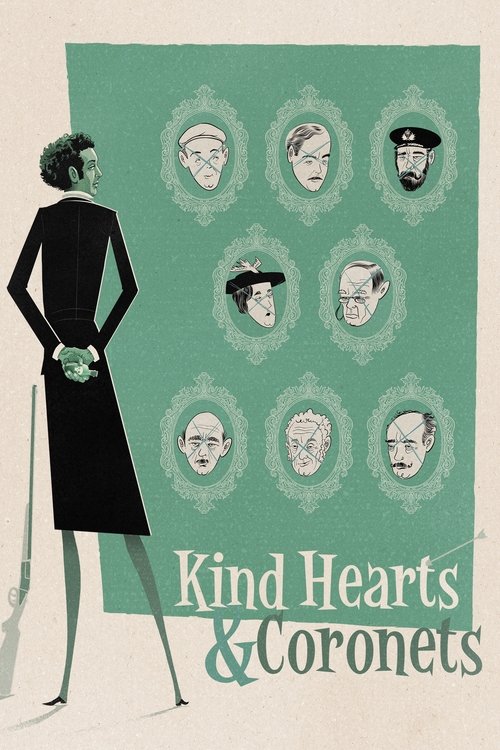
Kind Hearts and Coronets
A black comedy served in cut crystal: an elegant Edwardian murderer climbs his family tree one poisoned branch at a time, smiling politely as each coronet falls.
Kind Hearts and Coronets

"He chopped down the family tree..."

21 June 1949 United Kingdom 104 min 7.6 (592)

Director: Robert Hamer

Cast: Dennis Price, Alec Guinness, Joan Greenwood, Valerie Hobson, Audrey Fildes

Crime Comedy Class and social exclusion Revenge Satire of the aristocracy Charm, manners and moral hypocrisy Desire and ambition

Kind Hearts and Coronets — Ending Explained

⚠️ Spoiler Analysis

Louis is telling his story from a condemned cell. He has carried out his plan and killed the D'Ascoyne heirs who stood between him and the dukedom, and he has become the Duke of Chalfont. The irony is that he is sentenced to hang for the one murder he did not commit. That charge comes about through his entanglement with Sibella.

Sibella can save him, and a last-minute reversal sets him free. Then comes the twist the whole film has been building towards: in his hurry to leave, Louis realises he has left his memoirs, a full written confession, in the cell. The British version ends on that realisation, so it stays ambiguous whether he will be exposed.

The American version added a scene in which the memoirs are found. The reason was that the Production Code did not allow crime to pay. Seen afterwards, the framing device becomes the trap: Louis's vanity and his need to be admired as an artist of murder are what destroy him. His style, which carried him to the top, turns out to be his fatal flaw.

Alternative Interpretations

Class-war allegory: One reading treats the film as a symbolic end of the aristocracy. Louis, the half-outsider, wipes out a decaying elite, much as post-war Britain was sweeping away old privilege.

A critique of Louis himself: Another reading points out that Louis does not want to abolish the class system. He wants to join it. In that view, the film shows that the aristocracy rewards exactly the charm and ruthlessness Louis displays, so his rise proves the system is corrupt rather than fixing it.

The ambiguous ending: The British cut leaves open whether the forgotten memoirs will expose Louis. Some viewers see poetic justice coming. Others enjoy the thought that he might get away with it. The American version removes that doubt by showing the memoirs being found.

Explore More About This Movie

Dive deeper into specific aspects of the movie with our detailed analysis pages

Similar Movies