Skip to content
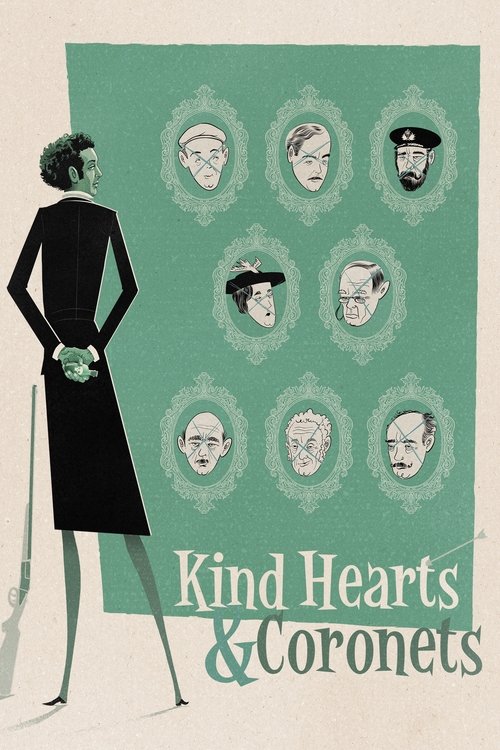
Kind Hearts and Coronets
A black comedy served in cut crystal: an elegant Edwardian murderer climbs his family tree one poisoned branch at a time, smiling politely as each coronet falls.
Kind Hearts and Coronets

Kind Hearts and Coronets

"He chopped down the family tree..."

21 June 1949 United Kingdom 104 min 7.6 (592)

Director: Robert Hamer

Cast: Dennis Price, Alec Guinness, Joan Greenwood, Valerie Hobson, Audrey Fildes

Crime Comedy Class and social exclusion Revenge Satire of the aristocracy Charm, manners and moral hypocrisy Desire and ambition

Overview

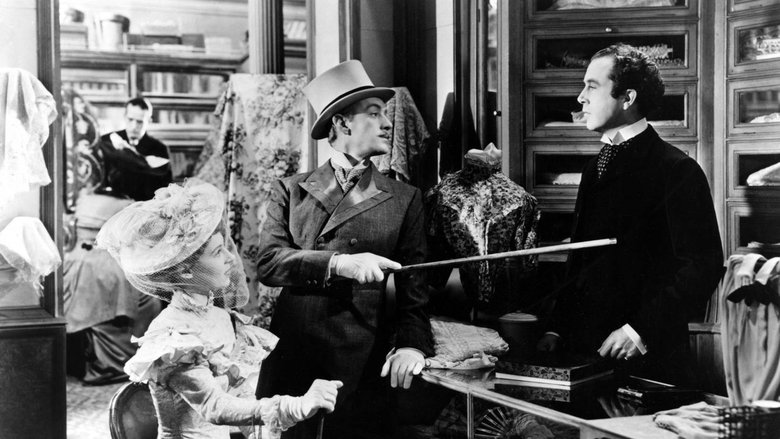
Kind Hearts and Coronets (1949) is an Ealing Studios black comedy directed by Robert Hamer. It is loosely based on Roy Horniman's 1907 novel Israel Rank: The Autobiography of a Criminal. The story follows Louis D'Ascoyne Mazzini (Dennis Price). His mother was disowned by her aristocratic family for marrying below her class, and Louis grows up on the edges of the grand dynasty that turned its back on them.

Louis tells his own story through the memoirs he writes in the calm, witty voice of a man of taste. In them he describes a cold-blooded plan: he will clear away every relative who stands between him and the dukedom of Chalfont. Those relatives are the D'Ascoyne family, and Alec Guinness famously plays eight of them, from a pompous duke to a doddering clergyman to a suffragette.

Louis's scheme gets tangled up with his love life. He is torn between the sharp, scheming Sibella (Joan Greenwood) and the virtuous Edith (Valerie Hobson). The result is a polished, dryly funny film in which murder is handled with perfect manners.
Core Meaning

At heart the film is a satire of the English class system. It shows how aristocratic power rewards charm and ruthlessness, and it treats the snobbery of an inherited elite as absurd. Critics have noted that it was made where "old" Britain met "new" Britain. The war had just ended, a socialist government had been elected, and the country was still living through austerity. Against that background, a story that kills off the D'Ascoyne line one member at a time reads as a symbol of the aristocracy's slow decline in the modern age.

Hamer also plays a moral trick on the audience. Louis tells the story with so much wit and poise that viewers end up sharing his point of view and rooting for a serial killer. That shows how easily style can hide cruelty, and how thin the line is between the "respectable" violence of class and the literal violence of murder.

Thematic DNA

Class and social exclusion 30%
Revenge 25%
Satire of the aristocracy 20%
Charm, manners and moral hypocrisy 15%
Desire and ambition 10%

Class and social exclusion

Louis's crimes begin with his mother being disowned for marrying out of her class. He and his mother are left without help at the edges of the family, and that exclusion drives the whole plot. Each murder is a way of forcing his way back into a world that shut him out.

Revenge

The story is a revenge plot built on bloodlines. Louis cites the proverb that revenge is best eaten cold, and his patience and method turn vengeance into something close to an art form.

Satire of the aristocracy

Guinness's eight D'Ascoynes are a gallery of pompous, foolish or out-of-touch aristocrats. As they die off one by one, the film suggests that the whole class is dying out.

Charm, manners and moral hypocrisy

Louis's refined narration makes murder sound well-mannered. The film shows how polish and charm can dress up ruthlessness, both in Louis and in the class he wants to join.

Desire and ambition

Louis's feelings for the scheming Sibella and the proper Edith mirror his divided goals. One stands for passion and manipulation, the other for respectability and status.

Character Analysis

Louis D'Ascoyne Mazzini

Dennis Price

Archetype: Antihero / charming villain-narrator Key Trait: Urbane, witty ruthlessness

Motivation

He wants revenge on the D'Ascoynes for how they treated his mother, and he wants the dukedom and the status that come with it.

Character Arc

Louis starts as the resentful son of a disowned mother. He becomes a methodical killer who works his way up the line of succession. His confident narration hides how fragile his position really is, and his own memoirs finally threaten to undo him.

The D'Ascoyne family (Ethelred, Lord Ascoyne, Rev. Lord Henry, General Lord Rufus, Admiral Lord Horatio, Young Ascoyne, Young Henry, Lady Agatha)

Alec Guinness

Archetype: Satirical caricatures of the aristocracy Key Trait: Eight distinct eccentricities, all played by one actor

Motivation

Mostly they are busy with their own vanities, from hobbies and pomposity to faith and causes, and they never notice the danger.

Character Arc

Each D'Ascoyne gets a short, vivid sketch before being removed from the line of succession. Together they show a whole class in decline.

All 4 characters and cast

Symbols & Motifs

The memoirs

Meaning:

They stand for Louis's vanity and self-mythologising. He cannot resist turning his crimes into literature, and that pride is what threatens him.

Context:

The whole film is framed as the memoirs Louis writes in prison, and the final twist depends on those pages.

The coronet / dukedom of Chalfont

Meaning:

It represents inherited privilege, the prize that justifies every crime in Louis's eyes.

Context:

Each killing moves Louis one step closer to the title, and the film's name sets "kind hearts" against coronets.

The D'Ascoyne family tree

Meaning:

It stands for the aristocracy as a dying line, pruned away as modern Britain takes shape.

Context:

Guinness's eight D'Ascoynes are removed one after another, and the famous shot of six of them together looks like a group portrait of a class about to disappear.

The gallows

Meaning:

It represents justice and mortality, the reckoning that Louis's elegance cannot escape.

Context:

Louis writes his story while waiting to be hanged, and he quotes Dr Johnson on how the prospect of hanging concentrates the mind.

Memorable Quotes

Revenge is a dish which people of taste prefer to eat cold.
— Louis Mazzini (narration)

Context

Louis offers it as an Italian proverb in his memoirs while explaining how he plans his campaign against the D'Ascoynes.

Meaning

This line sums up Louis's philosophy. For him, vengeance is patient and a matter of refined taste rather than passion, which fits the film's link between manners and murder.

Depend upon it, sir, when a man knows he's going to be hanged in a few hours, it concentrates his mind wonderfully.
— Louis Mazzini (quoting Dr Johnson)

Context

It comes from Louis's framing narration, written in his cell as the execution approaches.

Meaning

Louis borrows Dr Johnson's line to face his own death with literary composure. It shows his vanity and his habit of turning everything into style.

Philosophical Questions

Can a crime be justified by the injustice that caused it?

Louis's mother really was wronged by her family, and the film invites some sympathy for his grievance. But his cool, methodical killings push the viewer to separate a legitimate grievance from monstrous means.

Does style excuse substance?

Because Louis's narration is so elegant, the audience ends up on the side of a murderer. The film asks why charm and wit make us so ready to forgive.

Is inherited privilege legitimate?

The film pokes fun at the D'Ascoynes' foolishness and treats the dukedom as a prize worth killing for. That raises the question of what, if anything, justifies power that comes by birth.

How It Ends

Alternative Interpretations

Class-war allegory: One reading treats the film as a symbolic end of the aristocracy. Louis, the half-outsider, wipes out a decaying elite, much as post-war Britain was sweeping away old privilege.

Full ending explanation

Cultural Impact

The film came out in 1949, when post-war Britain was changing: the war was over, a Labour government had been elected, and austerity was still in force. It captured the tension between an old aristocratic order and a new, more egalitarian country, and it became one of the defining Ealing comedies.

Its reputation is huge. In 1999 the British Film Institute ranked it sixth in its Top 100 British films, and Time magazine named it one of the 100 best movies of all time. Alec Guinness's performance as eight D'Ascoynes became a landmark of character acting and a showcase for multi-role performances. Douglas Slocombe's matte work, which put six Guinnesses in one frame, was praised as a technical achievement.

The film's clash with the US Production Code, which forced a new ending, has become a classic example of how censorship shaped films that crossed the Atlantic.

Audience Reception

Critics received the film well when it came out in June 1949, and its standing has only grown since. Audiences today still rate it highly: it holds an 8.0 on IMDb, and Collider reports a 100% score on Rotten Tomatoes. Viewers most often praise Alec Guinness's eight performances, Dennis Price's witty narration, the sharp, epigram-filled script, and the deadpan black humour.

The criticism that does exist tends to focus on the film's cool, detached tone, which some find more amusing than laugh-out-loud funny. Its period attitudes, such as the original counting rhyme cut from the US version, also date it. The overall verdict is that it is one of the finest British comedies ever made.

Interesting Facts

  • The film is loosely based on Roy Horniman's 1907 novel 'Israel Rank: The Autobiography of a Criminal'.
  • Alec Guinness plays eight members of the D'Ascoyne family: Ethelred, Lord Ascoyne, the Rev. Lord Henry, General Lord Rufus, Admiral Lord Horatio, Young Ascoyne, Young Henry and Lady Agatha.
  • Guinness was first offered only four of the roles. He insisted on playing all eight.
  • The shot showing six D'Ascoynes together, all played by Guinness, took two days to film. The camera sat on a specially built platform, and the camera operator stayed with it overnight so nothing would move it.
  • For that shot, a frame with six black matte-painted glass windows was placed in front of the camera. Each window was opened in turn, and the film was wound back between takes. Most of the time went on waiting for Guinness to be made up as the next character.
  • US distributors required a different ending because the Production Code said crime could not be seen to pay. The American version shows the memoirs being discovered.
  • For the US release, the dialogue between Louis and Sibella was changed to play down their adultery, and derogatory lines about the parson were cut.
  • The film was released on 14 June 1949 and was well received by critics.
  • Douglas Slocombe was the cinematographer.

Easter Eggs

Louis quotes Dr Johnson about hanging

The line comes from Samuel Johnson via Boswell. It fits Louis's view of himself as a literary gentleman and neatly suits his situation in the condemned cell.

The 'Eeny, meeny, miny, moe' rhyme was altered for America

In the US version, a racial slur in the counting rhyme was replaced with the word "sailor". This shows how the film was reshaped for different censorship standards.

Jane Austen-style satire

Critics have described the film as an extension of Jane Austen's satire of the English aristocracy, taken to a murderous extreme.

Frequently Asked Questions

Explore More About This Movie

Dive deeper into specific aspects of the movie with our detailed analysis pages

Comments (0)

Leave a comment

No comments yet. Be the first to share your thoughts!

Similar Movies