Skip to content
King and the Clown
A sumptuous, suffocating period tragedy drenched in melancholic longing, where raw human dignity dances upon a razor-thin tightrope stretched between royal madness and mortal freedom.
King and the Clown

King and the Clown

왕의 남자

"Forbidden desire, sumptuous tragedy."

29 December 2005 South Korea 121 min 7.0 (121)

Director: Lee Joon-ik

Cast: Kam Woo-sung, Lee Joon-gi, Jung Jin-young, Kang Sung-yeon, Yoo Hai-jin

Drama History Thriller Artistic Freedom vs. Political Oppression Power, Complicity, and Tyranny Marginality, Haan, and Social Hierarchy Gender Transgression and Queerness Love, Sacrifice, and Possession

Overview

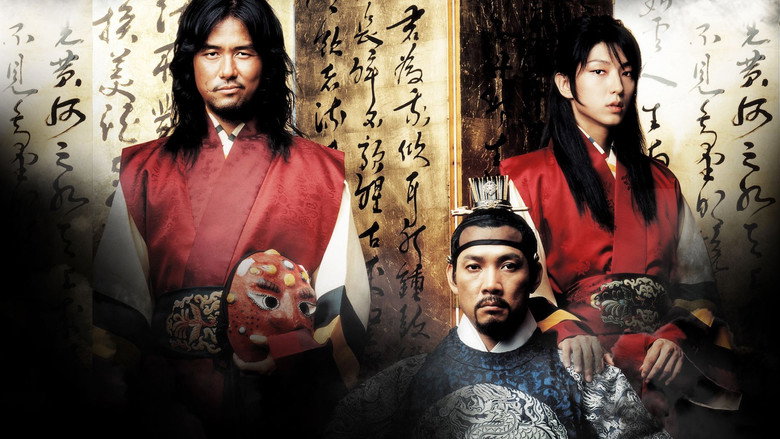
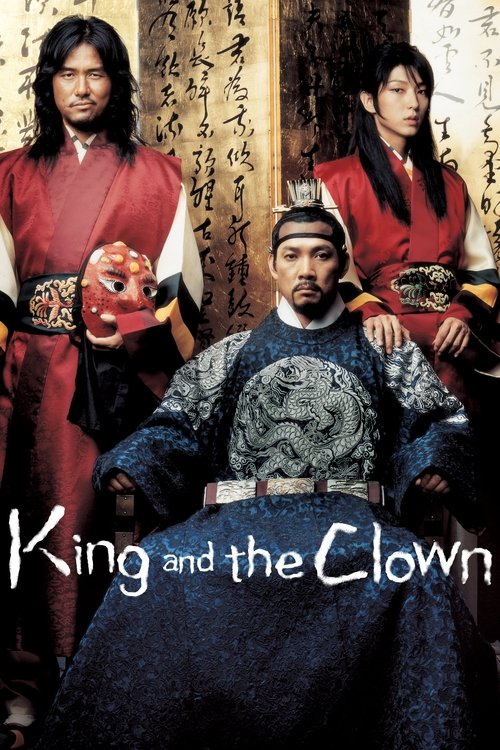
Set in early 16th-century Joseon under the volatile reign of King Yeonsan, The King and the Clown follows Jang-saeng, a fiercely independent tightrope acrobat, and Gong-gil, a delicate, androgynous performer skilled in puppetry and female impersonation. Escaping an abusive travelling circus troupe after an act of violence born of Jang-saeng's desperate desire to protect Gong-gil from wealthy exploiters, the duo arrives in the bustling capital of Hanyang. There, they team up with a trio of eccentric local acrobats to stage ribald street satires that mock court corruption, royal excess, and the King’s concubine, Jang Nok-su.

Their irreverent performances draw crowds but soon trigger their arrest for lèse-majesté. Facing execution, Jang-saeng brazenly wagers their lives: if their troupe can make the notoriously mercurial King laugh, they should be spared. When King Yeonsan watches their performance, an electric spark of theatrical improvisation by Gong-gil shatters the sovereign's solemnity. Amused and intrigued, the monarch installs the troupe in the royal palace as official court jesters, granting them status and shelter.

However, the palace quickly reveals itself to be a gilded cage far more perilous than the open road. King Yeonsan begins using the troupe’s raw street satires as a weapon to purge political rivals and unearth buried court conspiracies, while simultaneously developing an unsettling, possessive obsession with Gong-gil. Caught in a deadly crossfire between an unhinged ruler, outraged Confucian ministers, and a ruthlessly jealous royal consort, the performers find that speaking truth to power carries a harrowing cost.
Core Meaning

Director Lee Joon-ik uses the historic tyranny of King Yeonsan to explore the existential tension between art, political tyranny, and personal freedom. Through the lens of marginalized outcasts (gwangdae, traditional performers), the film delivers a searing critique of power structures: those who sit on thrones are often enslaved by trauma, paranoia, and hollow rituals, whereas the destitute fools possessing nothing are the only figures truly endowed with agency and inner liberty.

The core message asserts that genuine expression and human connection cannot survive within the parasitic architecture of absolute authority. The clowns’ plays (namsadang nori and mask dance satire) represent the primal voice of the oppressed (haan, Korean collective sorrow and unresolved grief). True nobility is defined not by crown or lineage, but by the courage to preserve one's spiritual autonomy even when the tightrope snaps.

Thematic DNA

Artistic Freedom vs. Political Oppression 30%
Power, Complicity, and Tyranny 25%
Marginality, Haan, and Social Hierarchy 20%
Gender Transgression and Queerness 15%
Love, Sacrifice, and Possession 10%

Artistic Freedom vs. Political Oppression

The film examines how the truth-telling function of theatrical satire can be manipulated and co-opted by state power. On the street, the clowns speak for the common people; in the palace, their skits are hijacked by King Yeonsan as a pretext to execute corrupt ministers and avenge his dead mother. Jang-saeng recognizes that art loses its soul when it becomes an instrument of state violence, whereas Gong-gil initially believes empathy can soften the King’s brutal reign.

Power, Complicity, and Tyranny

Rather than presenting King Yeonsan as an inexplicable monster, the film interrogates the deep psychological trauma underlying despotism. Crowned with absolute authority, Yeonsan remains an emotionally stunted child haunted by the patricidal and maternal wounds of Joseon court politics. His power grants him dominion over bodies, but renders him incapable of commanding authentic affection, driving him into violent madness.

Marginality, Haan, and Social Hierarchy

Rooted in traditional Korean performance arts (pansori, talchum, namsadang), the narrative illustrates the concept of haan—a deeply rooted Korean cultural sensibility of pent-up suffering, loss, and injustice sublimated into song, laughter, and dance. As cheonmin (the lowest hereditary caste of Joseon society), the clowns wield mockery as their only shield against dehumanization.

Gender Transgression and Queerness

Gong-gil’s androgyny disrupts traditional patriarchal dynamics both on stage and off. His soft, feminine stage persona makes him an object of desire for wealthy noblemen, the King, and the royal consort’s envy, establishing complex homoerotic and queer dimensions that subvert rigid Joseon gender roles.

Love, Sacrifice, and Possession

The film juxtaposes the King’s predatory, suffocating possessiveness against Jang-saeng’s selfless, protective devotion toward Gong-gil. The bond between the two clowns transcends simple definitions of romance or brotherhood, evolving into a sacrificial pact of spiritual mutual survival.

Character Analysis

Jang-saeng

Kam Woo-sung

Archetype: The Rebel / Protector Hero Key Trait: Fierce autonomy, moral courage, acrobatic mastery.

Motivation

To live freely with Gong-gil and perform without bowing to power.

Character Arc

Starts as a proud street acrobat guarding Gong-gil; chooses martyrdom and artistic integrity over subservience, achieving transcendence through blindness.

Gong-gil

Lee Joon-gi

Archetype: The Tragic Muse / Androgynous Innocent Key Trait: Melancholic grace, empathy, ethereal beauty (kkonminam).

Motivation

To protect Jang-saeng and find peace away from cruelty and exploitation.

Character Arc

Moves from passive victim of sexual exploitation to a royal favorite trapped in the palace, culminating in an act of suicide and defiant reunion with Jang-saeng.

All 5 characters and cast

Symbols & Motifs

The Tightrope (Jultagi)

Meaning:

The defining metaphor of the film embodying the existential precarity of the clowns' lives, walking the knife-edge between life and death, poverty and royal favor, ecstasy and annihilation. When Jang-saeng is blinded, walking the rope becomes an act of transcendent defiance where physical eyes are no longer required to balance when the spirit is free.

Context:

Used throughout the performers' acrobatic routines on the street, during the tense confrontation at the palace, and in the final climactic leap taken by Jang-saeng and Gong-gil.

The Wooden Finger Puppets

Meaning:

They symbolize innocent, sheltered communication outside social hierarchies and court terror, functioning as a private sanctuary of uncorrupted emotional dialogue.

Context:

Crafted and animated by Gong-gil in private moments shared with Jang-saeng, and later utilized during quiet, intimate exchanges between Gong-gil and the King.

Eyes and Blindness

Meaning:

Represents physical sight versus moral vision. While the King and ministers possess eyesight but remain blind to truth, decency, and human suffering, physical blinding grants metaphorical clarity and invulnerability against intimidation.

Context:

Central to Jang-saeng's punishment when his eyes are seared out with red-hot irons, leading directly to his defiant nighttime tightrope walk before the royal court.

The Clowns' Masks and Face Powder

Meaning:

Signifies protective social transcendence; masks allow the performers to transcend their social subjection and mock the ruling class without reprisal, while their removal leaves them bare and vulnerable to court retribution.

Context:

Worn during talchum and street satires, and removed during private and perilous interactions within the palace.

The Deposed Queen’s Blood-Stained Garment

Meaning:

A totem of vengeance, unresolved grief, and suppressed court trauma that catalyzes horrific bloodshed.

Context:

The physical remnant of King Yeonsan's executed mother, Queen Lady Yun, brought forth during the clowns' theatrical reenactment of the palace conspiracy.

The Fan

Meaning:

Signifies balance, wit, and performance mastery amidst chaos.

Context:

Wielded by Jang-saeng during his tightrope walks to steady his balance and punctuate jokes.

Memorable Quotes

나 여기 있고 너 거기 있지. / 나 여기 있고 너 거기 있지!
— Gong-gil and Jang-saeng

Context

Spoken by Gong-gil and Jang-saeng during their quiet finger-puppet performance.

Meaning

It encapsulates their emotional intimacy, the physical and societal distance between souls, and their unspoken vow of companionship amidst an oppressive world.

어느 잡놈이 그놈한테 눈이 멀어 광대짓을 못 보고 눈먼 놈 광대짓을 보느냐!
— Jang-saeng

Context

Delivered by the blinded Jang-saeng while walking the rope before the King and court at night.

Meaning

Mocks the King's moral blindness directly to his face, inverting physical sight and psychological corruption.

All 3 quotes

Philosophical Questions

Can art retain its integrity when patronized by power?

The narrative demonstrates that once street satire is co-opted by the royal court, it ceases to speak for the oppressed and is twisted into an instrument of state terror, surveillance, and judicial murder.

Is absolute power the ultimate form of imprisonment?

King Yeonsan exercises total dominion over his kingdom, yet remains entirely trapped by unresolved childhood trauma, severe paranoia, royal ritual, and emotional isolation.

What constitutes true sight?

Jang-saeng's blinding interrogates whether physical sight is merely an illusion that blinds humanity to moral and spiritual truth, whereas loss of eyes yields ultimate clarity and fearlessness.

Can love exist without ownership?

The film contrasts the King’s predatory obsession with caging Gong-gil against Jang-saeng’s selfless sacrifice, defining the boundary between destructive possession and unconditional devotion.

How It Ends

Alternative Interpretations

The Queer Romance & Trans-Feminine Reading: Emphasizes Gong-gil’s fluid gender presentation and views his relationship with Jang-saeng not merely as comradeship, but as a devoted romantic union forged in shared survival. In this reading, Yeonsan's obsession combines erotic desire and maternal substitution, while Gong-gil's authentic self functions as a trans-feminine identity that endures across all social settings.

Full ending explanation

Cultural Impact

The film exerted a massive influence on modern Korean popular culture by catalyzing the kkonminam ('flower boy') phenomenon. Lee Joon-gi’s delicate, androgynous appearance and eyeliner redefined standards of male beauty across East Asia, establishing aesthetic blueprints for subsequent K-pop and K-drama styling.

Moreover, it marked a historic milestone for LGBTQ+ discourse in Korean cinema, attaining historic commercial success while placing queer subtext, same-sex devotion, and non-binary gender presentation at the center of mainstream discussion. It also revolutionized the sageuk (period drama) genre, shifting narrative focus away from aristocratic power brokers toward marginalized commoners (cheonmin).

Audience Reception

The King and the Clown received overwhelming acclaim from critics and audiences alike. Critics praised the powerful performances of the cast—specifically Kam Woo-sung's grounded gravitas, Jung Jin-young's volatile portrayal of Yeonsan's madness, and Lee Joon-gi's breakout, multi-layered vulnerability. The film was lauded for seamlessly transitioning from bawdy, high-spirited folk comedy in its first half to a harrowing, emotionally resonant tragedy in its second half.

While a few traditionalist critics took issue with historical liberties regarding King Yeonsan's court life and some Western reviewers pointed to melodramatic elements in the final act, the consensus hailed it as an essential masterpiece of contemporary South Korean cinema that married independent artistic depth with unprecedented box office success.

Interesting Facts

  • The film is an adaptation of the award-winning Korean stage play Yi (이 / 爾) written by Kim Tae-woong.
  • Lee Joon-gi won the role of Gong-gil by competing against approximately 1,000 candidates and demonstrating handstands and acrobatics during his audition.
  • Produced on a modest budget of around 4.5 billion KRW (~$4.5 million USD), the film sold over 12.3 million tickets domestically, dethroning Taegukgi as South Korea's highest-grossing film of all time up to that point.
  • Lead actors Kam Woo-sung and Lee Joon-gi underwent months of rigorous training in traditional Joseon tightrope walking (jultagi) and namsadang performance arts to minimize the use of stunt doubles and CGI.
  • The film revived director Lee Joon-ik's career following earlier commercial disappointments, cementing his reputation as a master of period cinema (sageuk).
  • At the 43rd Grand Bell Awards, the film set a record by winning 10 awards, including Best Film, Best Director, Best Actor, Best Supporting Actor, and Best New Actor.
  • The film was chosen as South Korea's official submission for Best Foreign Language Film at the 79th Academy Awards in 2006.

Easter Eggs

Historical Clowns in the Annals

Unlike purely fictional period dramas, Jang-saeng and Gong-gil are derived from real brief entries in the Annals of the Joseon Dynasty (Joseon Wangjo Sillok), where a clown named Gong-gil was documented quoting the Analects of Confucius to rebuke King Yeonsan's misrule.

Play-Within-a-Play Structure

The narrative consciously mirrors the 'mousetrap' play from William Shakespeare's Hamlet, staging an artistic performance designed to catch the conscience of the monarch and expose buried royal crimes.

Eunuch Cheo-sun's Historical Martyrdom

Chief Eunuch Kim Cheo-sun was an actual Joseon official who served multiple kings and was historically executed for reprimanding King Yeonsan to his face; the film incorporates his quiet assistance to the clowns as a form of historical moral resistance.

Bawdy Folk Dialects and Street Puns

The theatrical routines integrate authentic Joseon-era vernacular puns (eunun) traditionally used to mock sexual hypocrisy and the corrupt Confucian aristocratic class (yangban).

Frequently Asked Questions

Explore More About This Movie

Dive deeper into specific aspects of the movie with our detailed analysis pages

Comments (0)

Leave a comment

No comments yet. Be the first to share your thoughts!

Similar Movies