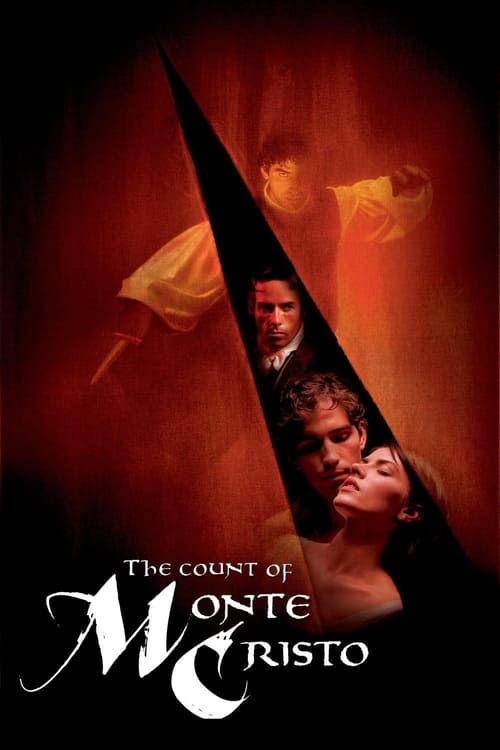
The Count of Monte Cristo
A sweeping tale of betrayal and rebirth, where a naive sailor transforms into an avenging angel. Amidst the cold stones of Château d'If and the golden opulence of Parisian society, it explores whether vengeance can truly restore what was stolen.
The Count of Monte Cristo

The Count of Monte Cristo

"Prepare for adventure. Count on revenge."

23 January 2002 Ireland 131 min ⭐ 7.7 (1,955)
Director: Kevin Reynolds
Cast: Jim Caviezel, Guy Pearce, Richard Harris, James Frain, Dagmara Dominczyk
Drama History Action Thriller Adventure
Revenge vs. Justice Transformation and Reinvention Faith and Providence Betrayal and Jealousy
Budget: $35,000,000
Box Office: $75,395,048

Overview

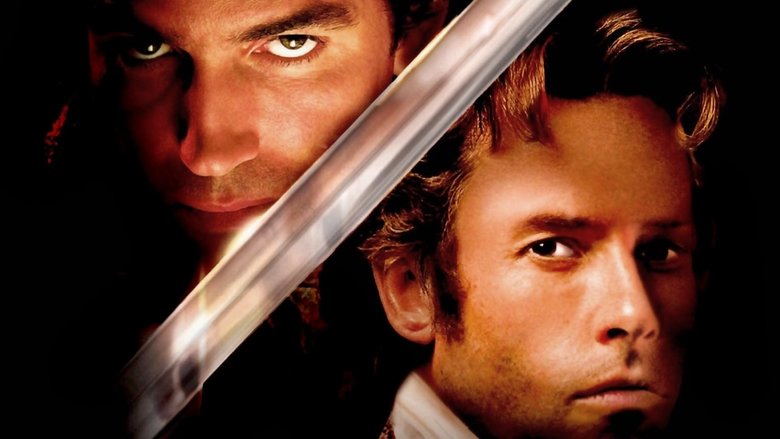
Edmond Dantès (Jim Caviezel), a young and honest sailor, is poised to marry his beloved Mercédès (Dagmara Dominczyk) when he is betrayed by his jealous best friend Fernand Mondego (Guy Pearce) and the corrupt magistrate Villefort. Falsely accused of treason, Edmond is imprisoned without trial in the grim island fortress of Château d'If. For thirteen years, he suffers in darkness until he meets the elderly Abbé Faria (Richard Harris), who educates him in swordplay, philosophy, and languages, and reveals the location of a legendary lost treasure.

After a daring escape and finding the Spada fortune, Edmond reinvents himself as the enigmatic and wealthy Count of Monte Cristo. He infiltrates the high society of Paris to systematically destroy the men who ruined his life. As his complex web of vengeance tightens, Edmond must confront the unintended consequences of his actions and decide if the pursuit of justice is worth the cost of his own soul, especially when he discovers a secret that binds him to the very people he seeks to destroy.
Core Meaning

At its heart, the film is a meditation on the corrosive nature of vengeance versus the healing power of mercy. While the director, Kevin Reynolds, delivers a swashbuckling adventure, the deeper message suggests that while revenge may be justified, it ultimately brings no peace. The film pivots on the idea that true justice is not about inflicting pain on others, but about finding the strength to move beyond the past. Abbé Faria's teaching that "God believes in you" serves as the moral compass, countering Edmond's initial nihilism with a message of hope and divine providence.

Thematic DNA

Revenge vs. Justice 40%
Transformation and Reinvention 30%
Faith and Providence 15%
Betrayal and Jealousy 15%

Revenge vs. Justice

The central conflict of the film. Edmond believes himself to be an agent of divine justice ("God's sword"), blurring the line between righteous punishment and personal vendetta. The film challenges the viewer to ask if destroying his enemies truly balances the scales or merely perpetuates the cycle of suffering.

Transformation and Reinvention

Edmond undergoes a complete metamorphosis from a naive, illiterate sailor to the sophisticated, intellectual, and ruthless Count. This theme highlights the human capacity to adapt and change, symbolized by his adoption of different personas (Zatarra, the Count) to navigate a world that previously crushed him.

Faith and Providence

Religious faith acts as both a source of despair and hope. Edmond loses his faith in prison ("I don't believe in God"), but Abbé Faria counters this by instilling the belief that God works through human actions. The film suggests that Edmond's survival and success are not just luck, but part of a larger divine plan.

Betrayal and Jealousy

The catalyst for the entire plot is the jealousy of Fernand and the ambition of Villefort. The film explores how envy (Mondego wanting Mercédès) and self-preservation (Villefort protecting his career) can lead men to commit monstrous acts against those they call friends.

Character Analysis

Edmond Dantès / The Count

Jim Caviezel

Archetype: The Byronic Hero
Key Trait: Relentless determination

Motivation

To punish those who stole his life and to regain the time and love he lost.

Character Arc

Starts as an innocent, optimistic sailor. Broken by imprisonment, he is forged into a cold, calculating instrument of vengeance. His arc concludes with a realization that love is more powerful than hate, allowing him to reclaim his humanity.

Fernand Mondego

Guy Pearce

Archetype: The Villain / The False Friend
Key Trait: Narcissistic envy

Motivation

Jealousy of Edmond and a desire to possess what he believes he deserves by birthright.

Character Arc

Driven by envy and entitlement, he betrays his best friend to steal his life. He rises to power but remains hollow and morally bankrupt. His arc ends in total ruin when his crimes are exposed and he refuses to accept defeat with honor.

Abbé Faria

Richard Harris

Archetype: The Mentor
Key Trait: Wisdom

Motivation

To pass on his knowledge and ensure his legacy survives through Edmond.

Character Arc

A wise priest imprisoned for years who mistakenly digs into Edmond's cell. He becomes a father figure, educating Edmond and giving him the tools (mental and financial) for his revenge, while trying to temper Edmond's anger with wisdom.

Mercédès Iguanada

Dagmara Dominczyk

Archetype: The Tragic Lover
Key Trait: Enduring love

Motivation

Protection of her son and lingering love for Edmond.

Character Arc

Believing Edmond dead, she marries Fernand to secure a future for her son. She lives a life of quiet desperation and regret until she recognizes Edmond. She ultimately leaves her life of unhappy luxury to start anew.

Jacopo

Luis Guzmán

Archetype: The Loyal Sidekick
Key Trait: Loyalty

Motivation

Gratitude and loyalty to the man who saved him.

Character Arc

A smuggler whose life Edmond spares. He pledges eternal loyalty and serves as Edmond's conscience, often reminding the Count of his humanity when he goes too far.

Symbols & Motifs

The Chess Piece (The King)

Meaning:

It symbolizes strategy, patience, and the idea that life is a game of "kings and pawns." It represents Edmond's transition from a pawn in others' games to the master player controlling the board.

Context:

Used throughout the film, first as a gift between Edmond and Fernand representing their friendship, and later reclaimed by Edmond to signify his victory and the end of his game of revenge.

Zatarra (Driftwood)

Meaning:

Symbolizes Edmond's state of being cast aside and floating without direction, yet resilient. It marks his phase of limbo between being Edmond Dantès and becoming the Count.

Context:

The name given to Edmond by the smuggler Luigi Vampa. Edmond embraces this identity before fully assuming the mantle of the Count.

The String on the Finger

Meaning:

A symbol of enduring love, poverty, and the original pure bond between Edmond and Mercédès, contrasting with the expensive jewelry of her later life.

Context:

Mercédès ties a string around her finger when she cannot afford a ring. She keeps this string for years, and it becomes the key proof of identity that allows her to recognize Edmond despite his disguise.

The Spada Treasure

Meaning:

Represents power and the means to rewrite history. It is the tool that converts Edmond's suffering into agency, turning a prisoner into a 'king'.

Context:

Discovered in the sea caves of Monte Cristo, the blinding gold contrasts with the dark gloom of the prison, visually marking Edmond's rebirth.

Memorable Quotes

Life is a storm, my young friend. You will bask in the sunlight one moment, be shattered on the rocks the next. What makes you a man is what you do when that storm comes.

— Edmond Dantès

Context:

Edmond says this to his son, Albert, delivering a lesson he learned through his own suffering.

Meaning:

Encapsulates the film's philosophy on resilience. It signifies that character is defined not by circumstance, but by reaction to adversity.

I'm a count, not a saint.

— The Count of Monte Cristo

Context:

Said in response to Jacopo or Mercedes questioning his ruthless methods.

Meaning:

A declaration of his new identity and moral flexibility. He acknowledges he is no longer the innocent Edmond, but a man willing to get his hands dirty for his cause.

God said, 'Vengeance is mine.'

— Abbé Faria

Context:

During a lesson in the prison cell.

Meaning:

A warning against usurping divine power. Faria tries to teach Edmond that seeking revenge is a spiritual trap.

I don't believe in God.

— Edmond Dantès

Context:

Edmond's bitter response to Faria's religious optimism.

Meaning:

Shows Edmond's total loss of hope and faith after years of solitary confinement.

It doesn't matter. He believes in you.

— Abbé Faria

Context:

Faria's immediate, profound retort to Edmond's atheism.

Meaning:

The pivotal theological statement of the film. It suggests that human worth and destiny exist independently of one's current faith or despair.

If you ever loved me, don't rob me of my hate. It's all I have.

— Edmond Dantès

Context:

Said to Mercédès when she tries to appeal to the man he used to be.

Meaning:

Highlights how hatred has become Edmond's life force and sole reason for survival. Letting go of it feels like dying.

Philosophical Questions

Does revenge ever truly satisfy?

The film explores this by showing that Edmond's satisfaction comes not from the suffering of his enemies, but from the realization that he still has a family. It suggests that revenge is a hollow pursuit that only gains meaning when abandoned for love.

Is destiny fixed or chosen?

Edmond believes he is 'God's sword,' implying a predetermined destiny. However, Faria argues for free will and the use of intellect. The film posits that while tragedy may be fated, how one responds to it—through despair or reinvention—is a choice.

Can a person truly change their nature?

Through the character of Fernand, the film suggests some are incapable of change due to inherent flaws like jealousy. Conversely, Edmond proves that trauma can fundamentally rewrite a person's identity, for better or worse.

Alternative Interpretations

While the film presents a straightforward hero's journey, some critics view Edmond's transformation as a tragedy of character. By becoming the Count, Edmond effectively kills the innocent sailor he was, becoming as manipulative as the men he hates. The 'happy ending' can be interpreted cynically: Edmond builds his new life on a foundation of lies and blood, raising the question of whether he can ever truly escape the shadow of the Count. Another reading suggests that Abbé Faria is the true hero, as his legacy of knowledge and forgiveness is the only thing that saves Edmond from becoming a monster.

Cultural Impact

The 2002 adaptation of The Count of Monte Cristo is often cited by general audiences as the definitive modern cinematic version of the story, despite its deviations from the source material. It revitalized the 'swashbuckling adventure' genre in the early 2000s, paving the way for films like Pirates of the Caribbean. While literary purists criticized the Hollywood-style 'happy ending' (reuniting Edmond and Mercédès), the film is widely praised for its pacing, score, and the chemistry between Caviezel and Pearce. It remains a popular entry point for students and viewers to discover Dumas's work, often sparking debates about the differences between 'justice' in the 19th-century novel and 'closure' in 21st-century cinema.

Audience Reception

The film holds a strong reputation among audiences, often scoring higher with viewers than critics. It is frequently praised for being an 'old-school' adventure with satisfying emotional payoffs. Praised aspects: The intense chemistry between Caviezel and Pearce, the sword-fighting choreography, the sweeping score, and the cathartic nature of the revenge plot. Criticisms: Literary purists often dislike the simplified plot and the altered ending, arguing it undermines the bittersweet poignancy of Dumas's original conclusion. Some critics found the dialogue occasionally anachronistic.

Interesting Facts

  • Henry Cavill plays Albert Mondego, Edmond's son, in one of his earliest film roles before becoming Superman.
  • Filming took place largely in Malta, with the explicit use of the Azure Window in Gozo (which has since collapsed in real life) as the location for the treasure.
  • Guy Pearce lost a significant amount of weight to appear gaunt and more snakelike for the role of Fernand.
  • Richard Harris (Abbé Faria) passed away shortly after the film's release; this was one of his final performances.
  • The Château d'If scenes were filmed at Saint Mary's Tower on the island of Comino, Malta.
  • Jim Caviezel and Guy Pearce did most of their own sword fighting, training extensively to make the final duel realistic.
  • The film significantly changes the book's ending: in the novel, Edmond and Mercédès do not end up together, and Albert is not explicitly revealed to be Edmond's son in the same way.

Easter Eggs

The name 'Zatarra'

In the film, Luigi Vampa names Edmond 'Zatarra'. He explains it means 'driftwood' in Italian. This serves as a metaphor for Edmond being lost at sea physically and metaphorically.

Chess Game motifs

The chess games between Edmond and Fernand, and later Edmond and Faria, mirror the strategic plot. The specific focus on the King piece foreshadows Edmond's rise to become the 'King' of the situation.

Edmond's Toast

When the Count toasts 'to the future,' it references his ability to finally look forward after being stuck in the past for 18 years.

⚠️ Spoiler Analysis

Click to reveal detailed analysis with spoilers

Frequently Asked Questions

Explore More About This Movie

Dive deeper into specific aspects of the movie with our detailed analysis pages

Comments (0)

Leave a comment

No comments yet. Be the first to share your thoughts!