Skip to content
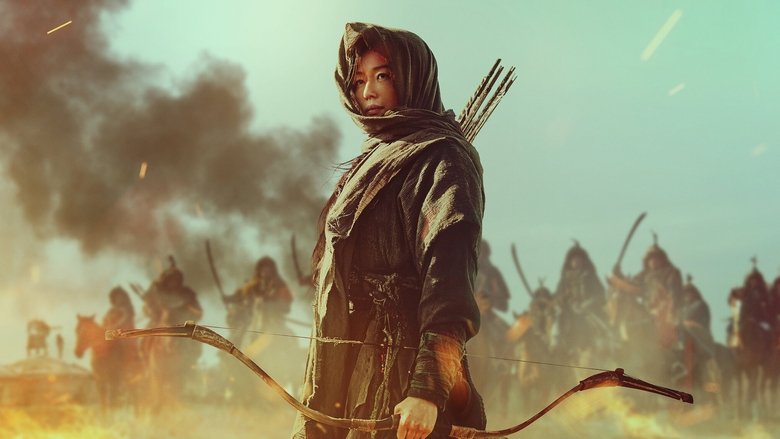
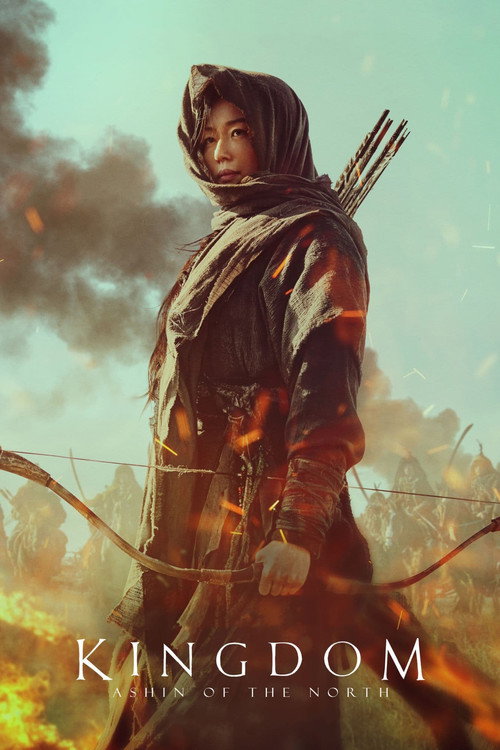
Kingdom: Ashin of the North
Amid the frozen desolation of a neglected frontier, an agonizing saga of disenfranchisement and grief unfurls like a venomous purple flower blooming in blood, casting a merciless shadow over an entire civilization.
Kingdom: Ashin of the North

Kingdom: Ashin of the North

킹덤: 아신전

"And so it begins."

23 July 2021 South Korea 92 min 7.1 (643)

Director: Kim Seong-hun

Cast: Gianna Jun, Park Byung-eun, Kim Si-a, Kim Roi-ha, Koo Kyo-hwan

Drama Fantasy Thriller The Devastation of Betrayal & Retributive Justice Systemic Oppression & Disenfranchisement Grief, Trauma, and Unresolved Han (한) The Ethical Perversion of Nature and Power

Overview

Kingdom: Ashin of the North is a feature-length special episode and prequel-sidequel to the historical zombie series Kingdom. Set along Joseon's volatile northern border near the Amnok (Yalu) River, the narrative chronicles the tragic origins of the resurrection plant (saengsacho) and introduces Ashin, a member of the Seongjeoyain—ethnic Jurchens settled in Joseon who remain marginalized outcasts belonging to neither land.

While Ashin's father, Tahab, serves as a loyal tracker and informant for Joseon military commander Min Chi-rok in hopes of gaining formal citizenship for his clan, tensions erupt when members of the fierce Jurchen Pajeowi clan are found murdered inside the forbidden royal boundary of Pyesa-gun. Desperate to cure her terminally ill mother, young Ashin wanders into the forbidden forest and discovers ancient cave murals detailing the resurrection plant.

When catastrophe strikes her settlement, leaving her family slaughtered and her village razed, a traumatized Ashin seeks refuge at the Joseon military outpost. Enduring years of indignity and subservience, she hones her lethal archery skills and vows retribution against those responsible, setting into motion an escalating spiral of historical calamity.
Core Meaning

The central message of the film is that systemic oppression, political betrayal, and the callous exploitation of marginalized people inevitably spawn monsters far more destructive than the original oppressors. Unlike the main series, which focuses on the heroic defense of the realm, this narrative adopts the perspective of the disenfranchised, revealing that the devastating plague consuming Joseon was not an arbitrary biological accident, but the calculated vengeance born of structural cruelty and administrative cynicism.

Thematic DNA

The Devastation of Betrayal & Retributive Justice 40%
Systemic Oppression & Disenfranchisement 25%
Grief, Trauma, and Unresolved Han (한) 20%
The Ethical Perversion of Nature and Power 15%

The Devastation of Betrayal & Retributive Justice

The plot reveals how Joseon leadership uses the Seongjeoyain as disposable pawns to avoid war with the Pajeowi. Once Ashin discovers her supposed protectors orchestrated the destruction of her village, her quest shifts from seeking protection into total, calculated retribution.

Systemic Oppression & Disenfranchisement

The Seongjeoyain occupy a liminal, non-citizen status—despised as traitors by the Pajeowi and treated as lower-class subhumans (baekjeong) by Joseon. Their desperate yearning for acceptance leaves them vulnerable to political exploitation and sacrifice.

Grief, Trauma, and Unresolved Han (한)

Ashin's existence is consumed by Han—the deep, unresolved grief, sorrow, and injustice born of historical trauma. Unable to process loss cleanly, she preserves her reanimated family in stasis, choosing monstrous coexistence over final separation.

The Ethical Perversion of Nature and Power

The resurrection plant disrupts the natural order of life and death. By converting natural cycles into tools of geopolitical leverage and personal malice, humanity unleashes a self-consuming plague.

Character Analysis

Adult Ashin

Gianna Jun / Jun Ji-hyun

Archetype: Tragic Antihero / Vengeful Nemesis Key Trait: Cold, ruthless precision masking bottomless psychological trauma

Motivation

To exact total retribution against both Joseon and the Pajeowi for destroying her clan, while staying united with her undead family.

Character Arc

Evolves from a loyal, long-suffering outpost servant into a cold, calculating orchestrator of mass annihilation across Joseon and Jurchen lands.

Young Ashin

Kim Si-a

Archetype: Innocent Victim / Inquiring Child Key Trait: Unwavering loyalty and emotional endurance

Motivation

Saving her dying mother and ensuring the survival and recognition of her village.

Character Arc

Shifts from a hopeful daughter searching for medicinal herbs into a shattered orphan begging the Joseon military for vengeance.

All 5 characters and cast

Symbols & Motifs

The Resurrection Plant (Saengsacho - 생사초)

Meaning:

Symbolizes false hope, deceptive salvation, and toxic consequence by reviving physical flesh while stripping away the human soul.

Context:

A delicate, luminous purple flower growing in the dark, cold caverns of the forbidden boundary Pyesa-gun.

The Bow and Arrow

Meaning:

Represents Ashin's Jurchen heritage, survival, patience, and precise, detached execution in contrast to aristocratic swords.

Context:

Used by Ashin throughout her years of silent training and during her rooftop assault on the Joseon military fortress.

The Zombie Tiger (Saengsayeok Tiger)

Meaning:

Symbolizes nature mutated, corrupted, and weaponized beyond human control, acting as an apex harbinger of the impending apocalypse.

Context:

An apex predator that consumes an infected deer in Pyesa-gun and subsequently hunts Jurchen trackers across the northern forests.

Pyesa-gun (폐사군)

Meaning:

Serves as a spatial motif for forbidden boundaries, buried state crimes, and dangerous secrets kept at the margins of empire.

Context:

A cordoned-off military zone sealed for a century where the resurrection plant grows and illegal ginseng harvesting occurs.

The Shack / Pigsty

Meaning:

Represents the subhuman degradation imposed upon marginalized outcasts and the grotesque domesticity of unresolved generational trauma.

Context:

The derelict outbuilding at the Joseon outpost where young Ashin sleeps, and where she later keeps her infected kin chained and fed.

Memorable Quotes

원수를 갚아 주십시오. 10년이든, 20년이든 기다릴 수 있습니다. 제 손으로 그들의 목을 벨 수 있게만 해 주십시오.
— Young Ashin

Context

Spoken while kneeling in the mud before Commander Min Chi-rok after discovering her entire village slaughtered.

Meaning

Demonstrates Ashin's relentless patience, establishing the ideological foundation for decades of silent servitude and training.

성저야인으로 살아가는 것은 쉬운 일이 아니다. 하지만 조선의 백성으로 인정받을 날이 올 것이다.
— Tahab

Context

Spoken to young Ashin while comforting her and explaining his dangerous espionage work for the military garrison.

Meaning

Highlights the tragic naivety, false hope, and unrequited allegiance of the marginalized Seongjeoyain clan toward Joseon.

All 5 quotes

Philosophical Questions

Can retributive justice ever be separated from self-destruction?

The narrative explores how Ashin's quest for total vengeance erodes her remaining humanity, locking her into an unending cycle of violence and isolation.

Does loyalty to a nation justify the sacrifice of human ethics?

Examined through Commander Min Chi-rok, who commits atrocities and frames innocent allies under the utilitarian rationale of preserving national stability.

What constitutes true life versus mere existence?

Ashin revives her family into ravenous undead shells, preserving physical motion while trapping them in perpetual torment and dehumanization.

Alternative Interpretations

Critical reception offers divergent interpretations of Ashin's journey:

Full ending explanation

Cultural Impact

The film explores 15th-to-16th-century Joseon border politics following the northern expansions under King Sejong, highlighting the historical stigma faced by the Seongjeoyain (城底野人) as stateless buffer populations. Reaching the #2 global ranking on Netflix upon release, it proved that Korean period horror could sustain international interest through character-driven spin-offs while subverting traditional historical dramas by exposing systemic xenophobia and class exploitation.

Audience Reception

Audience and critical reception praised the film's atmospheric cinematography, world-building, the zombie tiger set-piece, and compelling performances by Kim Si-a and Gianna Jun. Minor criticisms targeted the slow pacing of the first half, the late introduction of adult Ashin, and the uniformly grim tone lacking the palace intrigue of the main series. The dark depictions of abuse and Ashin feeding victims to her infected family were noted as polarizing, but the consensus recognized it as a powerful expansion of the Kingdom lore.

Interesting Facts

  • Netflix Korea held its first-ever all-virtual media conference using green screen technology to project key filming locations like Pyesa-gun behind the cast and crew.
  • Gianna Jun underwent rigorous archery coaching to master the swift Jurchen draw technique, performing most rooftop combat sequences without stunt doubles.
  • The zombie tiger sequence combined CGI with wire-cam systems and blue-suited stunt performers to give physical weight to the digital predator.
  • Director Kim Seong-hun and cinematographer Choi Sang-mook avoided Dutch angles and fast cuts, using extended tracking shots and low-light compositions for atmospheric dread.
  • Production filmed in remote northern pine forests and frozen reed flats in Gangwon and border provinces to contrast visually with the royal palaces of Hanyang.
  • Writer Kim Eun-hee originally drafted Ashin's backstory as a flashback arc for Season 3 before developing it into a standalone special feature.

Easter Eggs

Physician Lee's Resurrection Flower

The closing scene reveals Ashin delivering the resurrection plant to Physician Lee Seung-hui, directly initiating the events of Kingdom Season 1 where the King is revived.

Min Chi-rok's Notched Arrowheads

Young Ashin examines distinct notched arrowheads in slain Jurchen corpses—the exact signature arrows utilized by Commander Min Chi-rok's archers in Season 2.

Ankle Bells on Undead Warriors

Explains Ashin's Season 2 cliffhanger appearance by showing she uses ankle bells to corral, track, and direct infected test subjects along the frontier.

War of the Arrows Homage

The high-speed reed field chase between Jurchen trackers and the zombie tiger serves as a cinematic tribute to Kim Han-min's 2011 film War of the Arrows.

Park Chan-wook Revenge Parallel

The horrific scene where Ashin feeds human flesh to her infected kin mirrors the grim thematic dread and visceral revenge tropes of Park Chan-wook's Vengeance Trilogy.

Frequently Asked Questions

Explore More About This Movie

Dive deeper into specific aspects of the movie with our detailed analysis pages

Comments (0)

Leave a comment

No comments yet. Be the first to share your thoughts!

Similar Movies