Limelight
"The masterpiece of laughter and tears from the master of comedy!"
Overview
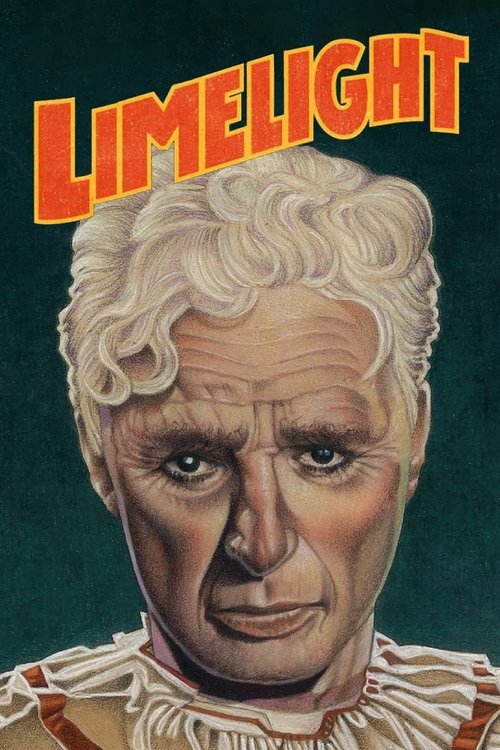
Set in London in 1914, Limelight tells the story of Calvero (Charlie Chaplin), a once-famous music hall comedian whose career is now in decline, finding solace in alcohol. His life takes an unexpected turn when he saves a young ballerina, Thereza "Terry" Ambrose (Claire Bloom), from a suicide attempt. Terry is despondent after a psychosomatic illness has left her unable to dance.
As Calvero nurses Terry back to health, he instills in her the confidence to pursue her dreams again, helping her regain her self-esteem and return to the stage. In the process of helping her, Calvero begins to regain his own self-confidence. However, as Terry's star begins to rise, Calvero's own attempts at a comeback falter, highlighting the cruel passage of time in the world of entertainment. Their relationship deepens into a complex bond of love and gratitude, forcing Calvero to make a difficult decision about their future as Terry becomes a celebrated star and he faces the twilight of his own career.
Core Meaning
Limelight is a deeply personal and autobiographical film for Charlie Chaplin, serving as a poignant reflection on the nature of fame, the passage of time, and the cycle of artistic life. The core meaning revolves around the idea that while an artist's time in the 'limelight' is fleeting, their legacy and spirit can be passed on to a new generation. It's a meditation on mortality, failure, and the redemptive power of art and human connection. The film suggests that true immortality for an artist is found not in endless applause, but in inspiring and nurturing the talent that follows. As the film's opening text states, it's about "The glamour of limelight, from which age must pass as youth enters."
Thematic DNA
The Fading of Fame and Aging
The central theme is the painful decline of an artist. Calvero, once a celebrated star, now faces empty theaters and the loss of his audience's affection. This is a deeply autobiographical reflection by Chaplin, who was experiencing his own waning popularity and facing political persecution in the U.S. at the time. The film poignantly explores the despair and loss of identity that comes when an artist can no longer connect with the public, contrasting Calvero's twilight with Terry's dawn.
Youth and Rebirth
Terry represents the ascendant youth entering the limelight. Her journey from suicidal despair and paralysis to becoming a prima ballerina is a story of rebirth. Calvero acts as her mentor, breathing life and confidence back into her. This dynamic creates a powerful juxtaposition: as one life and career fades, another blossoms, suggesting a natural and inevitable cycle. Their relationship becomes a symbiotic one where he gives her the will to live, and she gives him a final purpose.
The Nature of Art and Performance
The film is a love letter to the music hall and the world of performance Chaplin grew up in. It examines the deep, almost painful connection an artist has with their craft. Calvero expresses this conflict when he says, "I thought you hated the theater?" to which he replies, "I also hate the sight of blood, but it's in my veins." The stage is both a source of immense joy and profound sadness, a place of triumph and failure, reflecting the dual nature of an artist's life.
Sacrifice and Platonic Love
Despite Terry's desire to marry Calvero, he recognizes their age difference and believes her future lies with the young composer, Neville. He sacrifices his own happiness and emotional needs by leaving her, allowing her to find a more suitable partner. This portrays a profound, selfless love that transcends romance, focusing on mentorship and the desire for the beloved's ultimate well-being.
Character Analysis
Calvero
Charlie Chaplin
Motivation
Initially motivated by a basic human decency in saving Terry, his motivation shifts to finding meaning in his twilight years. He is driven by a deep-seated need to be an artist and to see the life and talent he fosters in Terry flourish. Ultimately, his motivation is to ensure her happiness and success, even at the cost of his own.
Character Arc
Calvero begins as a "washed-up drunk," a former star who has lost his audience and his self-confidence. By saving and mentoring Terry, he finds a renewed sense of purpose. He transitions from a state of despair to one of selfless love and dignity. Though he fails to make a permanent comeback, his final performance is a triumphant reclamation of his artistry, allowing him to die with grace, having passed his artistic spirit to the next generation.
Thereza "Terry" Ambrose
Claire Bloom
Motivation
Her initial motivation is simply to survive, spurred on by Calvero. This evolves into a powerful ambition to succeed as a dancer and a deep, loving gratitude towards Calvero, whom she wishes to marry and support. Her driving force becomes honoring the life and confidence he gave back to her.
Character Arc
Terry starts at the lowest point, attempting suicide and believing her life and career are over due to a psychosomatic paralysis. Under Calvero's care, she undergoes a complete transformation. She regains her physical strength and, more importantly, her self-esteem and will to live. She grows from a dependent, fragile girl into a confident, successful prima ballerina who, in a role reversal, tries to save Calvero in return.
Neville
Sydney Chaplin
Motivation
His motivation is his sincere and unwavering love for Terry. He wishes to support her career and build a life with her, representing the natural pairing of two young, rising artists.
Character Arc
Neville is a young, earnest composer who has been in love with Terry from afar. He represents a future of youth, stability, and conventional romance for her. His arc is simple: he remains a constant, gentle presence, eventually winning Terry's affection as Calvero steps aside.
Calvero's Partner
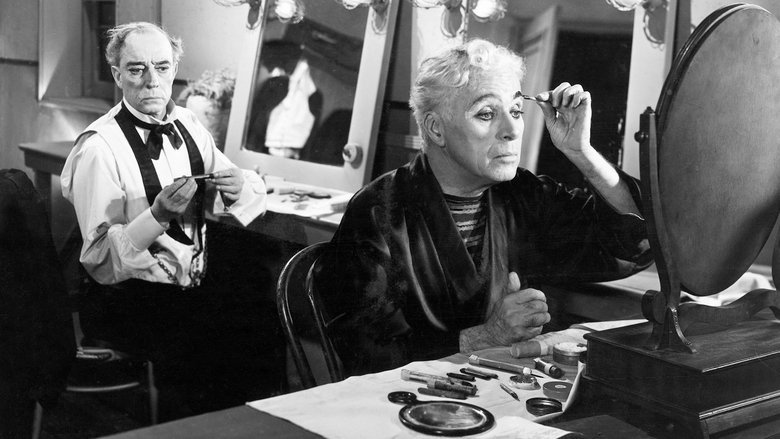
Buster Keaton
Motivation
His motivation is simply to perform alongside his old partner for the benefit concert. His purpose in the film is to create a legendary cinematic moment, uniting two of the greatest comedians of the silent era for the first and only time.
Character Arc
Keaton's character has no significant arc; he appears for the film's climactic performance. His presence is highly symbolic, representing another titan of a bygone era. He is Calvero's peer, a fellow clown who shares the stage for one last, brilliant routine.
Symbols & Motifs
The Limelight/Spotlight
The limelight symbolizes fame, public adoration, and the artist's moment of glory. It is both a warm, validating embrace and a harsh, unforgiving judge. The title itself refers to the harsh theatrical lighting used in the era, signifying the intense focus and scrutiny on a performer.
The film's narrative is structured around who is in the limelight. Calvero is fading from it, while Terry is stepping into it. The final scene crystallizes this symbolism: Calvero dies in the wings, watching Terry perform triumphantly on stage, bathed in the light that has now passed from him to her. This represents the passing of the torch from one generation to the next.
The Stage
The stage represents the entire world for Calvero. It is his home, his battleground, and the source of his identity. It is a space where illusion and reality collide, where he can be a triumphant star in his dreams but a failure in his waking life. It symbolizes both the past glory and the present pain of his career.
The film constantly cuts between Calvero's bleak reality and his dreamlike memories of triumphant performances on stage. The final, triumphant benefit concert brings him back to the stage one last time, allowing him to die in his 'home,' having reclaimed his dignity as a performer.
Terry's Paralysis
Terry's psychosomatic paralysis symbolizes a loss of will, hope, and artistic ability stemming from deep despair. It's a physical manifestation of her psychological state, her belief that she has no future and nothing to live for.
At the beginning of the film, Terry is found suicidal and unable to walk, her career as a dancer seemingly over. Calvero's mentorship and belief in her is the catalyst that allows her to overcome this paralysis, both literally and figuratively. Her ability to dance again signifies her return to life and her embrace of her artistic future.
Memorable Quotes
Life can be wonderful if you're not afraid of it. All it needs is courage, imagination ... and a little dough.
— Calvero
Context:
Calvero says this to Terry as he is trying to lift her out of her deep depression. It's a moment of mentorship where he shares his hard-won wisdom about perseverance and the power of one's own spirit to overcome adversity.
Meaning:
This line encapsulates Calvero's core philosophy, which he tries to impart to Terry. It's a statement of resilient optimism in the face of despair, suggesting that the ingredients for a good life are internal (courage, imagination) and practical (a little money), and that fear is the greatest obstacle.
Time is the best author. It always writes the perfect ending.
— Calvero
Context:
This line is spoken during one of Calvero's philosophical conversations. It foreshadows his own end, which, while sad, feels fitting and complete: he dies having achieved a final moment of glory and seeing the success of the young artist he nurtured.
Meaning:
This quote reflects a fatalistic yet accepting view of life's trajectory. It suggests that events unfold as they should and that one must trust in the passage of time to bring about the right conclusion. For Calvero, it's a way of coming to terms with his own decline and death.
That's all any of us are: amateurs. We don't live long enough to be anything else.
— Calvero
Context:
This is part of Calvero's gentle philosophizing, aimed at putting Terry's anxieties and his own failures into a broader perspective. It serves to demystify success and failure, framing life as a journey of perpetual learning rather than a destination of mastery.
Meaning:
A humble and profound observation on the human condition. Calvero suggests that life is a continuous learning process and that no one ever truly masters it. It's a statement that equalizes everyone, from the most famous star to the most obscure person, in the shared experience of navigating life's challenges.
I hate the sight of blood, but it's in my veins.
— Calvero
Context:
Terry asks Calvero why he continues with the theater when he claims to hate it. His response reveals that performing is not a choice but an intrinsic part of his identity, as essential and inescapable as the blood in his body.
Meaning:
This powerful metaphor expresses the complex, inescapable relationship an artist has with their craft and their audience. Performance is a fundamental part of Calvero's being, even if it has also been the source of pain, failure, and humiliation.
Philosophical Questions
What is the nature of an artist's legacy?
The film explores whether an artist's legacy is defined by sustained fame or by the impact they have on others. Calvero has lost his audience, a traditional measure of success. However, he achieves a different, more profound legacy by inspiring Terry and enabling her career. His final triumphant performance is for a benefit, not for personal gain, and his ultimate satisfaction comes from watching Terry succeed. The film posits that true artistic immortality lies in passing the torch and inspiring the next generation.
Can one find purpose in decline?
Limelight confronts the existential crisis of aging and losing one's primary identity. Calvero, the faded comedian, is forced to find a new reason for living when his old one is gone. He finds it not by recapturing the past, but by investing in the future through Terry. The film suggests that purpose is not static; it can be rediscovered in mentorship, sacrifice, and finding value outside of oneself, even as one's own light dims.
What is the relationship between life and art?
The film deeply probes the idea that for some, life and art are inseparable. Calvero's identity is completely tied to his role as a comedian; without it, he is lost. His statement, "I hate the sight of blood, but it's in my veins," illustrates that performance is a fundamental, inescapable part of his being. The film shows how art can be a source of profound despair when it fails, but also a source of life and rebirth, as seen when Terry's return to dancing lifts her from suicidal depression. Ultimately, Calvero's life ends as art continues, suggesting art's endurance beyond a single human life.
Alternative Interpretations
The most significant area for alternative interpretations lies in the film's autobiographical nature. While overtly a story about Calvero, many see it as Chaplin's direct commentary on his own life and career. One interpretation is that the film is a deeply melancholic self-eulogy, with Chaplin, as Calvero, mourning his own declining popularity and facing his artistic mortality. The loss of his audience was not just a plot point but a painful reality for Chaplin at the time, making the film a raw and vulnerable confession.
Another reading focuses on the relationship between Calvero and Terry. Some view it as a reflection of Chaplin's own relationships, particularly his marriage to the much younger Oona O'Neill, which was a source of scandal. In this light, the film can be seen as Chaplin's defense of May-December relationships, portraying their love as pure, platonic, and based on mutual salvation rather than romance. Calvero's ultimate sacrifice in pushing Terry towards a younger man can be interpreted as Chaplin's artistic justification and romantic idealization of his own life choices.
Finally, the ending can be interpreted not just as the death of a man, but as the symbolic death of an era. Calvero's passing while watching the new star, Terry, dance represents the end of the vaudeville and silent film era, giving way to a new form of entertainment and a new generation of stars. It is Chaplin's solemn but accepting acknowledgment that his time, and the world he knew, has passed.
Cultural Impact
Limelight's creation and release were deeply enmeshed in the political turmoil of the Cold War and McCarthyism. Accused of being a communist sympathizer, Chaplin became a target of the House Un-American Activities Committee and the right-wing press. This political climate led to the film being heavily boycotted in the United States, with many theaters refusing to show it. While Chaplin was traveling to London for the film's premiere, his U.S. re-entry permit was revoked, forcing him into a 20-year exile.
Despite its commercial failure in the U.S. upon initial release, the film was enormously successful in Europe and Japan. Over time, its reputation has grown immensely, and it is now regarded by many critics as one of Chaplin's masterpieces—his most personal, introspective, and moving work. The film's belated 1972 release in Los Angeles allowed it to qualify for the Academy Awards, where Chaplin won his only competitive Oscar for the film's musical score. This event, coupled with an Honorary Award the same year, marked Hollywood's reconciliation with its exiled genius.
The film's most iconic cultural contribution is the on-screen pairing of Charlie Chaplin and Buster Keaton, the two undisputed kings of silent comedy. Their shared scene is a historic moment in cinema, a bittersweet and brilliant final bow for a style of performance that had long since passed. Limelight stands as Chaplin's farewell to America, a summation of his life and career, and a timeless meditation on art, aging, and legacy.
Audience Reception
Upon its initial 1952 release, audience reception was starkly divided by geography. In the United States, the film was heavily boycotted and met with commercial failure due to the political backlash against Chaplin. Protests from groups like the American Legion led to many theaters refusing to screen it. However, where it was shown, such as in some East Coast cities, it was often well-received by those who saw it. In stark contrast, the film was a massive success internationally, especially in Europe and Japan, where audiences embraced its poignant story and Chaplin's performance.
Over the decades, and particularly after its 1972 wide release in the U.S., the film has garnered a strong cult following and is now widely regarded by audiences as a masterpiece. Viewers frequently praise its emotional depth, the powerful, autobiographical performance from Chaplin, and its beautiful, Oscar-winning score. The climactic scene featuring both Chaplin and Buster Keaton is consistently highlighted as a moment of cinematic genius. Some modern viewers find the film overly sentimental, melodramatic, and too long. Nevertheless, the overall verdict from audiences today is overwhelmingly positive, recognizing it as one of Chaplin's most profound and personal works.
Interesting Facts
- The film is highly autobiographical, reflecting Chaplin's own fears of losing his audience and drawing from his childhood in the London music halls. The character of Calvero was also inspired by his father, Charles Chaplin Sr., a music hall performer who became an alcoholic after his popularity waned.
- Limelight won an Academy Award for Best Original Dramatic Score in 1973, twenty years after its initial release. This was because the film was boycotted in the U.S. due to Chaplin's alleged communist sympathies and did not screen in Los Angeles until 1972, making it eligible for that year's awards.
- This is the only film in which cinema's two greatest silent comedians, Charlie Chaplin and Buster Keaton, appeared together. Chaplin hired Keaton, whose career had been in a severe decline, partly to help him financially.
- Chaplin cast several of his own family members in the film. His son, Sydney Earl Chaplin, played Neville. Three of his youngest children, Geraldine, Michael, and Josephine, appear in the opening scene.
- Claire Bloom, who played Terry, was only in her early twenties and this was her first major film role. Chaplin reportedly cast her partly because she resembled his young wife, Oona O'Neill.
- The film was based on a novella Chaplin himself wrote titled 'Footlights,' which was not published until decades later. This was a unique creative process for him.
- While on a promotional tour for the film in London, Chaplin's re-entry permit to the United States was revoked. As a result, he lived in exile in Switzerland and Limelight became the last film he made in America.
- Although set in London, the entire film was shot in Hollywood, using sets at Chaplin Studios, Paramount, and RKO, with some back-projected footage of London for exterior scenes.
Easter Eggs
Calvero is advertised on a poster as a "Tramp Comedian."
This is a direct and poignant reference to Chaplin's most famous and beloved character, The Tramp. By labeling Calvero this way, Chaplin explicitly links the fading comedian to his own iconic persona, suggesting that even The Tramp, a symbol of resilience, must eventually face the ravages of time and a changing world. It's a moment of self-reflection on his own legacy.
Chaplin's children Geraldine, Michael, and Josephine appear as street urchins in the film's opening scene.
This family affair serves as a nod to Chaplin's own difficult childhood on the streets of London. By placing his own children in this setting, he creates a bridge between his past and his present, embedding his personal history directly into the fabric of the film.
⚠️ Spoiler Analysis
Click to reveal detailed analysis with spoilers
Frequently Asked Questions
Explore More About This Movie
Dive deeper into specific aspects of the movie with our detailed analysis pages
Comments (0)
No comments yet. Be the first to share your thoughts!