Skip to content
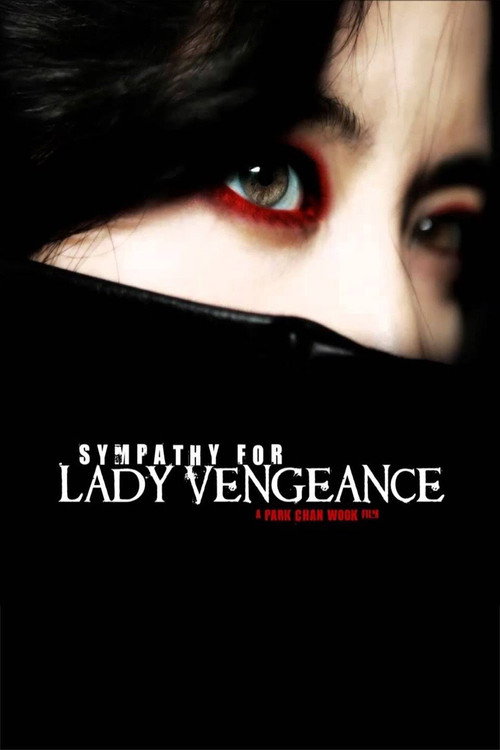
Lady Vengeance
A haunting psychological thrill-ride wrapped in baroque elegance, where a soul forged in betrayal bleeds fiery red against snow-white landscapes, seeking a holy salvation that forever eludes her.
Lady Vengeance

Lady Vengeance

친절한 금자씨

"All she wanted was a peaceful life… they didn't give it."

29 July 2005 South Korea 115 min 7.5 (1,990)

Director: Park Chan-wook

Cast: Lee Young-ae, Choi Min-sik, Kwon Yea-young, Kim Si-hoo, Nam Il-woo

Drama Thriller The Futility of Vengeance and False Salvation Atonement and Guilt Maternal Love and Redemption The Hypocrisy of Appearances and Religious Facades Democratic Justice and Shared Guilt
Box Office: $23,803,308

Overview

Lady Vengeance (2005), directed by Park Chan-wook, centers on Lee Geum-ja, a woman who at age nineteen was framed for the horrific kidnapping and murder of a five-year-old boy, Won-mo. Blackmailed into a false confession by her former schoolteacher and accomplice, Mr. Baek—who threatened her newborn baby—Geum-ja serves thirteen and a half years in prison. Behind bars, she cultivates an angelic, saintly persona, earning the nickname "Kind-hearted Geum-ja" while performing selfless favors for fellow inmates to systematically build a network of indebted allies.

Upon her release, Geum-ja discards her saintly act, donning sharp red eye shadow and custom leather heels to launch a meticulously engineered plan of retribution against Mr. Baek. Concurrently, she travels to Australia to track down her biological daughter, Jenny, who was placed up for adoption after Geum-ja’s arrest. Reconnecting with her daughter forces Geum-ja to navigate her long-dormant maternal instincts while pursuing her lethal mission.

Park Chan-wook structures the narrative through stylized non-linear flashbacks and dark satire. Rather than delivering a simple vigilante revenge story, the film evolves into a morally complex exploration of personal guilt, accountability, and the search for spiritual atonement.
Core Meaning

Director Park Chan-wook uses Lady Vengeance to examine the limits of retribution. The film argues that vengeance, no matter how methodically executed or morally justified, is inherently incapable of restoring lost innocence or granting spiritual absolution. While revenge may deliver punitive justice, it empties the avenger's soul rather than repairing it. True redemption requires confronting one's own guilt rather than projecting it entirely onto an enemy.

Thematic DNA

The Futility of Vengeance and False Salvation 30%
Atonement and Guilt 25%
Maternal Love and Redemption 20%
The Hypocrisy of Appearances and Religious Facades 15%
Democratic Justice and Shared Guilt 10%

The Futility of Vengeance and False Salvation

Geum-ja spends over thirteen years crafting the ultimate act of revenge, believing it will cleanse her soul. When the act is complete, she finds herself spiritually hollow and unpardoned, proving that vengeance cannot undo past tragedy.

Atonement and Guilt

Geum-ja carries crushing guilt for her passive complicity in Won-mo’s death. Her prison saintliness and elaborate revenge plot are fundamentally driven by a desperate yearning to atone to the dead boy rather than simple hatred for Mr. Baek.

Maternal Love and Redemption

Geum-ja’s original confession was coerced through threats against her infant daughter. Her attempt to rebuild a relationship with Jenny acts as her last remaining connection to humanity, motivating her desire to achieve purity.

The Hypocrisy of Appearances and Religious Facades

The film satirizes superficial morality. Geum-ja’s saintly persona in prison deceives guards and preachers alike, highlighting how society easily mistakes outward religious piety for genuine inner reform.

Democratic Justice and Shared Guilt

In the second half, vengeance shifts from an individual act to a communal trial involving all the victims' families. The film demonstrates how collective punishment distributes the moral weight of violence, turning ordinary citizens into accomplices.

Character Analysis

Lee Geum-ja

Lee Young-ae

Archetype: Antiheroine / Fallen Angel Key Trait: Striking visual grace masking an iron, lethal determination

Motivation

Achieving spiritual atonement for Won-mo's death while punishing Mr. Baek and reconnecting with her daughter.

Character Arc

Traumatized teenager to meticulous prison saint to cold-blooded avenger to grief-stricken mother confronting her unpardonable past.

Mr. Baek / Baek Han-sang

Choi Min-sik

Archetype: Villain / Psychopathic Mastermind Key Trait: Mundane banality masking predatory evil

Motivation

Financial greed (extorting child ransom money) and sadistic gratification.

Character Arc

Appears as a soft-spoken English teacher before being exposed as a ruthless serial murderer of children who feels zero remorse.

All 4 characters and cast

Symbols & Motifs

White Tofu and White Tofu Cake

Meaning:

In South Korea, eating white tofu upon release from prison symbolizes starting a clean life and never sinning again. At the climax, baking and face-burying in a white cake symbolizes a desperate, failed attempt to absorb purity.

Context:

Geum-ja knocks the preacher’s tofu to the ground upon her release from prison, rejecting a clean slate. Later, at the climax, she bakes a white cake and buries her face in it.

Red Eye Shadow and Red Heels

Meaning:

They symbolize her active embrace of her vengeful persona and her total rejection of fake kindness.

Context:

Worn by Geum-ja immediately after her release from prison to project her true intentions.

The Custom Silver Pistol

Meaning:

It merges sacred religious iconography with lethal human weapon design, embodying Geum-ja’s view of revenge as a holy sacrament.

Context:

A hand-crafted, double-barreled pistol decorated with silver cross ornaments used during her quest for retribution.

Snow and the Color White

Meaning:

Represents cold, unfeeling innocence and an elusive purity that buries the blood of revenge without truly washing it away.

Context:

Snow falls heavily during the film's resolution as Geum-ja interacts with Jenny and the white cake.

Won-mo’s Leather Strap/Whistle

Meaning:

Serves as a physical reminder of her guilt and her solemn obligation to atone.

Context:

A small personal item belonging to the murdered boy that Geum-ja wears around her wrist.

Memorable Quotes

너나 잘하세요.
— Lee Geum-ja

Context

Spoken to Preacher Won outside prison gates when he offers her white tofu.

Meaning

The film's most famous line, marking the instant destruction of her 'Kind-hearted Geum-ja' act.

친절해 보일까봐.
— Lee Geum-ja

Context

Explaining to Geun-shik why she wears heavy red eye shadow.

Meaning

Highlights her deliberate rejection of the passive, gentle facade forced upon her during her imprisonment.

All 4 quotes

Philosophical Questions

Can violent retribution grant true spiritual absolution?

The film explores whether punishing a perpetrator offers genuine peace or merely leaves the avenger emotionally empty.

Does shared, democratic violence diminish individual guilt?

By having all victim families participate in the execution, the narrative questions if distributing a violent act among a group makes it morally acceptable.

Is human nature capable of returning to absolute purity after committing sin?

The motif of stained white objects examines whether a person can ever truly "live white" again after being involved in horror.

Alternative Interpretations

The Impossibility of Absolution: One reading views the ending as a total failure of revenge. When Geum-ja buries her face into the cake, she realizes that killing Baek did not free her from guilt; Won-mo's ghost lingering over her proves she remains spiritually condemned.Communal Therapy and Democratic Guilt: The sequence where all victims' families participate in Baek's execution transforms vigil...

Full ending explanation

Cultural Impact

Released in 2005, Lady Vengeance concluded Park Chan-wook's thematic "Vengeance Trilogy" (Sympathy for Mr. Vengeance, Oldboy, Lady Vengeance). It premiered during the height of the "Korean New Wave," solidifying South Korean cinema's global prestige.

The film was a major commercial and critical success in South Korea and internationally, winning the Little Golden Lion and CinemaAvvenire Award at the 62nd Venice International Film Festival. It dominated the 2005 Blue Dragon Film Awards, winning Best Film and Best Actress for Lee Young-ae. Lady Vengeance helped pioneer modern female-led revenge narratives in global cinema, directly influencing titles such as Promising Young Woman and South Korean television dramas like The Glory.

Audience Reception

  • Praised: Audience and critics overwhelmingly praised Lee Young-ae's transformative performance, the stylized cinematography, the baroque soundtrack, and the dark satirical humor. The moral shift from individual vigilante action to collective family justice in the second half was widely acclaimed.
  • Criticisms: Some viewers found the non-linear, flashback-heavy structure of the first hour disjointed or difficult to follow compared to Oldboy.
  • Controversial Moments: The discovery of Mr. Baek’s video recordings of murdered children and the cold, methodical torture sequence performed by ordinary parents sparked debate over its moral discomfort.
  • Overall Verdict: Considered a masterpiece of artistic direction and moral storytelling, providing a thoughtful, tragic conclusion to Park Chan-wook’s trilogy.

Interesting Facts

  • Lee Young-ae was South Korea's most popular television star following her squeaky-clean role in Jewel in the Palace (Dae Jang Geum). Park Chan-wook intentionally cast her as a violent, vengeful convict to subvert her public persona.
  • Park Chan-wook created an alternate cut where color gradually desaturates over the runtime, leaving the final sequence in complete black-and-white to reflect the draining of humanity as revenge is achieved.
  • The custom silver pistol was designed specifically for the movie by director Park Chan-wook and production designer Jo Hwa-seong, integrating baroque cross details into the barrel.
  • Kwon Yea-young, who played Geum-ja’s Australian-raised daughter Jenny, was a non-professional actor selected through open auditions in Australia due to her native English fluency.
  • The film's musical score, composed by Choi Seung-hyun, prominently features baroque instruments (harpsichord, baroque guitar) and incorporates Vivaldi's vocal piece 'Ah ch'infelice sempre' from Cessate, omai cessate.

Easter Eggs

Vengeance Trilogy Cameos

Song Kang-ho and Shin Ha-kyun (stars of Sympathy for Mr. Vengeance) play the two hired assassins who attack Geum-ja in a tunnel. Yoo Ji-tae (villain from Oldboy) appears as a vision of the murdered boy Won-mo grown into adulthood. Kang Hye-jung (female lead of Oldboy) appears briefly as a television news reporter. Choi Min-sik (star of Oldboy) plays the main antagonist, Mr. Baek.

Reunion with J.S.A.

The film reunites director Park Chan-wook with Lee Young-ae, who starred in his 2000 box-office hit Joint Security Area.

Subversion of Korean Tradition

Tossing away the prison block of tofu explicitly parodies a widespread South Korean tradition where ex-convicts eat white tofu upon release to promise a sin-free future.

Frequently Asked Questions

Explore More About This Movie

Dive deeper into specific aspects of the movie with our detailed analysis pages

Comments (0)

Leave a comment

No comments yet. Be the first to share your thoughts!

Similar Movies