Skip to content
Landman
A sun-scorched Texas oil drama where fortunes and bodies are buried in the same dirt — every deal Tommy Norris closes costs somebody something, and the flares never stop burning on the horizon.
Landman

Landman

17 November 2024 — 18 January 2026 United States of America 3 season 20 episode Returning Series 8.2 (632)

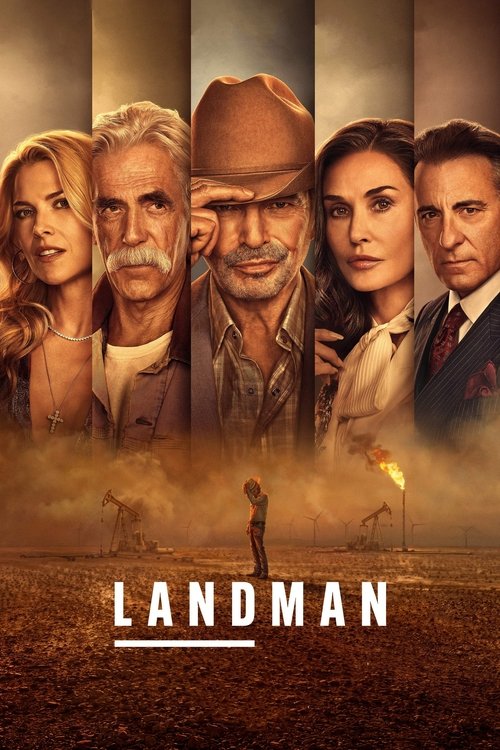
Cast: Billy Bob Thornton, Demi Moore, Ali Larter, Jacob Lofland, Michelle Randolph

Drama The true cost of prosperity Class, labor and the men in the field Family as the only asset that can't be leveraged Compromise with violence and corruption Mortality and the indifference of the land

Overview

Landman is a Paramount+ drama created by Taylor Sheridan and Christian Wallace, adapted from Wallace's Texas Monthly podcast Boomtown, and premiered on November 17, 2024. It follows Tommy Norris (Billy Bob Thornton), a crisis manager and fixer for the M-Tex oil company in the Permian Basin — the man who negotiates leases with ranchers, placates billionaires, buries mistakes, and translates capital, law and labor into deals that keep the rigs turning.

Across its run the series braids two currents. One is the business itself: boom-and-bust economics, arbitration hearings, force-majeure clauses, debt loads and the physical brutality of the patch, where a single mistake can incinerate a crew. The other is the Norris family — ex-wife Angela, daughter Ainsley and son Cooper, who follows his father onto the rigs — a household that keeps colliding with the job's collateral damage. Around them orbit the owner's widow Cami Miller (Demi Moore), who inherits a company drowning in debt, and criminal interests that never quite let Tommy walk away.

Season one establishes the world through a catastrophe and its long financial reckoning; season two shifts the power structure entirely, moving Tommy from the field into the executive suite and testing whether a fixer can survive when the thing that needs fixing is the company itself. Renewed for a third season, the show remains less a whodunit than a study of what prosperity costs and who is sent out into the heat to pay for it.


Core Meaning

The series argues that modern American comfort is subsidized by people whose names never appear on the deal. Every convenience — the fuel, the plastics, the cheap logistics — is traced back to a man in a truck at 4 a.m. negotiating with a rancher, and to the roughnecks who occasionally die making it happen.

Its central questions, as critics have framed them, are: what price are we willing to pay for prosperity, who actually bears that cost, and how does a person keep his humanity inside a system that demands constant compromise? Tommy Norris is the show's answer machine and its cautionary tale — a man fluent in the language of money, law and violence, who has traded away most of his private life to be indispensable.

Underneath the neo-Western swagger sits an unsentimental thesis about class: the industry does not reward loyalty, only usefulness. Bosses die, widows inherit, executives get fired, and the ground keeps producing regardless. Meaning, for these characters, has to be manufactured out of family and craft, because the economics will not supply it.

Thematic DNA

The true cost of prosperity 30%
Class, labor and the men in the field 25%
Family as the only asset that can't be leveraged 20%
Compromise with violence and corruption 15%
Mortality and the indifference of the land 10%

The true cost of prosperity

The show's spine. The pilot's collision between an M-Tex tanker and a cartel plane is not a thriller beat but an invoice: by the time of the arbitration episode Fifty Pounds of Gold, victims' families arrive with spreadsheets, force-majeure defenses collapse, and every handshake from the premiere is assigned a dollar figure.

As the series continues the accounting only widens — from individual deaths to a company balance sheet buried in debt, then to legal jeopardy that reaches inside the Norris family itself. The show keeps insisting that energy is never free, it is merely billed to someone else.

Class, labor and the men in the field

Sheridan's recurring interest in blue-collar, generationally indebted professions is the show's texture: roughnecks, tool pushers, truck drivers and landmen are rendered with what reviewers called an evocative sense of place unmatched since Friday Night Lights.

The theme evolves through Cooper, who begins as the boss's son slumming on a crew and gradually earns the patch the hard way, and through Tommy's own promotion — a move upward that reveals how little the suits understand about the work that generates their money.

Family as the only asset that can't be leveraged

Critics have compared the Norrises to the Roys of Succession — a powerful family whose intrigue drives the drama — but Landman inverts the joke: the Norrises have no dynasty, only a fractured household stitched together by Tommy's ex-wife Angela and his two adult children.

Across seasons the family shifts from comic relief and chaos to genuine stakes, culminating in a criminal charge that puts a Norris child's freedom on the line and forces Tommy to spend his professional capital on something that will never pay a dividend.

Compromise with violence and corruption

The cartel is present from the first episode and never fully leaves. Tommy's decision to maintain ties with criminal interests at the end of season one metastasizes in season two, where the fixer Gallino re-enters through the boardroom rather than the desert — and eventually launders himself into a legitimate investor under a new name.

The series traces how illegality doesn't get defeated in this world; it gets refinanced, renamed and invited to the table.

Mortality and the indifference of the land

Death is casual and constant — a well fire, a heart attack in a hospital bed, a beating that turns fatal weeks later. The Permian Basin absorbs all of it without comment.

The motif is formalized by the coyotes that close both season finales, with Tommy confronting his own mortality through their eyes — a deliberate rhyme that reframes the whole enterprise as scavenging on a landscape that will outlast every company on it.

Character Analysis

Tommy Norris

Billy Bob Thornton

Archetype: Antihero / fixer-mentor Key Trait: Profane, exhausted competence — he is always the smartest person in a room he'd rather not be in.

Motivation

Initially survival and usefulness: stay essential, keep the rigs running, keep the money flowing. This gradually converts into something closer to legacy — protecting his children, and building a business whose compromises are at least his own.

Character Arc

Begins as M-Tex's indispensable crisis manager — the man who translates capital, law and labor into deals and cleans up what the deals cost. Season one strips away his protection when Monty Miller, the boss who gave him cover, dies just as the bills come due.

Season two elevates him to company president under Cami Miller, exposing him to a balance sheet he can't charm and a criminal partner he can't shake. By the season two finale he has been fired outright and rebuilds from zero, founding a new company with his son — a fixer finally forced to own the thing he fixes.

Cami Miller

Demi Moore

Archetype: Reluctant heir turned power broker Key Trait: Poised ruthlessness — grief handled like a business problem.

Motivation

Preserving her husband's legacy at first; then keeping the company solvent by any means, which pulls her toward exactly the money Tommy warned against.

Character Arc

Introduced as the wife of oil baron Monty Miller, largely defined by her marriage. Monty's death transforms her overnight into the owner of M-Tex — a company she inherits already deep in debt.

Across season two she moves from grieving widow to operator, promoting Tommy to president, then negotiating directly with the criminal financier Gallino, and finally exercising the ultimate owner's prerogative by removing Tommy. Her growth is the show's clearest arc from inherited status to independent, and ethically compromised, authority.

All 5 characters and cast

Symbols & Motifs

Coyotes

Meaning:

Scavengers, survivors and memento mori. They embody the show's view of the oil economy: predators who eat what the land leaves behind, indifferent to human hierarchy.

Context:

The season one finale ends with Tommy face to face with coyotes, and the season two finale Tragedy and Flies deliberately mirrors it, closing with Tommy confronting his own mortality through their eyes — one of the series' few overtly poetic gestures.

The burning well / gas flare

Meaning:

Wealth and destruction as the same event. Fire here is simultaneously profit, waste and funeral pyre.

Context:

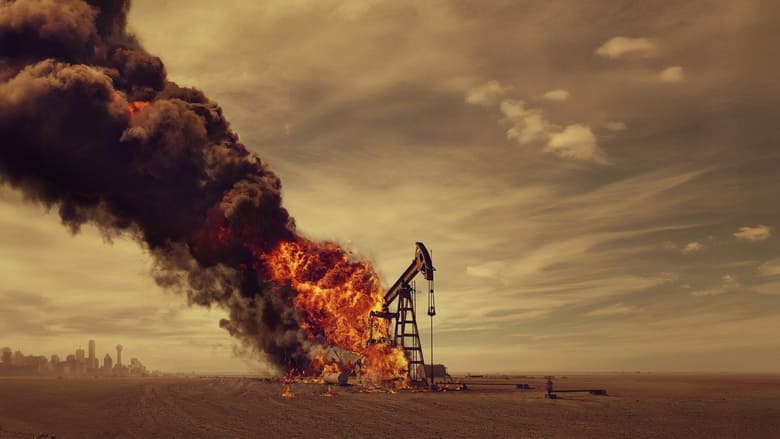
Season one's explosions — the tanker-and-plane collision in the premiere and the well accident — establish flame as the show's recurring punctuation, and Monty's decision to kill a well in the third episode turns extinguishing fire into an act of moral accounting.

The pickup truck

Meaning:

Tommy's real office and confessional. It represents mobility without arrival — a man always driving toward someone else's emergency.

Context:

Most of the series' best dialogue happens in transit across the Basin, and Tommy's eventual move into an executive role is measured by how much less time he spends behind that wheel.

The contract and the arbitration table

Meaning:

Language as weapon. Paper is where the violence of the patch gets converted into numbers, and where the powerful discover the limits of their protection.

Context:

Fifty Pounds of Gold stages this literally: families arrive with spreadsheets, force-majeure clauses fail, and the season pivots from crisis management to reckoning.

The company name

Meaning:

Identity as a legal fiction — people and enterprises alike can be renamed into respectability.

Context:

M-Tex passes from Monty to his widow Cami; Tommy is ultimately cast out of it and builds the new venture CTT on a 50/50 split; and Dan Gallino simply becomes the investor 'Dan Morrell'. Three rebrandings, three different kinds of survival.

The Permian Basin itself

Meaning:

An indifferent, sun-bleached deity that gives and takes without preference — the ultimate authority no character can negotiate with.

Context:

Shot on real Texas drilling platforms and refinery facilities, the landscape functions less as backdrop than as the show's silent lead, dwarfing every deal made on top of it.

Episode Highlights

Series Premiere

S1E1

An M-Tex oil tanker collides with a cartel plane, and Tommy Norris is dragged into a kidnapping before the opening credits have finished. In roughly forty minutes the show establishes its entire grammar: catastrophic industrial accidents, criminal entanglement, and a fixer who negotiates his way out of both.

Significance:

Every deal Tommy strikes here becomes the debt the rest of the season pays off — the premiere is written as a bill that will be presented later, in court.

Kill the Well

S1E3

Monty Miller makes the decision to kill a well — an operational and financial surrender that costs the company enormously and signals that the old way of doing business is finished.

Significance:

Frames Monty's authority and its limits, and marks the moment the series shifts from adrenaline to consequence, setting up the arbitration reckoning to come.

Fifty Pounds of Gold

S1E9

An arbitration ruling attaches a price to every deal Tommy made in the pilot. Victims' families arrive with spreadsheets, force-majeure clauses fail, and the episode also carries Monty's death — the boss who gave Tommy cover disappears exactly as the invoices land.

Significance:

The hinge of the entire series: crisis management becomes reckoning, and Tommy loses his political protection at the worst possible moment.

Season 1 Finale

S1E10

Tommy is left to choose whether to maintain his ties to the cartel — he does — and the season closes on a hallucinatory encounter with coyotes on the open ground.

Significance:

Establishes the coyote motif the series will return to, and plants the criminal relationship that becomes season two's boardroom problem.

Season 2 Premiere

S2E1

The aftershock of Monty's death: his widow Cami takes over M-Tex and Tommy is promoted to company president, inheriting an operation that is deeply in debt. Cami begins moving toward Gallino, the criminal who pushed Tommy to keep the cartel connection alive.

Significance:

Reconfigures the show's power structure — the field man becomes the executive, and the widow becomes the boss, redistributing every relationship in the series.

Tragedy and Flies

S2E10

The man Cooper beat after the attack on Ariana dies of his injuries, leaving Cooper charged with murder. Tommy is fired from M-Tex, then negotiates a 50/50 split to found a new company, CTT, with his partners and his son, while Dan Gallino completes his reinvention as legitimate investor 'Dan Morrell'. The episode closes with Tommy confronting his own mortality through the eyes of coyotes, mirroring the end of season one.

Significance:

Called downright thrilling and impressively crafty by critics, it resets the series for season three: Tommy as owner rather than employee, his heir facing prison, and organized crime laundered into respectability. It drew 14.8 million worldwide views in two days, a 70% jump over the season one finale.

Philosophical Questions

What price are we willing to pay for prosperity, and who actually pays it?

The series answers structurally: the premiere's disaster becomes the arbitration of Fifty Pounds of Gold, where grieving families arrive with spreadsheets and force-majeure defenses collapse. The show insists that the cost is always real, always deferred, and almost never paid by whoever profited.

Can a person keep his humanity inside a system built on constant compromise?

Tommy is the test case. Every season asks him to trade something — silence for cover, a cartel relationship for stability, his own position for his son's future — and the finales measure what remains. The verdict is deliberately unresolved: he keeps his conscience mostly intact and his life mostly ruined.

Is loyalty worth anything in a system that only values usefulness?

Monty's death removes Tommy's protector; Cami's promotion of Tommy is followed, one season later, by his firing. The show repeatedly demonstrates that relationships in this world are contracts with expiry dates, which is why Tommy's turn toward family and partnership at the end reads as an argument rather than a plot beat.

When does protecting the people you love become a crime?

Cooper's beating of Ariana's attacker is morally legible in the moment and legally catastrophic later, when the man dies and Cooper is charged with murder. The series lets a considerable gap open between what feels justified in the field and what the law will call it afterward.

Does dirty money stay dirty once it's rebranded?

Dan Gallino's transformation into legitimate investor 'Dan Morrell' poses the question without editorializing. The show suggests capital has no memory — only people do, and people can be fired.

Alternative Interpretations

As industry critique or industry advertisement. The show can be read as an exposé of what oil extraction costs in bodies and communities — or, as detractors argue, as a glamorization that lets its charismatic hero deliver the industry's talking points unchallenged. Both readings survive contact with the text, and much of the critical fight over the series is really a fight over which one is dominant.

Full ending explanation

Cultural Impact

Landman arrived as the next expansion of Taylor Sheridan's television empire — a slate that already included Yellowstone, 1883 and Lawman: Bass Reeves — and extended his neo-Western project from cattle to crude. It carries the same masculine bravado and conservative milieu as Yellowstone but transplants it into the Permian Basin, arriving amid live national arguments over energy policy, climate change and economic growth.

Critically the show has been polarizing. Variety found it engrossing and praised its immersive, detailed world-building, and observers noted an evocative sense of place television hadn't captured in this corner of Texas since Friday Night Lights. Others were far harsher: RogerEbert.com published withering reviews of both seasons, and The GATE argued Sheridan's formula — taking a blue-collar, generationally indebted profession and inflating it into a politically minded soap opera — backfires here.

Its most cited comparison is Succession: critics have framed Landman as Sheridan meeting HBO's boardroom saga, finding in the Norris family the same dynastic intrigue that the Roys supplied. Commercially it has been a clear win for Paramount+, with the season two finale pulling 14.8 million worldwide views in two days — a 70% jump on season one — and a third season ordered, cementing Sheridan's model of the star-led, place-specific American workplace epic as a streaming-scale format.

Audience Reception

Season one split critics and audiences along familiar Sheridan lines. Admirers praised the immersive, granular world-building, Billy Bob Thornton's performance, and a sense of place critics compared to Friday Night Lights; Variety judged it engrossing. Detractors — RogerEbert.com most bluntly — dismissed it, and the most widely shared complaint was that the show did not do justice to its female characters, who came across as simple, cookie-cutter tropes. Audience chatter through the first run was dominated by speculation about which major character would die before the finale, with Monty's failing health the focus.

Season two did not convert the harshest reviewers — RogerEbert.com returned with an even more scathing verdict — but the response to the finale was notably warmer, with The A.V. Club calling 'Tragedy and Flies' downright thrilling and impressively crafty. The season's structural changes (Cami running M-Tex, Tommy in the executive suite) gave the show more to play than the procedural rhythm of year one.

The numbers tell the clearer story. The season two finale drew 14.8 million worldwide views in two days, a 70% increase over the season one finale — evidence that audience enthusiasm grew substantially even as critical opinion stayed divided. The overall verdict: a show that reviewers argue about and viewers keep watching, carried by its lead performance and its authentically rendered corner of Texas rather than by consensus prestige.

Interesting Facts

  • The series is co-created by Taylor Sheridan and Christian Wallace and is based on Wallace's Texas Monthly podcast Boomtown, about the oil boom in the Permian Basin.
  • Sheridan penned every script for the show while sharing the creator credit with Wallace.
  • Christian Wallace, a former Texas Monthly writer, met Sheridan after the podcast drew attention; Sheridan invited him onto the sets of 1883 and Lawman: Bass Reeves to develop the project, and the two traded ideas and characters for years before filming.
  • Wallace kept a dual role on the production — consulting, occasionally scripting scenes, and, more often than not, pointing out when props needed dustier grime for authenticity.
  • Landman premiered on Paramount+ on November 17, 2024.
  • Filming took place across Texas, including at real oil drilling platforms and refinery facilities, giving the show unusually authentic industry footage.
  • Jon Hamm appears in a recurring guest role as oil baron Monty Miller; Andy Garcia also features as a guest star.
  • Monty's death is never shown on screen — production confirmed the character died in his hospital bed from a heart attack after suffering several.
  • The season two finale, 'Tragedy and Flies', notched 14.8 million worldwide views in just two days, a 70% increase over the season one finale.
  • Paramount+ renewed the series for a third season, with filming expected to begin at the end of August 2026 and a premiere likely in early 2027.

Easter Eggs

The coyote bookends

The closing scene of the season two finale deliberately mirrors the end of season one, with Tommy again confronting mortality through coyotes — a structural rhyme rather than a plot beat, rewarding viewers who remember how the first year ended.

'Dan Morrell'

Criminal financier Dan Gallino re-emerges under a lightly altered name as a legitimate investor — a small detail that encodes the show's whole thesis about how illicit money gets laundered into respectability.

The Boomtown DNA

Much of the show's incidental texture — arbitration mechanics, lease negotiations, roughneck routine — is lifted from the reporting in Christian Wallace's Texas Monthly podcast, so the series doubles as a dramatized version of real Permian Basin journalism.

Real rigs, real refineries

Because production shot on working Texas drilling platforms and refinery facilities, background equipment and site details are genuine industry hardware rather than set dressing — a form of authenticity Sheridan's team treated as a storytelling asset.

Frequently Asked Questions

Explore More About This Movie

Dive deeper into specific aspects of the movie with our detailed analysis pages

Comments (0)

Leave a comment

No comments yet. Be the first to share your thoughts!

Similar Movies