Zootopia
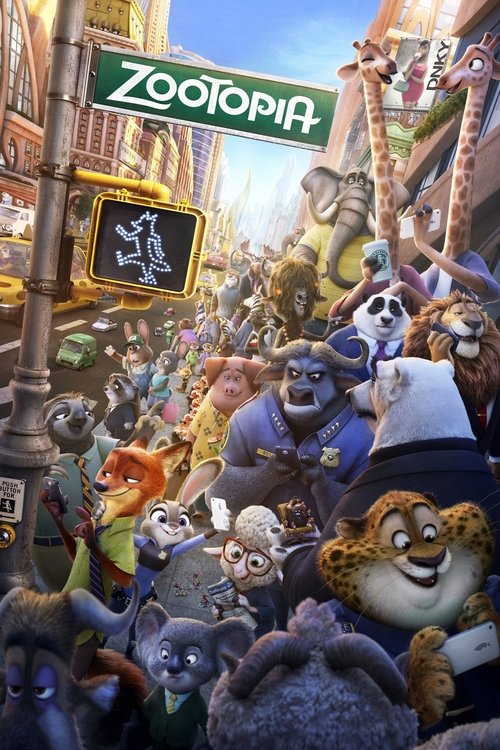
A vibrant neon noir wrapped in fur, where a small bunny's optimism clashes with a cynical fox's reality. It is a kinetic mosaic of predator and prey, exposing the fragile architecture of tolerance through the lens of a police procedural.
Zootopia

Zootopia

"Welcome to the urban jungle."

11 February 2016 United States of America 109 min ⭐ 7.8 (17,484)
Director: Byron Howard Rich Moore
Cast: Ginnifer Goodwin, Jason Bateman, Idris Elba, Jenny Slate, Nate Torrence
Animation Family Comedy Adventure
Prejudice and Stereotyping The Politics of Fear Identity vs. Nature Persistence and Optimism
Budget: $150,000,000
Box Office: $1,025,521,689

Overview

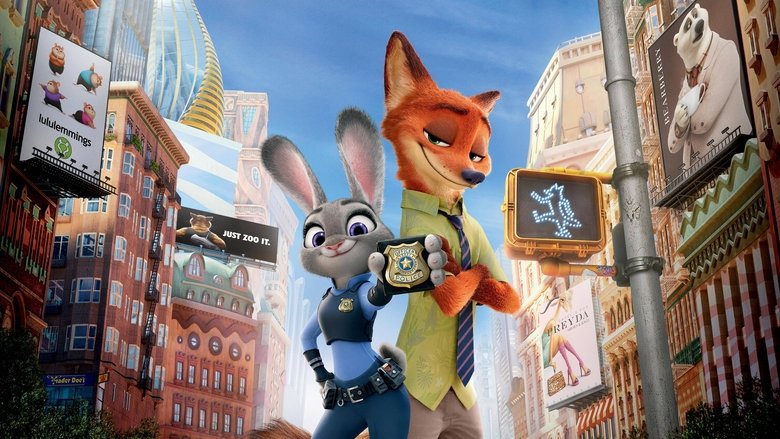
In a world populated by anthropomorphic mammals, Judy Hopps becomes the first rabbit to join the Zootopia Police Department. Despite graduating top of her class, she is sidelined into parking duty by her dismissive superior, Chief Bogo. Determined to prove herself, she volunteers to solve a missing mammal case with only 48 hours to do so or face resignation.

To solve the mystery, Judy blackmails a slick con-artist fox, Nick Wilde, into assisting her. Together, they uncover a sinister conspiracy involving the disappearance of predators who have mysteriously reverted to a savage, feral state. As they peel back the layers of the city's underbelly, they discover that the utopia of Zootopia is fractured by deep-seated fears and biological prejudices.
Core Meaning

At its heart, Zootopia is a nuanced deconstruction of bias, prejudice, and the complexity of social integration. Director Byron Howard and the team wanted to move beyond the simple message of "anyone can be anything" to explore the harder truth: that even well-meaning individuals harbor unconscious biases.

The film argues that a harmonious society isn't a given state of perfection but a constant, messy process of introspection and effort. It posits that fear is a weaponized political tool used to fracture communities, and that true courage lies in recognizing and overcoming one's own internal stereotypes.

Thematic DNA

Prejudice and Stereotyping 40%
The Politics of Fear 30%
Identity vs. Nature 20%
Persistence and Optimism 10%

Prejudice and Stereotyping

The film explores both explicit racism and subtle microaggressions. Judy faces sexism and species-ism as a "cute" bunny, while Nick is judged as a "shifty" fox. The film cleverly flips the script by showing that even the oppressed (Judy) can harbor dangerous prejudices against others (predators).

The Politics of Fear

The villain's plan hinges on manufacturing fear to control the majority population (prey). The film illustrates how leaders can exploit public anxiety about a minority group (predators) to seize power and justify segregation, mirroring real-world political demagoguery.

Identity vs. Nature

Characters struggle against the biological determinism forced upon them by society. Nick accepts his role as a "sly fox" because the world refuses to see him otherwise, until Judy inspires him to break that mold. It challenges the "nature vs. nurture" debate.

Persistence and Optimism

Encapsulated in the song Try Everything, this theme drives Judy's arc. It is not blind optimism, but a gritty resilience to keep moving forward despite failure, mistakes, and the realization that the world is broken.

Character Analysis

Judy Hopps

Ginnifer Goodwin

Archetype: The Idealist Hero
Key Trait: Relentless Optimism

Motivation

To make the world a better place and prove that a bunny can be a real police officer.

Character Arc

Starts as a naive optimist believing the world is fair. She inadvertently fuels fear through her own unconscious bias, falls from grace, and returns with a matured understanding that fixing the world starts with fixing oneself.

Nick Wilde

Jason Bateman

Archetype: The Cynical Mentor / Rogue
Key Trait: Charismatic Cynicism

Motivation

Initially money and survival; later, justice and acceptance.

Character Arc

Begins as a jaded con-artist who has internalized society's prejudice against him. Through his friendship with Judy, he learns to trust again and realizes he can be more than what society expects.

Dawn Bellwether

Jenny Slate

Archetype: The Wolf in Sheep's Clothing
Key Trait: Deceptive Meekness

Motivation

To overthrow the predator ruling class and establish prey supremacy through fear.

Character Arc

Appears as a meek, overworked assistant mayor representing the "little guy," but is revealed to be a ruthless mastermind using victimhood to justify supremacy.

Chief Bogo

Idris Elba

Archetype: The Hard-Boiled Chief
Key Trait: Stoic Authority

Motivation

Maintaining order and the reputation of the ZPD.

Character Arc

Represents the institutional barrier. He initially dismisses Judy based on her species but learns to respect her capability and results.

Symbols & Motifs

Predator vs. Prey

Meaning:

An allegory for racial and minority dynamics in society. While not a perfect 1:1 map to human races, it symbolizes the tension between a majority population and a stigmatized minority group.

Context:

Used throughout the city's structure and the central conflict. The 10% predator population represents marginalized groups often targeted by fear-mongering rhetoric.

Muzzles

Meaning:

Symbolizes suppression, shame, and the loss of voice/agency. It represents the traumatic policing of identity.

Context:

Seen in Nick's childhood flashback where he is forcibly muzzled by scout bullies, traumatizing him into believing he can never be anything but a predator.

Night Howlers

Meaning:

Represents the external manufacture of danger—specifically drugs or propaganda—used to criminalize a specific demographic.

Context:

Initially thought to be wolves, they are revealed to be flowers that chemically induce savagery, symbolizing how external factors, not biology, cause social breakdown.

The Carrot Pen

Meaning:

Symbolizes Judy's resourcefulness and the subversion of her "cute" image into a tool of justice.

Context:

Judy uses this recording device to outsmart Nick and later to capture the villain's confession, turning a toy into a weapon of truth.

Memorable Quotes

It's called a hustle, sweetheart.

— Nick Wilde

Context:

Spoken by Nick when he reveals he played Judy, and reclaimed by Judy at the end when she tricks Bellwether.

Meaning:

A defining line that represents street smarts and the subversion of expectations. It marks the shift in power dynamics between Nick and Judy.

Life's a little bit messy. We all make mistakes. No matter what type of animal you are, change starts with you.

— Judy Hopps

Context:

The closing monologue of the film where Judy reflects on her journey and the reality of police work.

Meaning:

The film's central thesis: perfection is impossible, but personal responsibility and growth are essential for a better society.

If the world's only gonna see a fox as shifty and untrustworthy, there's no point in trying to be anything else.

— Nick Wilde

Context:

Nick confesses his traumatic childhood backstory to Judy in the gondola lift.

Meaning:

Highlights the psychological impact of stereotyping—the self-fulfilling prophecy where victims internalize the hatred directed at them.

Fear always works!

— Bellwether

Context:

Spoken during the climax in the museum when Bellwether reveals her plan to keep predators savage.

Meaning:

A chilling summation of political demagoguery. It exposes the villain's belief that a society united by fear is easier to control than one united by trust.

Philosophical Questions

Can a true Utopia exist given biological differences?

The film suggests that 'Utopia' is a fallacy if it ignores nature. Instead, it proposes a 'Protopia'—a society that isn't perfect but is constantly working to be better through social contracts and empathy.

Is fear the most powerful political tool?

Bellwether's success proves that safety is often valued higher than liberty. The film explores the Hobbesian idea that people will trade freedom for protection against a perceived 'savage' enemy.

Are we defined by our DNA or our choices?

The film rejects biological determinism. Both Judy (a dumb bunny) and Nick (a sly fox) transcend their genetic stereotypes, arguing for Existentialism—that existence precedes essence, and we are what we choose to be.

Alternative Interpretations

The Crack Cocaine Allegory: Some critics view the 'Night Howler' plot as an allegory for the CIA/Crack Cocaine epidemic of the 1980s, where drugs were allegedly introduced to minority communities to destabilize them and justify heavy policing.

The Flawed Biological Metaphor: A common critique is that the predator/prey allegory breaks down because in the film, predators were historically dangerous, whereas real-world minorities have no biological predisposition to violence. This leads to an interpretation where the film unintentionally validates the fear of the minority, even while trying to debunk it.

Queer Coding: Nick Wilde's story of hiding his true self and finding community in the 'underground' is often read as a queer narrative, with the muzzle representing the closet or societal suppression of sexuality.

Cultural Impact

Zootopia was released during a period of heightened racial tension in the United States and was widely lauded for its bold handling of systemic racism and police profiling. It grossed over $1 billion worldwide and won the Academy Award for Best Animated Feature.

Culturally, it became a touchstone for discussions about unconscious bias, teaching children and adults alike that prejudice is not just an act of villains but a flaw in good people too. It spawned a massive 'furry' fandom following due to its expressive character designs. Philosophically, it moved the needle for animated films from simple moral fables to complex sociological allegories.

Audience Reception

Praised: Audiences and critics universally acclaimed the world-building, the chemistry between Ginnifer Goodwin and Jason Bateman, and the sophisticated script that didn't talk down to children. The animation, particularly the fur technology, was hailed as a new benchmark.

Criticized: Some cultural critics pointed out the muddiness of the central metaphor, noting that equating minorities with 'predators' (who eat people) is a problematic parallel. Others felt the third act relied too heavily on a standard 'surprise villain' twist.

Verdict: It is widely considered one of the best films of the Disney Revival era, praised for being both entertaining and intellectually stimulating.

Interesting Facts

  • The film was originally centered on Nick Wilde, with a much darker tone where predators were forced to wear 'tame collars' to suppress their instincts. The focus shifted to Judy Hopps late in production to make the city feel more like a utopia initially.
  • The character of Flash the Sloth was voiced by Raymond S. Persi, a story artist at Disney.
  • To create the realistic fur, Disney engineers developed new software called 'iGroom', allowing characters like the gerbil to have 400,000 individual hairs and the giraffe to have 9 million.
  • Shakira requested that her character, Gazelle, be given wider hips to be more realistic and representative of her own figure.
  • The news anchor in the film changes depending on the country of release (a moose in the US, a panda in China, a koala in Australia, a corgi in the UK).
  • There are clear references to the show Breaking Bad, with characters named Woolter and Jesse (rams) cooking the blue Night Howler serum in a lab.

Easter Eggs

Breaking Bad Lab

Two rams named Woolter and Jesse are seen creating a blue serum in a lab, a direct nod to Walter White and Jesse Pinkman from Breaking Bad.

Bootleg DVDs

Duke Weaselton sells bootleg movies that are animal versions of Disney hits: Pig Hero 6, Wrangled, and Meowana (referencing films not even released at the time like Moana).

Frozen Elephants

In Tundratown, two young elephants are dressed exactly like Anna and Elsa from Frozen.

Mickey Mouse Doll

A passing hippo with a stroller has a small Mickey Mouse plush toy visible in the bottom storage basket.

Mr. Big as The Godfather

The arctic shrew crime boss is a direct parody of Don Corleone, complete with the accent, mannerisms, and a wedding day request scene.

⚠️ Spoiler Analysis

Click to reveal detailed analysis with spoilers

Frequently Asked Questions

Explore More About This Movie

Dive deeper into specific aspects of the movie with our detailed analysis pages

Comments (0)

Leave a comment

No comments yet. Be the first to share your thoughts!