Skip to content
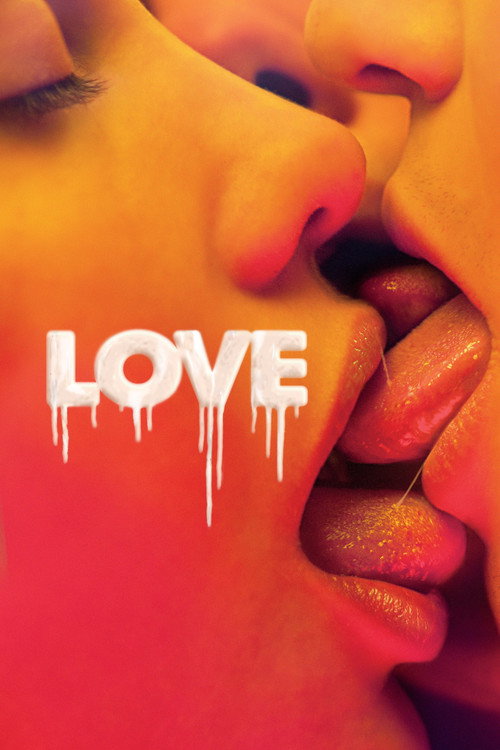
Love
An intoxicating, neon-drenched erotic melodrama drowning in suffocating nostalgia; a tactile journey of grief and desire where bruised memories flicker like dying halogen bulbs in a rain-soaked Parisian apartment.
Love

Love

15 July 2015 Belgium 134 min 6.5 (2,704)

Director: Gaspar Noé

Cast: Karl Glusman, Aomi Muyock, Klara Kristin, Ugo Fox, Juan Saavedra

Drama Romance Eros vs. Domesticity The Fragmentary Nature of Memory and Nostalgia Possession, Ego, and Hypocrisy Self-Destruction and Artistic Pretension
Budget: $3,000,000
Box Office: $249,083

Overview

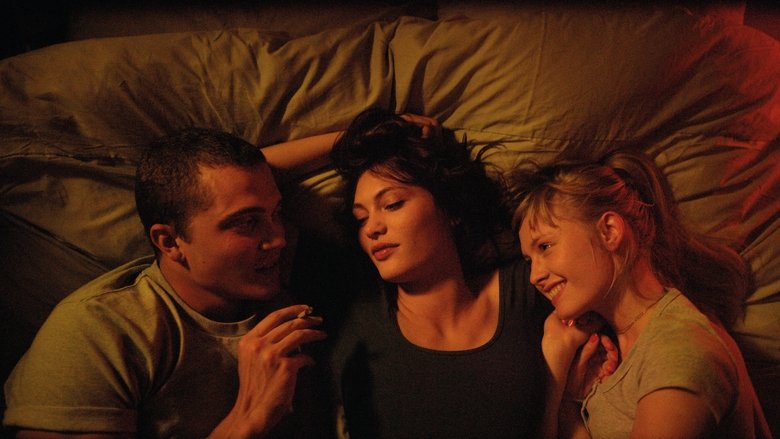
Love (2015) is an immersive, semi-autobiographical erotic drama set in Paris, directed by Gaspar Noé. The story begins on a dreary January 1st when Murphy, a disaffected American cinema student, awakens to a desperate phone message from Nora, the mother of his volatile former girlfriend, Electra. Electra has gone missing for months, and Nora fears the worst given her history of self-destructive tendencies and severe depression.

Trapped in a loveless domestic arrangement with his partner Omi and their newborn son, the news triggers a flood of unmoored recollections. Murphy spends the rainy day drifting through non-linear flashbacks of his past two years with Electra—charting the euphoric dawn of their passionate connection, their sensual explorations, and the gradual unraveling of their devotion.

As the narrative unfolds through intimate vignettes, the film exposes how carnal curiosity, artistic ambition, mutual obsession, and reckless boundaries ultimately transformed an all-consuming romance into an emotional battlefield.

Core Meaning

Gaspar Noé set out to bridge the artificial divide between emotional drama and explicit carnal reality, creating what his protagonist describes as "sentimental sexuality". The film posits that physical intimacy is an essential, raw dimension of human affection that cinema frequently sanitizes into romanticized cliché or detaches into sterile pornography. Through Murphy’s regret-laden perspective, Noé illustrates how ego, possession, and reckless boundary-crossing can destroy the very intimacy one seeks to elevate.

Thematic DNA

Eros vs. Domesticity 30%
The Fragmentary Nature of Memory and Nostalgia 25%
Possession, Ego, and Hypocrisy 25%
Self-Destruction and Artistic Pretension 20%

Eros vs. Domesticity

Reveals the tragic friction between violent, electric romantic passion and mundane domestic obligation. Murphy’s grief stems from trading transcendent sexual communion for accidental fatherhood in an unfulfilling domestic trap.

The Fragmentary Nature of Memory and Nostalgia

Memories do not surface linearly; they return through sensory triggers, drug trips, and heightened idealizations. Murphy reconstructs Electra through a haze of regret, mourning an idealized past while actively suffering in the present.

Possession, Ego, and Hypocrisy

Murphy seeks radical sexual exploration with third parties but suffers narcissistic agony and hypocrisy when boundaries blur or when Electra exercises sexual autonomy outside his control.

Self-Destruction and Artistic Pretension

Explores young bohemian artists in Paris mistaking destructive codependency and chemical excess for romantic depth and creative authenticity.

Character Analysis

Murphy

Karl Glusman

Archetype: The Flawed Romantic / Antihero Key Trait: Egotistical nostalgia

Motivation

To experience romantic transcendence and escape the suffocating mundanity of ordinary domestic life.

Character Arc

Starts as a self-assured, romantic film student believing he can conquer art and pleasure, but spirals into self-inflicted misery, trapped by consequences he cannot reverse.

Electra

Aomi Muyock

Archetype: The Tragic Bohemian / The Unattainable Muse Key Trait: Fiery volatility

Motivation

Searching for unconditional emotional shelter and profound, radical connection.

Character Arc

Evolves from an open-hearted, vibrant visual artist into a deeply wounded, isolated soul undone by betrayal and chemical dependency.

All 4 characters and cast

Symbols & Motifs

Red and Amber Lighting

Meaning:

Symbolizes heat, passion, and emotional womb-like safety, which contrasts starkly with the cold, gray realism of the present day.

Context:

Cinematographer Benoît Debie bathes the past in warm reds and amber tones throughout the flashback sequences.

The "Love" Hotel Model / Neon Signs

Meaning:

Symbolizes both an idealized sanctuary of pure physical communion and the artificial, constructed nature of Murphy's memories.

Context:

A miniature replica of the Love Hotel (reused from Noé’s Enter the Void) sits inside Murphy’s room.

The Ayahuasca and Ecstasy Trips

Meaning:

Serves as a physical gateway into Murphy's subconscious, blurring the line between actual memory and drug-fueled regret.

Context:

Occurs during psychedelic experiences and drug ingestions shared among the characters.

The Bathtub / Water

Meaning:

Functions as a recurring baptismal and melancholic motif, signifying a regression to a prenatal, sorrowful state.

Context:

Appears through the relentless rain outside Murphy's apartment and during his final emotional breakdown in the bath.

The 3D Ejaculation Toward Camera

Meaning:

An audacious visual motif breaking the fourth wall, literalizing the physical transfer of Murphy’s primal essence, ego, and vulnerability directly into the viewer's space.

Context:

Presented as a direct-to-lens visual effect during a sexual encounter.

Memorable Quotes

I want to make movies out of blood, sperm, and tears.
— Murphy

Context

Murphy lying in bed with Electra, passionately outlining his cinematic ambitions.

Meaning

Serves as the artistic manifesto of both Murphy and Gaspar Noé himself, summarizing the desire to depict raw, physical human existence without censorship.

Dicks have only one purpose: to fuck.
— Murphy

Context

A heated confrontation after Electra discovers his physical encounters outside their relationship.

Meaning

Highlights Murphy’s hypocritical rationalization when attempting to minimize his infidelity while refusing to extend equal emotional detachment to Electra.

All 4 quotes

Philosophical Questions

Can sexual experimentation remain untainted by possessiveness and jealousy?

The film explores how intellectual agreements regarding open sexuality collapse when exposed to primal emotional jealousy.

Is memory an act of preservation or one of distortion?

Murphy continually reframes past trauma and heartbreak into a melancholic, erotic fantasy to escape his current obligations.

Where does carnal authenticity end and objectification begin?

Investigates whether depicting graphic physical connection enhances human truth on screen or risks reducing emotional depth to exhibitionism.

Alternative Interpretations

Different ways to interpret the narrative include:

Full ending explanation

Cultural Impact

Debuting in 2015, Love followed a lineage of European art-house cinema exploring unsimulated sexual intercourse—such as Catherine Breillat’s Romance, Michael Winterbottom’s 9 Songs, John Cameron Mitchell's Shortbus, and Abdellatif Kechiche’s Blue Is the Warmest Colour.

Upon release, critical response was deeply polarized. Some critics championed Noé's daring technical craft and sentimental vulnerability, while detractors dismissed it as narcissistic, juvenile, and excessively prolonged. The film faced censorship battles worldwide; in France, its rating was temporarily elevated to an 18-plus restriction following legal appeals by conservative groups, before finding an extensive afterlife on international streaming platforms where it sparked renewed viral discussions around sexual realism in cinema.

Audience Reception

Audience reviews and reactions reflect a polarized consensus:

  • Praises: Benoît Debie’s warm, amber-soaked 3D cinematography; a poignant soundtrack (featuring Funkadelic, John Frusciante, and Erik Satie); the courage and raw vulnerability of the young cast.
  • Criticisms: Underwritten dialogue due to heavy improvisation; prolonged running time; Murphy’s unsympathetic, self-pitying demeanor.
  • Controversial Elements: Hardcore unsimulated sexual sequences and the direct-to-lens 3D ejaculation shot.
  • Overall Verdict: A polarizing, melancholic sensory experience that succeeds more as an atmospheric, nostalgic mood poem about lost love than a traditional narrative drama.

Interesting Facts

  • Gaspar Noé shot the film with an outline of only seven pages, encouraging Karl Glusman, Aomi Muyock, and Klara Kristin to improvise extensive portions of the dialogue.
  • Noé cast his leads after meeting them at Parisian bars, clubs, and fashion events rather than through conventional agency auditions, finalizing decisions days before principal photography.
  • Shot over five weeks on a modest €2.55 million budget, the production utilized native 3D camera rigs to lend a sense of spatial volume to unsimulated sexual encounters.
  • Longtime collaborator Benoît Debie used practical interior lights, neon accents, and long continuous takes to give the explicit love scenes a painterly, atmospheric warmth rather than clinical lighting.
  • The film premiered at midnight during the 2015 Cannes Film Festival, triggering massive queues, walkouts, and polarizing reviews due to its explicit content.

Easter Eggs

Gaspar Noé Cameo

Noé appears as "Aron Pages" (an anagram of Gaspar Noé), a hotheaded art gallery owner and Electra’s ex-lover.

Baby Gaspar

The child Murphy fathered with Omi is named "Gaspar," deliberately turning the child into a meta-stand-in for the director.

Benoît Debie Cameo

The film's cinematographer appears on screen as "Yayo," a shamanic figure presiding over psychedelic rituals.

Cinephile Posters & Homages

Murphy’s bedroom walls feature posters for Pier Paolo Pasolini’s Salò, or the 120 Days of Sodom, Paul Morrissey’s Flesh for Frankenstein (in 3D), and Stanley Kubrick’s 2001: A Space Odyssey.

The "Love" Hotel Model

Murphy keeps an architectural scale model of the neon "Love Hotel" featured centrally in Noé's previous feature, Enter the Void (2009).

Frequently Asked Questions

Explore More About This Movie

Dive deeper into specific aspects of the movie with our detailed analysis pages

Comments (0)

Leave a comment

No comments yet. Be the first to share your thoughts!

Similar Movies