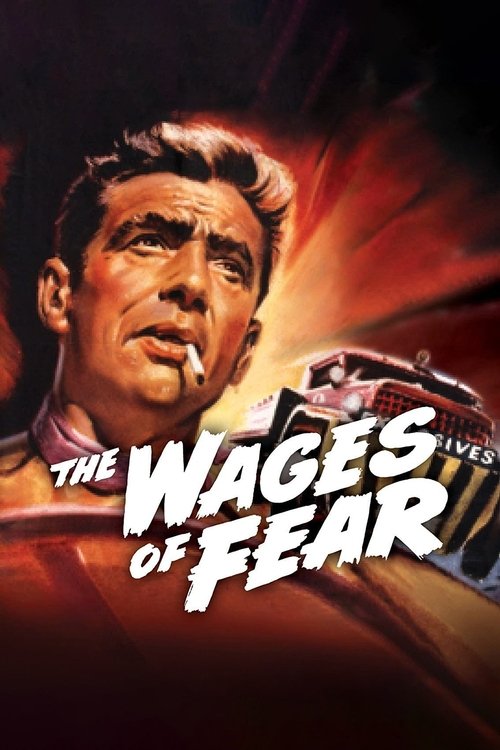
The Wages of Fear
A sweat-drenched, existential thriller where the fuse of human desperation burns as unstoppably as the volatile cargo, painting a visceral portrait of dread against a desolate, unforgiving landscape.
The Wages of Fear

The Wages of Fear

Le Salaire de la peur

"‘Dynamic’ ‘Tremendous’ ‘Shattering’"

22 April 1953 France 153 min ⭐ 8.0 (1,016)
Director: Henri-Georges Clouzot
Cast: Yves Montand, Charles Vanel, Peter van Eyck, Folco Lulli, Véra Clouzot
Drama Thriller Adventure
Existentialism and Nihilism Greed and Capitalism Fear and Cowardice Friendship and Betrayal

Overview

In the squalid, isolated South American town of Las Piedras, a group of desperate European expatriates are trapped, without the money or means to escape. The town is dominated by an American oil company, the Southern Oil Company (SOC), which callously exploits the local and foreign workers. When a catastrophic fire erupts at one of their remote oil wells, the company needs to transport a large quantity of highly volatile nitroglycerin over 300 miles of treacherous, poorly maintained mountain roads to extinguish the blaze.

Due to the extreme danger of the mission, the unionized employees refuse the job. Instead, the company offers a handsome reward of $2,000 per driver, a fortune to the destitute men of Las Piedras, attracting numerous volunteers for what is essentially a suicide mission. Four men are ultimately chosen: the cynical Corsican playboy Mario, the aging and seemingly tough ex-gangster Jo, the jovial Italian Luigi, and the quiet, intense German Bimba. Divided into two teams, they set off in dilapidated trucks, each carrying half of the deadly cargo.

The journey that follows is a relentless and masterfully orchestrated symphony of suspense. The men must navigate a series of perilous obstacles where the slightest jolt could lead to a fiery end. As they confront crumbling bridges, blocked roads, and their own mounting terror, their true characters are stripped bare. Friendships are tested, alliances shift, and the psychological toll of the journey proves to be as dangerous as the nitroglycerin itself, leading to a grim exploration of courage, cowardice, and the true cost of hope.
Core Meaning

At its core, The Wages of Fear is a deeply cynical and existential examination of the human condition under extreme pressure. Director Henri-Georges Clouzot uses the high-stakes, life-or-death scenario not just to create a masterful thriller, but to explore the corrupting influence of greed and the futility of human endeavor in a seemingly indifferent universe. The film posits that in a world dominated by amoral corporate power and overwhelming desperation, qualities like courage and cowardice become blurred and ultimately meaningless in the face of arbitrary fate.

The director's message is a scathing critique of capitalism and American corporate imperialism, where human lives are expendable commodities in the pursuit of profit. The Southern Oil Company's willingness to sacrifice the desperate for a task too dangerous for their own unionized workers highlights a world devoid of morality. Ultimately, Clouzot suggests that the 'wages of fear' are not the monetary reward, but death and spiritual emptiness. Even when the mission is accomplished, the reward is rendered meaningless by the ironic and tragic hand of fate, underscoring a profoundly nihilistic worldview that questions the very possibility of escape or redemption.

Thematic DNA

Existentialism and Nihilism 35%
Greed and Capitalism 30%
Fear and Cowardice 20%
Friendship and Betrayal 15%

Existentialism and Nihilism

The film is a powerful illustration of existentialist thought, emphasizing themes of absurdity, alienation, and the struggle for meaning in a meaningless universe. The characters are trapped in Las Piedras, a place Mario describes as a prison you can't escape from, symbolizing an existential state of being 'thrown' into a hostile world. Their suicidal mission becomes a desperate attempt to assert their freedom and create their own purpose, yet the film's tragic and ironic ending suggests a nihilistic conclusion: their efforts are ultimately futile, and death comes randomly, irrespective of their courage or success.

Greed and Capitalism

A central theme is the brutal critique of corporate greed and capitalist exploitation. The American Southern Oil Company (SOC), a thinly veiled stand-in for Standard Oil, represents a heartless entity that values profit over human life. The company knowingly sends desperate, non-union men on a suicide mission because they are expendable and their deaths won't cause union troubles. The $2,000 payment, the 'wages' of the title, is the ultimate lure, demonstrating how desperation, fueled by a capitalist system, can drive individuals to gamble with their very existence for a chance at a better life that remains tragically out of reach.

Fear and Cowardice

The film meticulously dissects the nature of fear and its transformative power. It posits that fear is contagious, “like smallpox,” and once it takes hold, it is for life. The journey serves as a crucible that strips away the characters' facades. Jo, who initially presents himself as a tough, experienced gangster, disintegrates into a sniveling coward, while the more unassuming Mario grows into a hardened leader. Clouzot challenges traditional notions of masculinity and bravery, suggesting that courage is not the absence of fear, but the ability to function in spite of it. However, even this is rendered moot by the film’s fatalistic outlook.

Friendship and Betrayal

The relationships between the four men are central to the narrative, particularly the bond between Mario and Jo. Initially, Mario is drawn to Jo's worldly, confident demeanor, even abandoning his roommate Luigi to partner with the newcomer. However, the immense pressure of the journey exposes Jo's cowardice, causing Mario's hero-worship to curdle into contempt and cruelty. The film explores how extreme circumstances can forge and shatter bonds, revealing that survival instincts can override loyalty and compassion, making betrayal an inevitable consequence of fear.

Character Analysis

Mario

Yves Montand

Archetype: Anti-hero
Key Trait: Cynical Survivor

Motivation

Mario's primary motivation is escape. He is desperate to earn enough money to leave the dead-end existence of Las Piedras. This desire is so powerful that he is willing to risk a horrific death and betray his friendships to achieve it.

Character Arc

Mario begins as a cynical, somewhat cruel Corsican playboy, dismissive of his devoted lover Linda and eager for any escape from Las Piedras. Initially, he is captivated by the seemingly worldly and tough Jo. However, the perilous journey forces him to shed his nonchalant demeanor. As Jo's bravado crumbles, Mario is forced to take charge, becoming a hardened, pragmatic, and ruthless survivor. His journey is one of disillusionment; he achieves the mission but loses his humanity in the process, culminating in an ironic, self-destructive end born of a fleeting moment of careless joy.

Jo

Charles Vanel

Archetype: The False Mentor / The Coward
Key Trait: Feigned Toughness

Motivation

Like the others, Jo is motivated by the money that will allow him to escape. More deeply, he seems motivated by a need to maintain his self-image as a tough guy, a persona he can no longer sustain under genuine, mortal threat.

Character Arc

Jo is introduced as an intimidating, tough-as-nails older gangster who commands Mario's respect. He projects an aura of confidence and experience. However, this is a facade that is brutally stripped away by the ever-present threat of death on the road. Jo's arc is a tragic and pathetic descent into abject fear. He becomes a liability, whining and panicking, his supposed strength revealed as hollow bravado. His journey is the film's most explicit illustration of how fear can unmake a man, reducing him from a figure of authority to a whimpering wreck.

Bimba

Peter van Eyck

Archetype: The Stoic
Key Trait: Fatalistic Composure

Motivation

Bimba's motivation is rooted in his past trauma. The money is a means to an end, but his deeper drive seems to be exercising control and proving his endurance in a world that has already subjected him to immense suffering. The nitroglycerin, he implies, holds less terror for him than his memories of the Nazis.

Character Arc

Bimba is an intense, quiet, and methodical German whose past includes his father being murdered by the Nazis and three years of forced labor in a salt mine. This history has forged him into a stoic and fatalistic individual. Throughout the journey, he remains calm, focused, and pragmatic, seemingly unfazed by the danger. His arc is less about change and more about the steadfastness of his grim worldview. He has already faced the worst of humanity and approaches the mission with a cold, detached professionalism, which holds until his sudden, unceremonious death.

Luigi

Folco Lulli

Archetype: The Everyman
Key Trait: Jovial Desperation

Motivation

Luigi is motivated by a desperate desire to see his family one last time before he dies of his illness. The money represents his last and only chance to make that journey home.

Character Arc

Luigi is Mario's roommate, a jovial and hardworking Italian who has recently discovered he is dying from cement dust in his lungs. He is the most good-natured and sympathetic of the group. His motivation for taking the job is perhaps the most tragic: he wants the money to return home to his family, knowing his time is short. His arc is brief and heartbreaking; he maintains his cheerful demeanor as long as possible, but the constant fear takes its toll before he and Bimba are killed in a sudden, shocking explosion that underscores the mission's brutal randomness.

Symbols & Motifs

Nitroglycerin

Meaning:

The nitroglycerin is the film's central and most potent symbol. It represents not only a literal, constant threat of sudden, violent death, but also the inherent instability and precariousness of life itself. It symbolizes the razor's edge on which the characters exist, where any misstep leads to annihilation. Furthermore, it embodies the corrupting lure of money; it is both the source of their potential salvation (the paycheck) and their likely destruction.

Context:

The substance is the entire focus of the second half of the film. Every bump in the road, every sharp turn, and every obstacle is amplified by the audience's awareness of the volatile liquid shaking in the back of the trucks. The characters' gingerly handling of it is the primary source of the film's excruciating tension.

The Oil

Meaning:

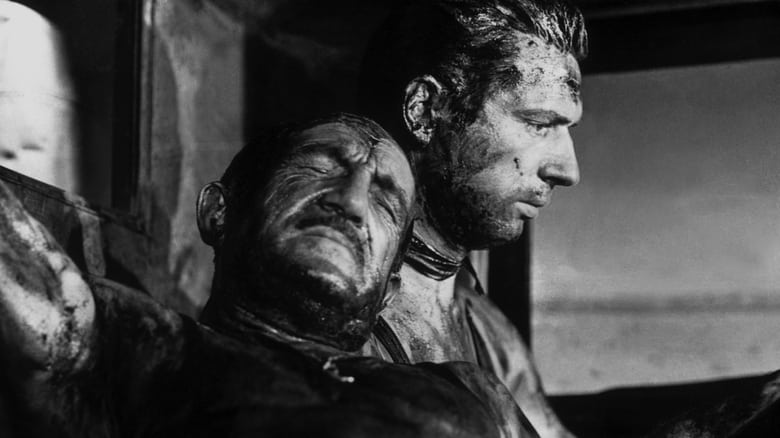
The oil, both the burning well and the pool that traps Mario and Jo, symbolizes the corrupting, all-consuming force of capitalism and corporate greed. It is the source of the SOC's wealth and power, but also the cause of death and destruction. The black, viscous pool of crude oil that nearly swallows their truck is a physical manifestation of the filth and moral mire created by the relentless pursuit of profit, a trap from which it is almost impossible to escape.

Context:

The entire plot is initiated by the oil well fire. The most harrowing sequence involves Mario and Jo navigating a large, deep pool of spilled oil from a pipeline. The scene is physically and metaphorically suffocating, leading to Jo sustaining the injuries that will ultimately kill him.

The Cockroaches

Meaning:

The film's opening shot of a child tormenting cockroaches tied together with a string serves as a powerful metaphor for the main characters' situation. The insects are trapped, powerless, and subject to the whims of a cruel and indifferent force. This perfectly mirrors the men in Las Piedras, who are similarly trapped and toyed with by the larger, amoral forces of poverty and the SOC.

Context:

This is the very first image of the film after the opening credits. A young boy watches the tethered cockroaches struggle against each other before becoming distracted by a passing vendor, only to return and find a vulture has eaten his 'toys.' This opening sequence establishes the film's themes of powerlessness and the cheapness of life in this environment.

The Trucks

Meaning:

The dilapidated, barely functional trucks symbolize the characters' own worn-out, fragile lives. They are unreliable vehicles for a desperate journey, much like the men are flawed and damaged vessels for their own ambitions. The trucks are constantly on the verge of breaking down or exploding, mirroring the psychological and physical fragility of the drivers themselves as they are pushed to their breaking points.

Context:

The two trucks are the primary setting for the second half of the film. Their physical struggles—getting stuck, navigating treacherous turns, backing onto a rotten platform—are the main set pieces of the thrilling journey and are central to every moment of suspense.

Memorable Quotes

C'est comme la prison ici. Facile d'entrer... Mais on n'en sort pas.

— Mario

Context:

Mario says this early in the film while talking to Jo, explaining the bleak, inescapable nature of the town where they are all stranded.

Meaning:

Translated as, "It's like prison here. Easy to get in... But there's no way out." This quote perfectly encapsulates the existential trap of Las Piedras and the feeling of hopelessness that pervades the film's first act. It establishes the immense desperation that will drive the characters to accept the suicidal mission.

Tu vas voir, c'est contagieux, la peur. Ça se prend comme la petite vérole. Et quand on l'a, c'est pour la vie.

— Jo (paraphrased from novel)

Context:

This sentiment is expressed as the men confront the reality of their mission, highlighting the psychological stakes of their journey, a fear that proves more debilitating than the physical dangers themselves.

Meaning:

Translated as, "You'll see, fear is contagious. It's catching like smallpox. And once you get it, it's for life." This line articulates one of the film's central themes: the infectious and permanent nature of profound fear. It foreshadows Jo's own complete unraveling and the psychological destruction the journey will wreak on the men.

Partout où il y a du pétrole, il y a les Américains.

— Unnamed Villager

Context:

This line is spoken by one of the disenfranchised men in Las Piedras, commenting on the power and pervasive influence of the Southern Oil Company (SOC).

Meaning:

Translated as, "Wherever there's oil, there are Americans." This quote is a direct and succinct expression of the film's anti-imperialist and anti-capitalist critique, pointing to the exploitative presence of American corporate interests in developing nations.

Philosophical Questions

What is the nature of courage in the face of certain death?

The film relentlessly questions traditional definitions of courage. Jo, the outwardly brave character, is revealed as a coward, while others who do not boast of their bravery manage to persevere. The film explores whether true courage is stoicism (Bimba), hopeful desperation (Luigi), or cynical survivalism (Mario). Ultimately, it suggests that in an absurd universe, such distinctions may be meaningless, as fate is arbitrary and does not reward the brave or punish the cowardly. Death comes for them all, making their displays of courage or fear seem like futile gestures in the face of oblivion.

Can individuals exercise free will when trapped by economic and social circumstances?

The Wages of Fear is a stark portrayal of determinism, where the characters' choices are severely constrained by their poverty. The men 'choose' to take the job, but it is a choice made under extreme duress, with the only alternative being a slow 'croaking' in Las Piedras. The film asks whether this can be considered true freedom. The all-powerful SOC dictates the terms of their existence, making them pawns in a corporate game. This raises the existential question of whether free will is an illusion when one's environment is so overwhelmingly oppressive.

Is there any meaning or morality in a world governed by greed and chance?

The film presents a deeply nihilistic worldview, suggesting that the world is amoral and chaotic. The actions of the SOC are driven purely by profit, with no regard for human life. The protagonists' journey is a series of random, life-threatening events. The tragic deaths of all four drivers, especially Mario's at the very moment of his supposed triumph, powerfully argues that their sacrifices were meaningless. The film seems to conclude that in such a world, the pursuit of money is a hollow goal and survival is merely a temporary postponement of an inevitable, senseless end.

Alternative Interpretations

While the film's ending is widely seen as a final, cruel twist of fate that underscores its nihilistic themes, some interpretations offer a more character-driven reading. One perspective is that Mario's reckless driving is not simply careless joy, but a subconscious death wish. Having survived the ordeal, he has been so psychologically scarred and has lost so much of his humanity that he can no longer live in a world without that life-or-death intensity. His crash is an act of self-destruction, a final release from the fear and trauma he has endured.

Another interpretation posits that the ending is a deliberate mockery of Hollywood conventions. After putting the audience through such a grueling, heart-stopping ordeal, Clouzot presents a fleeting moment of triumph—Mario has the money, the girl is waiting, and a cheerful Strauss waltz plays on the radio. He then violently subverts the expected 'happy ending' by having Mario plunge to his death. This is seen not just as a final note of existential despair, but as a cynical commentary on the artificiality of cinematic storytelling and a rejection of audience expectations for a neat, satisfying conclusion.

Cultural Impact

The Wages of Fear was a monumental success upon its release, achieving both critical acclaim and significant box office numbers in Europe. It cemented Henri-Georges Clouzot's reputation as a master of suspense, earning him the moniker of the 'French Hitchcock.' The film's gritty realism and almost unbearable tension set a new standard for the thriller genre, influencing countless filmmakers for decades to come.

Its unflinching political commentary was highly controversial at the time. Released during the height of the Cold War, its sharp critique of American corporate imperialism led to accusations of anti-Americanism and significant censorship in the United States, where scenes depicting the SOC's ruthless exploitation were removed. This censorship itself highlights the politically charged atmosphere of the 1950s. The film's themes resonated with a post-war European audience grappling with existential dread, disillusionment, and the new global economic order.

The film's influence is evident in numerous later works, most notably Sam Peckinpah's The Wild Bunch, which pays homage to the opening scene with the insects. Its legacy endures as a landmark of French cinema and a masterclass in suspense, studied for its pacing, psychological depth, and profound, if bleak, commentary on the human condition.

Audience Reception

Upon its release, The Wages of Fear was met with widespread critical acclaim, particularly in Europe, where it was praised for its masterful suspense and profound themes. Critics hailed Henri-Georges Clouzot's direction, frequently comparing his ability to build tension to that of Alfred Hitchcock. The film was a major commercial success in France, becoming one of the highest-grossing films of the year. Audiences were reportedly left breathless by the film's relentless, nerve-wracking set pieces.

In the United States, the reception was more complicated due to the extensive censorship. While still recognized as a powerful thriller, many critics and audiences were unaware of the excised political content that gave the film its deeper meaning. Over time, as the restored, uncut version has become widely available, its reputation has solidified globally. Today, it holds a perfect 100% rating on Rotten Tomatoes and is considered by critics and cinephiles alike to be a masterpiece of world cinema and one of the greatest thrillers ever made. The main point of criticism, for some viewers, is the lengthy setup in Las Piedras, though most critics argue this exposition is essential for establishing the characters' desperation and the film's oppressive atmosphere.

Interesting Facts

  • The film is the first and only to win both the Palme d'Or (then called the Grand Prix) at the Cannes Film Festival and the Golden Bear at the Berlin Film Festival in the same year.
  • Due to its perceived anti-American sentiment, particularly its critical portrayal of an American oil company, the film was heavily censored for its initial U.S. release, with nearly 50 minutes of footage removed. The cuts primarily excised political commentary and character development from the first act.
  • The famous French actor Jean Gabin turned down the role of Jo because he did not want his fans to see him portray a coward.
  • During the sequence where the truck is submerged in a pool of crude oil, actors Yves Montand and Charles Vanel both contracted conjunctivitis from the fumes and the oil itself.
  • Director Henri-Georges Clouzot was a famously demanding and tyrannical director. He was known for pushing his actors to their limits to achieve authentic performances, mirroring the on-screen tension with real-life hardship.
  • The author of the source novel, Georges Arnaud (pen name for Henri Girard), based the story on his own experiences in South America where he had worked as a truck driver.
  • The entire film was shot in the South of France, near Nîmes, where the desolate landscape effectively substituted for South America.
  • William Friedkin, director of the 1977 remake *Sorcerer*, has stated that his film is a reinterpretation of the novel, not a direct remake of Clouzot's film.

⚠️ Spoiler Analysis

Click to reveal detailed analysis with spoilers

Frequently Asked Questions

Explore More About This Movie

Dive deeper into specific aspects of the movie with our detailed analysis pages

Comments (0)

Leave a comment

No comments yet. Be the first to share your thoughts!