
Skip to content
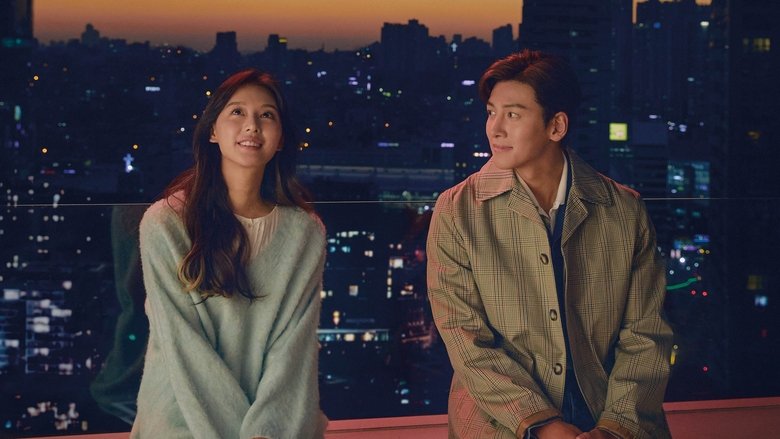
Lovestruck in the City
A stylish, bittersweet urban mockumentary drenched in romantic yearning, capturing modern love as fleeting footprints in coastal sand slowly washed over by the neon pulse and cold rain of a bustling metropolis.
Lovestruck in the City

Lovestruck in the City

도시남녀의 사랑법

22 December 2020 — 16 February 2021 South Korea 1 season 17 episode Ended 7.7 (176)

Cast: Ji Chang-wook, Kim Ji-won, Kim Min-seok, So Joo-yeon, Ryu Kyung-soo

Drama Identity, Masks, and Authenticity The Clash of Fantasy vs. Reality in Modern Romance Differing Life Philosophies and Social Expectations Closure, Lingering Resentment, and Forgiveness

Overview

Lovestruck in the City (literally City Couple’s Way of Love: My Lovable Camera Thief) is a digital short-form romantic drama presented in an innovative documentary and interview format. The story tracks six young adults living in modern Seoul who candidly break the fourth wall to answer probing questions from an unseen documentary crew about their romantic philosophies, dating behaviors, breakups, and emotional baggage.

At the center of the narrative is Park Jae-won, an architect who is unable to move on from a passionate, idyllic summer romance he experienced a year prior in the seaside surf town of Yangyang. The woman he fell in love with, known to him as the free-spirited Yoon Seon-a, abruptly ghosted him upon their planned return to Seoul, vanishing with his vintage cameras. Unbeknownst to Jae-won, "Seon-a" is actually Lee Eun-o, an ordinary freelance marketer living in Seoul whose real identity and inner insecurities are tightly guarded behind that beachside alter ego.

The drama interweaves Jae-won and Eun-o’s emotional collision with the lives of two other contrasting couples in their shared social orbit: Choi Kyeong-jun and Seo Rin-i, a seemingly stable long-term couple navigating divergent life goals, and Kang Geon and Oh Seon-yeong, ex-lovers dealing with the messy aftermath of their volatile breakup. Through these intertwined relationships, the series constructs an intimate portrait of millennial romantic entanglement in a hyper-connected yet isolating urban world.
Core Meaning

The core thesis of Lovestruck in the City is that genuine love cannot survive on romanticized fantasies or borrowed identities; it demands the courage of self-acceptance and emotional vulnerability. The creators critique how modern urban life pressures young adults to project fabricated, flawless personas to avoid rejection. The series demonstrates that running away into an alter ego will eventually collapse under reality, and true intimacy only begins when two people accept their own—and each other's—flawed, unvarnished truths.

Thematic DNA

Identity, Masks, and Authenticity 35%
The Clash of Fantasy vs. Reality in Modern Romance 25%
Differing Life Philosophies and Social Expectations 20%
Closure, Lingering Resentment, and Forgiveness 20%

Identity, Masks, and Authenticity

The central thematic pillar revolves around Lee Eun-o creating "Yoon Seon-a" to escape her feelings of inadequacy after experiencing career failure and heartbreak. Throughout the show, the narrative investigates how much of oneself is performed for others versus genuinely lived, ultimately culminating in Eun-o embracing both her quiet, hesitant self and her adventurous impulses.

The Clash of Fantasy vs. Reality in Modern Romance

The seaside romance in Yangyang represents an untethered, cinematic daydream where normal societal constraints do not apply. The Seoul storyline deconstructs that fantasy: love in the city involves rent, job stress, social ties, and confronting painful misunderstandings.

Differing Life Philosophies and Social Expectations

Exemplified through Kyeong-jun and Rin-i, the drama explores how standard capitalistic benchmarks of success (corporate career, home ownership, status) conflict with alternative, minimalist lifestyle choices. It highlights that love alone cannot always bridge fundamental differences in values.

Closure, Lingering Resentment, and Forgiveness

Whether it is Jae-won obsessively harboring anger over being ghosted or Seon-yeong stripping her ex of past gifts, the characters struggle with the messy process of letting go. The show demonstrates that closure rarely comes from neat explanations, but rather from forgiving past hurts and accepting reality.

Character Analysis

Park Jae-won

Ji Chang-wook

Archetype: The Passionate Romantic / Idealist Key Trait: Unfiltered emotional honesty and stubborn dedication.

Motivation

To understand why he was abandoned and find true romantic reciprocity.

Character Arc

Starts as a deeply lovesick, resentful romantic fixated on a past summer memory; evolves through painful confrontations to love the real, imperfect Lee Eun-o without requiring her to be a fantasy.

Lee Eun-o ("Yoon Seon-a")

Kim Ji-won

Archetype: The Masked Seeker / Escapist Key Trait: Guarded vulnerability concealed beneath bold facades.

Motivation

To protect her fragile self-worth and discover who she truly wants to be.

Character Arc

Escapes to Yangyang under an alter ego after hit by personal failure; transitions from running away from her flaws to confronting her past, integrating both identities, and defining herself on her own terms.

All 5 characters and cast

Symbols & Motifs

The Vintage Cameras

Meaning:

Represent memory, perspective, and captured moments of uninhibited truth.

Context:

Jae-won giving his cameras to Eun-o—and her retaining them as a "camera thief"—symbolizes stolen memories and her reluctance to surrender the version of herself that felt genuinely alive.

The Surfing / Yangyang Beach

Meaning:

A motif of freedom, escapism, and spontaneity.

Context:

The ocean represents an unstructured vacuum where social status vanishes, contrasting sharply with the structured, rigid alleyways and office buildings of Seoul.

The Camper Van

Meaning:

Symbolizes a self-contained, temporary paradise.

Context:

Their impromptu wedding on top of the van reflects an idealistic, non-binding commitment made outside societal rules, which later haunts Jae-won when translated to the real world.

The Wedding Rings / Cheonggyecheon Stream

Meaning:

The tangible token of Jae-won’s devotion.

Context:

Jae-won throwing his ring into the stream—and Eun-o secretly retrieving it—serves as a physical barometer for their unresolved emotional ties and mutual inability to truly sever their connection.

The Documentary Camera / Fourth-Wall Breaks

Meaning:

A meta-symbol of vulnerability and self-narration.

Context:

Facing the lens forces the characters to rationalize their decisions out loud, frequently exposing the hypocrisies between what they preach and how they actually behave.

Memorable Quotes

내가 사랑한 건 윤선아가 아니라 너야, 이은오.
— Park Jae-won

Context

Spoken during the climactic Seoul reconciliation phase in Episode 15.

Meaning

This line shatters Eun-o's core fear that Jae-won only loved her fabricated persona.

나는 그냥… 나답게 살고 싶었을 뿐이야.
— Lee Eun-o

Context

Delivered during her interview confession to the documentary crew.

Meaning

Encapsulates her motivation for running away to Yangyang and her painful quest to construct an authentic self.

All 4 quotes

Episode Highlights

Lovestruck in the City

S1E1

Introduces the documentary framing device and the six participants while establishing the idyllic flashback to September 2019 in Yangyang, where Jae-won meets the effervescent "Yoon Seon-a" at Ra-ra’s ramyeon stand.

Significance:

Sets the foundation for the entire dual-timeline structure and character dynamics.

Where Did She Go?

S1E4

Depicts the intimate camper-van wedding and the abrupt end of their vacation, showing Jae-won waiting futilely at Cheonggyecheon in Seoul while Eun-o watches from afar and chooses to ghost him.

Significance:

Marks the pivotal transition from summer romance to the core mystery of the show.

Is This Love?

S1E8

Highlights Jae-won’s drunken breakdown at a police station reporting the "camera thief" to Officer Oh Dong-shik.

Significance:

Delivers a standout emotional performance by Ji Chang-wook that balances comedic despair with gut-wrenching heartbreak.

Lee Eun-o, You’re Busted

S1E10

Captures the moment Jae-won accidentally spots Eun-o in Seoul and realizes she has been living under a different name right under his nose.

Significance:

Acts as the major turning point of the series, shattering the seaside illusion and forcing immediate real-world confrontation.

I Want to Erase You

S1E12

Features an intense emotional confrontation where Eun-o returns the cameras and confesses why she pretended to be Yoon Seon-a, prompting Jae-won to throw his wedding ring into the river.

Significance:

Marks the absolute rock-bottom emotional state for their relationship.

Are You Lee Eun-o or Yoon Seon-a?

S1E15

Jae-won steps into Eun-o’s marketing suitcase-office, confronts her ordinary, struggling reality, and confirms he accepts both sides of her.

Significance:

Transitions their dynamic from unresolved trauma to genuine, honest courtship.

The Way City Men and Women Love

S1E16

Provides resolution for all core couples as Jae-won and Eun-o begin dating anew without masks, while Rin-i and Kyeong-jun make the mature choice to break up over irreconcilable life philosophies.

Significance:

Serves as the original planned finale that concludes the primary storylines.

Winter, Night, Seoul

S1E17

An epilogue episode focusing on recurring police officer Oh Dong-shik and actress Hae-na.

Significance:

Expands the thematic tapestry of city dating to show the gentle, tentative start of another urban romance.

Philosophical Questions

Can one truly love someone if the relationship began under false pretenses?

The series asks whether Jae-won fell in love with a fiction or whether the core emotional energy between two souls remains genuine regardless of the names they use.

Is modern ambition required for a fulfilled life?

Through Rin-i, the narrative queries whether opting out of the rat race in pursuit of modest contentment is a valid life choice or an irresponsible avoidance of adulthood.

Why do we hide our weakest moments from those we love the most?

Eun-o’s ghosting behavior exposes how pride and shame often sabotage intimacy more effectively than external obstacles.

Alternative Interpretations

The Psychological Reading (Integration of the Self): Eun-o’s journey is not merely about finding a romantic partner, but about individuation. "Yoon Seon-a" was not a lie, but an uninhibited part of herself waiting to be unlocked. The ending signifies that she did not abandon "Seon-a" or revert to timid "Eun-o"; she integrated both into a whole, self-assured woman.

Full ending explanation

Cultural Impact

Lovestruck in the City emerged during the 2020 OTT streaming boom in South Korea. Traditional Korean romance dramas frequently adhered to high melodrama, 70-minute broadcast runtimes, and idealized, saintly archetypes. Lovestruck in the City pushed boundaries by adapting web-drama brevity for mainstream A-list actors, employing an interview-mockumentary format rarely seen in K-dramas, and showcasing realistic, morally gray dating dilemmas such as ghosting, casual cohabitation, non-traditional careers, and bitter breakups.

It reflected the genuine anxieties of Korean millennials who feel caught between intense societal pressure to succeed and the desire for personal identity and happiness.

Audience Reception

Lovestruck in the City received praise from domestic and international viewers for its fresh, breezy mockumentary format, naturalistic dialogue, and sizzling chemistry between Ji Chang-wook and Kim Ji-won. Ji Chang-wook's performance as an emotionally vulnerable, lovesick man received widespread critical acclaim. The nuanced resolution of the secondary couple, Rin-i and Kyeong-jun, was also praised.

Main points of criticism centered around the pacing of the middle episodes and viewer frustration with Lee Eun-o's prolonged refusal to communicate, which some viewers felt bordered on cruel and emotionally immature. The 17th bonus episode divided opinions: while fans of Choi Min-ho enjoyed his spotlight, others felt it derailed momentum from the central narrative. Overall, it is widely regarded as a standout modern romance that pushed K-drama storytelling formats forward.

Interesting Facts

  • Produced by Kakao M as a flagship original for KakaoTV and co-distributed globally by Netflix, the drama was specifically designed with 30-minute episodes to fit mobile and OTT consumption habits.
  • Originally conceived with the subtitle My Lovable Camera Thief as the first installment of a multi-season anthology series exploring various urban dating dynamics.
  • Initially scheduled for 16 episodes, KakaoTV extended the series to 17 episodes to flesh out the romance of supporting character Oh Dong-shik (played by Choi Min-ho).
  • The drama united director Park Shin-woo (fresh off It's Okay to Not Be Okay) with celebrated romance writer Jung Hyun-jung (Romance is a Bonus Book, Discovery of Love).
  • Ji Chang-wook and Kim Ji-won underwent intensive surf training and cold-water filming in Yangyang, Gangwon Province, to authentically depict beach lifestyle and surfing culture.
  • Filming faced temporary halts in November 2020 during the second wave of COVID-19 in South Korea when an extra tested positive, prompting schedule reshuffles.

Easter Eggs

Choi Min-ho (SHINee) as Oh Dong-shik

His guest appearance as the patient local police officer listening to Jae-won's drunken complaints became so popular it earned him the central spotlight in the final 17th episode.

Lee Sang-yoon & Lee Sang-woo cameos

Both veteran actors made playful early cameos as beach residents in Yangyang (Go Gyeong-gu and Bin), creating an easygoing, communal coastal atmosphere.

Park Jin-joo as Ra-ra

Reunited with director Park Shin-woo after working together on It's Okay to Not Be Okay, playing the quirky owner of Ra-ra’s ramen shack.

Pyo Ye-jin as the "Real" Yoon Seon-ah

Appears in Episode 11–12, revealing the actual acquaintance whose name and confident persona Eun-o borrowed when running away.

Writer Jung Hyun-jung’s Structural Homage

The rapid back-and-forth interview style and frank discussion of exes pays direct homage to Jung's earlier cult-classic romance Discovery of Love.

Frequently Asked Questions

Explore More About This Movie

Dive deeper into specific aspects of the movie with our detailed analysis pages

Comments (0)

Leave a comment

No comments yet. Be the first to share your thoughts!

Similar Movies