Mustang
A sun-drenched, claustrophobic fable of girlhood resistance. Against the backdrop of a conservative Turkish village, five sisters' innocent joy is suffocated by patriarchal walls, turning their home into a prison of arranged marriages and tragedy.
Mustang

Mustang

"Their spirit would never be broken."

17 June 2015 Turkey 97 min ⭐ 7.7 (1,430)
Director: Deniz Gamze Ergüven
Cast: Güneş Nezihe Şensoy, Doğa Zeynep Doğuşlu, Elit İşcan, Tuğba Sunguroğlu, Ilayda Akdoğan
Drama
The Demonization of Female Sexuality Confinement vs. Freedom Sisterhood and Solidarity Tradition as Oppression
Budget: $1,300,000
Box Office: $5,300,000

Overview

In a remote village on the Black Sea coast of Turkey, five orphaned sisters—Lale, Nur, Ece, Selma, and Sonay—celebrate the end of the school year with an innocent splash in the sea with male classmates. However, their playful exuberance is observed by a neighbor and reported as illicit behavior. This triggers a draconian crackdown by their grandmother and domineering uncle, who view their actions as a stain on the family's honor.

The family home is progressively transformed into a fortress, with bars installed on windows and high walls erected to keep the outside world at bay. The girls are taken out of school and subjected to domestic training, their home becoming a "wife factory" designed to marry them off one by one. As the older sisters face forced marriages and tragedy, the youngest, Lale, observes the tightening noose and begins to plot a desperate escape for herself and her remaining sister, refusing to submit to the destiny laid out for them.


Core Meaning

Mustang is a powerful critique of patriarchal oppression and the demonization of female sexuality. Director Deniz Gamze Ergüven uses the narrative to expose how traditional societies can perceive innocent girlhood through a hyper-sexualized lens, effectively punishing young women for merely existing. The film serves as a plea for female autonomy and a celebration of the unbreakable bond of sisterhood in the face of erasing cultural forces.

Thematic DNA

The Demonization of Female Sexuality 30%
Confinement vs. Freedom 25%
Sisterhood and Solidarity 25%
Tradition as Oppression 20%

The Demonization of Female Sexuality

The central conflict arises from the male gaze projected onto the girls. Their innocent game of "chicken fight" in the water is reinterpreted by the village as obscene. The film illustrates how conservative societies project sexual intent onto young women, policing their bodies and behavior to protect a fragile concept of "honor."

Confinement vs. Freedom

This theme is visually represented by the transformation of the house. Initially an open space, it becomes a literal prison with raised walls and barred windows. The girls' wild, "mustang"-like energy contrasts sharply with the static, suffocating interior of the domestic sphere they are forced into.

Sisterhood and Solidarity

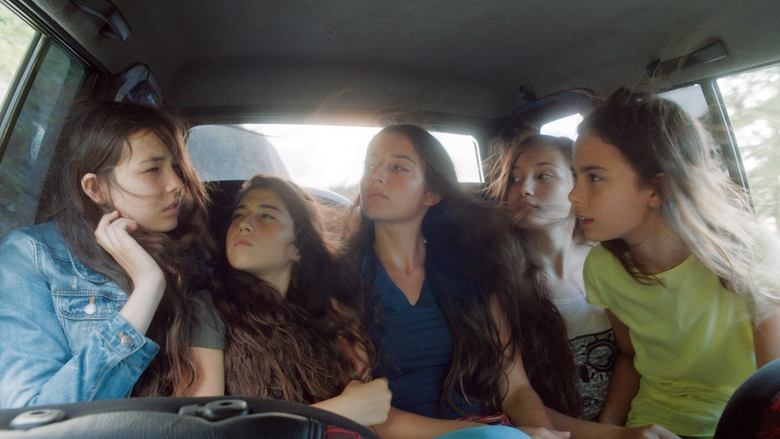
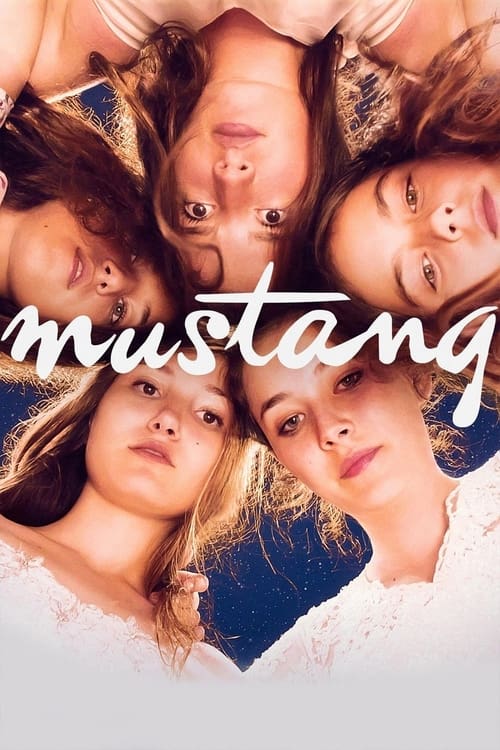
The five sisters function almost as a single organism—a "five-headed hydra" of tangled limbs and shared hair. Their physical closeness and emotional support provide the only shield against the outside world. Even as they are separated by marriage and death, their bond drives the narrative's emotional core.

Tradition as Oppression

The film critiques how tradition is used as a tool of control. The grandmother, though loving, enforces the patriarchal rules (the "shit-colored" dresses, the cooking lessons) out of fear of social ostracization, showing how women become complicit in their own oppression to survive.

Character Analysis

Lale

Güneş Şensoy

Archetype: The Rebel / The Observer
Key Trait: Defiance

Motivation

To escape the inevitable fate of forced marriage and to save her remaining sister, Nur, from the "wife factory."

Character Arc

Lale starts as the youngest observer of her sisters' fates but quickly becomes the catalyst for action. Unlike her sisters who succumb or despair, she actively learns to drive and plots their escape. Her journey is one of awakening—from innocence to a hardened determination to survive.

Sonay

Ilayda Akdoğan

Archetype: The Negotiator
Key Trait: Passion

Motivation

To marry the boy she loves as a way to escape the house's strict imprisonment.

Character Arc

The eldest sister. She manages to negotiate a marriage to her boyfriend, Ekin, rather than a stranger. She represents a form of resistance that works within the system to find the best possible outcome, though she still leaves the group.

Ece

Elit İşcan

Archetype: The Tragic Figure
Key Trait: Melancholy

Motivation

To escape her pain and the violation of her body, seeing death as the only exit.

Character Arc

Ece is the most visibly burdened by the abuse (implied sexual abuse by the Uncle). She does not fight back externally like Lale but internalizes the trauma until she commits suicide, serving as the film's darkest turning point.

Uncle Erol

Ayberk Pekcan

Archetype: The Patriarchal Villain
Key Trait: Domination

Motivation

To maintain the family's "honor" in the eyes of the village and to satisfy his own perverse need for control.

Character Arc

He represents the brutal enforcement of patriarchy. He devolves from a strict guardian to a monstrous figure of abuse and control, stripping the house of all joy and safety.

Symbols & Motifs

The Mustang (Wild Horse)

Meaning:

Symbolizes the girls' untamable spirits, wild hair, and natural desire for freedom. Like wild horses, they are corralled and "broken" by the family.

Context:

The title itself serves as the primary metaphor, reflected in the imagery of their long, flowing hair and their chaotic, energetic movements before their confinement.

The House / "Wife Factory"

Meaning:

Represents the systematic domestication of women. It is a place where individuality is stripped away to produce compliant wives.

Context:

Lale explicitly calls the house a "wife factory" in her voiceover as she watches her sisters being taught to cook and sew shapeless dresses.

The Sea

Meaning:

Represents infinite possibility and freedom, contrasting with the landlocked, walled-in existence of the village.

Context:

The film opens with the girls playing in the sea, and the final escape involves a journey toward Istanbul, crossing water (the Bosphorus) to reach freedom.

Shapeless Brown Dresses

Meaning:

Symbolizes the erasure of femininity and individuality. They are designed to hide the female form and suppress desire.

Context:

The grandmother forces the girls to trade their school uniforms and casual clothes for these "shit-colored" garments to signal their modesty to the village.

Memorable Quotes

The house became a wife factory that we never came out of.

— Lale (Voiceover)

Context:

Spoken by Lale as she watches her sisters being trained in domestic chores and dressed in conservative clothing.

Meaning:

This quote encapsulates the film's central metaphor: the reduction of women to domestic commodities. It highlights the industrial, dehumanizing nature of their upbringing.

Everything changed in the blink of an eye. First, we were free, then everything turned to shit.

— Lale (Voiceover)

Context:

Spoken at the beginning of the film, describing the immediate aftermath of the innocent beach scene.

Meaning:

Marks the sudden loss of innocence. It emphasizes how quickly the adult world's sexualized perception can destroy the freedom of childhood.

I slept with the whole world!

— Sonay

Context:

Shouted by Sonay when the grandmother interrogates them about what they did with the boys in the water.

Meaning:

A sarcastic, rebellious declaration mocking the village's obsession with their virginity. It shows Sonay's refusal to be shamed, using hyperbole to disarm the accusation.

Philosophical Questions

How does the 'male gaze' construct female reality?

The film explores how women's lives are dictated not by what they do, but by how men see what they do. An innocent game becomes 'obscene' solely because of the observer's mind. The film asks whether female freedom is possible in a society where the male gaze is the ultimate arbiter of truth.

Is freedom physical or internal?

While the house restricts their physical bodies, the film questions if their spirits can be caged. Ece's suicide is a tragic form of reclaiming agency (refusing to be possessed), while Lale's escape is physical. The film suggests that true freedom requires breaking the physical structures of oppression, not just mental resistance.

Alternative Interpretations

Fairy Tale vs. Social Realism: While the film deals with grim realities, many critics interpret it as a dark fairy tale rather than a documentary-style drama. The 'monster' (Uncle), the 'tower' (the house), and the 'courageous escape' fit mythical structures. This reading suggests the lack of specific geographical markers (accents, dialects) is intentional, universalizing the myth of the girl-heroine.

The Political Allegory: Some view the film as a direct allegory for the shifting political landscape of Turkey—from a secular, free society (the sea scene) to an increasingly conservative, religiously restrictive regime (the walled house), with the girls representing the resilient, modern spirit of the country trying to break free.

Cultural Impact

Mustang sparked intense debate upon its release. Internationally, it was celebrated as a feminist masterpiece, winning the César Award for Best First Feature Film and receiving an Oscar nomination. It resonated with global audiences as a universal story of female resistance.

However, within Turkey, the reception was polarized. Conservative critics and some viewers accused the film of Orientalism, arguing that the girls' behavior and accents were inauthentic to rural Turkish life and that the film was 'designed for Western eyes.' Despite this, it became a rallying point for Turkish feminists discussing the 'child bride' crisis and domestic violence, bringing international attention to the stifling conservatism faced by women in rural Anatolia.

Audience Reception

Praised: Audiences widely praised the naturalistic performances of the five young actresses, the 'dreamy' and sun-lit cinematography, and the emotional power of the sisterly bond. The ending is often cited as a heart-pounding and triumphant moment.

Criticized: Some Turkish viewers criticized the dialogue and accents as inauthentic to the Black Sea region. A few critics felt the villains (Uncle and Grandmother) were one-dimensional caricatures of evil.

Verdict: A critically acclaimed, emotionally devastating yet hopeful film that effectively translates a specific cultural issue into a universal story of youth and rebellion.

Interesting Facts

  • The film was France's official entry for the Best Foreign Language Film at the 88th Academy Awards, despite being in Turkish and set in Turkey.
  • Director Deniz Gamze Ergüven was pregnant during the filming, which she noted made the crew very protective of her, contrasting with the film's theme of female oppression.
  • The football match scene is based on a real event from 2011, where the Turkish Football Federation banned men from a Fenerbahçe match, allowing only women and children to attend.
  • The actresses were cast for their physical resemblance and chemistry; they spent time together before filming to build the 'hydra-like' bond of the sisters.
  • The title 'Mustang' was chosen because the director felt the girls' long hair and energetic movements resembled wild horses.
  • Warren Ellis of 'Nick Cave and the Bad Seeds' composed the film's haunting score.
  • Critics in Turkey were divided; some praised it, while others accused it of 'Orientalism' and making the characters sound too urban for a rural village.

Easter Eggs

The 'Virgin Suicides' Parallel

While director Ergüven denies it as a direct adaptation, the film contains numerous visual and thematic nods to Sofia Coppola's The Virgin Suicides (1999), particularly the shots of the sisters sprawling together with tangled limbs and hair, and the narrative of five sisters trapped by strict parents.

Real Football Match Broadcast

The football match the girls sneak out to see plays actual commentary from the 2011 game where only women and children were present, grounding the film's fairy-tale atmosphere in a specific Turkish socio-political reality.

⚠️ Spoiler Analysis

Click to reveal detailed analysis with spoilers

Frequently Asked Questions

Explore More About This Movie

Dive deeper into specific aspects of the movie with our detailed analysis pages

Comments (0)

Leave a comment

No comments yet. Be the first to share your thoughts!