Skip to content
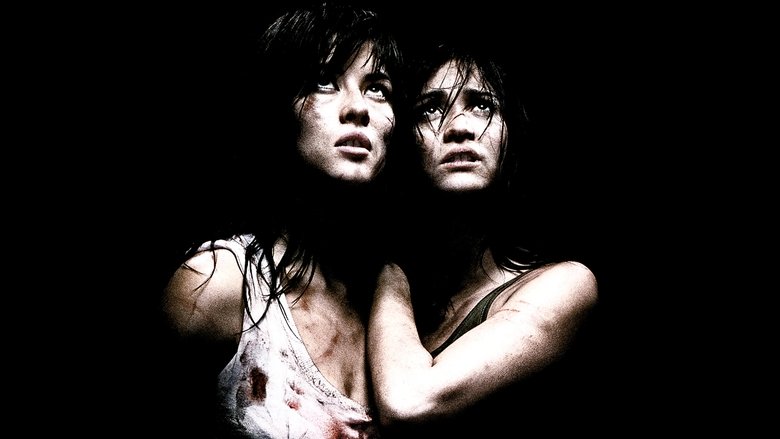
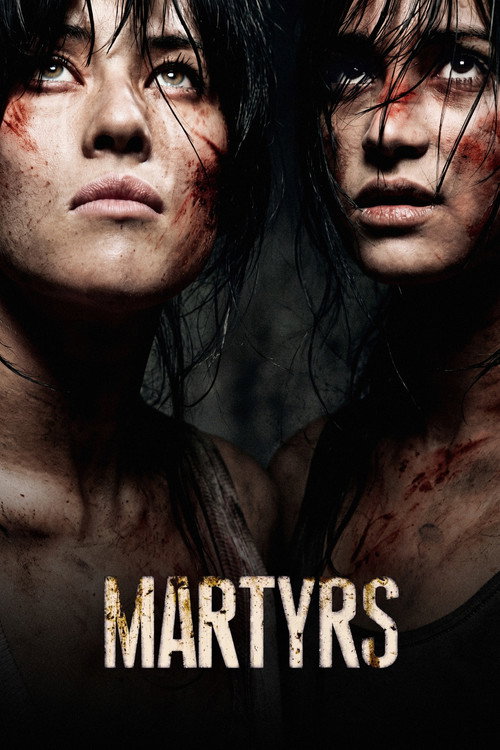
Martyrs
This harrowing New French Extremity nightmare submerges viewers in unbearable existential grief, painting a terrifying canvas where relentless, industrial agony bleeds into a fleeting, blinding glimpse of divine transcendence.
Martyrs

Martyrs

"They haven't finished being alive."

12 June 2008 Canada 99 min 7.3 (3,079)

Director: Pascal Laugier

Cast: Morjana Alaoui, Mylène Jampanoï, Catherine Bégin, Robert Toupin, Patricia Tulasne

Drama Thriller Horror The Cyclical Nature of Trauma and Survivor’s Guilt Systemic Exploitation and Privilege Suffering vs. Transcendence Devotion, Love, and Selfless Empathy
Budget: $6,500,000
Box Office: $1,100,000

Overview

Set in France during the mid-2000s, Martyrs opens with a nightmare rooted in the past. In 1971, a young girl named Lucie escapes from an abandoned slaughterhouse where she was subjected to prolonged, unspeakable abuse. Severely traumatized and mute about her ordeal, Lucie is placed in an orphanage. There, she bonds with Anna, another abused child who becomes her sole protector and confidante. Despite Anna's love, Lucie is continuously tormented by horrifying visual hallucinations of a mutilated, demonic creature that physically attacks her whenever she tries to heal.

Fifteen years later, Lucie tracks down an apparently normal, suburban middle-class family—the Belfonds. Convinced they are responsible for her childhood torment, she executes all four family members with a shotgun in a sudden, shocking act of retribution. Horrified but fiercely loyal, Anna arrives at the scene to help her friend. However, as the aftermath unfolds inside the suburban home, the boundaries between Lucie's trauma-induced delusions and reality begin to blur.

When Anna makes a discovery hidden beneath the house, the narrative shifts drastically. The story transforms from a revenge thriller into a cold, clinical descent into systematic horror, unraveling a high-society conspiracy obsessed with uncovering the ultimate mystery of human existence.

Core Meaning

Director Pascal Laugier wrote Martyrs during a period of severe clinical depression and suicidal thoughts, intending to make a film about the raw, uncompromising reality of human pain.

The central thesis of Martyrs is a critique of humanity’s obsession with seeking metaphysical answers through the violent exploitation and suffering of others. Laugier exposes how dogmatic, privileged institutions (represented by the wealthy, bourgeois cult) rationalize cruelty under the guise of enlightenment and intellectual curiosity. The film illustrates that true martyrdom is not an act of glorified self-sacrifice, but the total, tragic destruction of an innocent human being by a selfish society desperate to conquer its own existential dread.

Thematic DNA

The Cyclical Nature of Trauma and Survivor’s Guilt 30%
Systemic Exploitation and Privilege 25%
Suffering vs. Transcendence 25%
Devotion, Love, and Selfless Empathy 20%

The Cyclical Nature of Trauma and Survivor’s Guilt

Lucie’s storyline illustrates how abuse permanently fractures the mind. Her spectral tormentor is revealed to be her own survivor's guilt—a projection of another young victim she abandoned during her escape years prior. No amount of revenge can silence her trauma.

Systemic Exploitation and Privilege

The secret society consists of wealthy, elderly intellectuals who use young, disenfranchised women as disposable test subjects to answer their own existential questions.

Suffering vs. Transcendence

The film explores the distinction between a 'victim' who succumbs to agony and a 'martyr' who endures systematic torture until their sensory perception breaks through corporeal boundaries to witness the afterlife.

Devotion, Love, and Selfless Empathy

Anna’s unyielding love for Lucie drives her into the abyss. While the cult inflicts pain out of cold, intellectual curiosity, Anna endures her nightmare out of pure, selfless compassion.

Character Analysis

Anna Assaoui

Morjana Alaoui

Archetype: The Devoted Martyr / Tragic Hero Key Trait: Pure, selfless empathy.

Motivation

Love and loyalty toward Lucie, and later, basic human survival and empathy.

Character Arc

Starts as an empathetic, cautious protector cleaning up after Lucie. After Lucie's death, she discovers the underground dungeon, gets captured, endures brutal torture, and ultimately ascends to a state of complete spiritual detachment/martyrdom.

Lucie Jurin

Mylène Jampanoï

Archetype: The Broken Survivor / Avenging Victim Key Trait: Tragic, overwhelming psychological agony.

Motivation

Eradicating her tormentors and stopping the phantom that relentlessly attacks her.

Character Arc

Escapes torture as a child but remains mentally imprisoned by trauma. She executes her captors, realizes revenge does not cure her agony, and dies by suicide.

All 3 characters and cast

Symbols & Motifs

The Spectral/Mutilated Woman

Meaning:

Represents Lucie's lingering survivor's guilt. She wears the horrific wounds of the girl Lucie left behind in the slaughterhouse.

Context:

Manifests as a terrifying visual hallucination that physically attacks Lucie whenever she tries to heal.

The Metal Bridle / Head Cage

Meaning:

It symbolizes total sensory deprivation, subjugation, and the reduction of human consciousness to a forced, static gaze.

Context:

A device screwed directly into the victim's skull in the cult's underground complex.

The Photo Album of Victims

Meaning:

Symbolizes humanity's long, morbid obsession with harvesting pain for revelation.

Context:

Maintained by Mademoiselle, containing historical photographs of suffering victims across centuries.

Flaying / Skinning

Meaning:

Removing the skin represents shedding the physical, corporeal ego. Without the protective barrier of the skin, the victim is stripped down to pure, unmediated feeling and spiritual exposure.

Context:

Performed on Anna during the final stage of the cult's systematic torture.

Clean, Sterile Environments vs. Blood

Meaning:

Emphasizes the cold detachment with which atrocities are committed.

Context:

Shown through the stark contrast between the pristine, modern suburban home (and clinical dungeon) and the raw, splattered blood.

Memorable Quotes

Doutez, Étienne.
— Mademoiselle

Context

Her final words to her assistant right before putting a pistol in her mouth and pulling the trigger.

Meaning

The climax of the film; leaves the nature of the afterlife permanently ambiguous.

Il y a des victimes, et il y a des martyrs... Les martyrs sont exceptionnels. Ils survivent à tous les maux.
— Mademoiselle

Context

Explaining the cult's philosophical distinction between ordinary victims who break and true martyrs who transcend pain.

Meaning

Defines the title and core thesis of the cult's twisted experiments.

All 3 quotes

Philosophical Questions

Does purpose or knowledge justify extreme human suffering?

The film tests whether gaining the answer to the ultimate cosmic mystery compensates for torturing an innocent person.

What is the boundary between the physical body and the transcendent soul?

It asks if stripping away human skin and sensory ego allows one to perceive reality beyond mortal limits.

Is absolute truth inherently destructive to human existence?

By showing that obtaining ultimate truth leads to immediate suicide, the film explores whether human sanity requires doubt and mystery to function.

Alternative Interpretations

When Anna whispers her vision to Mademoiselle, Mademoiselle immediately kills herself, leaving Étienne with the directive to 'keep doubting'. Key theories include:

Full ending explanation

Cultural Impact

Released at the peak of the New French Extremity wave (alongside High Tension, Inside, and Frontier(s)), Martyrs was distinguished by critics as the movement's most intellectually ambitious and bleak entry.

While contemporary critics initially lumped Martyrs with American films like Saw or Hostel, scholars noted that Martyrs subverts the subgenre. Instead of treating violence as fun thrills, it makes the viewer feel the agonizing weight of every blow.

Divisive upon release, critics like Todd Brown praised its technical perfection and emotional devastation, while others condemned it as excessively sadistic. Over time, it has come to be regarded as a modern horror masterpiece and a landmark of transgressive cinema.

Audience Reception

Martyrs received polarized reactions from audiences and critics alike:

  • Praised for: Uncompromising lead performances (Morjana Alaoui and Mylène Jampanoï), stunning practical special effects, masterclass sound design, unpredictable act structure, and profound thematic depth.
  • Criticized for: Extreme, unrelenting graphic violence, the grueling mid-film torture montage, and a deeply oppressive tone that leaves viewers feeling emotionally exhausted.
  • Overall Verdict: Widely hailed as one of the most powerful, disturbing, and thought-provoking horror movies ever made—a film that viewers admire deeply but rarely wish to rewatch.

Interesting Facts

  • Pascal Laugier wrote the script during a severe bout of clinical depression to make a film about pain because he felt European horror was becoming too safe and formulaic.
  • The French ratings board initially slapped Martyrs with an 18+ rating, but after outrage from French filmmakers and an appeal to the Minister of Culture, it was lowered to a 16+ rating.
  • During its screening at the Marché du Film at the Cannes Film Festival in May 2008, multiple audience members walked out or fainted due to the extreme graphic violence.
  • Morjana Alaoui and Mylène Jampanoï endured extreme physical discomfort, with Alaoui spending hours in prosthetic makeup daily and suffering minor injuries during intense physical scenes.
  • The cult's archival photo book features actual historical photographs of human suffering, including images of Lizzie van Zyl and traditional Chinese Lingchi executions.
  • Director Jordan Peele mandated Lupita Nyong'o to watch Martyrs before filming Us (2019) to establish a shared cinematic language of terror.

Easter Eggs

Buñuel & Un Chien Andalou

The visual motif of eye damage and skin slicing directly references Luis Buñuel's surrealist classic Un Chien Andalou (1929).

Francis Bacon’s Art

The depiction of flayed meat, twisted figures in enclosed rooms, and mouth-gaping agony draws heavily from painter Francis Bacon’s visceral, existential art.

Etymology of 'Martyr'

Mademoiselle explicitly references the original Greek origin of the word martys, which translates strictly to 'witness' rather than 'one who dies for a cause'.

Literary References

The film's themes of institutionalized sadism and ritualized torment blend the transgressive philosophical writings of the Marquis de Sade with the haunting, psychological horror of Edgar Allan Poe.

Frequently Asked Questions

Explore More About This Movie

Dive deeper into specific aspects of the movie with our detailed analysis pages

Comments (0)

Leave a comment

No comments yet. Be the first to share your thoughts!

Similar Movies