
Skip to content
Memoir of a Murderer
A cold, fog-laden thriller where a fading mind hunts a killer. Memory crumbles like old paper, and a father's love and a murderer's instincts blur into the same trembling hand.
Memoir of a Murderer

Memoir of a Murderer

살인자의 기억법

"Memories can deceive you."

07 September 2017 South Korea 128 min 7.4 (402)

Director: Won Shin-yun

Cast: Sul Kyung-gu, Kim Nam-gil, Kim Seol-hyun, Oh Dal-su, Hwang Seok-jeong

Crime Thriller Mystery Memory and identity Unreliable perception and truth Paternal love and protection The nature of evil and vigilantism Guilt and the inescapable past
Budget: $125,000

Overview

Memoir of a Murderer (살인자의 기억법) is a 2017 South Korean mystery thriller directed by Won Shin-yun. It is adapted from the bestselling novel by Kim Young-ha. Sul Kyung-gu plays Kim Byung-su, an aging veterinarian in a quiet rural town. He is hiding a terrible past: for years he killed people as a self-appointed vigilante, and he stopped only after an accident seventeen years ago.

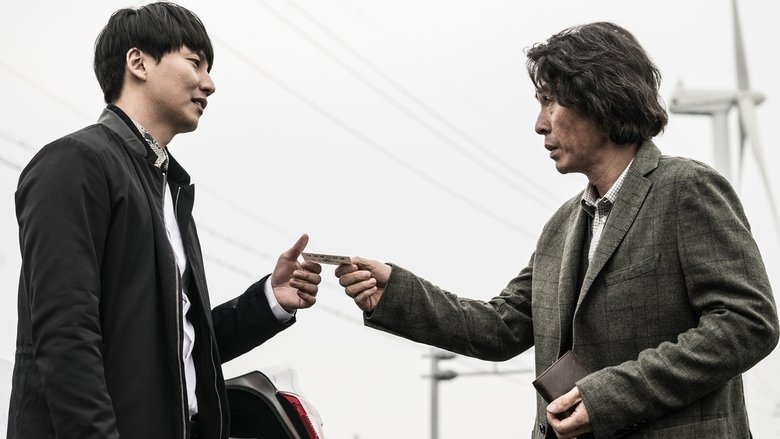
Now Byung-su has vascular dementia and Alzheimer's disease, and his memories are slipping away. He records his thoughts on a voice recorder and in notes. He lives with his beloved daughter Eun-hee (Kim Seol-hyun). A car accident brings him into contact with a police officer, Min Tae-ju (Kim Nam-gil), and Byung-su becomes sure the man is a killer like himself. He believes Tae-ju recognized him too.

When Tae-ju starts getting close to Eun-hee, Byung-su tries desperately to protect her. The problem is that he cannot trust his own mind. The film becomes a tense cat-and-mouse game in which neither Byung-su nor the audience can be sure what is real and what his illness is inventing.


Core Meaning

The film asks what is left of a person when their memory is gone. Byung-su is losing the story he tells about himself, but, as he says, his hands still remember how to kill. Won Shin-yun uses an unreliable narrator to make viewers share Byung-su's doubt, so every scene can be read in more than one way.

Underneath the thriller is a story about guilt and love. A man who has done monstrous things still loves his daughter and wants to protect her. The film suggests that identity is not just a set of memories. It is also habits, instincts and bonds that remain, for better or worse, after memory fades.

Thematic DNA

Memory and identity 30%
Unreliable perception and truth 25%
Paternal love and protection 20%
The nature of evil and vigilantism 15%
Guilt and the inescapable past 10%

Memory and identity

Byung-su's dementia is breaking apart his sense of who he is. He depends on recordings and notes to rebuild his own life, and the film keeps asking whether a man who cannot remember his crimes is still the same man.

Unreliable perception and truth

Everything reaches us through Byung-su's failing mind. Viewers are never sure whether Tae-ju is really a killer or whether Byung-su's illness has twisted what he sees and remembers.

Paternal love and protection

Byung-su's fierce need to protect Eun-hee drives the story. It makes a murderer sympathetic, even though the film reveals that his relationship to her began in violence.

The nature of evil and vigilantism

Byung-su thought of his killings as a kind of justice. When he faces Tae-ju, who may be a killer without any such excuse, he has to see himself in a mirror.

Guilt and the inescapable past

Byung-su's crimes keep returning as memories fall away. The past he buried will not stay buried.

Character Analysis

Kim Byung-su

Sul Kyung-gu

Archetype: Antihero / unreliable narrator Key Trait: Fierce resolve inside a crumbling mind

Motivation

To protect Eun-hee from Tae-ju and to hold on to the truth before his mind fails.

Character Arc

Byung-su begins as a retired serial killer who has buried his past. His dementia forces him to hunt again in order to protect his daughter. By the end he is caught between what he remembers, what he imagines, and what he really did.

Min Tae-ju

Kim Nam-gil

Archetype: Shadow / antagonist Key Trait: Charming menace

Motivation

He seems to be drawn to Byung-su and Eun-hee because he sees a fellow killer in Byung-su.

Character Arc

Tae-ju first appears as a friendly police officer and Eun-hee's boyfriend. He turns into a menacing mirror of Byung-su, though the film leaves room to wonder how much of his menace is real.

All 3 characters and cast

Symbols & Motifs

The voice recorder and written notes

Meaning:

An outside memory that stands in for a mind that is failing, and also a confession.

Context:

Byung-su records his thoughts and suspicions so he can check his own reality, but the records can be fragmentary and misleading.

The hand that remembers

Meaning:

Instinct and bodily habit as a deeper layer of identity than conscious memory.

Context:

Byung-su says that although his head is losing memories, his hand still remembers the habit of killing.

The car accident

Meaning:

A turning point in fate that brings two killers together and makes the past impossible to ignore.

Context:

A car accident leads to Byung-su's first meeting with Tae-ju. An earlier accident, seventeen years before, ended his killing career.

Poetry and prose

Meaning:

Byung-su's view of murder as an art form, set against the plain work of fatherhood.

Context:

His line "If murder is poetry, child care is prose" sums up the double life he has lived.

Memorable Quotes

If murder is poetry, child care is prose.
— Kim Byung-su

Context

Byung-su's narration as he reflects on his past and his life with Eun-hee. Only an English translation was found, not the original Korean.

Meaning

Shows how Byung-su sees murder as art and fatherhood as ordinary daily work, the two halves of his hidden life.

I regrettably can't kill any more. My head is losing the memories. But my hand remembers the habit of killing.
— Kim Byung-su

Context

Byung-su's reflection on his illness and his past. English translation.

Meaning

Sums up the film's main idea: identity lives on in the body after memory is gone.

All 5 quotes

Philosophical Questions

Is a person still responsible for crimes they can no longer remember?

Byung-su's memory of his murders is fading, but his guilt and his instincts remain. The film asks whether identity and moral responsibility depend on memory.

Can a murderer truly love?

Byung-su's devotion to Eun-hee looks sincere, yet it began with violence, since he took her from one of his victims. The film leaves open whether his love redeems him or only complicates who he is.

How can we know what is real when our own mind is unreliable?

By sticking with Byung-su's point of view, the film makes viewers feel his uncertainty and doubt what they see.

Is 'justified' killing different from any other killing?

Byung-su killed as a vigilante. Facing Tae-ju pushes him and the viewer to ask whether that difference means anything.

How It Ends

Alternative Interpretations

Tae-ju really is a killer: Read literally, Byung-su correctly spots a fellow predator, and his memory, however broken, protects his daughter.

Full ending explanation

Cultural Impact

The film came out in 2017 as part of a strong run of Korean serial-killer thrillers. It stood out because it put a killer with dementia at the center and told the story through an unreliable narrator. It adapted one of Kim Young-ha's best-known novels and was a commercial success, earning about US$19.5 million. A director's cut was later released.

Critics such as The Reel Bits called it a top-notch thriller that keeps audiences thinking after the credits. They praised how it uses the unreliable narrator and Sul Kyung-gu's physical, emaciated performance, which the Korea Herald highlighted. The same novel was later adapted again as the Japanese film Memoirs of a Murderer, which shows how appealing the source material has been across cultures.

Audience Reception

The film scores about 7.2 on IMDb. Viewers and critics widely praised Sul Kyung-gu's performance, the gripping premise, and the clever use of an unreliable narrator that keeps viewers guessing.

The most common criticism is about the finale. Some reviewers felt it slides into melodrama, with over-the-top twists and a long, drawn-out fight scene. Others were frustrated or fascinated by the ambiguity about what is real. Overall, it is seen as a strong, thought-provoking Korean thriller whose ending splits opinion.

Interesting Facts

  • The film is based on the bestselling novel of the same Korean title by Kim Young-ha.
  • It was distributed by Showbox. Filming began in late 2015.
  • It was released in South Korean theaters on 6 September 2017.
  • Sul Kyung-gu, about 50 at the time, lost a lot of weight to play a man in his late 50s to early 60s with Alzheimer's disease.
  • Sul had made dramatic physical transformations before, for Peppermint Candy (2000) and Rikidozan (2004).
  • The theatrical cut runs 118 minutes. A director's cut runs 128 minutes.
  • The film earned about US$19.5 million at the box office.

Frequently Asked Questions

Explore More About This Movie

Dive deeper into specific aspects of the movie with our detailed analysis pages

Comments (0)

Leave a comment

No comments yet. Be the first to share your thoughts!

Similar Movies