Skip to content
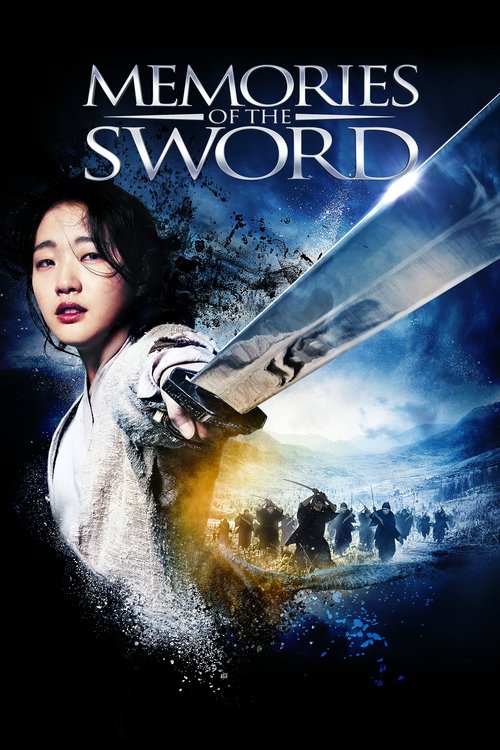
Memories of the Sword
A melancholy Goryeo-era swordplay tragedy where revenge, love and betrayal collide; grief hangs like mist over tea fields and snow, and every blade carries a memory that will not stay buried.
Memories of the Sword

Memories of the Sword

협녀, 칼의 기억

"The fated Battle of the Three Swords."

13 August 2015 South Korea 120 min 6.6 (111)

Director: Park Heung-sik

Cast: Lee Byung-hun, Jeon Do-yeon, Kim Go-eun, Bae Soo-bin, Sung Yu-been

Drama History Action Revenge and its cost Betrayal and lost ideals Memory and the past Love, guilt and tragic bonds Growth and identity

Overview

Memories of the Sword (2015) is a South Korean period martial-arts drama directed by Park Heung-sik. He co-wrote it with Choi A-reum. It is set in the final years of the Goryeo dynasty. Three warriors once led an uprising on behalf of the impoverished. One of them betrayed the others, and the uprising's leader died. Another fled with her sword and an infant girl.

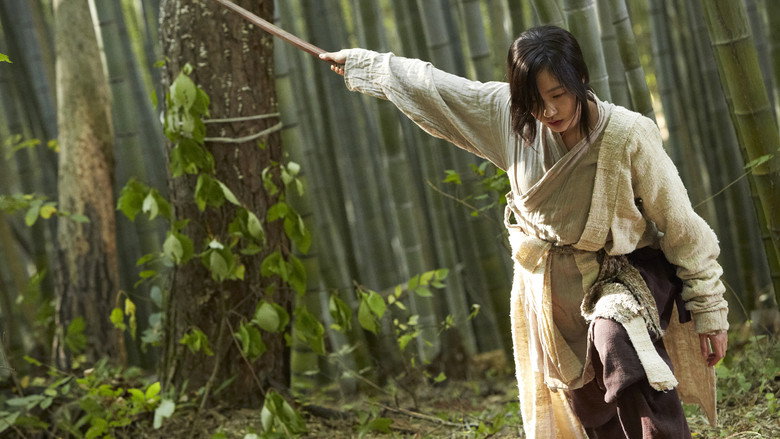
Eighteen years later the fugitive, Wol-so (Seol-rang), is blind. She has raised the girl, Hong-yi (Kim Go-eun), as her adoptive daughter and swordswoman. Hong-yi is lively and confident, and she is drawn toward the capital. There she attracts the attention of Yu-baek (Lee Byung-hun), a powerful general with royal ambitions.

The film is billed as the clash of "three swords": one that covets the kingdom, one that upholds a cause, and one that seeks revenge. It is less a pure action spectacle than a brooding revenge-romance. Its pace is deliberate, and it spends as much time on regret as on combat. It also reunites Lee Byung-hun and Jeon Do-yeon for the first time since The Harmonium in My Memory (1999).

Core Meaning

The film argues that revenge is inherited grief. It is passed from one generation to the next and tends to consume the people who pass it on. The title points to memory as the real weapon: the past, with its lost ideals and old loves, wounds more deeply than steel. Park Heung-sik frames the swordswoman's story as a young woman's coming-of-age. She must decide whether to be defined by a hatred she was given or by the life she might choose. The tale also shows how a righteous cause can curdle into ambition, and how loyalty and love can be corrupted by both.

Thematic DNA

Revenge and its cost 30%
Betrayal and lost ideals 25%
Memory and the past 20%
Love, guilt and tragic bonds 15%
Growth and identity 10%

Revenge and its cost

Hong-yi has been raised on a mission of vengeance. The film questions whether a goal implanted in a child can ever truly be her own.

Betrayal and lost ideals

The original uprising for the poor is betrayed by one of its own. The film traces how ambition for power corrupted a once-noble cause.

Memory and the past

Wol-so's blindness and her years of waiting suggest time frozen until the past can be settled. Each character is imprisoned by what happened eighteen years earlier.

Love, guilt and tragic bonds

Bonds between the three elders, and between mother and daughter, are shaped by love and guilt. This is why the film reads as a tragic romance as much as an action film.

Growth and identity

Hong-yi grows from a spirited girl into a true female warrior, the hyeopnyeo of the title. She moves between the identities others assign her and the one she chooses.

Character Analysis

Hong-yi (Seol-hui)

Kim Go-eun

Archetype: Young avenger / hero Key Trait: Fiery and headstrong

Motivation

To avenge her family's betrayal, while discovering who she is.

Character Arc

She begins as an energetic, confident young fighter. She is drawn into the truth about her parents and into a confrontation with the general. She matures into the true female warrior of the title.

Wol-so (Seol-rang)

Jeon Do-yeon

Archetype: Mentor / guilt-ridden guardian Key Trait: Stoic and restrained

Motivation

To atone for the past and see the betrayal answered.

Character Arc

A former comrade turned blind recluse. She has trained Hong-yi for eighteen years and is the architect of the plan, a link between Hong-yi and Yu-baek. Her arc is about settling a long-sealed past.

All 4 characters and cast

Symbols & Motifs

The sword

Meaning:

Memory, inheritance and the burden of the past.

Context:

Wol-so fled with her sword, and the title ties the blade to remembrance. Swords are passed on and used to settle old accounts.

Wol-so's blindness

Meaning:

Penance, and a life spent looking backward.

Context:

The blind swordswoman raises Hong-yi in seclusion. The blindness reads as guilt and as years of waiting for revenge.

The tea garden retreat

Meaning:

A sealed, protected stretch of time, apart from the political world.

Context:

Hong-yi grows up near the capital in seclusion. The calm of the tea house contrasts with the violence to come.

The mask

Meaning:

Hidden identity and the secrets that link the characters.

Context:

Yu-baek gives Hong-yi a mask after she enters his arena contest. This sets off the revelation of her past.

Philosophical Questions

Can vengeance that was taught to you ever be your own?

Hong-yi's whole life has been shaped by a goal planted by her mentor. The film asks whether that goal can be freely chosen.

Can a just cause survive the person who betrays it?

The uprising for the poor ends in betrayal and in the rise of a would-be king. The film asks whether an ideal outlives those who corrupt it.

How It Ends

Alternative Interpretations

It can be read as a personal tragedy of unresolved love and guilt among three people. It can also be read as a political allegory about how revolutionary ideals decay into the pursuit of power. A third reading sees it as a female coming-of-age story in which Hong-yi has to untangle her own will from the one her mentor wrote for her.

Full ending explanation

Cultural Impact

The film arrived as a Korean take on the art-house wuxia tradition associated with Crouching Tiger, Hidden Dragon, House of Flying Daggers and Hero. Reviewers made those comparisons, some of them unfavorable. Screen Daily noted that it opened weakly against much bigger summer hits. It is best known today as a showcase for its stars, with Kim Go-eun in a martial-arts lead role.

Audience Reception

Audiences and critics praised the visuals and the strong cast. Reviewers called it a tragic revenge-romance rather than a typical action film. The criticism centered on a slow pace, a thin or weak story, and the director's inexperience with period filmmaking, which Screen Daily called palpable. Box office was disappointing in South Korea. Overall it is seen as a handsome but uneven film that is worth watching for its aesthetics and acting.

Interesting Facts

  • The film was directed by Park Heung-sik, who co-wrote it with Choi A-reum. It was his first period film.
  • It reunited Lee Byung-hun and Jeon Do-yeon for the first time since The Harmonium in My Memory (1999).

  • It was initially scheduled for release at the end of 2014 but opened in South Korea on August 13, 2015.
  • The reported budget was ₩10 billion.
  • The running time is 121 minutes, and the music was composed by Mowg.
  • It opened in sixth place in South Korea against Assassination and Veteran, with about $1.7m from 247,119 admissions over its first weekend.
  • Wikipedia lists a box office of US$2.4 million.

Frequently Asked Questions

Explore More About This Movie

Dive deeper into specific aspects of the movie with our detailed analysis pages

Comments (0)

Leave a comment

No comments yet. Be the first to share your thoughts!

Similar Movies