
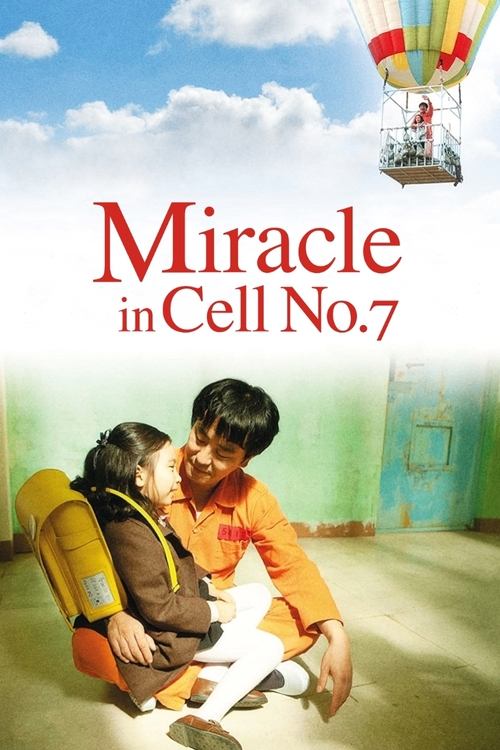
Miracle in Cell No. 7
7번방의 선물
"If caught, they're all doomed!"
Overview
"Miracle in Cell No. 7" (Korean: 7번방의 선물) is a 2013 South Korean comedy-drama about Lee Yong-gu, a man with an intellectual disability, who is devoted to his young daughter, Ye-sung. Their idyllic life is shattered when Yong-gu is falsely accused and imprisoned for the abduction and murder of a young girl, a crime he did not commit. The deceased girl's father happens to be the chief of the National Police Agency, complicating Yong-gu's case.
Sentenced to the harsh reality of prison life in Cell No. 7, Yong-gu's innocence and unwavering love for his daughter gradually win over his hardened cellmates. Initially hostile, the inmates, led by the gruff So Yang-ho, come to believe in his innocence. In a remarkable act of camaraderie, they devise a plan to smuggle Ye-sung into their cell to reunite the father and daughter. This event sparks a series of heartwarming and comedic moments, transforming the grim prison cell into an unlikely sanctuary of friendship and hope.
The film unfolds through the perspective of the adult Ye-sung, now a lawyer, who is determined to clear her father's name in a retrial. Her narration frames the story, leading the audience through the emotional journey of her childhood and her father's unjust incarceration, culminating in her fight for posthumous justice.

Core Meaning
The core message of "Miracle in Cell No. 7" is a powerful testament to the enduring nature of love and humanity in the face of injustice and adversity. Director Lee Hwan-kyung explores the idea that familial bonds, even those forged in the unlikeliest of places like a prison cell, can transcend physical barriers and societal prejudices. The film poignantly argues that innocence and kindness can flourish even in the darkest environments. It critiques a flawed justice system that preys on the vulnerable, while simultaneously celebrating the compassion and solidarity that can emerge from shared hardship. Ultimately, the film suggests that while the legal system can fail, the power of love and memory can provide a different, more profound form of justice and redemption.
Thematic DNA
Injustice and the Flawed Legal System
The film's central conflict revolves around the wrongful accusation and imprisonment of Lee Yong-gu, a man with a developmental disability. The system, represented by the powerful police commissioner, coerces a confession from Yong-gu and manipulates the trial to ensure a guilty verdict. This highlights the theme of a justice system that is susceptible to corruption and prejudice, failing to protect its most vulnerable citizens. The adult Ye-sung's quest to exonerate her father posthumously serves as a direct challenge to this institutional failure.
Unconditional Paternal Love
At its heart, the film is a story about the profound and unwavering love between a father and his daughter. Despite his intellectual limitations, Yong-gu is a deeply loving and dedicated father whose world revolves around Ye-sung. This love is his driving force, even within the dehumanizing environment of the prison. The narrative beautifully portrays how this pure love not only sustains him but also touches and transforms the hardened criminals around him, becoming the 'miracle' in Cell No. 7.
Found Family and Solidarity
Yong-gu's initial experience in prison is one of hostility and fear. However, his inherent goodness and innocence gradually break down the walls of his cellmates. These hardened criminals, initially dismissive of him, become his fierce protectors and advocates. They form an unconventional 'found family,' working together to help Yong-gu and orchestrating the smuggling of his daughter into the cell. This theme emphasizes that family is not solely defined by blood but by bonds of love, loyalty, and mutual support.
Sacrifice
The theme of sacrifice is woven throughout the narrative. Yong-gu ultimately sacrifices his own life, accepting a false confession under duress to protect his daughter from harm threatened by the police commissioner. This ultimate act of fatherly love is mirrored by the sacrifices made by his cellmates, who risk punishment to help him, and the prison warden, who risks his career to aid Ye-sung. The film posits that true love is often expressed through selfless acts of sacrifice for the well-being of others.
Character Analysis
Lee Yong-gu
Ryu Seung-ryong
Motivation
Yong-gu's sole motivation is the well-being and happiness of his daughter, Ye-sung. Every action he takes, from wanting to buy her a backpack to his final, heartbreaking decision in court, is driven by his profound paternal love.
Character Arc
Lee Yong-gu is a static character in the sense that his core nature—pure, loving, and childlike—does not change. His journey is not one of internal transformation but of enduring external hardship. He enters the prison an innocent man and remains so, his goodness acting as a catalyst for change in those around him. His arc is tragic; despite his unwavering innocence, he is forced by a corrupt system to make the ultimate sacrifice for his daughter.
Ye-sung (child)
Kal So-won
Motivation
Her primary motivation is to be with her father. She displays incredible resilience and love, never doubting his innocence and wanting only to be reunited with him.
Character Arc
As a child, Ye-sung is intelligent and fiercely devoted to her father. Her arc involves being thrust into a traumatic situation where she is separated from her father and must rely on the kindness of strangers (the inmates and the prison warden). She is the 'gift' or 'miracle' that brings light into the darkness of Cell No. 7, her presence humanizing the prisoners and strengthening their resolve to help her father.
Ye-sung (adult)
Park Shin-hye
Motivation
Her driving motivation is to fulfill her father's last wish and prove his innocence to the world. She is fueled by love, memory, and a deep-seated need for justice.
Character Arc
The adult Ye-sung's character arc is the narrative frame of the film. Having been raised by the prison warden, she fulfills her promise to her father by becoming a lawyer. Her arc is one of determination and vindication, as she meticulously prepares to reopen her father's case and fight the system that wronged him. Her journey culminates in achieving posthumous justice for her father, bringing his story to light and clearing his name.
Jang Min-hwan (Prison Warden)
Jung Jin-young
Motivation
His motivation shifts from upholding prison rules to seeking true justice for Yong-gu and protecting Ye-sung. He is driven by a newfound sense of duty and compassion after witnessing Yong-gu's profound goodness.
Character Arc
The prison warden, Jang Min-hwan, initially views Yong-gu with the same prejudice as everyone else. However, after Yong-gu saves his life during a fire, he begins to see the truth. His arc is one of redemption and moral awakening. He transforms from a cog in the prison system to a compassionate ally who recognizes the injustice and ultimately becomes a surrogate father to Ye-sung, raising her as his own.
So Yang-ho
Oh Dal-su
Motivation
Initially motivated by self-preservation and maintaining his status, his motivation becomes rooted in repaying his debt to Yong-gu and a genuine affection for both father and daughter.
Character Arc
As the leader of Cell No. 7, So Yang-ho is initially tough and intimidating. His arc demonstrates a significant transformation from a cynical criminal to a loyal and caring friend. After Yong-gu saves his life, his hardened exterior melts away, and he becomes the chief architect of the plan to bring Ye-sung into the cell, leading the other inmates in their quest to help Yong-gu.
Symbols & Motifs
Sailor Moon Backpack
The yellow Sailor Moon backpack symbolizes Yong-gu's simple, pure love for his daughter and his earnest desire to provide for her happiness. It represents the innocence of childhood and the normalcy of the life that was unjustly stolen from them.
The film opens with Yong-gu and Ye-sung admiring the backpack in a store window. The tragic event that leads to Yong-gu's arrest occurs when he is led away by the police commissioner's daughter, who promises to show him where he can buy the same backpack. It is a recurring motif that connects the beginning of their tragedy to their deep-seated love.
Hot Air Balloon
The hot air balloon represents a fleeting moment of hope, freedom, and the dream of escape for Yong-gu and Ye-sung. It symbolizes the inmates' collective effort to create a miracle and restore the family's happiness, even if just for a moment.
Towards the end of the film, as Yong-gu's execution nears, his cellmates construct a hot air balloon as a desperate attempt to help him and Ye-sung escape the prison. The attempt ultimately fails as the balloon's rope gets caught on the prison's barbed wire, symbolizing the crushing reality of their situation and the impossibility of escaping the unjust system. The image of the balloon appears again in the final scene as the adult Ye-sung reminisces, signifying her father's spirit being set free through his exoneration.
Cell No. 7
Initially, Cell No. 7 symbolizes the harshness and cruelty of the justice system. It is the repository for the most hardened criminals. However, through the influence of Yong-gu and Ye-sung, it transforms into a symbol of an unconventional home and found family, a place where humanity and compassion can blossom in the most unexpected of circumstances.
Yong-gu is assigned to this cell upon entering prison. The transformation of the cell's dynamics, from a place of hostility to one of warmth and camaraderie, is central to the film's narrative arc. It is the location where the 'miracle' of family and friendship occurs.
Memorable Quotes
1961년 1월 18일 태어났어요 제왕절개. 엄마 아팠어요. 내 머리 커서.
— Lee Yong-gu
Context:
Yong-gu says this during his initial interrogation or trial. Instead of defending himself against the heinous charges, he responds with simple, personal facts, underscoring his intellectual disability and how utterly lost he is in the complex and cruel legal proceedings.
Meaning:
This quote, which translates to "I was born on January 18, 1961. Cesarean section. Mom was sick. Because my head is big," poignantly captures Yong-gu's childlike mind and his way of processing information. He is simply stating facts as he knows them, highlighting his innocence and inability to comprehend the gravity of his legal situation.
아빠 딸로 태어나서 고맙습니다.
— Lee Yong-gu / Ye-sung
Context:
This phrase is exchanged between Yong-gu and Ye-sung during their tearful moments together, particularly during their final farewell before his execution. It is a declaration of their profound bond and the gratitude they feel for each other, making their separation all the more heartbreaking.
Meaning:
This line, meaning "Thank you for being born as my daughter" (when Yong-gu says it) or "Thank you for letting me be born as your daughter" (when Ye-sung says it), is the emotional core of the film. It encapsulates the deep, mutual love and appreciation between father and daughter, a bond that remains unbroken by distance or injustice.
잘못했어요! 살려주세요!
— Lee Yong-gu
Context:
Yong-gu shouts this in the courtroom, sealing his own fate. He has been beaten and told that if he doesn't confess, Ye-sung will be harmed. This quote represents the pinnacle of the film's theme of injustice, where an innocent man is forced to condemn himself out of love and fear.
Meaning:
Translating to "I did wrong! Please save me!", this desperate plea is not a confession of guilt for the crime he's accused of, but a cry of fear and confusion. It is the coerced statement he is forced to make to save his daughter's life after being threatened by the police commissioner. It is the tragic turning point where he sacrifices his life for hers.
Philosophical Questions
What is the true meaning of justice?
The film rigorously questions the nature of justice, contrasting legal justice with moral or emotional justice. Legally, Yong-gu is condemned, a victim of a corrupt and biased system. The police commissioner achieves his desired legal outcome through coercion and power. However, the film suggests that true justice lies in the recognition of innocence and truth, regardless of the court's verdict. The loyalty of the inmates, the compassion of the warden, and Ye-sung's unwavering belief in her father's innocence represent a higher, more humane form of justice. The final retrial, while legally significant for clearing Yong-gu's name, serves more as a symbolic affirmation of a truth that the characters (and the audience) already knew, suggesting that justice is ultimately about preserving truth and love against all odds.
Can humanity and kindness flourish in inhumane conditions?
"Miracle in Cell No. 7" uses the setting of a grim, maximum-security prison to explore the resilience of the human spirit. The film posits that inherent goodness is not extinguished by environment. Yong-gu's childlike innocence acts as a transformative force, melting the hardened exteriors of his fellow inmates. The cell, a place designed for punishment and isolation, becomes a crucible for friendship, loyalty, and selfless love. The film argues that compassion is a choice and a powerful force that can create a 'miracle' of human connection even in the most dehumanizing of circumstances.
How does society treat its most vulnerable members?
The film serves as a powerful indictment of societal prejudice against the mentally disabled and the powerless. Yong-gu is an easy target for the police because his disability makes him unable to defend himself effectively. He is misunderstood, underestimated, and ultimately sacrificed by a system that is supposed to protect him. The film forces the audience to confront the uncomfortable truth that society often fails its most vulnerable, prioritizing power and convenience over compassion and truth. Yong-gu's tragedy is a direct result of this societal failure.
Alternative Interpretations
While the primary interpretation of "Miracle in Cell No. 7" is a straightforward and emotional narrative about love and injustice, some critics and viewers have pointed to alternative readings. One perspective is to view the film as a modern-day fairytale or fantasy rather than a realistic prison drama. The highly improbable events, such as successfully smuggling a child into a maximum-security prison, the overly benevolent nature of hardened criminals, and the construction of a hot-air balloon, suggest a narrative that prioritizes emotional impact over plausibility. In this light, the 'miracle' is not just the presence of Ye-sung but the entire fantastical transformation of the prison cell into a haven of goodness, a symbolic representation of hope rather than a literal depiction of events.
Another interpretation focuses on the film's social commentary. Beyond the critique of the justice system, the film can be seen as an allegory for societal outcasts. The inmates of Cell No. 7, along with the intellectually disabled Yong-gu, represent marginalized groups who are pre-judged and discarded by mainstream society. Their formation of a supportive 'family' is a powerful statement on the ability of the oppressed to find humanity and solidarity with one another when the official structures of society have failed them. Ye-sung's presence acts as a catalyst, reminding them of a world of innocence and love that exists beyond their criminal labels.
Cultural Impact
"Miracle in Cell No. 7" had a profound cultural impact in South Korea and beyond, resonating deeply with audiences and critics alike. Released in 2013, the film became a box office phenomenon, drawing over 12.8 million viewers and becoming one of the highest-grossing Korean films of all time. Its success was particularly notable as it was a low-budget film without major A-list stars, relying instead on its powerful story and stellar performances.
The film's blend of comedy and melodrama, often referred to as a 'tearjerker,' struck a powerful chord with the public, sparking conversations about the fallibility of the justice system and the treatment of individuals with disabilities. While inspired by a real-life case of wrongful conviction, the film used a more sentimental and dramatic approach to highlight systemic flaws and the human cost of injustice. This prompted public reflection on historical cases of judicial misconduct in Korea.
The film's influence extended internationally, leading to a wave of official remakes in countries such as the Philippines, Turkey, and Indonesia, each adapting the story to their own cultural contexts. This demonstrated the universal appeal of its core themes of paternal love, injustice, and the kindness of strangers. The movie not only solidified the careers of its actors, especially Ryu Seung-ryong, but also cemented its place in Korean pop culture as a film that could make audiences laugh and cry in equal measure, often simultaneously.
Audience Reception
Audience reception for "Miracle in Cell No. 7" was overwhelmingly positive, with viewers praising its powerful emotional core and the stellar performances of the cast, particularly Ryu Seung-ryong as Yong-gu and Kal So-won as the young Ye-sung. Many viewers described the film as a "tearjerker" that skillfully balanced heartbreaking drama with moments of genuine comedy, creating a full rollercoaster of emotions. The father-daughter relationship was the most lauded aspect, resonating deeply and leaving a lasting impact on audiences.
The main points of criticism, even from those who enjoyed the film, centered on its lack of realism. Some found the plot points, such as smuggling a child into prison and building a hot air balloon, to be overly sentimental and fantastical. However, most viewers were willing to suspend their disbelief, arguing that the film's emotional truth and heartwarming message transcended its narrative implausibility. The overall verdict from the audience was that it is a deeply moving and unforgettable film about love, family, and injustice, with many recommending it as a must-watch, albeit with a box of tissues readily available.
Interesting Facts
- The film is inspired by the real-life story of a man who was wrongfully convicted and imprisoned for the rape and murder of a 9-year-old girl in 1972 and was finally exonerated in 2008 after being tortured into a false confession.
- "Miracle in Cell No. 7" was a massive box office success in South Korea, becoming only the eighth film in the country's history to surpass 10 million ticket sales.
- Despite its huge success, the film was produced on a relatively modest budget, making its eventual profit one of the highest in Korean cinema at the time.
- The film's early working title was "December 23" (12월 23일), which is the date of Yong-gu's execution and Ye-sung's birthday.
- Director Lee Hwan-kyung won Best Screenplay at the 50th Grand Bell Awards for the film.
- Lead actor Ryu Seung-ryong won the Grand Prize (Daesang) for Film at the prestigious 49th Baeksang Arts Awards for his portrayal of Lee Yong-gu.
- The film's immense popularity has led to numerous international remakes, including versions in the Philippines, Turkey, Indonesia, and India.
⚠️ Spoiler Analysis
Click to reveal detailed analysis with spoilers
Frequently Asked Questions
Explore More About This Movie
Dive deeper into specific aspects of the movie with our detailed analysis pages
Comments (0)
No comments yet. Be the first to share your thoughts!