Skip to content
Move to Heaven
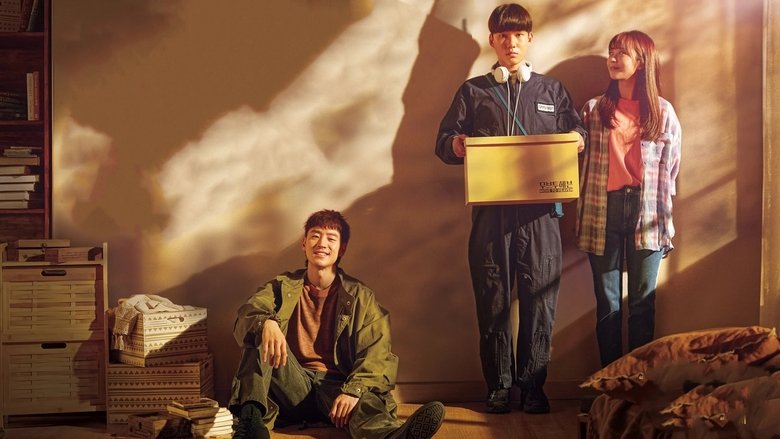
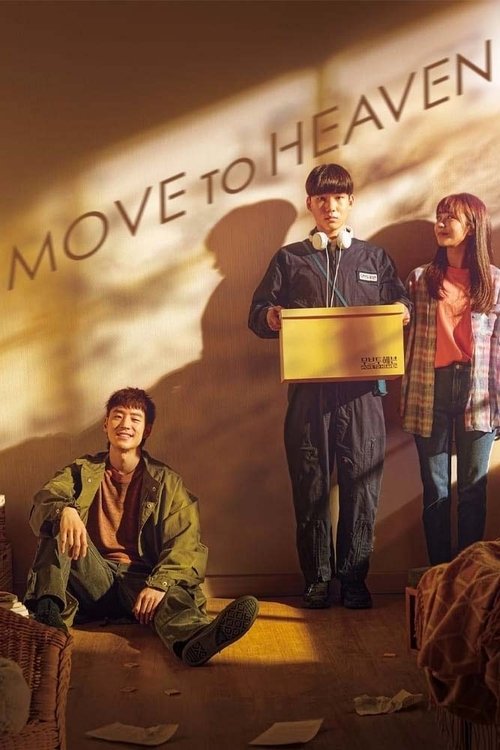
A tender, melancholic human drama pulsating with quiet reverence and cathartic grief, Move to Heaven follows an autistic young man and his ex-convict uncle who uncover the unspoken stories of departed souls through trauma cleaning.
Move to Heaven

Move to Heaven

무브 투 헤븐: 나는 유품정리사입니다

"We are trauma cleaners. We will now begin your last move."

14 May 2021 — 14 May 2021 South Korea 1 season 10 episode Ended 8.0 (384)

Cast: Lee Je-hoon, Tang Joon-sang, Hong Seung-hee, Jeong Seok-yong, Jung Young-ju

Drama Dignity in Death and the Unspoken Stories (Godoksa) Family Reconciliation, Trauma, and Forgiveness Neurodiversity and Alternative Ways of Seeing Societal Marginalization and Structural Neglect Grief, Ritual, and Emotional Closure

Overview

Move to Heaven follows Han Geu-ru, a twenty-year-old man on the autism spectrum with remarkable photographic memory and deductive clarity, and his estranged uncle Cho Sang-gu, an ex-convict and cynical underground mixed martial arts fighter. Following the unexpected death of Geu-ru’s devoted father, Han Jeong-u, Sang-gu becomes Geu-ru’s temporary legal guardian. To inherit his brother's estate, Sang-gu must complete a three-month probation period living with his nephew and working at the family business: Move to Heaven, a specialized trauma cleaning service that clears the residences of the deceased.

Alongside Geu-ru's fiercely loyal childhood friend and neighbor, Yoon Na-mu, the unlikely duo cleans crime scenes, unattended death sites, and solitary living spaces. Rather than treating the belongings left behind as refuse, Geu-ru meticulously sifts through every remnant to reconstruct the unsaid words, broken dreams, and hidden love of the departed, packing their most meaningful possessions into signature yellow boxes to deliver to surviving loved ones.

Over the course of its run, the series weaves poignant episodic vignettes with an overarching emotional arc of personal healing. As Sang-gu is confronted with the raw truths of ordinary people’s lives and deaths, his deep-seated resentment toward his deceased brother begins to dissolve, revealing buried past traumas and forging a profound bond of chosen family between uncle and nephew.

Core Meaning

The central thesis of Move to Heaven is that death does not erase human dignity, nor does it silence the emotional truth of a life lived. Drawing directly from real-life experiences of trauma cleaners, the series asserts that the objects left behind are not inert trash, but the final, unspoken messages of human existence.

The series emphasizes that modern society frequently ignores the marginalized—including overworked laborers, isolated elderly individuals, victims of domestic violence, queer individuals, and overseas adoptees. It serves as a compassionate corrective, illustrating that true mourning requires listening to those who can no longer speak, providing closure for the dead and establishing a necessary path of healing for the living.

Thematic DNA

Dignity in Death and the Unspoken Stories (Godoksa) 30%
Family Reconciliation, Trauma, and Forgiveness 25%
Neurodiversity and Alternative Ways of Seeing 20%
Societal Marginalization and Structural Neglect 15%
Grief, Ritual, and Emotional Closure 10%

Dignity in Death and the Unspoken Stories (Godoksa)

The series centers on solitary, unattended deaths (godoksa), demonstrating that every individual deserves a respectful departure regardless of social status. The trauma cleaners treat each space as a sacred archive of a human life, showing that physical relics can restore voice to the voiceless.

Family Reconciliation, Trauma, and Forgiveness

Through the gradual thawing of tensions between Sang-gu and Geu-ru, the show examines generational wounds, childhood abandonment, and sibling misunderstandings. Sang-gu's bitter exterior peels away as he realizes his brother never truly abandoned him, transforming inherited bitterness into unconditional protective love.

Neurodiversity and Alternative Ways of Seeing

Han Geu-ru’s Asperger syndrome is portrayed not as a deficit, but as a distinct perceptual lens. His photographic recall, adherence to routine, and refusal to rely on social deceit allow him to detect subtle emotional breadcrumbs in physical artifacts that neurotypical individuals overlook.

Societal Marginalization and Structural Neglect

Episodic storylines confront modern social realities such as temporary workers dying without workplace safety, elderly parents abandoned by financially obsessed children, domestic stalking, suppressed LGBTQ+ love, and overseas adoptees left stateless due to legal loopholes.

Grief, Ritual, and Emotional Closure

The narrative explores mourning as an active practice. The formal ritual performed before clearing each room and the careful preservation of select items in yellow boxes highlight the psychological power of ceremonial send-offs in releasing grief.

Character Analysis

Han Geu-ru

Tang Joon-sang

Archetype: The Pure Soul / Intuitive Investigator Key Trait: High deductive intellect, photographic recall, uncompromising literal honesty, and methodical empathy.

Motivation

To strictly honor every deceased person's final wishes and maintain the professional and moral integrity of Move to Heaven.

Character Arc

Initially functioning strictly within the structured routine built by his father, Geu-ru learns to navigate a chaotic world alongside his uncle, confronts the truth of his adoption, exercises his own agency, and ultimately completes his father's trauma cleaning.

Cho Sang-gu

Lee Je-hoon

Archetype: The Cynical Antihero / Wounded Reluctant Protector Key Trait: Rough exterior concealing intense emotional vulnerability and self-sacrificial loyalty.

Motivation

Initially driven by financial gain from Geu-ru's trust fund, but evolves into protecting Geu-ru and safeguarding the family home.

Character Arc

Begins as an abrasive underground fighter burdened by guilt over his comatose mentee and resentment toward his brother. Through working with Geu-ru, he uncovers the truth behind the 1995 separation, sheds his bitterness, and embraces his role as Geu-ru's permanent guardian.

All 4 characters and cast

Symbols & Motifs

The Yellow Keepsake Box

Meaning:

Symbolizes the distilled essence of a soul's dignity, love, and life summation, transforming physical clutter into a concentrated testament of affection and memory.

Context:

Used during every trauma cleaning operation to carefully collect and present the most personal, meaningful remnants of the deceased to their surviving loved ones.

Aquarium and Marine Life (Manta Rays)

Meaning:

Represents tranquility, psychological structure, emotional refuge, and Geu-ru's deep connection to his late mother and father.

Context:

Whenever Geu-ru experiences sensory overload, panic, or distress, he recites biological facts and taxonomy regarding sea animals and visits the aquarium.

Jeong-u's Cassette Player and Headphones

Meaning:

Embodies memory preservation, emotional insulation from sensory chaos, and the enduring spiritual guidance and presence of Geu-ru's father.

Context:

Worn by Geu-ru at cleanup sites, playing classical music pieces by composers such as Bach and Elgar to focus his mind during work.

Nike Air Force 1 Sneakers

Meaning:

Represents unbroken brotherly promises, unfulfilled love, and the tragic misunderstanding that caused decades of estrangement and emotional pain.

Context:

Discovered unopened in Jeong-u's emergency deposit box, revealing that Jeong-u had purchased them every year for Sang-gu's birthday following the 1995 disaster.

The Butterfly

Meaning:

Signifies the peaceful transition of the soul into the afterlife, personal metamorphosis through grief, and the promise of renewal.

Context:

Appears prominently in the final scene of the season alongside the arrival of student Cha Eun-byeol.

Memorable Quotes

OOO님, OOOO년 O월 O일 운명하셨습니다. 저희는 유품정리업체 무브 투 헤븐의 한그루입니다. 지금부터 고인의 마지막 이사를 시작하겠습니다.
— Han Geu-ru / Han Jeong-u

Context

Recited at the start of every cleaning operation, and recited by Geu-ru when cleaning his father's room in Episode 10.

Meaning

Establishes trauma cleaning as a dignified transition and sacred ceremony rather than a mere physical chore, showing respect to the departed.

죽은 사람은 말을 할 수 없으니까. 대신 그들이 남긴 물건들이 이야기를 해 주는 거야.
— Han Jeong-u

Context

Spoken by Jeong-u to a young Geu-ru in Episode 1 during a childhood flashback.

Meaning

Frames the foundational philosophy of the series: that the physical artifacts left behind serve as the final voice and truth of the deceased.

All 4 quotes

Episode Highlights

Episode 1

S1E1

Introduces the trauma cleaning profession through the death of Kim Seon-u, an overworked factory employee who suffers a preventable fatal injury. Jeong-u unexpectedly suffers a fatal collapse, dramatically altering Geu-ru's life and introducing Sang-gu.

Significance:

Sets up the primary premise, introduces the philosophy of Move to Heaven, and forces the estranged uncle and nephew into an uneasy guardianship.

Episode 3

S1E3

Sang-gu participates in cleaning the home of an elderly woman who hoarded cash in secret to buy her estranged son a high-end tailored suit before she passed away alone.

Significance:

Triggers Sang-gu’s initial emotional awakening as he witnesses the ungrateful son’s delayed breakdown and realization of maternal sacrifice.

Episode 5

S1E5

Geu-ru and Sang-gu clean the residence of an emergency room doctor killed in a hospital attack, uncovering his hidden romance with a male cellist that had been suppressed by unaccepting parents.

Significance:

Highlights Geu-ru's deductive ability to convey unspoken love across societal prejudices by delivering the doctor's final musical gift.

Episode 7

S1E7

Explores Sang-gu’s history with his fighting mentee Kim Su-cheol, detailing the illegal match that left Su-cheol in a coma and led to Sang-gu's imprisonment.

Significance:

Unpacks the source of Sang-gu's deep guilt, destructive tendencies, and initial financial desperation.

Episode 8

S1E8

Uncovers the reality of the 1995 Sampoong Department Store collapse, revealing that Jeong-u was buried under rubble while buying Sang-gu's birthday present rather than abandoning him.

Significance:

Completely dismantles Sang-gu's twenty-six years of hatred and resentment toward his brother, replacing it with grief and redemption.

Episode 9

S1E9

Focuses on Matthew Green, a Korean overseas adoptee deported from the United States due to administrative failures, who dies of heart failure while searching for his birth mother.

Significance:

Highlights societal and legal vulnerabilities regarding international adoption while leading to Sang-gu discovering that Geu-ru was also adopted.

Episode 10

S1E10

Sang-gu survives a dangerous underground fight, and Geu-ru gathers the emotional strength to clean his father's room, discovering how Jeong-u rescued and adopted him as a baby.

Significance:

Provides full emotional closure for the family arc as Sang-gu becomes Geu-ru's permanent guardian and a new client, Cha Eun-byeol, introduces herself.

Philosophical Questions

What truly remains of a human being once their physical presence is gone?

The series explores this by examining how physical possessions, letters, and unspoken intentions serve as durable testaments to a person's dignity, identity, and love.

Is biological bloodline a requirement for authentic familyhood, or is family forged through shared vulnerability and care?

Explored through the revelation of Geu-ru's adoption and Sang-gu's transition from an estranged, non-biological guardian to a dedicated, loving parent figure.

How can a society prioritizing rapid modernization and economic success maintain dignity and community care for its most vulnerable citizens?

Addressed through episodic cases of neglected factory workers, forgotten elderly citizens, and marginalized individuals who fall outside corporate and governmental protections.

Alternative Interpretations

Several critical and thematic readings have been applied to the series:

Full ending explanation

Cultural Impact

Move to Heaven has drawn substantial attention to critical socio-cultural issues in modern South Korea:

  • The Crisis of Solitary Death (Godoksa): Brought national and international awareness to lonely deaths stemming from single-person households, youth unemployment, and elderly isolation.
  • Historical Collective Trauma: Wove the 1995 Sampoong Department Store collapse into the narrative, acknowledging collective grief caused by man-made disasters and institutional negligence.
  • Stateless Adoptees: Shed rare light on adult deportees who were adopted abroad as children without receiving legal naturalization from adoptive parents.
  • Challenging Social Taboos: Addressed sensitive subjects in Korean drama including workplace safety violations, elder abandonment, suicide pacts, and same-sex relationships.

Audience Reception

Move to Heaven received overwhelming critical and audience acclaim worldwide, holding a 9.1/10 on MyDramaList and a 97% audience approval rating on Rotten Tomatoes.

Critics and viewers widely praised:

  • Tang Joon-sang's nuanced, dignified portrayal of Asperger syndrome that avoided stereotyping or caricature.
  • Lee Je-hoon's compelling emotional performance transitioning from cynicism to vulnerability.
  • Tight, filler-free 10-episode pacing combined with empathetic storytelling around real societal issues.

Minor criticisms noted that certain subplots involving underground fight syndicates felt slightly more conventional and melodramatic in comparison to the delicate slice-of-life tone of the cleanup cases, though general reception remained glowing.

Interesting Facts

  • The series is adapted from the non-fiction essay collection 'Things Left Behind' by Kim Sae-byul, one of South Korea's pioneer trauma cleaners.
  • Screenwriter Yoon Ji-ryeon shadowed real trauma cleaners on cleanup sites in 2015 to observe the physical and emotional realities of the work.
  • Lee Je-hoon underwent months of rigorous boxing and mixed martial arts training to perform his own fight choreography.
  • Tang Joon-sang memorized extensive scientific names and taxonomic descriptions of aquatic life, delivering them in continuous single-take dialogue scenes.
  • Filming was temporarily suspended in late August 2020 due to an outbreak of COVID-19 in South Korea before resuming under safety protocols.
  • The drama swept major honors at the 2021 Asia Contents Awards, winning Best Creative, Best Writer (Yoon Ji-ryeon), and Actor of the Year (Lee Je-hoon).

Easter Eggs

Lee Jae-wook makes a cameo appearance as Kim Su-cheol.

Portrays Sang-gu's loyal protégé whose tragic boxing injury serves as the catalyst for Sang-gu's prison sentence and emotional guilt.

Choi Soo-young appears as social worker Son Woo-rim.

Connects the trauma cleaning service with vulnerable and neglected community members needing post-mortem care.

Musician Kevin Oh portrays Korean-American adoptee Matthew Green (Kang Seong-min).

Highlights the real-world legal difficulties and statelessness faced by unregulated international adoptees.

Lee Re appears as Cha Eun-byeol ('Butterfly Girl') in the finale.

Serves as a narrative cliffhanger by requesting a trauma cleaning for herself prior to her death.

Direct integration of the 1995 Sampoong Department Store collapse.

Anchors the fictional family trauma in the real historical tragedy of South Korea's worst peacetime structural disaster.

Frequently Asked Questions

Explore More About This Movie

Dive deeper into specific aspects of the movie with our detailed analysis pages

Comments (0)

Leave a comment

No comments yet. Be the first to share your thoughts!

Similar Movies