
Skip to content
My First First Love
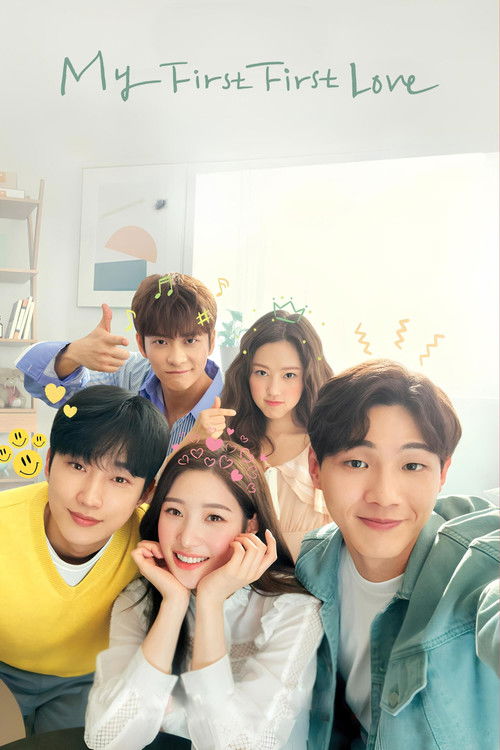
A pastel-drenched coming-of-age romance shimmering with the sweet, clumsy ache of emerging adulthood as five young people collide, spin, and discover their paths.
My First First Love

My First First Love

첫사랑은 처음이라서

18 April 2019 — 26 July 2019 South Korea 2 season 16 episode Ended 8.2 (556)

Cast: Kim Ji-soo, Jung Chae-yeon, Jung Jinyoung, Choi Ri, Kang Tae-oh

Drama Romantic Awakening vs. Childhood Friendship Economic Realism and Socioeconomic Disparity Autonomy and Severing Familial Expectations The Healing Power of Chosen Family

Overview

My First First Love (첫사랑은 처음이라서) is a warm youth melodrama that charts the messy, tender transition from adolescence to self-reliance. When privileged college student Yoon Tae-o turns twenty, his father grants him permission to live alone in a spacious, two-story house inherited from his grandfather. Tae-o dreams of an idyllic, independent bachelor life filled with romance and freedom. Instead, his sanctuary transforms into a boarding house when three friends facing personal crises arrive on his doorstep: his lifelong best friend Han Song-i, whose family home is seized by debt collectors; Oh Ga-rin, an eccentric chaebol heiress fleeing an overbearing mother; and Choe Hun, an aspiring musical actor disowned by his strict father.

Alongside Tae-o’s pragmatic, hardworking university friend Seo Do-hyeon—who lives outside the house working multiple part-time jobs—this quintet forms a tight-knit chosen family. Season 1 focuses on the awkward collision of boundaries, survival under one roof, and the thrill of first attractions. As Song-i and Do-hyeon embark on an earnest, tentative romance, Tae-o pursues an older campus art student, Ryu Se-hyun. However, the intimacy of cohabitation gradually chips away at Tae-o’s emotional defenses, forcing him to confront buried feelings for Song-i that predate any of his romantic fantasies.

In Season 2, the lighthearted honeymoon phase gives way to the sobering realities of adulthood. Career struggles, class disparities, and hidden family trauma strain the characters' bonds. Do-hyeon’s grueling schedule and economic pressures begin creating emotional distance between him and Song-i, while Tae-o's instinctive urge to protect Song-i sparks friction. Across sixteen episodes, the series weaves romantic yearning with professional discovery, ultimately demonstrating that first loves are not merely romantic milestones, but crucibles in which young adults learn who they truly are.

Core Meaning

The overarching thesis of My First First Love is embedded in its Korean title: Because It's the First Time, We Make Mistakes, and Because It's Love, We Learn. The series argues that early adulthood is defined by trial and error. The creators convey that first love is not a singular romantic destination or an infallible fairy tale, but a vital emotional learning curve.

By juxtaposing Tae-o and Song-i’s twenty-year friendship against Do-hyeon’s earnest romantic devotion, the show highlights how timing, open communication, and personal readiness dictate love’s outcome. Love cannot flourish in secrecy, nor can it thrive if personal pride or unresolved emotional baggage drown out mutual vulnerability. Ultimately, the drama asserts that growing up requires stepping out of familial shadows, learning to advocate for oneself, and embracing the inevitable pain that accompanies finding one's true path.

Thematic DNA

Romantic Awakening vs. Childhood Friendship 35%
Economic Realism and Socioeconomic Disparity 25%
Autonomy and Severing Familial Expectations 20%
The Healing Power of Chosen Family 20%

Romantic Awakening vs. Childhood Friendship

The show questions whether years of comfortable platonic companionship mask romantic denial. In Season 1, Tae-o and Song-i dismiss any romantic tension because their twenty-year bond feels as mundane as breathing. As Song-i dates Do-hyeon, Tae-o realizes that what he considered paternal or brotherly care was actually profound romantic affection. Season 2 tracks the painful dismantling of the 'friend zone,' asking whether romantic love can survive the collapse of a foundational friendship.

Economic Realism and Socioeconomic Disparity

Unlike many glossy escapist K-dramas, the series grounds its romantic conflicts in concrete material struggles. Song-i experiences homelessness, home repossession, and part-time exhaustion, while Do-hyeon juggles civil service exam prep with food service shifts to clear his father’s debts. Their romance founders not on a lack of love, but on financial exhaustion, pride, and the harsh reality that romantic courtship requires time, emotional bandwidth, and security.

Autonomy and Severing Familial Expectations

Every character is trapped beneath family demands. Ga-rin lives under surveillance in a gilded cage; Hun is battered by his father’s refusal to accept theater acting; Tae-o seeks a separate residence to escape his father and stepmother's household. Across both seasons, each roommate must claim emotional and financial autonomy, enduring rejection or estrangement from their parents to build a self-directed identity.

The Healing Power of Chosen Family

The shared domestic space of Tae-o’s house functions as an emotional hospital. When biological parents discard, smother, or abandon them, the five youths provide an unconditional safety net for one another. They cook together, pool their limited coins, rehearse audition lines, and nurse each other’s heartbreaks, proving that kinship can be consciously chosen through everyday solidarity.

Character Analysis

Yoon Tae-o

Kim Ji-soo

Archetype: The Protector / Reluctant Hero Key Trait: Generous yet emotionally oblivious.

Motivation

Initial: Freedom and casual romance.
Final: Guarding the happiness of those he loves and standing by Song-i authentically.

Character Arc

Begins as an emotionally sheltered, wealthy university student seeking superficial freedom. Across the seasons, his paternal protectiveness toward Song-i deepens into romantic devotion, forcing him to address his unhealed maternal abandonment and mature into an empathetic adult.

Han Song-i

Jung Chae-yeon

Archetype: The Resilient Everywoman Key Trait: Tenacious, pragmatic perseverance.

Motivation

Initial: Survival, housing security, and finishing university.
Final: Achieving emotional peace and choosing love rooted in total transparency.

Character Arc

Starts resilient but destabilized by her mother’s sudden desertion and crushing poverty. She leans on Do-hyeon for romantic affection, but learns that shared history and deep vulnerability matter more than idealized infatuation.

All 5 characters and cast

Symbols & Motifs

Tae-o’s House (The Roof/Sanctuary)

Meaning:

Symbolizes the transitional threshold between childhood dependence and adulthood.

Context:

It begins as Tae-o’s selfish playground for independence, evolves into a collective refuge for displaced souls, and closes as a launchpad where every resident finds their footing.

Han Song-i’s Potted Plant / Moving Boxes

Meaning:

Symbolize dignity, uprootedness, and the desire to plant roots somewhere safe amid financial abandonment.

Context:

Seen through the taped boxes and the small plant Song-i rescues from her foreclosed home as she faces sudden displacement.

The Shared Bus Stop / Public Transit

Meaning:

Represents the divergent social classes and pacing of the characters' lives.

Context:

For Song-i and Do-hyeon, the bus stop is a romantic haven of stolen minutes between jobs, yet it also exposes the grueling grind that Do-hyeon cannot escape, contrasted against Tae-o’s easy mobility.

Camera / Photography (Song-i’s Architecture Studies)

Meaning:

Reflects her internal quest for stability, architectural permanence, and a home that cannot be foreclosed or taken away.

Context:

Song-i photographs old, weathering buildings throughout the city as part of her architectural interests and studies.

Food Sharing / Porridge and Ramyeon

Meaning:

Functions as an emotional barometer for the characters' relationships and psychological states.

Context:

Elaborate home meals signify domestic harmony and chosen family warmth, while cold, solitary meals mark moments of alienation, grief, and emotional exhaustion.

Memorable Quotes

첫사랑이 왜 첫사랑인 줄 알아? 처음이라서 그래. 서툴고, 바보 같고, 아프고.
— Yoon Tae-o

Context

Spoken in Season 1, Episode 8 as Tae-o reflects on the confusion erupting among the group when romantic feelings complicate their domestic dynamic.

Meaning

Captures the central premise of the drama, explaining that first love is inherently accompanied by clumsy errors and emotional growing pains.

내 세상이 무너질 때, 항상 내 옆에 서 있어 준 사람은 너였어.
— Han Song-i

Context

Delivered by Song-i to Tae-o during an emotional conversation in Season 2, Episode 7.

Meaning

Acknowledges that throughout homelessness, abandonment, and heartbreak, Tae-o has remained her true and steadfast refuge.

All 4 quotes

Episode Highlights

A Close Friend

S1E1

Tae-o moves into his grandfather’s detached house expecting an independent youth lifestyle. Meanwhile, Song-i loses her home to debt collectors, while Ga-rin and Hun flee their parents, leading all three to converge on Tae-o’s doorstep.

Significance:

Establishes the fundamental premise, spatial dynamics, and chosen family motif that drive the narrative.

The Rooftop Confession / Stolen Glances

S1E4

Do-hyeon and Song-i grow closer while studying and sharing rides, culminating in Do-hyeon's quiet romantic confession. Concurrently, Tae-o's dates with Ryu Se-hyun feel shallow and forced.

Significance:

Triggers the central love triangle and exposes Tae-o's simmering, unacknowledged jealousy.

The Turning Point

S1E8

The housemates embark on a coastal trip to Gangneung. Beneath the sunset, Tae-o observes Do-hyeon and Song-i kissing, setting off a seismic personal revelation.

Significance:

Acts as the mid-series hinge and cliffhanger, shifting Tae-o from an oblivious companion to a man confronting unrequited love.

Cracks in the Wall

S2E4

Do-hyeon's father suffers a severe financial setback, forcing Do-hyeon to double his shifts. When Song-i experiences an emotional family crisis concerning her estranged mother, Do-hyeon is unreachable, leaving Tae-o to rush to her side.

Significance:

Demonstrates the diverging priorities between Song-i and Do-hyeon, illustrating how socioeconomic strain dismantles early relationships.

The Inevitable Goodbye

S2E6

Realizing that their emotional distance and mutual exhaustion cannot be reconciled, Song-i and Do-hyeon have an honest, tearful breakup at their familiar meeting spot.

Significance:

Resolves the secondary romantic arc with dignity and maturity, clearing the path for the primary leads to confront their connection.

Because It's the First Time

S2E8

Hun successfully lands a stage musical role, Ga-rin secures an independent job and his heart, and Tae-o gains closure by meeting his estranged mother. On the terrace, Tae-o and Song-i confess their feelings.

Significance:

Concludes the sixteen-episode arc, transitioning the roommates into fully autonomous young adults and establishing Tae-o and Song-i's romance.

Philosophical Questions

Can platonic love between lifelong friends ever be truly devoid of romance?

The series explores whether years of deep care between opposite-sex friends is merely unactivated romantic attraction or an autonomous bond compromised once physical attraction enters the equation.

Is love sustainable without material stability?

Through Do-hyeon and Song-i, the narrative asks whether romance is a luxury good requiring financial margin, and whether social safety nets are necessary for young affection to thrive.

What defines a genuine home?

By stripping its characters of biological familial safety, the drama explores whether home is a physical property, a family of origin, or an emotional sanctuary constructed among friends.

How It Ends

Alternative Interpretations

The series invites multiple readings depending on audience perspective:

Full ending explanation

Cultural Impact

My First First Love was produced during Netflix’s first major wave of direct investments into original South Korean scripted series following Kingdom and preceding Love Alarm. It represented Netflix's strategic attempt to capture the lucrative global teen-and-twenties demographic using the classic Korean campus romance format.

The drama reflected modern Korean youth anxieties, specifically the 'Sampo Generation' (삼포세대)—young Koreans forced by economic instability to delay or abandon romantic relationships, marriage, and homeownership. Do-hyeon's grueling study schedules and Song-i's sudden housing displacement resonated deeply with domestic viewers, while international audiences gravitated toward the warm, comforting 'found family' aesthetic. The drama cemented the viability of the 8-episode-per-batch release cadence for romantic Korean dramas on international streaming platforms.

Audience Reception

Audience reception was divided across its two releases:

  • Season 1 Praise: Viewers widely celebrated the effortless charm, sunny aesthetic, and dynamic between the five housemates. Jinyoung’s portrayal of Do-hyeon generated a major wave of 'Second Lead Syndrome,' with viewers falling for his respectful, soft-spoken courtship of Song-i.
  • Season 2 Divisiveness: The second season received criticism from a vocal subset of viewers who felt Song-i and Do-hyeon’s chemistry was stronger than Song-i and Tae-o’s, feeling Do-hyeon was sidelined for conventional genre conventions. Conversely, Ji-soo supporters celebrated the actor finally securing a romantic happy ending after playing unrequited second leads across multiple previous dramas.
  • The B-Couple Acclaim: The comedic side-romance between Choi Ri (Ga-rin) and Kang Tae-oh (Hun) was universally hailed as an absolute delight, frequently cited as the emotional stabilizer of Season 2.

Interesting Facts

  • The series is an expanded remake and reimagining of writer Jung Hyun-jung’s 2015 OnStyle short drama Because It's the First Time, which originally starred Choi Min-ho and Park So-dam.
  • Although marketed and released by Netflix in two distinct 8-episode seasons, the entire 16-episode series was filmed as a single, contiguous production from September 2018 to January 2019.
  • Netflix deliberately scheduled Season 2 to release exactly 100 days after Season 1 (July 26 vs. April 18), playfully honoring the Korean custom of celebrating the 100th-day anniversary (baek-il) of a relationship.
  • Jung Chae-yeon (member of DIA and I.O.I) and Jung Jinyoung (leader/producer of B1A4) bonded over their shared backgrounds as active K-pop idol-actors, creating an effortless rapport during rehearsals.
  • Kang Tae-oh's comedic turn as the struggling musical actor Choe Hun became one of the show's standout elements, presaging his subsequent global stardom in Extraordinary Attorney Woo (2022).

Easter Eggs

Cameo by Hong Seok-cheon

Renowned Korean entertainer and restaurateur Hong Seok-cheon makes a humorous cameo appearance as an exacting musical audition director in Season 1, delivering meta-critiques of Hun’s over-the-top acting techniques.

Meta-References to B1A4 and DIA

During lighter house-party and banter scenes, small instrumental rhythms and background tracks nod to the idol discography of leads Jinyoung and Chaeyeon.

Color-Coded Wardrobe Subtleties

Throughout Season 1, Tae-o and Song-i frequently wear complementary warm pastel tones like soft yellow and mint, while Do-hyeon wears muted navy, gray, and denim, subtly signaling that Tae-o and Song-i's aesthetic worlds mirror one another long before they date.

Frequently Asked Questions

Explore More About This Movie

Dive deeper into specific aspects of the movie with our detailed analysis pages

Comments (0)

Leave a comment

No comments yet. Be the first to share your thoughts!

Similar Movies