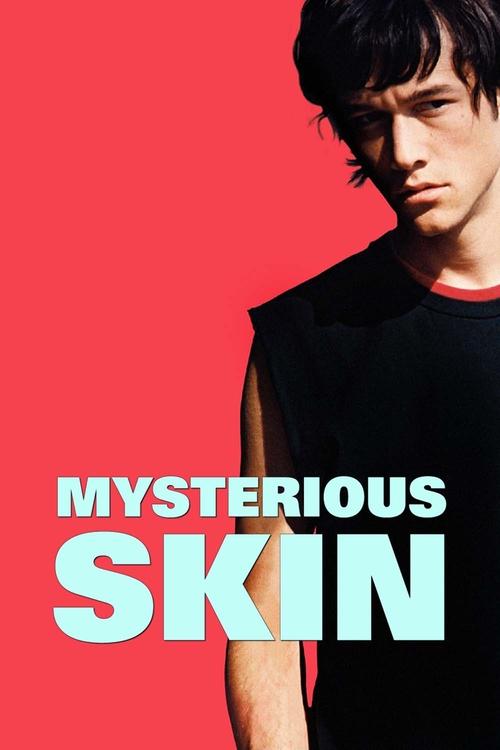
Mysterious Skin
A haunting, poetic exploration of trauma where two estranged childhood friends navigate the aftermath of sexual abuse through divergent paths of alien obsession and reckless prostitution, culminating in a heartbreaking reunion.
Mysterious Skin

Mysterious Skin

"Two boys. One can't remember. The other can't forget."

30 March 2005 United States of America 105 min ⭐ 7.7 (1,220)
Director: Gregg Araki
Cast: Joseph Gordon-Levitt, Brady Corbet, Michelle Trachtenberg, Jeffrey Licon, Mary Lynn Rajskub
Drama
Coping Mechanisms & Repression The Corruption of Innocence Loneliness & Connection
Budget: $3,000,000
Box Office: $2,148,548

Overview

In the small town of Hutchinson, Kansas, two young men, Neil McCormick and Brian Lackey, are linked by a shared but buried past. Neil, a charismatic and beautiful hustler, believes his childhood relationship with his Little League coach was a consensual and loving affair. He moves to New York City, seeking intimacy and validation through dangerous sexual encounters with older men.

Meanwhile, Brian is a shy, introverted recluse suffering from blackouts and nosebleeds. He has no memory of a specific five-hour block of time from the summer he was eight years old and becomes convinced he was abducted by aliens. As Brian digs deeper into his "abduction" theory, his search for the truth inevitably leads him back to Neil, the only person who holds the key to the terrifying reality of their shared summer.


Core Meaning

The Enduring Weight of Trauma: The film fundamentally explores how the human mind copes with unspeakable pain. Araki illustrates that whether one retreats into a fantasy of extraterrestrial abduction (Brian) or normalizes the abuse as "love" and empowerment (Neil), the trauma remains the central, defining force of their lives.

The Loss of Innocence: It portrays the shattering of childhood innocence not as a single event, but as a continuous echo that distorts the victims' perception of the world, intimacy, and themselves. The film ultimately suggests that facing the painful truth is the only path to genuine connection, even if that truth offers no easy healing.

Thematic DNA

Coping Mechanisms & Repression 40%
The Corruption of Innocence 30%
Loneliness & Connection 30%

Coping Mechanisms & Repression

The film contrasts two extreme responses to trauma: Brian represses the memory entirely, replacing the horror with a sci-fi fantasy of alien abduction to make sense of his "missing time." Neil, conversely, remembers everything but reframes the abuse as a special, romantic connection to avoid feeling victimized. Both are survival strategies to distance themselves from the pain.

The Corruption of Innocence

Visualized through the juxtaposition of childhood iconography (Little League baseball, cereal, toys) with predatory sexual acts. The film examines how adults in positions of trust can exploit a child's need for affection, permanently altering their trajectory.

Loneliness & Connection

Both protagonists are profoundly lonely. Neil uses sex to simulate intimacy but remains emotionally detached, while Brian is socially isolated by his 'weirdness' and trauma. Their eventual reunion suggests that true connection comes only from sharing the burden of their reality.

Character Analysis

Neil McCormick

Joseph Gordon-Levitt

Archetype: The Fallen Angel / Tragic Hustler
Key Trait: Detached Beauty

Motivation

To fill the emotional void left by his father's absence and to reclaim power over his sexuality.

Character Arc

Starts as a confident, sexually aggressive hustler who believes he was 'special' to his abuser. His journey involves the slow erosion of this delusion, leading to a breakdown where he must admit the 'love' was actually exploitation.

Brian Lackey

Brady Corbet

Archetype: The Seeker / Repressed Victim
Key Trait: Innocent Obsession

Motivation

To uncover the truth of the 'missing five hours' in his childhood.

Character Arc

Begins as a fearful, asexual introvert obsessed with aliens. He relentlessly pursues the truth of his 'abduction,' eventually finding the courage to hear the horrific reality from Neil.

Wendy

Michelle Trachtenberg

Archetype: The Witness / Loyal Friend
Key Trait: Unconditional Loyalty

Motivation

To protect and save Neil from himself.

Character Arc

Neil's childhood friend who harbors a secret unrequited love for him. She moves to New York and tries to ground Neil, acting as his only link to a 'normal' life and genuine non-sexual intimacy.

Symbols & Motifs

Alien Abduction

Meaning: A metaphor for the incomprehensible nature of sexual abuse and the 'missing time' lost to trauma.
Context: Brian believes he was taken by aliens during the five hours he cannot remember; the 'white light' of the spaceship masks the trauma of the abuse.

The Coach's House

Meaning: The locus of trauma; a place that is simultaneously mundane and horrific.
Context: The final scene takes place here, where the boys break in to confront the physical space where their innocence was stolen.

Fruit Loops / Cereal

Meaning: Childhood innocence and its sudden interruption/corruption.
Context: The opening shot features slow-motion cereal raining down, a sensory detail from the moment Neil was first groomed/abused.

Nosebleeds

Meaning: The physical manifestation of repressed psychological trauma trying to surface.
Context: Brian suffers from sudden, unexplained nosebleeds whenever he gets close to the truth or experiences stress related to his memory.

Angels

Meaning: Transcendence and the desire to escape the dirty reality of the world.
Context: Neil is called an 'angel' by the coach; in the final monologue, Neil wishes they could rise like 'two angels in the night' to escape their pain.

Memorable Quotes

I wished with all my heart that we could just leave this world behind. Rise like two angels in the night and magically... disappear.

— Neil McCormick

Context:

Voiceover during the final scene as Neil holds a crying Brian on the couch in their abuser's old house.

Meaning:

The film's closing line, summarizing the tragic desire to escape the permanent scars of their trauma. It reflects a loss of hope but a gain in solidarity.
I hate this stinking little butt crack of a town!

— Neil McCormick

Context:

Neil shouts this into the night air while hanging out with his friend Eric, a moment of teenage rebellion masking deeper pain.

Meaning:

Expresses the suffocating nature of their small-town environment and Neil's desperate need to escape to something bigger (New York).
You called me your fucking... angel.

— Neil McCormick

Context:

Spoken by Neil during a violent encounter with a client, echoing the grooming language used by his coach.

Meaning:

A heartbreaking realization and confrontation. Neil clings to the term of endearment used by his abuser as proof of his worth, even as he is being victimized again.

Philosophical Questions

Is a painful truth better than a comforting lie?

The film centers on this dichotomy. Brian seeks truth at the cost of his peace of mind, while Neil lives a lie to maintain his self-worth. The film suggests that while the truth is devastating, living in the 'lie' (repressed memory or denial) prevents true connection and healing.

How does trauma shape identity?

Neil identifies as a 'hustler' and 'heartbreaker,' constructing his entire persona around the sexualization he learned from his abuser. Brian identifies as an 'outsider' and 'abductee.' The film asks if who they are is a result of their nature or entirely a product of what was done to them.

Alternative Interpretations

Avalyn's Abduction: There is debate regarding the character Avalyn (who claims to be an abductee). Some interpret her as genuinely crazy or delusional. However, a common reading is that she, like Brian, is a victim of sexual abuse (possibly by her father) who uses the alien narrative as a similar coping mechanism. Her 'evidence' is just as ambiguous as Brian's.

The Ending: Critics and audiences often debate if the ending is hopeful. One view is that it is tragic, as they are left with the unfixable reality of their past. Another view is that it is the first step toward healing, as they have finally broken the silence and found the only other person who truly understands their pain.

Cultural Impact

New Queer Cinema Evolution: Mysterious Skin is a landmark film in the New Queer Cinema movement. It marked a shift for director Gregg Araki from his earlier, more chaotic and nihilistic 'Teen Apocalypse Trilogy' (e.g., The Doom Generation) to a more mature, polished, and emotionally resonant style.

Discussion of Male Trauma: The film broke ground by openly and sensitively discussing male childhood sexual abuse, a topic often taboo or sensationalized in media. It is frequently cited by survivors and psychologists for its accurate portrayal of the long-term psychological effects of grooming and trauma, such as hypersexuality and dissociation.

Career Defining: It established Joseph Gordon-Levitt as a fearless indie actor capable of tackling dark, complex material, separating him from his wholesome TV persona.

Audience Reception

Critical Acclaim: The film holds a high rating on Rotten Tomatoes (around 85%) and is praised for its fearless direction, haunting cinematography, and the powerful performances of its leads.

"Hard Watch": Audience reviews frequently describe it as a "masterpiece" that they "never want to watch again." The disturbing subject matter (pedophilia) makes it extremely difficult for many viewers, yet it is respected for handling the topic without being exploitative or graphic.

Controversy: Upon release, it faced scrutiny and near-censorship in some regions (like Australia) due to fears it sexualized children, though critics defended it as an anti-abuse film.

Interesting Facts

  • To protect the child actors, they were never on set with the 'Coach' actor during explicit scenes; they were filmed separately or with props/parents present, and the footage was edited together.
  • Joseph Gordon-Levitt and author Scott Heim took a road trip to Kansas before filming to research accents and locations. They saw a dying cow on the side of the road, mirroring a scene from the book, which they took as an 'omen'.
  • The film is widely considered a pivotal point in Joseph Gordon-Levitt's career, marking his transition from child sitcom star (3rd Rock from the Sun) to a serious adult actor.
  • The 'UFO' effects were intentionally made to look slightly 'cheesy' and reminiscent of 1950s B-movies to reflect that they were a product of a child's imagination/coping mechanism.
  • Gregg Araki adapted the screenplay from Scott Heim's 1995 novel of the same name. Heim has stated he was very happy with the adaptation.

Easter Eggs

Shoegaze Soundtrack

The soundtrack features iconic shoegaze bands like Slowdive, Cocteau Twins, and Ride. This musical choice by Araki (a known fan of the genre) creates the film's signature 'dream-pop' atmosphere, mirroring the hazy, dissociated state of the characters' memories.

The Dying Cow

The scene with the dying cow is a direct lift from the book, but it also became a real-life 'easter egg' for the actor and author when they encountered a similar sight during their research road trip.

⚠️ Spoiler Analysis

Click to reveal detailed analysis with spoilers

Frequently Asked Questions

Explore More About This Movie

Dive deeper into specific aspects of the movie with our detailed analysis pages

Comments (0)

Leave a comment

No comments yet. Be the first to share your thoughts!