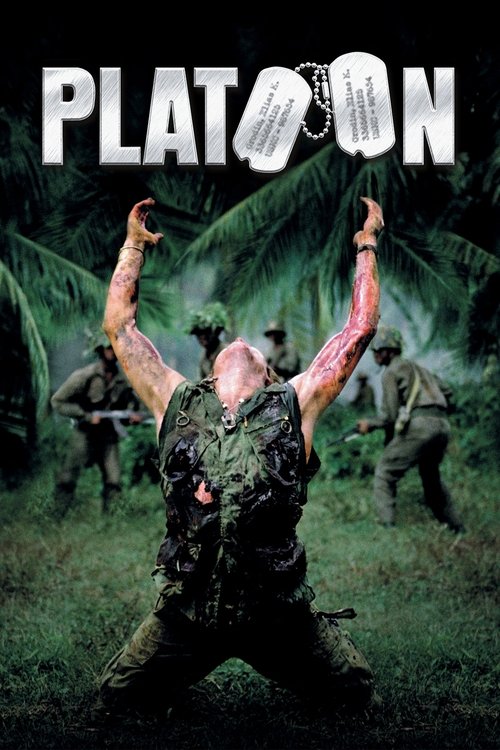
Platoon
"The first casualty of war is innocence."
Overview
Young volunteer Chris Taylor (Charlie Sheen) arrives in Vietnam in 1967, driven by idealistic notions of duty, only to be immediately thrust into the grueling reality of jungle warfare. Assigned to an infantry platoon near the Cambodian border, he finds himself a pawn in a brutal internal power struggle between two sergeants: the compassionate, humanistic Elias (Willem Dafoe) and the scarred, ruthless Barnes (Tom Berenger).
As the platoon faces ambushes, booby traps, and the sweltering exhaustion of the jungle, the moral divide between Barnes and Elias widens, splitting the men into opposing camps. The conflict reaches a breaking point during a raid on a village, where Barnes's brutality against civilians clashes violently with Elias's conscience. This internal "civil war" becomes as deadly as the enemy hiding in the foliage, forcing Taylor to choose not just a side, but what kind of man he will become amidst the madness.
Core Meaning
The Enemy Within: Platoon posits that the true war is not fought against an external enemy, but against the darkness inside the human soul. Oliver Stone deconstructs the myth of the heroic soldier, suggesting that war strips away civilization to reveal a primal duality: the capacity for selfless love (Elias) and animalistic violence (Barnes). Ultimately, the film argues that the "first casualty of war is innocence," and that every soldier leaves the battlefield—if they leave at all—carrying the war forever within them.
Thematic DNA
The Duality of Man
The central conflict is the battle for Taylor's soul between two father figures: Sgt. Elias (benevolence, morality, preservation of life) and Sgt. Barnes (malevolence, pragmatism, destruction). Taylor acknowledges this explicitly, stating he is a "child born of those two fathers," destined to carry their conflicting legacies for the rest of his life.
Loss of Innocence
The film traces Taylor's rapid evolution from a naive volunteer to a hardened, cynical veteran. The jungle strips away his social conditioning, forcing him to confront the savagery he is capable of—culminating in his final, decisive act of violence against a fellow soldier, which marks the complete death of his former self.
The Fog of War and Chaos
Combat is depicted not as heroic strategy but as terrifying confusion. Friendly fire, lack of visibility, drug use, and the inability to distinguish civilians from combatants create a chaotic environment where morality becomes fluid and survival is often a matter of luck rather than skill.
Class Warfare
The film highlights that the war was fought primarily by the poor and disenfranchised—the "bottom of the barrel." Characters like King point out that the rich have always used the poor to fight their wars, adding a layer of socio-political critique to the personal drama.
Character Analysis
Chris Taylor
Charlie Sheen
Motivation
Initially driven by patriotism and a desire to escape his privileged life; later driven by a primal need to survive and a desire to avenge Elias.
Character Arc
Starts as an idealistic college dropout who volunteered to "do his part." He is quickly broken by the physical and mental toll of the jungle. Caught between Elias and Barnes, he eventually succumbs to the war's brutality, committing murder to exact justice, and leaves as a "survivor" burdened with the task of finding meaning in the ashes.
Sgt. Bob Barnes
Tom Berenger
Motivation
Survival and total dominance. He believes he is the only one capable of keeping the platoon alive through sheer force of will.
Character Arc
Barnes is static; he is already fully formed as the avatar of war's cruelty. He believes in the necessity of ruthlessness to survive. His arc is one of exposing his total lack of moral boundaries, eventually turning his violence against his own men to maintain control.
Sgt. Elias Grodin
Willem Dafoe
Motivation
To protect his men and retain a shred of human decency in an inhuman environment.
Character Arc
A battle-hardened veteran who has not lost his humanity. He acts as the spiritual father to the "heads" (the pot-smoking group). He openly challenges Barnes's war crimes, which leads to his betrayal and death, elevating him to a mythic, martyr status.
Symbols & Motifs
Sgt. Elias's Crucifixion
Elias represents a Christ-like figure of sacrifice and grace. His death—arms outstretched towards the sky while being gunned down—is a visual martyrdom, symbolizing the death of morality and hope in the face of unbridled evil.
Betrayed by Barnes and left for dead, Elias emerges from the jungle one last time, running from NVA soldiers before collapsing in a crucifixion pose as the helicopter lifts off, unable to save him.
The Jungle
The jungle is an indifferent, suffocating entity that consumes everything. It serves as a trap, a green hell that hides the enemy and amplifies the soldiers' paranoia, representing the chaotic and primal state of nature where civilization holds no power.
It is the constant backdrop, shot to feel claustrophobic and alive, hiding booby traps and enemies, and "eating" the soldiers alive with insects, heat, and rot.
Barnes's Scars
The extensive scarring on Barnes's face represents his internal corruption and his history of violence. He is the "machine" of war made flesh—broken, stitched back together, and seemingly unkillable (having been shot seven times), embodying the resilience of evil.
Barnes is frequently framed in shadow or close-up to emphasize his disfigured visage, contrasting with Elias's often open, angelic expressions.
Memorable Quotes
I think now, looking back, we did not fight the enemy; we fought ourselves. And the enemy was in us.
— Chris Taylor
Context:
Spoken as a voiceover narration at the very end of the film, as Taylor flies away in the helicopter, looking back at the jungle.
Meaning:
The film's thesis statement. It reframes the entire Vietnam conflict not as a military struggle, but as an internal American moral collapse and a civil war within the human heart.
Everyone's gotta die sometime, Red.
— Sgt. Barnes
Context:
Said to O'Neill (Red) in the bunker before the final battle, dismissing O'Neill's fear of dying with chilling indifference.
Meaning:
Illustrates Barnes's fatalistic and cold nihilism. He accepts death as an inevitability of their existence, stripping it of any tragic weight.
Shut up and take the pain! Take the pain!
— Sgt. Barnes
Context:
Yelled at a wounded soldier during a firefight, demanding he suppress his agony to stay focused on the fight.
Meaning:
Encapsulates Barnes's philosophy: suffering is necessary, and weakness is intolerable. It is a demand for absolute stoicism and submission to the harsh reality he rules.
I love this place at night. The stars... there's no right or wrong in them. They're just there.
— Sgt. Elias
Context:
Spoken to Taylor while they are smoking marijuana in the "Underworld" bunker, a moment of peace amidst the war.
Meaning:
Shows Elias's spiritual connection to the universe, finding beauty and neutrality even in hell. It contrasts sharply with the moral hellscape they inhabit during the day.
Somewhere out there is the beast and he hungry tonight.
— King
Context:
Said while on guard duty in the pouring rain, anticipating the impending attack.
Meaning:
Personifies the war and the enemy as a predatory, almost supernatural force waiting to consume them.
Philosophical Questions
Can morality exist in the vacuum of war?
The film asks whether ethical codes are a luxury of civilization. Elias tries to maintain a moral baseline (protecting civilians), while Barnes argues that war suspends all normal rules and that the only 'sin' is losing. The film leaves us questioning if Elias's morality was a weakness that got him killed, or a strength that saved Taylor's soul.
Is evil inherent in human nature?
By stating 'the enemy was in us,' the film suggests that the capacity for atrocity is not unique to the enemy or a specific ideology, but a dormant seed in every human being that war simply fertilizes. It challenges the viewer to accept that under the right pressure, anyone could become Barnes.
Alternative Interpretations
The 'Tainted Survivor' Theory: While the ending narration sounds hopeful ('find a goodness and meaning'), some critics argue that Taylor's murder of Barnes proves he has been permanently corrupted. He didn't defeat the monster; he became one to survive. Thus, the 'goodness' he seeks is a desperate, perhaps impossible, attempt to wash away the sin of that final act.
The Religious Allegory: The film can be read as a passion play. Elias is the Christ figure (benevolent, crucified, resurrected in memory), Barnes is the Beast/Antichrist (marked by scars, cannot die, rules by fear), and Taylor is the disciple whose soul is the prize. The platoon itself is a purgatory where these spiritual forces wage war.
The Marxist/Class Lens: The platoon represents the working class ('the bottom of the barrel') sent to die for an imperialist machine. The internal conflict is less about morality and more about the fragmentation of the proletariat under extreme duress, with the 'lifers' (Barnes) enforcing the system's brutality while the 'heads' (Elias) attempt to escape it through counter-culture (drugs/music).
Cultural Impact
Platoon shattered the John Wayne-style mythos of World War II movies, presenting a raw, cynical, and morally ambiguous view of combat that resonated deeply with a generation of veterans who felt their story had never been told truthfully. It triggered a wave of realistic war films in the late 80s (like Full Metal Jacket and Hamburger Hill) and forced American culture to confront the ugly realities of the Vietnam War—drug use, fragging, and war crimes—out in the open. Its success (winning Best Picture) validated the 'grunt's eye view' of history and cemented Oliver Stone's reputation as a provocative, political filmmaker. The use of Samuel Barber's Adagio for Strings became iconic, forever associating the piece with tragedy and loss in popular culture.
Audience Reception
Upon release, Platoon was a massive critical and commercial success, praised for its visceral intensity and emotional power. Praised: Veterans lauded it for finally 'getting it right,' capturing the sensory details of the jungle—the heat, the bugs, the rot—and the camaraderie. Criticized: Some conservative critics and veteran groups felt it depicted American soldiers too negatively (as drug addicts and baby killers). African American journalist Wallace Terry criticized the depiction of Black soldiers as stereotypical. Verdict: It is widely regarded as one of the greatest war films ever made, holding a 89% rating on Rotten Tomatoes and winning 4 Academy Awards.
Interesting Facts
- The film was shot in the Philippines just as the 1986 People Power Revolution was overthrowing Ferdinand Marcos. The production was almost canceled due to the political instability, and the military equipment they were using was occasionally recalled for the real coup.
- Director Oliver Stone makes a cameo appearance as a battalion commander in a bunker who gets blown up by a suicide bomber during the final battle.
- The actors underwent a grueling two-week boot camp led by military advisor Dale Dye (who also plays Captain Harris). They were deprived of sleep, forced to dig foxholes, and ate MREs to achieve the exhausted, 'thousand-yard stare' look before filming began.
- Tom Berenger (Barnes) and Willem Dafoe (Elias) were cast against type. Berenger was known for playing romantic leads and 'good guys,' while Dafoe had primarily played villains. Stone wanted to subvert audience expectations.
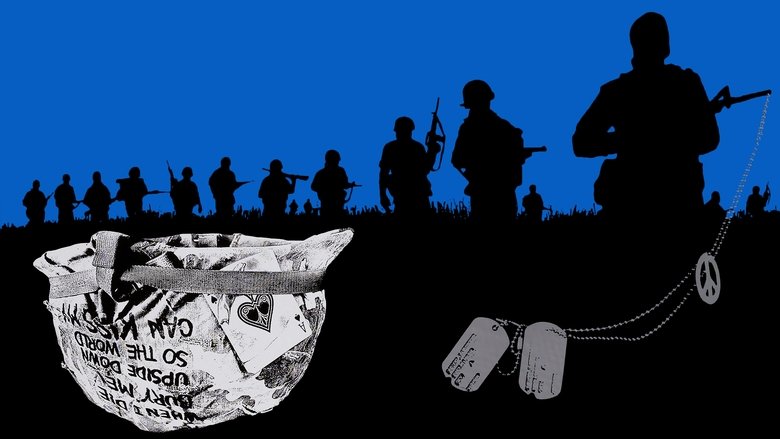
- Charlie Sheen's helmet graffiti reads 'When I die, bury me upside-down, so the world can kiss my ass.' Johnny Depp's helmet reads 'Sherilyn,' a reference to his then-girlfriend Sherilyn Fenn.
- The scene where Chris Taylor forces himself to dance while firing his weapon at the feet of a villager is based on an incident Oliver Stone witnessed himself in Vietnam.
- Platoon was the first Hollywood feature film to be written and directed by a Vietnam War veteran, lending it a level of gritty authenticity that previous films lacked.
- Johnny Depp was cast in a minor role (Lerner) because he was young and unknown at the time; Stone reportedly wanted him for the lead but the studio felt he wasn't a big enough star yet.
Easter Eggs
Oliver Stone's Cameo
Director Oliver Stone appears briefly as a Battalion Commander in the command bunker during the climactic battle. He is seen talking on the radio just before a suicide bomber runs in and detonates, killing him—a meta-commentary on the director destroying himself or his past self in the film.
Actual Letters Home
The voiceover narrations spoken by Charlie Sheen are largely based on the actual letters Oliver Stone wrote to his grandmother during his tour of duty in Vietnam, grounding the film's narrative in genuine historical documentation.
Body Bags at the Start
The very first thing Taylor sees upon exiting the plane is a loading crew moving body bags. This mirrors Oliver Stone's real-life experience of arriving in Vietnam, immediately signaling the grim reality of his destination.
⚠️ Spoiler Analysis
Click to reveal detailed analysis with spoilers
Frequently Asked Questions
Explore More About This Movie
Dive deeper into specific aspects of the movie with our detailed analysis pages
Comments (0)
No comments yet. Be the first to share your thoughts!