Skip to content
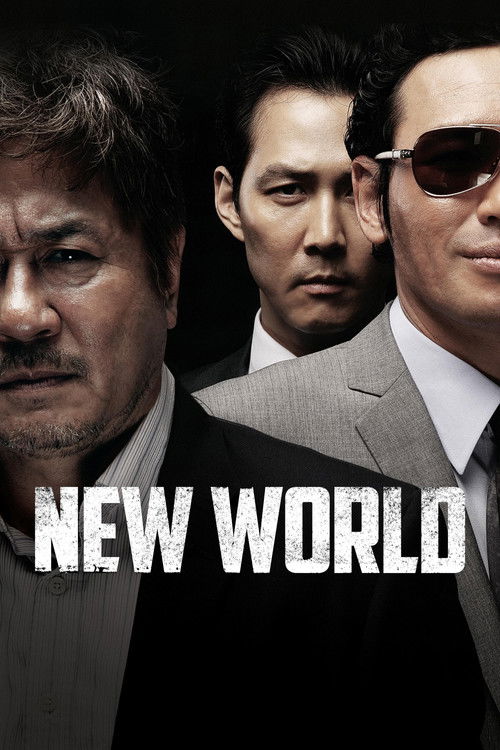
New World
Wrapped in cold neo-noir paranoia, this tragic crime thriller transforms suffocating betrayal into a ruthless baptism of authority—where brotherhood bleeds into ambition like crimson ink dissolving in frozen glass.
New World

New World

신세계

"Three Men. Three Ways. To A Different World."

21 February 2013 South Korea 134 min 7.4 (554)

Director: Park Hoon-jung

Cast: Lee Jung-jae, Choi Min-sik, Hwang Jung-min, Park Sung-woong, Song Ji-hyo

Drama Crime Thriller Loyalty vs. Betrayal Identity Erosion and Corruption Power, Ambition, and Succession Institutional Morality vs. Criminal Honor Self-Preservation and Pragmatism

Overview

When the chairman of Goldmoon International—South Korea’s most sprawling corporate crime syndicate—is killed in a suspicious car crash, a ferocious power vacuum erupts within the organization. Two major factions vie for control: the flamboyant, Chinese-connected mob boss Jung Chung and the cold, ruthless strategist Lee Joong-gu. Sensing an opportunity to neutralize the syndicate once and for all, the National Police Agency launches "Operation New World," a covert strategy aimed at manipulating the succession battle from behind the scenes.

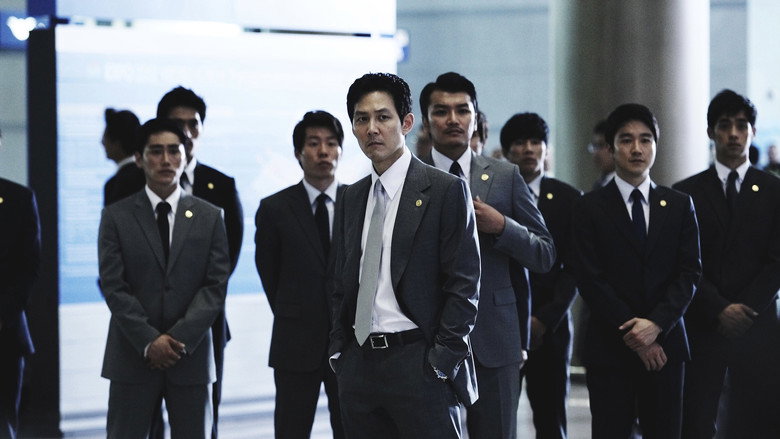
At the center of this volatile storm sits Lee Ja-sung, an elite undercover officer who has spent eight grueling years climbing Goldmoon's hierarchy to become Jung Chung’s right-hand man. Pushed to the brink of psychological collapse by his handler, Section Chief Kang—who relentlessly delays Ja-sung’s promised exit while exploiting his loyalty—Ja-sung finds himself caught between a police apparatus that treats him as a disposable pawn and a charismatic gangster boss who loves him like a true brother.
Core Meaning

Directed and written by Park Hoon-jung, New World explores how institutional cynicism and systemic manipulation can corrupt human morality, ultimately driving an individual to abandon legitimate law for criminal absolute power. The film argues that the line separating law enforcement from organized crime is purely superficial; both systems operate on coercive control, deceit, and human sacrifice. True survival in a morally bankrupt world requires shedding naive notions of justice and embracing cold pragmatism.

Thematic DNA

Loyalty vs. Betrayal 30%
Identity Erosion and Corruption 25%
Power, Ambition, and Succession 20%
Institutional Morality vs. Criminal Honor 15%
Self-Preservation and Pragmatism 10%

Loyalty vs. Betrayal

The emotional heart of the story contrasts the genuine, unconditional brotherhood offered by a ruthless mobster with the treacherous, transactional exploitation enforced by the police state.

Identity Erosion and Corruption

Ja-sung’s prolonged undercover assignment erodes his original self. Trapped between two identities, he discovers that the "monsters" in suits offer more human warmth than his legal masters.

Power, Ambition, and Succession

Emulating corporate warfare, the battle for Goldmoon demonstrates how systemic power struggles commodify human lives, turning subordinates into collateral damage.

Institutional Morality vs. Criminal Honor

The film subverts classic tropes by framing the police leadership as calculating and cold-hearted, while the organized crime bosses demonstrate codes of personal honor and deep emotional bonds.

Self-Preservation and Pragmatism

In a world of absolute cynicism, idealists perish; only those willing to make ruthless choices can carve out their own "New World".

Character Analysis

Lee Ja-sung

Lee Jung-jae

Archetype: Reluctant Undercover Agent / Tragic Antihero Key Trait: Intense internal control masking deep anxiety and latent lethality.

Motivation

Personal survival and protecting his pregnant wife.

Character Arc

Begins as an exhausted, terrified undercover cop yearning for freedom; evolves into a cold, decisive mafia patriarch who takes total control.

Jung Chung

Hwang Jung-min

Archetype: Flamboyant Mob Boss / Tragic Brother Key Trait: Unpredictable warmth paired with explosive cruelty.

Motivation

Expanding Goldmoon’s power while protecting his inner circle.

Character Arc

Shifts from a vulgar, comedic executive into a devastatingly sharp, fiercely protective figure who chooses to save his brother over his own life.

All 5 characters and cast

Symbols & Motifs

Counterfeit Designer Goods & The Fake Rolex

Meaning:

They symbolize Ja-sung's false, performative gangster persona—yet ironically contain genuine emotional devotion that outshines the police force's official badge.

Context:

Jung Chung repeatedly gifts Ja-sung fake luxury items throughout the film.

The Elevator

Meaning:

Represents a claustrophobic trap where power struggles turn into visceral, violent slaughter.

Context:

Serves as the site of the film's climax during an ambush on Jung Chung.

Cigarettes and Lighters

Meaning:

Smoking acts as a gauge of stress, identity, and control.

Context:

Ja-sung constantly struggles to light his cigarette throughout the film due to nervous tension; lighting it smoothly at the end signifies his complete embrace of power.

Go (Baduk) Board

Meaning:

The game symbolizes strategic manipulation where human beings are calculated, expendable pieces.

Context:

Used as a secret meeting cover between Ja-sung and his handler Shin Woo.

Drums of Concrete

Meaning:

Represent the dark, unglamorous foundation upon which corporate crime empires are built.

Context:

Steel barrels filled with concrete poured over victims before being dropped into the ocean.

Memorable Quotes

드루와, 드루와!
— Jung Chung

Context

Trapped in a crowded elevator packed with armed rival assassins, a bloody Jung Chung screams this defiance while wielding a knife.

Meaning

It became one of the most famous improvised lines in South Korean cinema history, showcasing ultimate defiance.

거 죽기 딱 좋은 날씨네.
— Lee Joong-gu

Context

Delivered on a rooftop before being thrown to his death by Ja-sung’s men.

Meaning

Reflects the character's unyielding pride and acceptance of his violent fate.

All 6 quotes

Philosophical Questions

What truly defines a person's identity—their official duty or their real-world actions?

Ja-sung carries a police ID, but lives, bleeds, and builds relationships within Goldmoon, showing that identity is forged by lived experiences rather than institutional titles.

Does state power lose its moral legitimacy when it adopts the exact methods of criminals?

Chief Kang blackmailing his own agents and sacrificing human lives demonstrates how the state's pursuit of order can become indistinguishable from tyranny.

Can genuine brotherhood exist upon a foundation of deceit?

Jung Chung knows Ja-sung lied to him for eight years, yet forgives him and dies protecting him, asserting that human affection can transcend ideological deceit.

Alternative Interpretations

Reading 1: The Tragedy of Systemic Corruption: Ja-sung’s dark transformation is a tragic, forced survival response. The police force left him no moral alternative, forcing him to kill his handlers to protect himself.Reading 2: The Choice of Brotherhood Over the State: Jung Chung’s selfless act of protecting Ja-sung even after discovering his police file touches Ja-sung profoundly. Ja-sung chooses...

Full ending explanation

Cultural Impact

Historical/Social Context: The film reflects South Korea’s historical reality of gang syndicates restructuring into legitimate-looking corporate conglomerates (jaebeol style) following major government crackdowns in the 1990s.

Impact on Cinema: New World revitalized the Korean gangster noir genre in the 2010s, shifting focus from romanticized street brawls to corporate politicking and institutional corruption.

Pop Culture Legacy: The film's lines remain widely parodied on South Korean television shows, comedy programs, and online media.

Critical Reception: Praised worldwide for its cast performances, sleek cinematography, and dark thematic subversions.

Audience Reception

Praised Aspects: Masterful performances by Lee Jung-jae, Hwang Jung-min, and Choi Min-sik; brilliant dialogue; sleek corporate neo-noir aesthetic; and the visceral elevator fight scene.

Main Criticisms: Some viewers found the mid-narrative politicking slightly slow and noted heavy structural similarities to Infernal Affairs and The Godfather.

Controversial Elements: Extreme, graphic violence (concrete torture, throat-slitting, elevator bloodbath) and the harsh, abrupt fates of female characters.

Overall Verdict: Unanimously hailed as one of the finest South Korean crime thrillers of the 21st century.

Interesting Facts

  • Choi Min-sik personally called Lee Jung-jae to pitch the script, rekindling a close professional friendship that translated directly into their intense dynamic on screen.
  • Hwang Jung-min’s iconic line "Deuruwa, deuruwa!" in the elevator fight was not in the original script; he improvised it on set, and it grew into an enduring South Korean internet meme.
  • The elevator battle took several days to film inside a real, narrow shaft setup. The tight space made heat and exhaustion real for the actors, resulting in raw, brutal choreography.
  • Park Sung-woong was initially considered too gentle-looking by the production team for Lee Joong-gu, but his chilling audition read convinced director Park Hoon-jung instantly.
  • Despite its restricted R-rating, the film drew over 4.68 million theater admissions in South Korea, cementing its status as a modern classic.

Easter Eggs

Homage to The Godfather

The succession war, the cold baptism-style execution montage at the climax, and Ja-sung's transformation into the undisputed mob boss directly pay homage to Michael Corleone’s rise in Francis Ford Coppola's masterpiece.

Nod to Infernal Affairs & The Departed

Rooftop rendezvous, secret codebooks, and deep-cover identity crises directly reference the Hong Kong crime classic.

The Post-Credit/Epilogue Scene (Yeosu 6 Years Ago)

The ending sequence shows a younger Ja-sung and Jung Chung clearing out a local gang in Yeosu. It reveals that Ja-sung was always capable of ruthless violence and genuinely enjoyed his raw brotherhood with Jung Chung long before corporate ambitions took over.

Cut Sequels Cameos

Ryoo Seung-bum and Ma Dong-seok filmed cameo scenes as replacement undercover police officers, meant to set up a prequel/sequel trilogy, though those plans were eventually shelved.

Frequently Asked Questions

Explore More About This Movie

Dive deeper into specific aspects of the movie with our detailed analysis pages

Comments (0)

Leave a comment

No comments yet. Be the first to share your thoughts!

Similar Movies