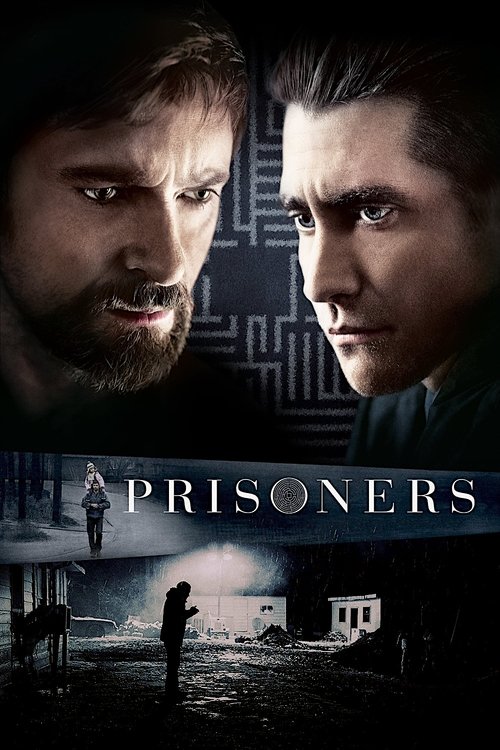
Prisoners
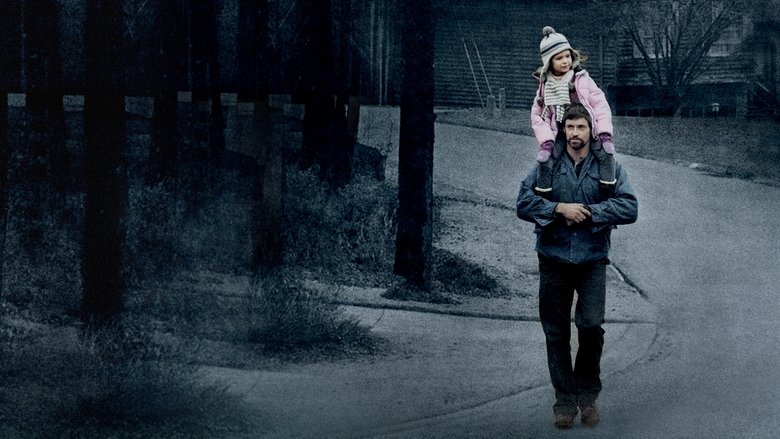
A rain-drenched, morally gray thriller where a father's desperate search for his daughter spirals into a labyrinth of primal fear and fractured faith.
Prisoners

Prisoners

"Every moment matters."

19 September 2013 United States of America 153 min ⭐ 8.1 (12,481)
Director: Denis Villeneuve
Cast: Hugh Jackman, Jake Gyllenhaal, Viola Davis, Maria Bello, Terrence Howard
Drama Crime Thriller
Justice vs. Vigilantism The Fragility of Faith The Labyrinth of Grief and Trauma The Cycle of Violence
Budget: $46,000,000
Box Office: $122,126,687

Overview

On a dreary Thanksgiving Day in a small Pennsylvania town, two young girls, Anna Dover and Joy Birch, vanish without a trace. As the hours turn into days, the investigation, led by the meticulous Detective Loki (Jake Gyllenhaal), hones in on Alex Jones (Paul Dano), a peculiar young man with a diminished IQ who was seen in an RV near where the girls were last playing. However, with no physical evidence, the police are forced to release him.

Convinced that Alex holds the key to his daughter's whereabouts, Anna's father, Keller Dover (Hugh Jackman), a deeply religious man and survivalist, takes matters into his own hands. He kidnaps Alex and imprisons him in an abandoned building, subjecting him to brutal torture in a desperate attempt to extract information. This act forces the Birch family into a moral crisis and sets Keller on a collision course with Detective Loki, who is simultaneously navigating a complex web of leads, red herrings, and other dark secrets hidden within the community.

Core Meaning

"Prisoners" explores the harrowing depths of human nature when confronted with unimaginable loss and the ambiguous line between justice and vengeance. Director Denis Villeneuve probes the question of how far a person will go to protect their family and whether it's possible to retain one's humanity in the face of monstrous acts. The film suggests that everyone is a prisoner of something—grief, fear, faith, or obsession—and that the desperate search for answers can create its own inescapable prison. It's a dark meditation on morality, the fragility of faith, and the cyclical nature of violence, leaving the audience to question who the real monsters are.

Thematic DNA

Justice vs. Vigilantism 35%
The Fragility of Faith 30%
The Labyrinth of Grief and Trauma 25%
The Cycle of Violence 10%

Justice vs. Vigilantism

The central conflict of the film revolves around Keller Dover's decision to abandon the legal system and enact his own brutal form of justice. Believing the police are failing, he tortures a suspect, crossing a significant moral boundary. This theme forces the audience to confront uncomfortable questions: Is his vigilantism justified by the circumstances? Does the failure of the system excuse his monstrous actions? The film contrasts Keller's violent, faith-driven certainty with Detective Loki's methodical, yet equally obsessive, adherence to the law, presenting two fraught paths to the same goal.

The Fragility of Faith

Religion and faith are pervasive throughout "Prisoners." Keller Dover is introduced as a devout Christian, reciting the Lord's Prayer. However, the abduction of his daughter shatters his faith, leading him to question God and commit heinous sins in his desperation. Conversely, the film's antagonists, Holly Jones and her husband, are revealed to be waging a "war on God" by abducting children to make other people lose their faith, a twisted response to the loss of their own son to cancer. The film explores how faith can be both a source of strength and a catalyst for profound darkness.

The Labyrinth of Grief and Trauma

The film uses the recurring symbol of the maze to represent the psychological state of its characters. Each character is trapped in their own personal prison of grief, trauma, and obsession. Keller is lost in a maze of rage and vengeance. Loki is trapped by the case, unable to rest. The victims, past and present, are psychologically scarred, forever trying to navigate the maze of their trauma. This theme is not just about the external search for the girls, but the internal, disorienting struggle to cope with an unbearable reality.

The Cycle of Violence

"Prisoners" demonstrates how violence begets more violence. The kidnapper, Holly Jones, and her husband began their crusade after the trauma of losing their child. Their actions, in turn, transform Keller Dover from a protective father into a torturer. Other victims of the Joneses, like Bob Taylor, are so traumatized that they begin to emulate the patterns of their own abduction. The film suggests that trauma and violence are not isolated events but are part of a destructive cycle that ensnares everyone it touches.

Character Analysis

Keller Dover

Hugh Jackman

Archetype: The Antihero / The Avenger
Key Trait: Desperate Determination

Motivation

His sole motivation is to find his daughter, Anna, at any cost. He is driven by a profound paternal love that is twisted by desperation and a conviction that the official investigation is insufficient. He believes he is the only one who can save her, justifying any action, no matter how brutal.

Character Arc

Keller begins as a deeply religious, protective family man and survivalist. The abduction of his daughter transforms him into a ruthless vigilante. He sacrifices his morality and faith, becoming a prisoner of his own rage and grief. His journey is a descent into darkness, where his initial righteous anger curdles into monstrous obsession. By the end, he has found his daughter but lost himself, trapped in a physical pit that mirrors his moral one.

Detective Loki

Jake Gyllenhaal

Archetype: The Obsessed Detective
Key Trait: Relentless Obsession

Motivation

Loki is driven by a powerful sense of duty and a need for order and resolution. He is relentless in his pursuit of the truth, unable to rest while the case is unsolved. His motivation is not just professional; it's a deep-seated personal compulsion to solve the puzzle and bring the guilty to justice.

Character Arc

Loki starts as a confident, highly skilled detective with a perfect record of solving cases. He is methodical and controlled, distinguished by his tattoos and a nervous facial tic. As the case drags on and the pressure mounts, he becomes increasingly obsessed and frustrated, blurring the lines of professional conduct. His journey shows him becoming a prisoner of the case itself, unable to let go until every piece is in place. He ultimately succeeds, but the case leaves a clear psychological mark on him.

Holly Jones

Melissa Leo

Archetype: The Shadow / The Nihilist
Key Trait: Twisted Conviction

Motivation

Her motivation stems from a profound loss of faith. After her young son died of cancer, she and her husband declared a "war on God." They kidnap children to inflict the same pain on other parents, hoping to make them lose their faith as well, thereby creating more "demons." It is a motivation born from nihilistic despair and a desire to see the world share her suffering.

Character Arc

Holly Jones is initially presented as the unassuming, caring aunt of the primary suspect, Alex. Her character undergoes a shocking transformation when she is revealed to be the mastermind behind the abductions. Her arc is one of revelation, moving from a seemingly harmless background figure to the story's central antagonist. She doesn't change; rather, her true, monstrous nature is unveiled.

Alex Jones

Paul Dano

Archetype: The Scapegoat / The Victim
Key Trait: Traumatized Innocence

Motivation

Alex's motivations are simple and driven by fear and trauma. He acts out of a childlike confusion and a deep-seated terror of his "aunt," Holly. His cryptic statements, like "They didn't cry 'til I left them," are not confessions but fragmented memories of his own traumatic past and the current events.

Character Arc

Alex is introduced as a suspect with the IQ of a 10-year-old, making him an easy target for Keller's rage. Throughout the film, he is a figure of ambiguity. It is eventually revealed that he is not a perpetrator but one of Holly Jones's first victims, kidnapped as a child himself. His arc is one of a traumatized individual trapped in a mental and physical prison, unable to articulate the truth. He remains a victim from beginning to end, suffering at the hands of both his original captor and the desperate father.

Symbols & Motifs

The Maze

Meaning:

The maze is the film's central and most potent symbol, representing the complex and often inescapable nature of the characters' psychological states, the intricate web of the investigation, and the loss of moral direction. It embodies the feeling of being lost, facing dead ends, and the desperate search for an exit from trauma, grief, and moral ambiguity.

Context:

The maze appears in multiple forms: drawn on the walls by suspect Bob Taylor, on a necklace worn by a murder victim (Holly Jones's husband), and mentioned cryptically by the tortured Alex Jones. It connects the various victims and perpetrators, serving as a physical clue for Detective Loki that ultimately helps him solve the case. For the characters, it's a metaphor for their entrapment in the horrifying situation.

The Whistle

Meaning:

The small red emergency whistle symbolizes hope, survival, and a child's last cry for help. It represents a fragile connection to innocence and the potential for rescue from the literal and figurative darkness that engulfs the characters. In the end, it becomes a beacon of salvation for Keller.

Context:

Anna Dover loses her whistle at the beginning of the film, just before she is abducted. In the film's final moments, Keller, trapped in a hidden pit, finds the whistle. As Detective Loki stands over the crime scene, about to leave, he faintly hears the sound of the whistle, indicating Keller's location and offering the possibility of his rescue.

Constant Rain and Snow

Meaning:

The bleak, overcast weather, with persistent rain and snow, reflects the film's oppressive and somber tone. It creates an emotional landscape of coldness, despair, and moral gloom. The weather visually reinforces the characters' internal states of confusion and hopelessness, suggesting a world washed clean of color and warmth, where clarity is obscured.

Context:

Nearly every outdoor scene is drenched in rain or covered in snow. This constant dreary weather, masterfully captured by cinematographer Roger Deakins, is a key element of the film's visual style, enhancing the sense of dread and isolation that permeates the story from the moment the girls disappear.

Memorable Quotes

They didn't cry 'til I left them.

— Alex Jones

Context:

Alex whispers this to Keller outside the police station just after he has been released due to a lack of evidence. Keller has just physically assaulted him, and this line, born of Alex's traumatized and confused mind, seals his fate as Keller's prisoner.

Meaning:

This is a pivotal, ambiguous line that Keller Dover misinterprets as a confession. It fuels his certainty that Alex is guilty, setting him on his path of torture. The quote's true meaning is revealed later: Alex was a previous victim, and he is likely referring to leaving the girls with Holly, the real kidnapper, which is when their true ordeal began.

Pray for the best, prepare for the worst.

— Keller Dover

Context:

This is a recurring phrase for Keller. He says it to his son at the beginning of the film while they are hunting, establishing his character's core beliefs about being prepared for any eventuality.

Meaning:

This line encapsulates Keller's survivalist philosophy, which is established early in the film. It highlights his worldview of self-reliance and his belief that one must be ready for any disaster. This motto foreshadows the extreme measures he will take, showing his mindset of preparing for the absolute worst-case scenario.

Making children disappear is the war we wage with God. Makes people lose their faith.

— Holly Jones

Context:

Holly says this to Keller after she has trapped him in her house. She calmly explains her philosophy as she prepares to imprison him in the pit, revealing the full, twisted scope of her and her late husband's decades-long crusade.

Meaning:

This chilling line reveals Holly's motive for her horrific crimes. It's not about ransom or personal gratification in a conventional sense; it's a nihilistic, theological attack. She aims to destroy people's faith by inflicting unbearable suffering, recreating her own loss of belief in others as a form of twisted revenge against God.

He's not a person anymore. No, he stopped being a person when he took our daughters.

— Keller Dover

Context:

Keller says this to Franklin Birch when trying to convince him to go along with the plan to torture Alex. Franklin is hesitant and horrified, but Keller uses this powerful, dark justification to rationalize his actions and pressure Franklin into complicity.

Meaning:

This quote marks the moment Keller completely dehumanizes Alex Jones in order to justify the horrific acts of torture he is about to commit. It is a stark verbalization of his moral descent, showing how his grief and rage allow him to strip another human being of their personhood to serve his own desperate ends.

Philosophical Questions

Do the ends justify the means?

This is the central philosophical question of the film, embodied by Keller Dover. He commits morally repugnant acts of torture, believing they are the only way to save his daughter. The film forces the audience into a deeply uncomfortable position: while his actions are horrific, he is ultimately proven correct—the man he tortures does have a connection to the kidnapper. "Prisoners" doesn't provide an easy answer. Keller finds his daughter, but he loses his soul and his freedom in the process, leaving the audience to grapple with whether his partial 'success' validates his brutal methods.

What is the nature of faith in the face of suffering?

The film presents a spectrum of responses to unbearable suffering. Keller's faith crumbles under pressure, replaced by a violent self-reliance that mimics a vengeful God. In contrast, Holly Jones's faith was utterly destroyed by her son's death, turning her into an agent of nihilism who actively seeks to destroy the faith of others. The film explores faith not as a comfort, but as a fragile construct that can either sustain a person or, when broken, lead to monstrous ideologies. It questions whether belief can survive when confronted with the worst aspects of humanity.

What does it mean to be a 'prisoner'?

The title applies to nearly every character in the film. The girls are literal prisoners of Holly Jones. Keller becomes a prisoner of his rage and grief, and ultimately of the pit. Alex is a prisoner of his past trauma and diminished mental capacity. Loki is a prisoner of the case, unable to escape his obsession. The film uses the concept of imprisonment to explore not just physical confinement, but the psychological, emotional, and spiritual cages that people build for themselves or are forced into by trauma and circumstance.

Alternative Interpretations

The film's ending is the primary source of alternative interpretations. While the most straightforward reading is that Detective Loki hears the whistle and will rescue Keller Dover, the deliberate cut to black leaves room for debate.

A Bleaker Interpretation: Some viewers argue that the ending is not as hopeful as it seems. Loki is exhausted, and the sound is faint. He might dismiss it as the wind or his imagination. In this reading, Keller is never found and perishes in the pit—a grim form of cosmic justice for his torture of Alex Jones. His final act is one of hope (blowing the whistle), but it goes unanswered, solidifying the film's dark, nihilistic themes. Keller remains a permanent "prisoner."

A Symbolic Interpretation: The ending can be read less literally and more thematically. Keller, having lost his faith and descended into a moral abyss, is in a state of purgatory (the pit). His finding of the whistle, a symbol of his daughter's innocence, and using it to call for help represents a final, desperate prayer. Loki, who has been repeatedly and almost supernaturally present after Keller's prayers, acts as an agent of grace or divine intervention. Whether he physically saves Keller is less important than the fact that Keller, in his darkest moment, reached for a sliver of hope. The ending then becomes about this final moral choice rather than the physical outcome. Screenwriter Aaron Guzikowski has confirmed an alternate scene was shot showing Keller's rescue, but the filmmakers opted for the more ambiguous and impactful ending.

Cultural Impact

Released in 2013, "Prisoners" arrived as a stark, morally complex thriller that stood in contrast to more conventional Hollywood fare. It was Denis Villeneuve's first major English-language film and served as a powerful introduction for many to his meticulous, atmospheric, and thematically heavy style of filmmaking, which would later be seen in films like "Sicario," "Arrival," and "Blade Runner 2049." The film was a critical and commercial success, praised for its masterful direction, Roger Deakins' Oscar-nominated cinematography, and the powerful performances of its cast, especially Hugh Jackman and Jake Gyllenhaal.

"Prisoners" resonated with critics and audiences for its unflinching exploration of dark themes like vigilantism, the nature of evil, and the crisis of faith. It eschewed easy answers and comfortable resolutions, culminating in an ambiguous final shot that sparked considerable debate. The film is often compared to other landmark dark thrillers like "Se7en" and "The Silence of the Lambs" for its grim tone, intricate plotting, and psychological depth. While perhaps too bleak to have a widespread pop culture footprint in terms of memes or catchphrases, its influence is seen in the wave of somber, character-driven crime dramas that followed. It solidified Villeneuve's reputation as a master of suspense and elevated the genre by proving that a mainstream thriller could also be a profound and unsettling work of art.

Audience Reception

Audiences generally lauded "Prisoners" as an intense, gripping, and masterfully crafted thriller. Viewers frequently praised the stellar performances, particularly from Hugh Jackman and Jake Gyllenhaal, for their raw and compelling portrayals of men pushed to their absolute limits. The film's suspenseful and intricate plot, which keeps the audience guessing until the final act, was another major point of acclaim. The dark, moody atmosphere created by Denis Villeneuve's direction and Roger Deakins' cinematography was also widely celebrated for its effectiveness in building a pervasive sense of dread.

The primary point of criticism for some viewers was the film's extreme bleakness and graphic depiction of torture, which some found unsettling or gratuitously disturbing. The 153-minute runtime was also cited by some as being overly long, with claims that the middle section dragged. The film's ambiguous ending was a controversial point; while many found it to be a perfect, thought-provoking conclusion, others felt it was unsatisfying and abrupt after such a lengthy and emotionally taxing journey.

Interesting Facts

  • The screenplay for "Prisoners", written by Aaron Guzikowski, was featured on the 2009 Blacklist, a list of the year's most-liked unproduced scripts.
  • The film was initially set to star Mark Wahlberg and Christian Bale with Bryan Singer directing, but they left to make "The Fighter" instead. Leonardo DiCaprio was also attached to the project at one point.
  • Director Denis Villeneuve's first cut of the film was reportedly three hours long.
  • The film originally received an NC-17 rating from the MPAA for its "substantial disturbing violent content and explicit images." It was edited to achieve the final R rating.
  • Jake Gyllenhaal developed many of Detective Loki's character traits himself, including the distinct facial tic, the tattoos (including zodiac signs and a Freemason ring), and his backstory.
  • Cinematographer Roger Deakins shot the film digitally, which was a departure for him at the time, and made extensive use of natural and practical light to create the film's bleak, realistic atmosphere.
  • The original script was partially inspired by Edgar Allan Poe's short story "The Tell-Tale Heart," particularly in its themes of guilt.
  • Hugh Jackman was initially attached to the lead role, then dropped out, but returned to the project several years later once Denis Villeneuve was set to direct.

Easter Eggs

While Detective Loki is looking through Bob Taylor's notebook of mazes, one page features a drawing that strongly resembles Frank the Rabbit from "Donnie Darko" (2001), another film starring Jake Gyllenhaal.

This is a subtle visual nod to one of Jake Gyllenhaal's most iconic early roles. It serves as an inside joke for fans of his work, connecting two of his dark, psychologically complex films.

The byline on one of the newspaper articles shown briefly in the film is credited to "Aaron Guzikowski."

This is a small cameo by the film's screenwriter, Aaron Guzikowski, inserting his own name into the world of the story he created.

Detective Loki has zodiac sign symbols tattooed on his fingers.

This detail adds to the character's enigmatic nature and could be a nod to Gyllenhaal's starring role in the film "Zodiac" (2007), which is also about the obsessive hunt for a mysterious criminal.

⚠️ Spoiler Analysis

Click to reveal detailed analysis with spoilers

Frequently Asked Questions

Explore More About This Movie

Dive deeper into specific aspects of the movie with our detailed analysis pages

Comments (0)

Leave a comment

No comments yet. Be the first to share your thoughts!