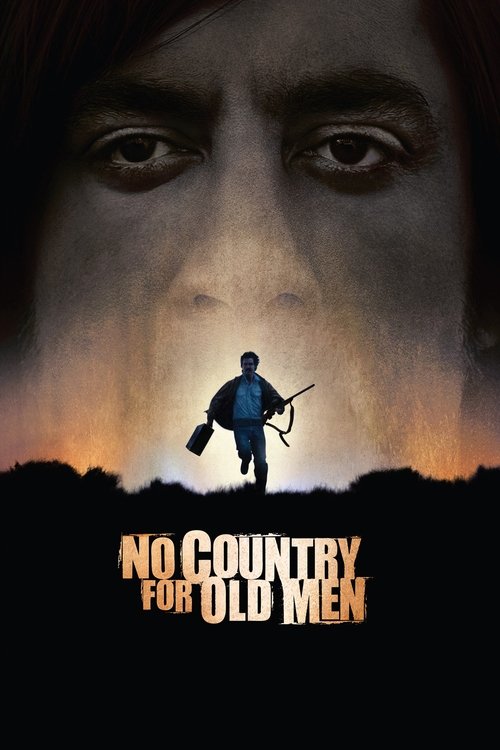
No Country for Old Men
"There are no clean getaways."
Overview
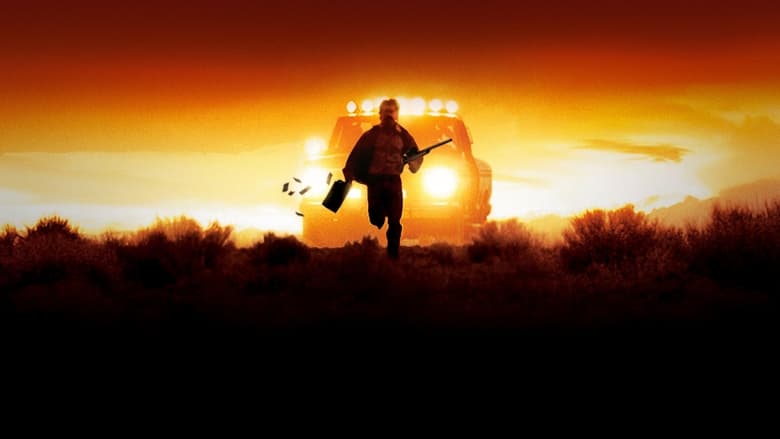
Set in the desolate landscape of 1980 West Texas, "No Country for Old Men" begins when Llewelyn Moss (Josh Brolin), a Vietnam veteran, stumbles upon the bloody aftermath of a drug deal gone wrong. Among the dead, he discovers a briefcase containing two million dollars, a discovery that irrevocably alters the course of his life. His decision to take the money sets off a violent chain of events, primarily by attracting the attention of Anton Chigurh (Javier Bardem), a relentless and enigmatic hitman hired to recover the cash.
As Moss attempts to evade his pursuer, the film unfolds into a tense cat-and-mouse chase across Texas and Mexico. Chigurh, armed with a captive bolt pistol and an unwavering, peculiar code of ethics, leaves a trail of bodies in his wake, representing a new, incomprehensible form of evil. Tracking them both is the aging Sheriff Ed Tom Bell (Tommy Lee Jones), a man haunted by the escalating violence in a world he no longer understands. Bell serves as the film's moral consciousness, reflecting on the changing nature of crime and his own perceived inadequacy in the face of such brutality.
Core Meaning
"No Country for Old Men" is a profound meditation on the themes of fate, free will, and the encroaching presence of an indifferent, chaotic evil in the modern world. The title itself, taken from a W.B. Yeats poem, alludes to Sheriff Bell's struggle to reconcile his old-world morality with a new, more brutal form of criminality that he cannot comprehend. The film suggests that traditional values and laws are becoming obsolete against a tide of senseless violence. Anton Chigurh is not just a villain but an allegorical figure—a force of nature or fate itself, operating on principles that transcend money or conventional morality. Ultimately, the film posits that one cannot stop what's coming; it's a commentary on aging, the inevitability of change, and the vanity of thinking one can control the relentless and often random nature of destiny.
Thematic DNA
Fate, Chance, and Free Will
This is the central theme, embodied by Anton Chigurh and his coin toss. Chigurh often lets a coin flip decide a victim's fate, suggesting he sees himself as an instrument of destiny rather than a murderer making a choice. This act removes morality from the equation, replacing it with pure chance. The film relentlessly questions how much control individuals have over their lives. Moss's decision to take the money (free will) sets his fate in motion, but his end comes randomly and off-screen. Sheriff Bell is forced to confront the idea that the world is indifferent to human striving and that some events are simply fated to happen, regardless of one's actions.
The Nature of Good and Evil
The film explores a shifting moral landscape where traditional notions of good and evil are challenged. Sheriff Bell represents an older, more straightforward morality, but he feels increasingly powerless against the new wave of violence. Chigurh represents an almost elemental form of evil, one that operates without passion or remorse and follows its own inscrutable logic. Llewelyn Moss exists in a morally gray area; he is a basically decent man whose greed leads him down a dark path, yet he also shows compassion, as when he returns to the crime scene with water. The film suggests that evil is not just an opposing force to good, but a persistent, evolving presence in the world.
The Old vs. The New
The title directly references the film's concern with changing times and generational conflict. Sheriff Bell is the quintessential "old man," a third-generation lawman who feels "overmatched" by the modern world's brutality. He laments the loss of old values and struggles to understand the motivations behind the crimes he investigates. Chigurh is the harbinger of this new era—a killer who doesn't operate by any recognizable code of honor or even financial greed in a traditional sense. The film paints a portrait of a world where experience and wisdom are no longer enough to navigate the encroaching chaos.
Violence and Greed
The narrative is set in motion by an act of greed: Llewelyn Moss's decision to take the briefcase of money. This single choice unleashes a torrent of violence that consumes nearly every character he comes into contact with. The film depicts violence not in a stylized or glorified manner, but as brutal, sudden, and deeply unsettling. Chigurh's use of the captive bolt pistol, a tool for slaughtering cattle, underscores his view of his victims as mere animals. The money symbolizes the promise of a better life, but ultimately it becomes a catalyst for death and destruction, proving to be a corrupting and dangerous force.
Character Analysis
Anton Chigurh
Javier Bardem
Motivation
Chigurh's motivation is not simple greed; he is hired to retrieve the money and does so with relentless dedication. However, his primary driver appears to be an adherence to his own bizarre principles and a philosophical compulsion to act as an agent of fate. He believes that his actions are the logical conclusion of the choices others have made, making him an arbiter of consequence rather than a simple hitman. As Carson Wells says, he has "principles that transcend money or drugs or anything like that."
Character Arc
Anton Chigurh is a static character who does not change. He is presented as an implacable force of nature, an embodiment of violence and fate. His purpose is not to grow but to act as a catalyst for change and destruction in the lives of others. Throughout the film, he remains a consistent, terrifying presence, operating by a rigid and inscrutable personal code that transcends money or traditional morality. He begins and ends the film as a mysterious, seemingly invincible agent of chaos.
Llewelyn Moss
Josh Brolin
Motivation
Moss's primary motivation is to escape his blue-collar life and provide a better future for himself and his wife, Carla Jean, with the stolen money. He is driven by a stubborn belief in his own ability to outwit his opponents and handle the dangerous situation he has created. Despite the escalating danger, his refusal to give up the money stems from a deep-seated desire for autonomy and freedom.
Character Arc
Llewelyn Moss begins as a resourceful, self-sufficient Vietnam veteran living a simple life. His character arc is a tragic trajectory initiated by a single, impulsive decision: taking the money. This act transforms him from a hunter into the hunted. He uses his survival skills and cunning to stay one step ahead of his pursuers, but his overconfidence and stubborn independence ultimately lead to his downfall. He never fully grasps the nature of the force he is up against and dies not in a heroic showdown, but unceremoniously off-screen, a victim of the violent world he entered.
Sheriff Ed Tom Bell
Tommy Lee Jones
Motivation
Bell is motivated by a deep-seated sense of duty and a desire to uphold justice and protect the innocent, specifically Llewelyn and Carla Jean. He is also driven by his personal history and a need to make up for what he perceives as a past act of cowardice during the war. He wants to make sense of the chaos and impose order, but ultimately realizes he is powerless against the coming tide of violence, leading to his decision to retire rather than confront an evil he doesn't understand.
Character Arc
Sheriff Bell is the moral center of the film, but his arc is one of disillusionment and resignation. He starts as a competent, traditional lawman who values justice and honesty. As he investigates the trail of violence left by Chigurh, he becomes increasingly aware that the world has changed in ways he cannot comprehend or combat. Haunted by a past failure in WWII and overwhelmed by the senseless brutality he now faces, he loses faith in his ability to protect his community. His arc concludes with his retirement and a quiet acceptance of his own limitations and the world's indifference, finding solace only in dreams of the past.
Carson Wells
Woody Harrelson
Motivation
Wells is motivated primarily by money and professional pride. He is a specialist brought in to clean up a mess. He offers to protect Moss in exchange for the money, framing it as a simple business transaction. His motivation is purely transactional, which makes him unable to comprehend Chigurh's philosophical and seemingly non-rational motivations, leading to his demise.
Character Arc
Carson Wells is a confident, pragmatic bounty hunter hired to stop Chigurh and recover the money. He serves as a foil to both Chigurh and Moss. Unlike Moss, he understands the true nature of the threat Chigurh poses, explaining that Chigurh has unwavering "principles." Unlike Chigurh, Wells operates within a more conventional (though still criminal) framework of money and negotiation. His arc is short and brutal; his confidence proves to be hubris. He believes he can reason with or outmaneuver Chigurh, a fatal miscalculation that leads to his swift death.
Symbols & Motifs
The Coin Toss
The coin toss is Chigurh's signature act and symbolizes his philosophy of fate, chance, and the abdication of personal responsibility. By forcing his victims to "call it," he externalizes the decision to kill, presenting himself not as a murderer but as a mere enforcer of destiny. The coin itself represents the random, indifferent nature of the universe. It will land as it will, just as a person's life choices have led them to this final, unchangeable moment.
Chigurh uses the coin toss in several key scenes, most notably with the unsuspecting gas station owner and later when he confronts Carla Jean Moss. In the final confrontation, Carla Jean refuses to call the toss, challenging his philosophy by forcing him to make a conscious choice, asserting that the act of killing is his own, not the coin's.
Captive Bolt Pistol
Chigurh's unconventional weapon, a captive bolt pistol used to slaughter cattle, symbolizes his dehumanizing view of his victims. It implies that he sees people as little more than livestock to be dispatched efficiently and impersonally. The weapon is also foreign to law enforcement, which reinforces Chigurh's status as a mysterious and almost otherworldly force of destruction that operates outside conventional methods.
Chigurh uses the bolt pistol throughout the film, both to kill people and as a tool for breaking locks, such as when he blows out the lock on Moss's trailer door. Its first on-screen use is when he murders the deputy to escape custody, establishing his brutal and resourceful nature from the outset.
Sheriff Bell's Dreams
The two dreams Bell recounts at the end of the film symbolize his feelings of guilt, his yearning for a simpler past, and his ultimate acceptance of his mortality. The first dream, about losing money his father gave him, reflects his sense of failure, particularly in his inability to protect Moss. The second, more hopeful dream of his father riding ahead of him in the cold darkness carrying fire in a horn, symbolizes hope and the passage into the next life. His father is lighting the way in the darkness, suggesting that even in a cold, incomprehensible world, there is a promise of peace and reunion in death.
Bell's dreams are the subject of the film's final monologue, which he recounts to his wife after his retirement. This quiet, contemplative scene concludes the film, shifting the focus from the violent plot to Bell's internal, philosophical struggle with his place in the world.
The Money
The briefcase full of cash is the film's MacGuffin, but it symbolizes temptation, corruption, and the false promise of a better life. It represents a path to escaping a mundane existence for Moss, but instead, it leads directly to his and his wife's demise. The money itself is indifferent; it is the human greed and violence it inspires that gives it its destructive power. It passes from hand to hand, leaving a trail of death, ultimately signifying the destructive nature of avarice.
Llewelyn Moss finds the briefcase containing $2.4 million at the site of a drug deal gone bad near the beginning of the film. The entire plot revolves around his attempts to keep it while being pursued by Chigurh and others who want to reclaim it.
Memorable Quotes
What's the most you ever lost on a coin toss?
— Anton Chigurh
Context:
Chigurh says this to a nervous gas station proprietor after the man makes a casual remark about the time. Chigurh takes offense and forces the man to call a coin toss, with his life implicitly on the line. The scene is a masterclass in building tension through dialogue, establishing Chigurh's terrifying and unpredictable nature.
Meaning:
This question is not about money; it's a philosophical inquiry into fate and consequence disguised as a simple query. Chigurh uses it to assert his power and introduce his twisted game of chance. The quote encapsulates his worldview: that lives and fortunes are subject to random, inescapable events, and he is merely the facilitator of that reckoning.
You can't stop what's coming. It ain't all waiting on you. That's vanity.
— Ellis
Context:
Sheriff Bell visits his elderly uncle, Ellis, a former lawman, to discuss his intention to retire because he feels "overmatched." Ellis delivers this piece of wisdom to comfort and correct Bell, putting his personal struggle into a much larger, historical context of violence and change that has always existed.
Meaning:
This line, spoken to Sheriff Bell, is the core thesis of the film. It speaks to the themes of fate and the inability of one person, no matter how principled, to hold back the tide of change and violence. It dismisses Bell's feeling of personal failure as a form of arrogance—the belief that he alone should be able to impose order on a chaotic world. It's a statement about acceptance in the face of inevitability.
If the rule you followed brought you to this, of what use was the rule?
— Anton Chigurh
Context:
Chigurh has tracked down and cornered Carson Wells in his hotel room. Wells attempts to bargain for his life, operating under the assumption that they are both professionals who can make a deal. Chigurh dismisses this and poses this question before killing him, highlighting the difference between Wells's pragmatic professionalism and his own elemental, uncompromising nature.
Meaning:
This chilling question is posed by Chigurh to Carson Wells right before killing him. It challenges the very foundation of societal and personal codes of conduct. Chigurh implies that any set of rules or principles is ultimately useless if it leads to one's own demise. It reflects his nihilistic belief that only outcomes matter, and the principles that guide one to a fatal outcome are meaningless.
And then I woke up.
— Sheriff Ed Tom Bell
Context:
Sitting at his kitchen table in retirement, Sheriff Bell describes two dreams he had to his wife. After detailing the second dream where his father carries fire ahead of him into the darkness, he ends his monologue, and the entire film, with this simple, profound sentence.
Meaning:
This is the final line of the film, and it is laden with ambiguity. It concludes Bell's recounting of his second, more hopeful dream about his father. The line can be interpreted in several ways: as a simple return to the bleak reality after a comforting dream, as a questioning of whether hope itself is just an illusion, or as a final acceptance of his place in the waking world, however harsh it may be. It leaves the audience in a state of quiet contemplation about hope and reality.
Philosophical Questions
How much of our lives is determined by fate, and how much by our own choices?
The film relentlessly explores the tension between determinism and free will. Llewelyn Moss makes a conscious choice to take the money, an act of free will that sets his tragic fate in motion. Anton Chigurh, conversely, acts as if he has no choice at all, viewing himself as an instrument of a destiny that was written long ago by the choices of others. His coin toss is the ultimate symbol of this philosophy, turning a life-or-death decision into a matter of pure chance, effectively removing agency. The film doesn't provide a clear answer, suggesting instead that life is a complex interplay of both. As Ellis tells Bell, "You can't stop what's coming," implying a powerful deterministic force, yet every character's predicament arises from a specific choice they made.
What is the nature of evil in a world that seems to lack a moral center?
"No Country for Old Men" presents a world grappling with the death of God, or at least the decay of a shared moral framework. Sheriff Bell embodies the struggle of traditional morality against a rising tide of what he perceives as senseless, passionless evil. Anton Chigurh represents this new evil; he is not sadistic and takes no pleasure in killing, but operates according to a strict, personal, and utterly alien set of principles. The film raises the question of whether evil is an external force or a philosophy one can adopt. By presenting Chigurh's actions without a clear, understandable motive like greed or revenge, the film suggests that evil may be an inherent, chaotic force in the universe, indifferent to human attempts to understand or contain it.
How should one respond to a world that is becoming increasingly violent and incomprehensible?
The film offers three distinct responses through its main characters. Llewelyn Moss chooses to engage with the violent world on its own terms, believing he can outsmart it through his own resourcefulness and grit, a choice that proves fatal. Anton Chigurh chooses to become an agent of that violence, embracing its chaos and imposing his own brutal order upon it. Sheriff Bell, after a lifetime of trying to impose order, chooses to withdraw. His retirement is an admission of defeat, a recognition that he is an "old man" for whom this new country is no longer tenable. His final solace comes not from action, but from introspection and dreams, suggesting that perhaps the only meaningful response is to find personal peace and accept one's limitations.
Alternative Interpretations
One of the most debated aspects of the film is the nature of Anton Chigurh. While on the surface he is a hitman, many interpretations see him as a supernatural or allegorical figure. Some view him as an embodiment of Death itself or an unstoppable force of fate—a "true and living prophet of destruction," as Sheriff Bell calls him. This reading is supported by his seemingly inhuman pain tolerance, his uncanny ability to track his victims, and his adherence to the 'rules' of the coin toss, as if he were an agent of destiny. He appears and disappears like a phantom, leaving destruction in his wake.
Another interpretation posits that Chigurh is not supernatural but represents a new, modern form of evil that the old world, represented by Sheriff Bell, can no longer comprehend or contain. He is the logical endpoint of a world without a moral center, a universe where principles are arbitrary and violence is the only constant. In this reading, he is a human being who has simply adopted a nihilistic philosophy that renders him terrifyingly effective in a brutal world.
The ending, with Bell's dreams, also invites multiple interpretations. A cynical reading sees his final line, "And then I woke up," as an admission that the hope represented by the fire in his dream is just an illusion, and the waking world remains cold and dark. A more optimistic interpretation, supported by actor Tommy Lee Jones, is that the dream itself is a powerful statement of hope, a recognition that even in the face of mortality and chaos, the bonds of family and the promise of peace persist, even if only in the subconscious.
Cultural Impact
"No Country for Old Men" was released to widespread critical acclaim, culminating in four Academy Awards, including Best Picture, Best Director, and Best Adapted Screenplay for the Coen Brothers, and Best Supporting Actor for Javier Bardem. The film is considered a modern masterpiece and one of the best films of the 21st century. It solidified the Coen Brothers' reputation as master filmmakers capable of blending genre conventions with profound philosophical themes.
Javier Bardem's portrayal of Anton Chigurh created one of cinema's most memorable and terrifying villains. The character's stoicism, bizarre haircut, and use of a captive bolt pistol have become iconic, frequently appearing on lists of the greatest movie villains of all time. His character has been analyzed by critics and psychologists as one of the most realistic depictions of a psychopath in film history.
The film's stark, minimalist aesthetic, crafted by cinematographer Roger Deakins, and its near-total lack of a musical score were influential, demonstrating how tension could be built through natural sound and deliberate pacing. Its ambiguous, contemplative ending was divisive among general audiences but praised by critics for its thematic resonance, sparking extensive debate and analysis about its meaning. The film brought the dark, existentialist themes of author Cormac McCarthy to a wider audience and is considered one of the most faithful and successful adaptations of his work.
Audience Reception
Audience reception for "No Country for Old Men" was largely positive, though notably more divided than its universal critical acclaim. Many viewers praised the film for its intense suspense, masterful direction, and stunning cinematography. Javier Bardem's performance as Anton Chigurh was widely lauded as iconic and terrifying. Audiences appreciated the film's dark, gritty tone and its intelligent, thought-provoking script.
However, the film's primary point of contention for many viewers was its abrupt and unconventional ending. Llewelyn Moss's off-screen death and the final scenes focusing on Sheriff Bell's retirement and dreams left some audience members feeling unsatisfied and anticlimactic, as it subverted the expectations of a traditional thriller showdown. This led to criticism that the film was nihilistic, confusing, or pretentious. Despite this, for many others, the philosophical and ambiguous conclusion was precisely what elevated the film from a simple crime thriller to a profound work of art. The film's challenging themes and structure have cemented its status as a film that is deeply respected and endlessly debated by cinephiles.
Interesting Facts
- The title of the film and the Cormac McCarthy novel it's based on comes from the first line of the 1926 poem "Sailing to Byzantium" by W.B. Yeats.
- The distinctive and unsettling haircut worn by Javier Bardem as Anton Chigurh was inspired by a 1979 photograph of a man in a West Texas bar.
- During production in Marfa, Texas, filming had to be shut down for a day because a large plume of black smoke from the set of Paul Thomas Anderson's "There Will Be Blood," which was filming nearby, drifted into their shot.
- Josh Brolin won the role of Llewelyn Moss after Heath Ledger, the Coens' initial choice, decided to take time off to be with his newborn daughter.
- Javier Bardem became the first Spanish actor to win an Academy Award for his role as Anton Chigurh.
- The film has no traditional musical score; the soundtrack is almost entirely composed of ambient sounds, which heightens the tension and sense of realism.
- Josh Brolin broke his collarbone in a motorcycle accident two days after being cast. He kept the injury a secret from the Coens, and fortuitously, his character gets shot in the shoulder early in the film, allowing him to play the pain realistically.
- The Coen brothers storyboarded the entire film so meticulously that only about a dozen planned shots didn't make it into the final cut.
- The suitcase of money used in the film is the same prop suitcase that was buried in the snow in the Coens' earlier film, "Fargo" (1996).
⚠️ Spoiler Analysis
Click to reveal detailed analysis with spoilers
Frequently Asked Questions
Explore More About This Movie
Dive deeper into specific aspects of the movie with our detailed analysis pages
Comments (0)
No comments yet. Be the first to share your thoughts!