Skip to content
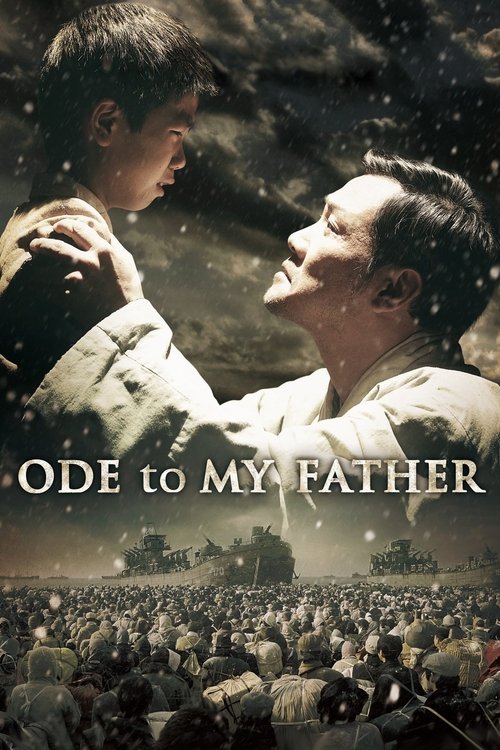
Ode to My Father
A sweeping, tear-soaked family epic where six decades of Korean upheaval pass through one stubborn man's shoulders. Warm nostalgia and quiet grief move together, like a crowded harbor market lit by a single lamp left on for someone who never arrives.
Ode to My Father
Ode to My Father

국제시장

"One promise can shape a lifetime."

17 December 2014 South Korea 126 min 7.4 (145)

Director: JK Youn

Cast: Hwang Jung-min, Yunjin Kim, Oh Dal-su, Jung Jin-young, Jang Young-nam

Drama Filial duty and the promise to the father Generational sacrifice and gratitude War, division and separated families National history seen through one ordinary life Letting go of the past
Box Office: $105,365,782

Ode to My Father — Ending Explained

The Ending in Brief

Deok-soo's televised reunion does not bring his father back, although his sister Mak-soon is found. He understands that he has kept the shop only to wait for his father. In the final scene he tells his wife that his father is too old to come, and he decides to sell the shop and stop waiting.

⚠️ Spoiler Analysis

The film is told in flashbacks from the present, where an old Deok-soo argues with his family over the shop he will not sell. At Hungnam he lets go of Mak-soon's hand, and his father goes back for her. He never sees his father again. In Busan he supports his family as a shoe shiner and stevedore, then goes to Germany to work as a miner. Later he goes to Vietnam, where he and his friend Dal-gu work for money. He meets Young-ja in Germany, and they marry. After his return he buys his aunt's shop and keeps it going.

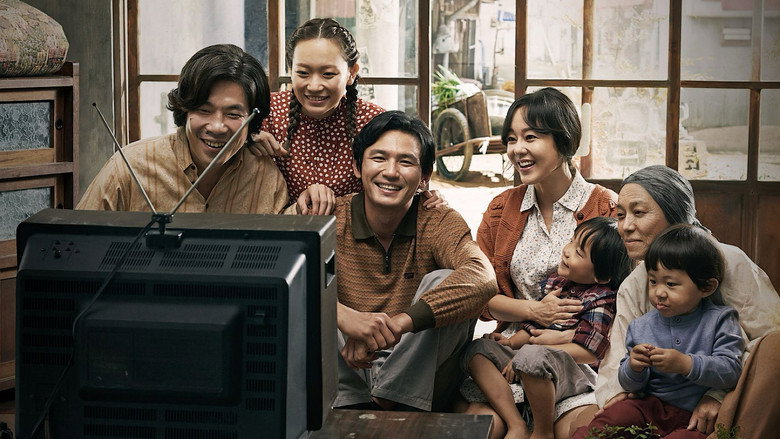
In 1983, the KBS programme reuniting separated families contacts Deok-soo because an old man from his hometown hopes to be his father. Going on live air, he realizes the man is not his father. The broadcast does lead to a reunion with his sister Mak-soon, who was adopted by an American family. He remains unreconciled with his father's absence. After a quarrel with his children, he retreats to a room and sees a daydream in which his father affirms his struggles. He weeps alone while the family celebrates next door.

Hidden meaning: The shop was never about money. His father had said he would meet them there, so Deok-soo kept it open for decades without telling anyone. Only after the failed reunion, and the daydream, can he accept that his father will not return.

Alternative Interpretations

One reading sees the film as a heartfelt tribute to ordinary parents with no political agenda, which is how the director described it. Another sees it as sentimental nationalism that glorifies sacrifice and the developmental state while softening its violence and contradictions, particularly regarding the Vietnam War. A third reading is a "national coming-of-age story" in which painful episodes become stepping stones to a confident modern nation. The ending can also be read as a personal liberation: Deok-soo is freed from a burden he carried so long, rather than being a pure tragedy.

Explore More About This Movie

Dive deeper into specific aspects of the movie with our detailed analysis pages

Similar Movies