Skip to content
Once Upon a Time
A fairy tale cracked open and poured into a small Maine town, where every villain hides a wound and every happy ending must be fought for, one page at a time.
Once Upon a Time

Once Upon a Time

"Magic is coming."

23 October 2011 — 18 May 2018 United States of America 7 season 156 episode Ended 7.4 (2,539)

Cast: Lana Parrilla, Robert Carlyle, Jared Gilmore, Jennifer Morrison, Josh Dallas

Drama Sci-Fi & Fantasy Hope as an act of will Redemption and the making of villains Family, chosen and biological True love in all its forms The price of magic and the weight of choice

Overview

Once Upon a Time begins with a bail bondsperson named Emma Swan, alone on her twenty-eighth birthday, answering the door to the ten-year-old son she gave up for adoption. He carries a book of fairy tales and an impossible claim: the storybook is history, the townspeople of Storybrooke, Maine are cursed fairy-tale characters who have forgotten who they are, and Emma is the child of Snow White and Prince Charming — the Savior destined to break the spell.

Created by Lost and Tron: Legacy writers Edward Kitsis and Adam Horowitz, the series ran on ABC from October 23, 2011 to May 18, 2018 across seven seasons and 156 episodes. Its signature structure braids two timelines in every hour: the present-day drama of a small coastal town and flashbacks to the Enchanted Forest and other realms, so that each episode simultaneously advances a mystery and excavates a backstory. Over its run the canvas expands far past Snow White and Rumplestiltskin to Neverland, Camelot, Oz, Arendelle, the Underworld and the land of untold stories, pulling in Disney and public-domain figures alike.

The long arc belongs less to any single quest than to a rotating family of heroes, villains and people stranded in between — a queen trying to stop being evil, an imp who keeps choosing power over love, a lost girl learning to stay. The seventh and final season jumps forward in time and relocates the "real world" half of the story to Hyperion Heights, a neighborhood of Seattle, with a grown Henry, his wife and his daughter at the center of a new curse and a new book.
Core Meaning

At its heart Once Upon a Time argues that stories are not escapism but instruction — that the reason we keep telling fairy tales is to remind ourselves that the worst thing we have done is not the last thing we will do. The series takes the flat moral geometry of the folk tale, where witches are wicked and princesses are good, and insists on the messier truth underneath: evil is made, not born, and therefore it can be unmade.

Three convictions run through all seven seasons. First, hope is a discipline, not a mood: characters repeat that they will always find each other precisely because the odds say otherwise. Second, love is defined by sacrifice rather than romance — the curse that opens the show is broken not by a prince but by a mother kissing her son's forehead. Third, every power has a cost; shortcuts around grief, guilt or loss always come back to collect.

The finale's move — dissolving the borders between realms so that all the stories share one world — is the thesis made literal. No one gets a happy ending alone, and no ending is happy that requires someone else to stay a villain.

Thematic DNA

Hope as an act of will 25%
Redemption and the making of villains 26%
Family, chosen and biological 20%
True love in all its forms 17%
The price of magic and the weight of choice 12%

Hope as an act of will

Season one frames hope as naive: Henry believes, everyone else humors him, and Emma's cynicism is treated as adult realism. The show spends seven years proving Henry right, but never cheaply — belief is repeatedly punished before it pays off.

By the middle seasons hope has become a practice passed between characters like a relay baton: Snow's insistence that good wins, Emma's reluctant acceptance of the Savior role, Hook's refusal to stay the man he was. In the later seasons, and especially in the final-season curse over Hyperion Heights, hope is what a small child holds onto when every adult has forgotten — the series' oldest move, restaged one last time.

Redemption and the making of villains

The show's most durable idea is that villains are authored by their pain. Regina begins as a storybook Evil Queen and is progressively revealed as a grieving young woman shaped by her mother; Rumplestiltskin's cowardice and love for his son explain, without excusing, centuries of monstrousness.

Redemption here is not a single confession scene but a grinding, reversible process — characters backslide, relapse into darkness, and have to start again. The series deliberately complicates its own premise by asking whether villains can even have happy endings, a question that drives the Author arc and is finally answered in the last season when the show's two great antagonists are given conclusions built on what they chose, not what they were.

Family, chosen and biological

Nearly every plot is a custody dispute in disguise: Emma and Regina over Henry, Rumplestiltskin over Baelfire, Snow and Charming over the daughter they sent away to save. The flashback structure exists largely to show how parents fail their children and how children inherit the failure.

Over the seasons the show enlarges the definition until enemies become co-parents and the ensemble functions as one absurd, quarrelsome clan. The final season pushes it another generation forward, making a granddaughter the believer and letting the audience watch the cycle of abandonment finally break.

True love in all its forms

The series takes the most clichéd device in fairy tales — true love's kiss — and systematically redefines it. The first curse breaks on maternal love, not romance, and later curses fall to fathers, friends and siblings.

Romantic pairings still matter enormously to the show's engine, but they are consistently judged by sacrifice rather than passion: love that demands someone shrink is exposed as possession, and love that survives memory loss, death and monstrous transformation is the only kind the story certifies as real.

The price of magic and the weight of choice

"All magic comes with a price" functions as the show's physics. Every bargain struck with Rumplestiltskin, every curse cast to escape grief, every resurrection pulled off in defiance of death generates a debt that a later season collects.

The theme deepens as magic becomes a metaphor for coping: the Dark One's dagger is addiction, the curse is denial, memory potions are the temptation to edit your own past. The show's moral is that pain avoided is pain deferred, and that character is simply the sum of what you were willing to pay.

Character Analysis

Regina Mills / the Evil Queen

Lana Parrilla

Archetype: Villain turned antihero turned redeemed ruler Key Trait: Ferocious, guilt-driven love

Motivation

Initially revenge on Snow White for a childhood betrayal, then the desperate wish to keep Henry's love, then — most difficult of all — the desire to believe she deserves a happy ending she did not steal.

Character Arc

Regina begins as the architect of the Dark Curse, a mayor with an iron grip on a town of amnesiacs and a son who is afraid of her. Flashbacks recast her as a girl whose first love was killed by her own mother, and the series follows her from vengeance to grudging cooperation, from cooperation to genuine heroism, and through relapses that make each step forward cost something.

Her later seasons externalize the struggle — she physically separates from her own darkness — before the final season, set largely in Hyperion Heights, gives her a conclusion that critics singled out as one of the show's most rewarding: the Evil Queen ends the story as a ruler chosen by the people she once terrorized.

Rumplestiltskin / Mr. Gold

Robert Carlyle

Archetype: Trickster mentor and tragic antagonist Key Trait: Bargainer who can never stop hedging

Motivation

Begins as the terror of being powerless and abandoned, becomes reunion with his son, then love for Belle — always in tension with his addiction to control.

Character Arc

A limping coward who takes the Dark One's power to avoid losing his son, Rumplestiltskin spends centuries becoming the most feared dealmaker in every realm — and the man whose son runs from him because of it. Across seasons he is variously villain, ally, mentor, and the story's shadow narrator, the one who knows the rules of magic because he wrote most of them.

His arc is the series' cruellest and most patient: he is offered redemption again and again and keeps choosing the dagger, until the very end of the show, when the price he finally agrees to pay is himself.

All 5 characters and cast

Symbols & Motifs

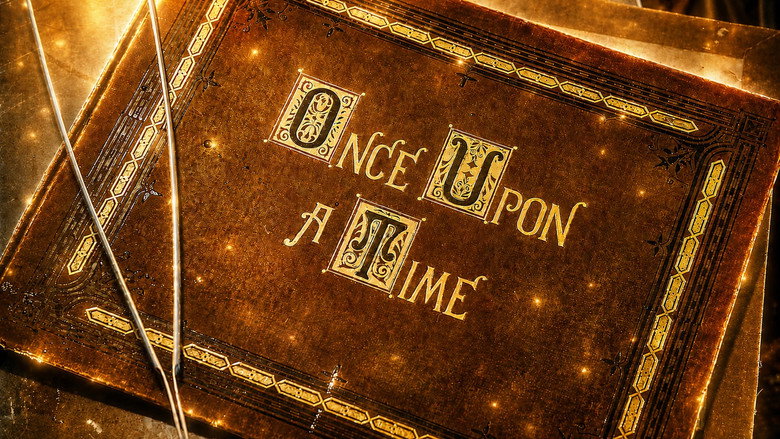
Henry's storybook

Meaning:

The book is narrative itself as a moral technology — proof that identity survives even when memory is stolen, and that being written about means being worth remembering.

Context:

Introduced in the pilot as a child's improbable evidence, it becomes a plot engine: pages appear and vanish, an Author can rewrite it, and by the final season a new book is being assembled by a grown Henry. Its physical condition tracks the health of the story's world.

The clock tower

Meaning:

Frozen hands mean frozen lives: a town where nothing changes, nobody ages, and no one can grow. Time restarting is the show's visual shorthand for the possibility of change.

Context:

The Storybrooke clock — in reality a landmark clock in Steveston, British Columbia, where the town exteriors were filmed — is stuck at 8:15 until Emma decides to stay. Later seasons return to it whenever the town's fate hangs in the balance.

True love's kiss

Meaning:

A test of whether love is given or taken. The kiss cannot be faked, bought or forced, making it the one incorruptible force in a world built on bargains.

Context:

Deployed across all seven seasons and repeatedly reinvented: maternal in the first-season finale, paternal, fraternal and platonic later. Its failures are as meaningful as its successes, marking relationships the story refuses to bless.

The Dark One's dagger

Meaning:

Power that owns whoever holds it — the illusion of control. Whoever wields the dagger commands the Dark One and is in turn corrupted by the commanding.

Context:

Passed between Rumplestiltskin, Belle, Emma and others across the middle seasons; the name etched on the blade is the show's clearest statement that darkness is a role a person can be cast in, and can also refuse.

Hearts held in hands

Meaning:

Literalized emotional violence: to control someone is to hold their heart, to feel nothing is to have removed your own. Redness or blackness of the heart makes morality visible.

Context:

Regina and Cora's signature magic. The blackening and slow reddening of Regina's own heart over the seasons is the series' most economical way of charting a redemption arc without dialogue.

Mirrors and reflections

Meaning:

The self one refuses to look at — vanity, imprisonment, and the double that carries the traits a character has disowned.

Context:

From the Magic Mirror and the genie trapped inside it in the first season to the Evil Queen literally split from Regina as a separate body in the sixth, mirrors mark the show's recurring claim that villainy is a part of a person, not a different species.

Memorable Quotes

All magic comes with a price, dearie.
— Rumplestiltskin / Mr. Gold

Context

Rumplestiltskin's signature line, delivered whenever a deal is struck, from the first season onward. It recurs so often that other characters eventually quote it back at him.

Meaning

The operating law of the series, and its ethical spine: no power, shortcut or resurrection is free, and the bill always arrives for someone. It is also a self-portrait — the man who says it most has never once managed to avoid paying.

I will always find you.
— Snow White / Mary Margaret Blanchard and Prince Charming / David Nolan

Context

Exchanged between Snow and Charming in the first season and echoed across all seven, including by Emma and by the next generation — separations by curse, realm and memory loss are always answered with the same sentence.

Meaning

The show's promise that love is a form of navigation rather than sentiment. Repetition turns it from a romantic vow into a family creed about refusing to let anyone stay lost.

All 3 quotes

Episode Highlights

Pilot

S1E1

Henry knocks on Emma's door on her twenty-eighth birthday and drags her to Storybrooke, establishing the dual-timeline structure that every subsequent episode would use: a present-day town plot cut against an Enchanted Forest flashback.

Significance:

Lays the entire premise — a cursed town, a frozen clock, a Savior who doesn't believe — and ends with the clock ticking forward, the series' first promise that change is possible.

A Land Without Magic

S1E22

The first-season finale, and one of the highest-rated episodes in fan rankings. Emma finally embraces her destiny as the Savior and breaks the Dark Curse, while Rumplestiltskin learns that Belle has been alive in Storybrooke the whole time.

Significance:

Pays off nearly every thread of season one at once and rewrites the show's central rule: the curse falls to a mother's kiss, not a prince's. Magic then arrives in Storybrooke, changing the series' rules permanently.

And Straight On 'til Morning

S2E22

The second-season finale, in which the town faces destruction and the fractured found family has to act as one, closing with a turn toward Neverland.

Significance:

Converts the Emma–Regina rivalry into an uneasy alliance and sets up the Neverland arc, the point at which the show committed to seasonal mythologies rather than a single curse.

Going Home

S3E11

The midseason finale that resolves the Neverland arc with the story's most costly sacrifice and a second curse that scatters the characters and their memories.

Significance:

Resets the board entirely — sending the fairy-tale characters back and stranding Emma and Henry with false memories — and proves the series will destroy its own status quo rather than repeat it.

New York City Serenade

S3E12

Picks up a year later with Emma living a fabricated happy life in New York, forcing the show to ask whether a comfortable lie is preferable to a painful truth.

Significance:

The clearest statement of the memory-versus-identity theme that recurs in every later curse, and the template the final season reuses in Hyperion Heights.

A Tale of Two Sisters

S4E1

Launches the Frozen arc, with Georgina Haig as Elsa joined later by Elizabeth Lail as Anna and Scott Michael Foster as Kristoff.

Significance:

Marks the show's fullest embrace of the Disney synergy that defined its middle years, drawing some of the series' largest audiences while sharpening debate about how much the mythology could absorb.

The Song in Your Heart

S6E20

The musical episode, in which characters explain themselves in original songs and the conceit is woven into the plot rather than played as a gimmick.

Significance:

One of the highest-rated episodes in viewer polls; a late-run demonstration that the ensemble's chemistry, not the mythology, was the show's real engine.

The Final Battle

S6E21

The two-hour sixth-season finale resolves the long-running prophecy about the Savior's fate and closes the Storybrooke chapter of the story.

Significance:

Functions as an ending for the original cast's arcs before the series reset with a time jump, a new city and a new generation for its seventh season.

Leaving Storybrooke

S7E22

The series finale, which aired on ABC on May 18, 2018. Wish Rumplestiltskin's plan is revealed, and Regina realizes the only way to stop him is to turn Wish Henry away from his path of vengeance.

Significance:

Ranked the best episode of season seven, it brings the arcs of the show's two most complex characters — Regina and Rumplestiltskin — to conclusions built on persuasion and sacrifice rather than combat, and unites the realms so that no story stands alone.

Philosophical Questions

Is anyone born evil, or is every villain made?

The series answers with flashbacks: each antagonist gets an origin episode showing the loss, humiliation or betrayal that produced them. But it refuses to make explanation identical to excuse — characters who understand exactly why they became monstrous still have to choose, repeatedly, not to be. Over seven seasons the show tests the claim from both sides, including characters who are given every reason to turn and don't.

Can a person deserve a happy ending after doing unforgivable things?

This is the engine of the Author storyline and of Regina's entire arc. The show stages the question literally — whether villains are structurally barred from happy endings — and concludes that the ending has to be earned in the currency of sacrifice rather than granted by narrative fiat. Its final answer is that a happy ending is rarely what the character originally wanted.

What is love, if it is measured by sacrifice rather than feeling?

By breaking its first and greatest curse with a mother's kiss rather than a prince's, the series immediately widens the fairy-tale definition. Across the seasons true love's kiss works for parents, children, siblings and friends, and fails for relationships built on possession — making love a verb the story can verify rather than an emotion it takes on trust.

Is a comfortable false life better than a painful true one?

Every curse in the series is essentially an offer of managed amnesia: Storybrooke, Emma's fabricated year in New York, and finally Hyperion Heights. The show consistently sides with truth, but honestly — it shows what the characters lose by remembering, and lets some of them genuinely prefer the lie for a while.

If all magic comes with a price, who ends up paying it?

The series' most morally serious thread is that the cost of a bargain is almost never borne by the person who struck it. Rumplestiltskin's deals injure his son; Regina's curse traps a town; resurrections demand a substitute. The recurring lesson is that power is mostly a mechanism for transferring consequences onto someone else, and that refusing to do so is the definition of heroism in this world.

Alternative Interpretations

The optimistic reading. Taken at face value, the series is a sincere argument that people can change: Regina's journey from Evil Queen to a ruler her former victims accept, and the finale's dissolution of the borders between realms, present a world where no one is condemned by their worst chapter. On this reading the final season's move to Hyperion Heights is not a reboot but a proof — the same lesson has to be learned again by each generation, and it works again.

Full ending explanation

Cultural Impact

Once Upon a Time arrived in the fall of 2011, in the same cultural moment as a broader fairy-tale revival on screen, and became one of ABC's defining genre hits of the decade. Its lasting contribution was structural: the rigid two-timeline episode — one hour of present-tense plot cut against a flashback that reframes it — was inherited directly from Lost, where creators Edward Kitsis and Adam Horowitz had worked, and the show demonstrated that the device could carry a fantasy ensemble as well as a mystery box.

Its second legacy is corporate as much as creative. By weaving Disney-owned characters into an original mythology, the series became a template for treating a studio's catalogue as a shared universe, absorbing Frozen's Elsa, Anna and Kristoff at the height of that film's popularity and expanding into Oz, Camelot, Neverland and Wonderland — the latter via the spin-off Once Upon a Time in Wonderland.

Critically the run was uneven and the trajectory is legible in the numbers: the series holds a strong overall 80% on Rotten Tomatoes, with the first season praised as "charming and fantastical, tonally uneven but derives strength from an outstanding cast and handsome visuals," while the seventh and final season landed at 43% from critics and 48% from audiences. The show's most durable cultural footprint may be its fandom, which built an unusually intense culture around villain redemption — Regina and Rumplestiltskin, played by Lana Parrilla and Robert Carlyle, drew the kind of sustained devotion usually reserved for protagonists, and the finale's choice to give both characters rewarding conclusions was widely read as the writers answering their audience.

Audience Reception

The first season was the high-water mark for both critics and the general audience: reviewers described it as charming and fantastical, tonally uneven but carried by an outstanding cast and handsome visuals, and the Emma–Regina–Henry triangle gave the show an emotional core that survived its most convoluted plotting. The series overall sits at a healthy 80% on Rotten Tomatoes.

The middle seasons split the audience. The Neverland and Frozen arcs were ratings peaks and brought in younger, Disney-oriented viewers, but a segment of the original audience complained about mythology bloat — new realms, new villains and a rising cast count each half-season, with curses repeatedly used as a reset button. Fan discussion of this period is dominated less by plot than by relationships: villain redemption, and the ferocious shipping culture around Regina, Emma and Hook, which at times overshadowed critical assessment entirely.

The sixth-season finale functioned for many viewers as the real ending, and the seventh season's decision to jump forward in time, relocate to Hyperion Heights in Seattle and rebuild around an adult Henry was the show's most divisive choice. The numbers are stark: season seven drew a 43% critic score and a 48% audience score, the lowest of the run. Even so, the finale itself was better received than the season around it, and is ranked the strongest episode of season seven for bringing Regina's and Rumplestiltskin's arcs to rewarding conclusions.

Overall verdict: a show whose reach exceeded its grasp, loved less for its mythology than for its performances — particularly Lana Parrilla and Robert Carlyle — and remembered as a sincere, sometimes sentimental, unusually persistent argument that people can change.

Interesting Facts

  • The series was created by Edward Kitsis and Adam Horowitz, writers on ABC's Lost and on Tron: Legacy, and ran on ABC from October 23, 2011 to May 18, 2018 for seven seasons and 156 episodes.
  • Kitsis and Horowitz conceived the concept roughly seven years before joining the Lost writing staff in 2005, but deliberately waited until Lost had finished before developing it.
  • Storybrooke's exteriors were shot in Steveston, a seaside village in Richmond, British Columbia; Moncton Street doubled as the main drag, housing Granny's Diner and the library, and the local Nikka Industries clock tower became the show's iconic frozen clock.
  • The seventh and final season moved the 'real world' half of the story from Maine to Hyperion Heights, a fictional neighborhood of Seattle, Washington, and recentered the narrative on an adult Henry, his wife and his daughter.
  • After the 2014 success of Frozen, ABC cast Georgina Haig as Elsa, Elizabeth Lail as Anna and Scott Michael Foster as Kristoff for the fourth season, with Elsa first teased in the season three finale.
  • Producers cited casting challenges beyond scheduling: because the show wove Disney-owned characters into an original mythology, individual character usage had to clear Disney approval and rights.
  • Merrin Dungey was cast as Ursula despite not resembling the animated character, a choice the creators said was driven by her performance on Alias.
  • The show spawned a spin-off, Once Upon a Time in Wonderland, which aired on ABC as a limited companion series.
  • After the finale, Kitsis and Horowitz moved on to showrun Apple's reboot of Steven Spielberg's Amazing Stories under an overall deal with ABC Studios.

Easter Eggs

Lost artifacts hidden in Storybrooke

As a nod to the ties between the two production teams, props from the Lost universe recur throughout the series — Apollo candy bars, Oceanic Airlines and MacCutcheon Whisky all appear. It was intended as a running motif rather than a one-off gag, rewarding viewers who followed Kitsis and Horowitz from the island.

The real Steveston clock tower as Storybrooke's clock

The most symbolically loaded object in the show — the clock stuck at 8:15 — is an actual working landmark clock on Moncton Street in Richmond, British Columbia. Fans still make pilgrimages to the filming locations, turning a piece of set dressing into a tourist site.

Elsa's silhouette in the season three finale

Before any casting was announced, the show closed a season by revealing Queen Elsa emerging in Storybrooke, a reveal timed to Frozen's global peak. It doubled as a statement of intent about how deeply the series would draw on the Disney catalogue.

Merrin Dungey's Ursula as an Alias callback

The casting was explicitly inspired by Dungey's work on Alias, another J.J. Abrams-adjacent ABC series — part of a pattern of the show recruiting from the network's earlier genre hits.

Frequently Asked Questions

Explore More About This Movie

Dive deeper into specific aspects of the movie with our detailed analysis pages

Comments (0)

Leave a comment

No comments yet. Be the first to share your thoughts!

Similar Movies