ORESUKI Are you the only one who loves me?
俺を好きなのはお前だけかよ
Overview
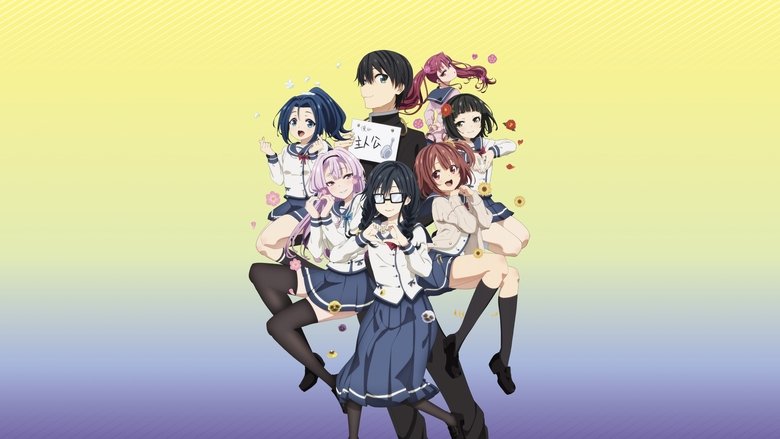
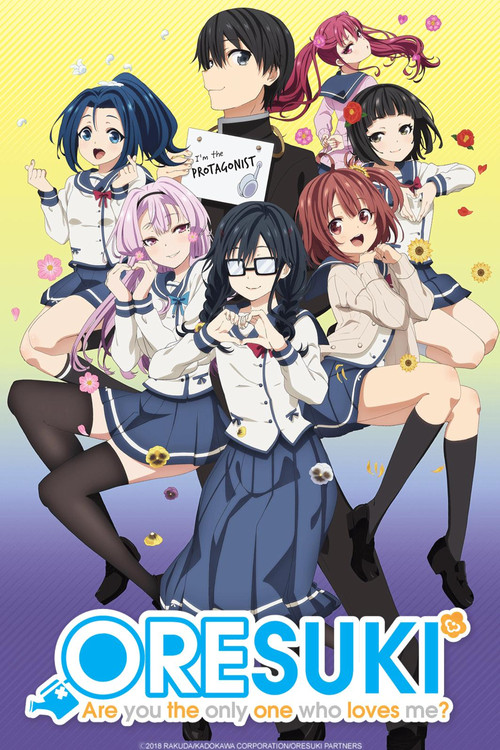
"ORESUKI Are you the only one who loves me?" follows Amatsuyu "Joro" Kisaragi, a high school student who puts on a "dense nice guy" persona, hoping to star in his own romantic comedy. His plans go awry when two girls he's close to, student council president Sakura "Cosmos" Akino and childhood friend Aoi "Himawari" Hinata, confess to him on the same weekend. However, they both reveal they're in love with his best friend, the cheerful baseball ace Taiyou "Sun-chan" Ooga, and only want Joro's help. Joro maintains his friendly act, secretly hoping to date whichever girl Sun-chan rejects.
His cynical worldview is challenged by the quiet, sharp-tongued bookworm Sumireko "Pansy" Sanshokuin. She's the only one who sees Joro's true, scheming personality and shockingly confesses that she's in love with that hidden side of him. This sets off a complex web of schemes, misunderstandings, and betrayals among the friends, as Joro navigates shifting alliances and confronts the consequences of everyone's hidden feelings and manipulative actions. The story, which begins as a sharp parody of harem tropes, evolves into a genuine exploration of the characters' insecurities and what it means to truly care for someone, culminating in a final OVA episode that resolves the central conflicts.
Core Meaning
The core meaning of "ORESUKI" is a critical examination of appearances versus reality in relationships. It deconstructs the idealized archetypes found in romantic comedies to argue that true connection is only possible when individuals drop their facades and show their authentic, flawed selves. The series posits that the "perfect protagonist" or the "ideal friend" are manufactured roles, and the messy, sometimes selfish, reality of human nature is far more compelling and worthy of love. It champions the idea of loving someone for their true personality, warts and all, rather than the polished image they present to the world.
Thematic DNA
Deconstruction of Harem Tropes
The series begins as a biting satire of the harem genre. It takes standard character archetypes—the dense protagonist, the childhood friend, the student council president, the jock best friend—and reveals them to be manipulative and self-serving. The initial plot twist, where both girls confess their love for the protagonist's best friend, immediately subverts expectations. Throughout the series, it continues to play with and mock genre conventions, such as confessions always happening on a specific bench, only to eventually embrace some of those clichés in a more earned, self-aware manner.
Appearance vs. Reality
This is the central theme of the show. Nearly every main character projects a false personality. Joro pretends to be a kind, oblivious harem protagonist but is secretly cynical and calculating. Sun-chan's cheerful demeanor hides deep-seated insecurity and jealousy. Pansy's mousy librarian look conceals her true, beautiful appearance and sharp intellect. The series constantly explores the tension between these outer personas and the characters' true inner selves, arguing that authenticity is paramount for genuine relationships.
Manipulation in Relationships
The plot is driven by characters manipulating each other for personal gain. Joro agrees to help Cosmos and Himawari to position himself as a second choice. Sun-chan orchestrates a plan to socially isolate Joro out of jealousy. Later characters are introduced who also attempt to manipulate the group dynamic for their own romantic goals. The series explores how these schemes, born from insecurity and selfishness, inevitably backfire and damage the friendships they are meant to leverage, suggesting that honesty, while difficult, is a better path.
The Nature of Friendship
Beyond the romantic entanglements, the series deeply examines the friendship between Joro and Sun-chan. Their relationship goes through betrayal and reconciliation, highlighting themes of jealousy, forgiveness, and loyalty. Sun-chan's plot against Joro is a major turning point, forcing both characters to confront the ugly side of their friendship. Ultimately, their bond is reaffirmed, suggesting that true friendship can withstand and overcome significant conflict. The finale of the TV series even re-frames the show's title to question if Sun-chan is the "only one who loves" Joro in a platonic, steadfast way.
Character Analysis
Amatsuyu "Joro" Kisaragi
Daiki Yamashita
Motivation
Initially, Joro's motivation is purely selfish: to create a harem of cute girls. After this plan fails spectacularly, his motivation shifts to survival and revenge against those who wronged him. As the story progresses, his primary motivation becomes protecting Pansy and his other friends from external threats and their own self-destructive tendencies, even if he still frames it in his mind as part of his grander scheme.
Character Arc
Joro begins as a deeply cynical high schooler who fakes a "nice guy" persona to manipulate girls into liking him. His primary goal is to live out a real-life harem fantasy. When his initial plans collapse, he's forced into an alliance with Pansy, the only person who sees his true self. Throughout the series, Joro is repeatedly humbled and forced to confront the consequences of his and others' manipulations. While he never fully loses his cunning and foul-mouthed inner monologue, his arc sees him genuinely starting to care for his friends and value honesty. He evolves from a purely selfish schemer into someone who uses his strategic mind to protect his friends, ultimately accepting that being his true, flawed self is better than being a fake protagonist.
Sumireko "Pansy" Sanshokuin
Haruka Tomatsu
Motivation
Pansy's motivation is simple and unwavering: she is genuinely in love with Joro's hidden personality, which she first witnessed during a baseball game the previous year where he showed selfless support for Sun-chan. All of her actions, from stalking him to forming alliances, are aimed at getting closer to him and having him accept her affections and, more importantly, accept himself.
Character Arc
Pansy is introduced as a quiet, bookish librarian with glasses and braids, but this is a disguise. Her true self is sharp-witted, perceptive, and beautiful. She is the catalyst for the entire story, as she is the only one who loves Joro's true, "scumbag" personality. Her arc involves slowly revealing her own vulnerabilities and the reasons for her disguise. She acts as Joro's confidante and moral compass, consistently pushing him to be true to himself. Her unwavering belief in the "real" Joro helps him grow, and she, in turn, learns to open up and trust others, culminating in her revealing her true appearance to everyone.
Taiyou "Sun-chan" Ooga
Yuma Uchida
Motivation
Sun-chan is motivated by a desperate need for approval and a fear of being hated or seen as less than perfect. He fell in love with Pansy at the same baseball game where she noticed Joro. His jealousy over Pansy's affection for Joro drives him to betray his best friend. After being forgiven, his motivation shifts to truly supporting Joro and atoning for his actions.
Character Arc
Sun-chan is presented as the perfect best friend: friendly, popular, and the star of the baseball team. However, this cheerful persona masks deep-seated insecurities and jealousy towards Joro's relationship with Pansy. His arc takes a dark turn when he manipulates Cosmos and Himawari to frame Joro and turn the school against him. After his betrayal is exposed, Sun-chan hits rock bottom and is forced to confront his flaws. His arc becomes one of redemption, as he works to mend his friendship with Joro, learning to be a more genuine and supportive friend rather than a competitor in the game of love.
Sakura "Cosmos" Akino
Sachika Misawa
Motivation
Her initial motivation is to win Sun-chan's affection. She sees Joro as a convenient tool to achieve this goal. Later in the series, after Joro helps her despite her earlier manipulation, her motivation shifts towards understanding and supporting him, leading to her developing romantic feelings for him.
Character Arc
Cosmos initially appears as the stereotypical beautiful and intelligent student council president. She manipulates Joro, using their friendship to try and get closer to Sun-chan. After this plan backfires and Sun-chan's betrayal is revealed, she is forced to reflect on her own actions. Her arc involves realizing her feelings were more complicated than she thought, and she eventually develops genuine affection for Joro, not for his fake persona, but for the kindness he shows despite his cynicism. She grows from a one-dimensional archetype into a more rounded character who understands the complexity of her own emotions.
Aoi "Himawari" Hinata
Haruka Shiraishi
Motivation
Initially driven by a crush on Sun-chan, Himawari's actions are straightforward and emotionally charged. She wants Joro's help because she believes their close bond makes him the perfect person to assist her. As the series progresses, her motivation becomes more about repairing her friendship with Joro and navigating her newfound, confusing feelings for him.
Character Arc
Himawari fits the energetic, bubbly childhood friend trope perfectly at the start. Like Cosmos, she uses her long-standing friendship with Joro to try and get with Sun-chan. She is shown to be less cunning than Cosmos but equally willing to manipulate Joro. Her development follows a similar path; she feels remorse for her actions after the truth is revealed. Her arc is about maturing and realizing the value of her friendship with Joro, which she took for granted. She also develops feelings for Joro, recognizing the genuine person underneath the facades.
Symbols & Motifs
The Bench (Bench-kun)
The bench, affectionately dubbed "Bench-kun" by fans, symbolizes the artificiality and clichés of the romantic comedy genre. It represents the moment of dramatic confession, a cornerstone of the genre. However, in "ORESUKI," every time the bench appears, it signals an ironic subversion of that trope, bringing bad news or a twisted confession for Joro. Its recurring, often inexplicable appearances in various locations, sometimes accompanied by a parody of Darth Vader's theme, elevate it to the status of the show's main antagonist and a running gag that underscores the series' satirical nature.
The bench first appears in Episode 1, where both Cosmos and Himawari use it as the setting to ask Joro for help in pursuing Sun-chan. It then reappears throughout the series on the school roof, in the library, and other unlikely places, always preceding a moment where Joro's expectations are hilariously and painfully crushed. Its presence becomes a source of dread and comedy for both Joro and the audience.
Flowers and Watering Cans
The character nicknames are all based on flowers (Cosmos, Himawari/Sunflower, Pansy, Sasanqua, Asunaro) or tools for watering them. This creates a sustained metaphor for relationships and nurturing. The girls are the "flowers" who need care. Joro's nickname means "watering can," suggesting a careful, personal approach to nurturing, while his rival, Hose, represents a more forceful and potentially harmful method. Sun-chan, as the "sun," is another essential element for growth. The symbolism implies that Joro's thoughtful, if cynical, method is ultimately what allows the "flowers" in his life to truly bloom.
These names are used consistently throughout the series. Joro's identity as the "watering can" is established early on. The introduction of a rival explicitly named "Hose" in the final arc of the anime brings the metaphor to the forefront, contrasting his aggressive approach to relationships with Joro's more meticulous, albeit manipulative, style.
Episode Highlights
I'm a High School Student, and I'm Also a Normal Reader
This episode is a masterclass in subverting expectations. It spends its first half perfectly setting up a generic harem comedy, introducing the seemingly dense protagonist Joro, his childhood friend Himawari, and the beautiful student council president Cosmos. The pivotal moment occurs when both girls, on the infamous bench, confess they are in love with Joro's best friend, Sun-chan. The episode concludes with Joro revealing his true, cynical personality in his room, completely flipping the script on the audience.
This episode is crucial as it establishes the show's central premise: the deconstruction of harem tropes. It immediately differentiates "ORESUKI" from its peers and sets the satirical, unpredictable tone for the rest of the series. It's the hook that draws viewers in by promising a story that plays by different rules.
Me and the Catastrophe
This episode marks the climax of the first major arc. Sun-chan's plan to ruin Joro's reputation comes to fruition, culminating in a public confrontation where Joro is physically and socially beaten down. However, the tide turns when Pansy reveals she was aware of Sun-chan's scheme all along and exposes his manipulation. It's a moment of vindication for Joro and solidifies the alliance between him and Pansy.
This episode is significant because it solidifies the central conflict and the core relationships. It's the series at its most dramatic, showing the dark potential of jealousy and deceit. It cements Sun-chan as a temporary antagonist and proves Pansy's unwavering loyalty to the real Joro, setting the stage for the rest of the story.
Even I Have My Moments
Following his social ostracism and subsequent rehabilitation, this episode shows Joro using his cunning for good. A new character, Asunaro from the journalism club, tries to frame him as a two-timer. Joro, with the help of his friends (including a redeemed Sun-chan), navigates the complex situation of the "Flower Dance Festival." The episode culminates with Pansy appearing in her true, beautiful form in public for the first time, dancing with Joro and stunning the entire school.
This episode marks a turning point where Joro begins to be proactive in controlling his own narrative. It also signifies the mending of his friendship with Sun-chan. Pansy's public reveal is a major step in her character arc and significantly deepens her romantic connection with Joro in the eyes of their peers.
Our Game Set
This 60-minute OVA serves as the true finale to the series. Joro is challenged by a charismatic rival, Hose, for Pansy's affection. The conflict involves a complex bet surrounding the regional baseball finals. In a major twist, Cosmos, Himawari, and another girl all confess their love to Joro right before the climax, throwing his plans into disarray. The story concludes with Joro reaffirming his connection with Pansy, culminating in a quiet, meaningful conversation where he reciprocates her feelings using a literary reference she would understand.
This episode provides a satisfying conclusion to the anime's story arc. It resolves the primary romantic conflict, brings the themes of friendship and authenticity to a head, and gives Joro a final moment of growth. The ending, particularly Joro's indirect confession, is a poignant and clever callback to Pansy's love for literature, ending the series on a heartwarming and intellectually satisfying note.
Philosophical Questions
What is the nature of a 'true self'?
The series constantly questions whether a person's 'true self' is their internal thoughts or their external actions. Joro internally is cynical and manipulative, but his actions often end up helping others. Sun-chan presents a friendly exterior while hiding jealousy and malice. Pansy hides her entire physical appearance. The show explores the idea that the 'self' is not a single, static entity but a complex interplay of different personas used in different contexts. It ultimately suggests that authenticity comes not from having a single 'true' self, but from integrating one's various facets and being honest about one's flaws and intentions with those you care about.
Can a relationship built on manipulation ever become genuine?
Nearly every relationship in the show begins with some form of deceit or manipulation. Joro wants to use Cosmos and Himawari's confessions to his advantage, and they in turn are using him to get to Sun-chan. The series charts the messy path from these selfish beginnings to genuine affection. It seems to argue that while the foundation is flawed, the shared experiences, conflicts, and eventual honesty that arise from these situations can forge truly strong, genuine bonds. The characters grow to care for each other not in spite of their initial manipulations, but because working through the fallout of those schemes forced them to see each other's true, flawed natures.
Alternative Interpretations
One alternative interpretation focuses on Joro's character not as a scumbag who learns to be good, but as a fundamentally good person who creates a cynical persona as a defense mechanism. This reading suggests that his constant internal scheming is a way to cope with his own perceived mediocrity and insecurity. His acts of kindness are not him developing a new personality, but his true nature leaking through the cracks of his carefully constructed facade. Pansy, in this view, doesn't fall for a "scumbag," but for the genuine, kind-hearted boy she can see hiding underneath the cynical act.
Another interpretation posits that the entire series is a meta-commentary on the anime production process itself. The initial, trope-filled setup represents a pitch for a standard harem show. The subsequent deconstruction is the author's true vision breaking through, while the later arcs, which lean back into some clichés, represent the inevitable pressures of audience expectation and commercial demands on a series. The show's self-aware, fourth-wall-breaking humor lends some credence to this reading, suggesting the characters are fighting against the roles the genre demands of them.
Cultural Impact
"ORESUKI" made a notable impact within the anime community as a sharp and intelligent deconstruction of the oversaturated harem romantic-comedy genre. At a time when many similar shows relied on tired clichés, "ORESUKI" was praised for its self-awareness and satirical bite, particularly in its first few episodes which viciously subverted audience expectations. The protagonist, Joro, stood out from the typical bland, passive harem lead; his two-faced, scheming nature was seen as a refreshing and more psychologically interesting take on the archetype.
The show's running gag involving "Bench-kun" became a widespread meme, demonstrating its ability to connect with audiences through absurdist humor. While some critics and viewers felt the series lost some of its critical edge in the middle and began to indulge in the very tropes it was mocking, many agreed that it successfully balanced satire with genuine character development and heartfelt moments. Its legacy is that of a clever, witty series that dared to question the formula of its genre, influencing viewers to look more critically at the character dynamics and plot devices common in romance anime. The necessity of watching the OVA for the true ending also sparked discussions about storytelling formats in anime adaptations.
Audience Reception
Audience reception for "ORESUKI" was largely positive, though often divided into distinct phases. The first three episodes received widespread acclaim for being a brilliant and hilarious deconstruction of harem tropes. Viewers praised the unique protagonist and the show's willingness to subvert expectations. However, opinions became more mixed during the middle of the series. Some viewers felt the show lost its satirical edge and devolved into the very type of harem comedy it initially mocked, accumulating a large cast of female characters who predictably fall for the protagonist.
Despite this mid-series criticism, the overall consensus remained favorable, especially after the release of the concluding OVA. Many viewers found the ending to be one of the most satisfying and heartwarming conclusions in the genre, praising its emotional depth and clever resolution. The character of Joro was a frequent point of discussion, with many appreciating a protagonist who was proactive and cunning rather than passive. Pansy was also a fan-favorite for her sharp personality and devotion to Joro's true self. The primary criticism often centered on the expanded cast of girls in the later arcs, who some felt were underdeveloped compared to the main cast.
Interesting Facts
- The series is based on a light novel series of the same name written by Rakuda and illustrated by Buriki.
- The author, Rakuda, also wrote the screenplay for the anime adaptation, which is relatively uncommon and ensured the adaptation's tone remained close to the source material.
- The infamous 'Bench-kun' became a breakout meme in the anime community during the show's airing, beloved for its comedic timing and absurd appearances.
- The TV series ends on a cliffhanger, and the story is officially concluded in a 60-minute OVA episode titled "Oretachi no Game Set" (Our Game Set).
- The girls' nicknames (Cosmos, Himawari, Pansy, Sasanqua, etc.) are all based on flowers, which ties into the overarching flower and gardening metaphor of the series.
⚠️ Spoiler Analysis
Click to reveal detailed analysis with spoilers
Frequently Asked Questions
Explore More About This Movie
Dive deeper into specific aspects of the movie with our detailed analysis pages
Comments (0)
No comments yet. Be the first to share your thoughts!