Pan's Labyrinth
El laberinto del fauno
"Innocence has a power evil cannot imagine."
Overview
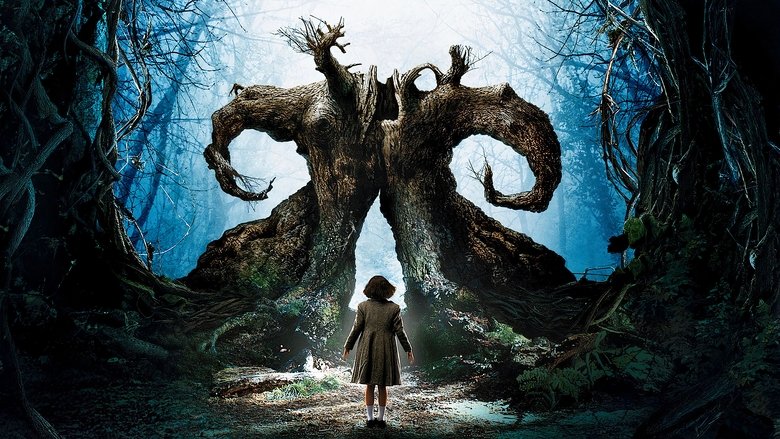
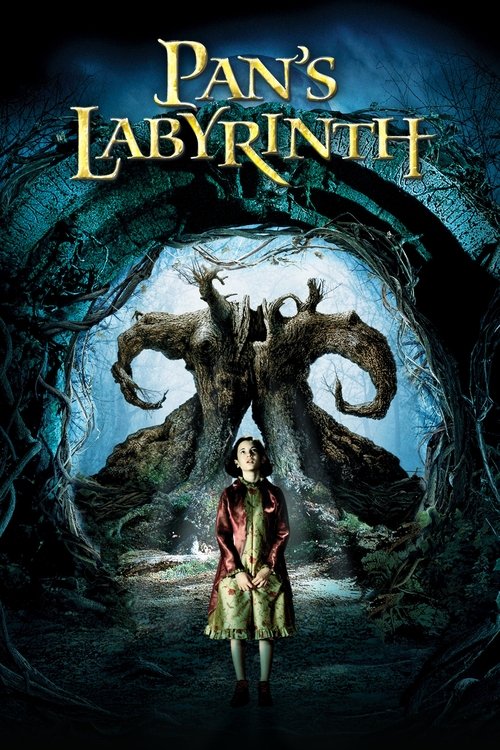
In 1944 Francoist Spain, young Ofelia travels with her pregnant mother to live with her new stepfather, Captain Vidal, a sadistic military officer tasked with hunting down Republican rebels. While her mother falls ill and Vidal displays increasing cruelty, Ofelia discovers an ancient, overgrown labyrinth near the old mill they inhabit.
Inside, she meets a mysterious Faun who reveals she is the reincarnation of Princess Moanna from the Underworld. To return to her kingdom, she must complete three dangerous tasks. As the war between the rebels and Vidal's soldiers escalates, Ofelia's magical quest begins to bleed into her terrifying reality, forcing her to make choices that will determine her fate and the fate of those she loves.

Core Meaning
At its heart, Pan's Labyrinth is a parable about the morality of disobedience. Del Toro juxtaposes the blind, mechanical obedience demanded by fascism (represented by Captain Vidal) with the difficult, conscientious choices required to preserve one's humanity (represented by Ofelia, Mercedes, and the Doctor). The film argues that true bravery lies not in following orders, but in questioning them, even at the cost of one's life.
Thematic DNA
Disobedience vs. Blind Obedience
This is the film's central conflict. Captain Vidal demands absolute submission, while the heroes (Ofelia, the Doctor, Mercedes) define themselves by their refusal to comply with unjust authority. Ofelia's final test is literally a test of disobedience—refusing to shed innocent blood.
The Brutality of War and Fascism
The film strips away the glory of war, presenting fascism as a dehumanizing force that consumes everything. Vidal is not just a soldier but a symbol of a system that destroys innocence and demands conformity. The fantasy world mirrors this violence, showing that evil exists in all realms.
Innocence and Childhood
Ofelia represents purity in a corrupted world. Unlike a typical Disney fairy tale, her innocence does not shield her from pain; rather, it gives her the moral clarity to navigate a world where adults have lost their way. Her belief in magic is not escapism, but a spiritual truth that adults cannot see.
Femininity and Nature vs. Masculine Order
Vidal represents a cold, mechanical, masculine order (clocks, tools, strict lines). In contrast, the rebels, Ofelia, and the fantasy world are linked to the feminine, the earth, and nature (caves, trees, blood, curves). The film suggests the latter is the source of life and truth.
Character Analysis
Ofelia
Ivana Baquero
Motivation
To escape the horrors of her stepfather's world, protect her mother and brother, and return to her true home in the Underworld.
Character Arc
She starts as a frightened child reading fairy tales and evolves into a brave heroine who sacrifices her own life to save her brother. Her journey is one of realizing her true identity as Princess Moanna through acts of moral courage.
Captain Vidal
Sergi López
Motivation
To crush the resistance, uphold the fascist order, and ensure his lineage (his son) continues his name.
Character Arc
He remains static in his cruelty but unravels as he loses control over his environment. He moves from absolute power to a humiliating death where his legacy is erased.
Mercedes
Maribel Verdú
Motivation
To support the anti-fascist guerrillas (her brother among them) and protect Ofelia from Vidal's cruelty.
Character Arc
She begins as a submissive housekeeper hiding her true allegiance, but grows to openly defy Vidal, physically wounding him and ultimately denying him his legacy.
The Faun
Doug Jones
Motivation
To guide the lost Princess back to her kingdom, ensuring she has not become mortal/corrupted.
Character Arc
He acts as an ambiguous guide, oscillating between menacing and helpful. He tests Ofelia's obedience and ultimately her morality, revealing his true benevolent nature only after she passes the final test.
Symbols & Motifs
The Labyrinth
It symbolizes the journey into the subconscious and the search for truth. Unlike a maze designed to get you lost, a labyrinth has a single path to the center, representing an inevitable destiny and spiritual return.
Ofelia enters the labyrinth to meet the Faun, symbolizing her descent into her own psyche and the spiritual realm to find her true self.
Captain Vidal's Pocket Watch
Represents his obsession with controlling time, his mechanical nature, and his desire to leave a legacy of death (referencing his own father's death). It symbolizes the rigid, unfeeling nature of fascism.
Vidal constantly checks and repairs the watch, and his final wish is for his son to know the exact time of his death—a wish that is denied.
The Pale Man
A symbol of institutional greed and oppression (specifically the Church or the ruling class) that devours the innocent. He sits before a feast but eats only the helpless.
Ofelia encounters him in a banquet hall. His eyes are in his hands, representing a selective blindness—he only sees what he grabs to destroy.
The Toad
Symbolizes gluttony and stagnation. Like the fascists hoarding resources while the people starve, the toad kills the tree by sucking out its nutrients.
Ofelia finds the toad inside the dying fig tree (a uterine symbol) and must make it regurgitate a golden key to save the tree.
Memorable Quotes
Es que obedecer por obedecer, así, sin pensarlo, eso sólo lo hacen gentes como usted, Capitán.
— Doctor Ferreiro
Context:
Said to Vidal right before the Doctor is killed for euthanizing a tortured rebel instead of keeping him alive for more torture.
Meaning:
Translation: "But Captain, to obey - just like that - for obedience's sake... without questioning... that's something only people like you do."
This defines the film's central moral argument: blind obedience is a moral failing, not a virtue.
No serás el primer cerdo que degüello.
— Mercedes
Context:
Mercedes says this while holding a knife to Vidal's throat after he catches her trying to escape.
Meaning:
Translation: "You won't be the first pig I've gutted."
A powerful moment of female empowerment where the oppressed servant turns the tables on the oppressor.
Ni siquiera sabrá tu nombre.
— Mercedes
Context:
Delivered as Vidal is dying and asks for his son to be told the time of his death.
Meaning:
Translation: "He won't even know your name."
The ultimate punishment for Vidal: the erasure of his legacy, which he valued more than life itself.
Yo soy la montaña, el bosque, la tierra. Yo soy... un fauno.
— The Faun
Context:
The Faun's first introduction to Ofelia in the labyrinth.
Meaning:
Establishes the Faun not as a devil, but as an ancient, neutral force of nature—neither good nor evil by human standards.
Philosophical Questions
Is disobedience a moral duty?
The film posits that when authority is corrupt (Vidal/Fascism), obedience becomes a sin. The Doctor and Ofelia demonstrate that morality often requires breaking the law and defying power structures, suggesting that individual conscience is superior to state-imposed order.
Does the spiritual world exist if others cannot see it?
The film explores subjective vs. objective reality. Vidal sees only the physical world and is therefore 'blind' to the truth. Ofelia sees the magic because she retains her innocence. The film asks if 'reality' is defined by consensus or by individual experience.
Alternative Interpretations
Real vs. Imagined: The most debated aspect is whether the magic is real or a hallucination of a dying girl.
- The 'Real' Interpretation: Ofelia escapes to her true home. Evidence: The chalk door Mercedes sees, the mandrake root that cures the mother (and the mother worsening when it's burned), and the narrator's final words about the flower.
- The 'Psychological' Interpretation: The fantasy is a coping mechanism for trauma. Ofelia retreats into her mind to deal with the horror of war. She dies at the end, and the 'throne room' is her brain releasing endorphins/hallucinations at the moment of death.
- Del Toro's View: The director has stated he believes it is spiritually real, citing the fact that the adult Vidal cannot see the Faun as proof of his spiritual blindness, not the Faun's non-existence.
Cultural Impact
Pan's Labyrinth is widely considered Guillermo del Toro's masterpiece and a landmark in fantasy cinema. It successfully legitimized the fantasy genre as a medium for serious adult storytelling and political commentary.
Context: Released in 2006, it provided a raw look at the Spanish Civil War's aftermath, a period often romanticized or ignored in cinema. It bridged the gap between art-house drama and creature features.
Reception: It won three Academy Awards (Cinematography, Art Direction, Makeup) and is consistently ranked among the best films of the 21st century. It influenced a wave of 'dark fairy tale' films but remains unique for its uncompromising ending.
Audience Reception
Universal Acclaim: Audiences and critics alike praised the film for its stunning visuals, emotional depth, and unique blend of genres. The practical effects (especially the Pale Man) are legendary.
Points of Criticism: Some viewers were shocked by the graphic violence (bottle to the face, torture, sewing the cheek), finding it jarring alongside the fairy tale elements. However, most argued this violence was necessary to ground the fantasy in high stakes.
Verdict: It holds a 95% on Rotten Tomatoes and is regarded as a modern classic.
Interesting Facts
- The English subtitles were personally translated and done by Guillermo del Toro himself because he was disappointed with the subtitles in his previous films.
- The character of the Faun is NOT the Greek god Pan. The original Spanish title is El laberinto del fauno (The Faun's Labyrinth). The name 'Pan' was added for English markets to evoke the correct mythological association.
- Doug Jones, who played both the Faun and the Pale Man, had to memorize his lines in Spanish (a language he did not speak) so his mouth movements would match the dubbing.
- The pile of shoes in the Pale Man's lair is a direct reference to footage from concentration camps, symbolizing the systematic slaughter of innocents.
- The film received a 22-minute standing ovation at the Cannes Film Festival in 2006, one of the longest in the festival's history.
- Guillermo del Toro gave up his entire salary and points on the film to ensure the creature effects could be finished to his standards.
- The toad scene was inspired by del Toro's own experience of seeing a toad eat its own skin, which he found both disgusting and fascinating.
Easter Eggs
Saturn Devouring His Son
The Pale Man biting the heads off the fairies is a direct visual reference to Francisco Goya's painting Saturn Devouring His Son. This links the monster to themes of time, madness, and a father figure destroying his own children (paralleling Vidal).
Hidden Faun Faces
Throughout the film, the architectural elements (trees, ruins, gates) are often shaped to subtly resemble the Faun's head, suggesting the magical world is always present in the environment.
The Wizard of Oz Reference
Ofelia's dress and the concept of the red shoes (though here she wears muddy boots) loosely reference Dorothy. Like Dorothy, she is a girl lost in a strange land, but del Toro subverts this by making the fantasy world dark and dangerous.
⚠️ Spoiler Analysis
Click to reveal detailed analysis with spoilers
Frequently Asked Questions
Explore More About This Movie
Dive deeper into specific aspects of the movie with our detailed analysis pages
Comments (0)
No comments yet. Be the first to share your thoughts!