Skip to content
Ranking of Kings
A storybook fantasy of soft watercolor kingdoms and sharp shadows, where a small, unheard prince's stubborn hope glows like a lantern against a world that measures worth by strength.
Ranking of Kings

Ranking of Kings

王様ランキング

15 October 2021 — 25 March 2022 Japan 1 season 23 episode Ended 8.0 (350)

Cast: Minami Hinata, Ayumu Murase, Yuki Kaji, Takuya Eguchi, Yoji Ueda

Animation Sci-Fi & Fantasy Action & Adventure Worth beyond strength Communication and being understood Found family and parenthood Trauma and the roots of villainy Power, legacy and expectation

Overview

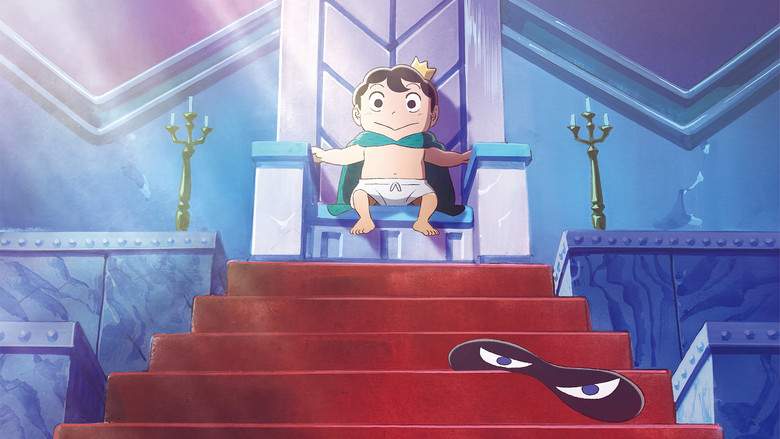
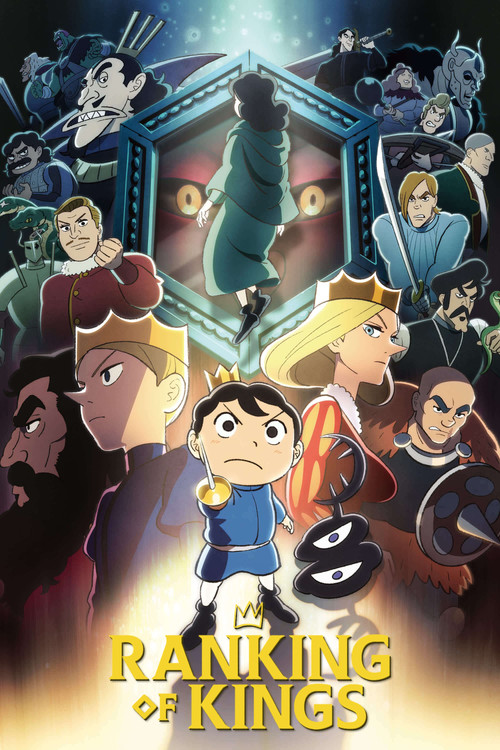
Ranking of Kings (Wit Studio, 2021–22, 23 episodes) adapts Sosuke Toka's manga. It follows Prince Bojji, the deaf and physically weak firstborn son of a famous king. Bojji dreams of becoming the greatest king in the world, yet the court whispers that he is a good-for-nothing who could never rule. In a world where kings are publicly ranked by power, his father Bosse is only seventh.

Bojji's life changes when he meets Kage, a shadow-clan survivor who can understand him without words. The two form a bond that carries the story through palace intrigue, training under hardened masters, and a growing conflict that threatens the kingdom itself. The series starts out like a fairy tale and gradually reveals a far more complicated world behind its soft look.

The story runs as one continuous arc. It moves from a child's wish to be recognized to a wider reckoning with family, loyalty, and the cost of the ranking system. Its villains and rivals are rarely simple, and its tone swings between comedy, tenderness and sudden brutality.

Core Meaning

The series argues that strength is not the same as greatness. Bojji's kingship is built on empathy, perseverance and the willingness to listen to people others overlook. The ranking system measures power, but the story keeps showing that kindness, courage and understanding change people more than force does.

It also shows that cruelty usually has roots in pain, loneliness and misunderstanding. Several antagonists are given sympathetic histories, which suggests that compassion can reach even people who seem beyond it.

Thematic DNA

Worth beyond strength 30%
Communication and being understood 22%
Found family and parenthood 22%
Trauma and the roots of villainy 16%
Power, legacy and expectation 10%

Worth beyond strength

Bojji is mocked for his weakness, and the ranking system treats power as the measure of a king. Over the run, he earns respect through resilience, empathy and bravery rather than combat skill.

Communication and being understood

Bojji is deaf and cannot speak, and Kage is the first person who truly understands him. Communication keeps being tested across the series, and it is repeatedly shown to be a matter of attention and care more than words.

Found family and parenthood

Kage, Hiling, Bebin, Domas, Hokuro and others become Bojji's chosen family. The series examines parents and stepparents, especially Hiling and Bosse, and the many forms love and protection take.

Trauma and the roots of villainy

Antagonists such as Miranjo are given painful backstories that complicate the line between victim and villain. Over the course of the story, the series moves from assigning blame toward trying to understand.

Power, legacy and expectation

Kings, ranks and lineages shape the characters' destinies. Bojji's struggle is partly to define his own legacy rather than to live up to his father's.

Character Analysis

Bojji

Minami Hinata

Archetype: Underdog hero Key Trait: Unbreakable optimism

Motivation

He wants to become the greatest king and make his father proud. Over time, the wish grows into a desire to protect and understand others.

Character Arc

He begins as a ridiculed, deaf and powerless child prince. Through training, loss and trial, he finds his own form of strength and becomes the person who ends cycles of vengeance with understanding.

Kage

Ayumu Murase

Archetype: Loyal companion Key Trait: Quiet, perceptive loyalty

Motivation

He first wants safety and belonging. Later, he is driven by his devotion to Bojji.

Character Arc

He is a lonely shadow-clan survivor and a former thief for hire. As he bonds with Bojji, he learns to trust and to act for someone else, and he becomes a pillar of Bojji's journey.

All 4 characters and cast

Symbols & Motifs

The shadow (Kage)

Meaning: The unseen, the overlooked, and quiet loyalty.
Context: Kage is a shadow-clan survivor who becomes Bojji's friend. Unnoticed people and skills become decisive in the story.

The Ranking

Meaning: Society's reduction of worth to a numerical hierarchy.
Context: It shapes how every king is seen, and Bojji's journey challenges its logic.

The children's sword

Meaning: Expectations of strength, and Bojji's inability to meet them.
Context: Bojji is introduced as a prince who cannot even wield a child's sword. The weapon recurs as a measure of how he is judged.

The Magic Mirror

Meaning: Distorted desire, vanity and hidden pain.
Context: The mirror is tied to Miranjo and to the villains' scheme, and it is revealed to hide a tragic story.

Bojji's smile

Meaning: Hope and unguarded sincerity.
Context: His expressive face carries the dialogue he cannot speak. It is the series' main emotional signature.

Episode Highlights

The Queen and the Shield

S1E9

King Bosse gains full control of Daida's body and orders Queen Hiling's execution. Hiling fights to reach her husband.

Significance:

It showcases Hiling as a fighter and a mother, and it turns the story towards open conflict.

The Sacrifice of a Dream

S1E8

Hiling and her knights face intense opposition from forces commanded by the Magic Mirror, and Apeas's loyalties are tested.

Significance:

It sets up the court conflict that follows.

The Return of the Prince

S1E14

Dorshe tries desperately to protect Hiling while Gigan presses his assault, and Bojji and Kage return to the castle.

Significance:

It brings the main characters back together and starts the climactic confrontation.

Royal Majesty

S1E16

Desha explains what turned Gigan into a criminal, and Bojji learns more about the Magic Mirror's role in his mother's death.

Significance:

It deepens the series' moral complexity and ties together the threads of the past.

Battle with the Gods

S1E18

Bojji faces Ouken with help from Despa, while Bosse recounts his first meeting with Miranjo.

Significance:

It combines action with Miranjo's backstory and makes Ouken a terrifying threat.

The Last Bastion

S1E19

Bosse tells Bebin how he found the disfigured Miranjo, and Kage faces a life-or-death choice.

Significance:

It is a key emotional turning point for the finale.

Immortal vs. Invincible

S1E20

Miranjo answers for her actions, Bojji must consider passing judgment on her, and the Ouken threat intensifies until a new warrior arrives.

Significance:

It sets up the final test of mercy against vengeance.

Philosophical Questions

What makes a person worthy to lead?

The ranking measures power, but Bojji's progress shows that listening, courage and compassion matter more.

Can people who commit terrible acts be redeemed or forgiven?

The series repeatedly gives antagonists painful histories, especially Miranjo, and asks whether judgment should be tempered with understanding.

What does it mean to truly understand another person?

Bojji and Kage communicate without speech, and the series asks whether understanding depends on language at all.

How It Ends

Alternative Interpretations

Some viewers read the series as a fairy tale about disability and acceptance, where the ranking is a metaphor for ableism. Others see it as a political allegory about how hierarchies create resentment and violence, and about breaking cycles of vengeance. Some see Miranjo's story as the darker, tragic mirror of Bojji's.

Full ending explanation

Cultural Impact

Wit Studio's adaptation helped bring attention to a manga that began as a web series. Critics praised the way its storybook look is combined with serious emotional stakes, and its sympathetic portrayal of a deaf protagonist drew notice. Anime Corner described it as a beautiful gem from Wit Studio that shouldn't be slept on. It has an IMDb rating of about 8.4/10.

Audience Reception

Audiences praised the visuals, emotional depth, and the central friendship between Bojji and Kage. Episode ratings on IMDb mostly run in the high 7s to high 8s out of 10. The overall series rating of about 8.4/10 reflects a warm reception. Points of criticism mentioned include pacing differences between the lighter early episodes and the darker later arcs, but reception overall was strongly positive.

Interesting Facts

  • The anime adapts Sosuke Toka's manga, which began serialization on May 20, 2017, in Manga Hack.
  • The series was directed by Yosuke Hatta and Makoto Fuchigami.
  • Bojji's voice actor, Minami Hinata, was in her first main role, while Ayumu Murase voices Kage.
  • The anime consists of 23 episodes, which aired from October 2021 to March 2022.
  • The series was released in multiple dubs, including Italian and German.

Frequently Asked Questions

Explore More About This Movie

Dive deeper into specific aspects of the movie with our detailed analysis pages

Comments (0)

Leave a comment

No comments yet. Be the first to share your thoughts!

Similar Movies