Rear Window
A sweltering thriller of suspense and suspicion, where a lone window becomes a cinematic screen for the dark theater of human nature.
Rear Window

Rear Window

"It only takes one witness to spoil the perfect crime."

01 August 1954 United States of America 112 min ⭐ 8.3 (6,846)
Director: Alfred Hitchcock
Cast: James Stewart, Grace Kelly, Wendell Corey, Thelma Ritter, Raymond Burr
Thriller Mystery
Voyeurism and Ethics Love, Marriage, and Gender Roles Community and Isolation Perception vs. Reality
Budget: $1,000,000
Box Office: $37,042,336

Overview

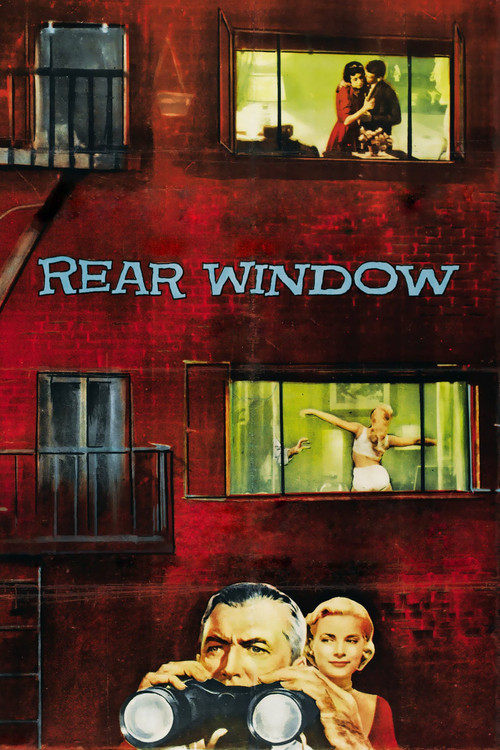
Alfred Hitchcock's 1954 masterpiece, "Rear Window," is a gripping thriller that masterfully explores themes of voyeurism, community, and the nature of observation. The film centers on L.B. "Jeff" Jefferies, a professional photographer confined to his Greenwich Village apartment with a broken leg. To pass the time during a stifling heatwave, he begins to spy on his neighbors through his rear window, creating narratives for their lives based on the snippets he observes. His casual people-watching takes a dark turn when he suspects that one of his neighbors, Lars Thorwald, has murdered his wife.

Jeff enlists the help of his sophisticated socialite girlfriend, Lisa Fremont, and his sharp-witted insurance nurse, Stella, to investigate his suspicions. As the trio delves deeper into the mystery, the lines between harmless observation and dangerous obsession begin to blur. Confined to his wheelchair, Jeff can only watch from afar as Lisa bravely puts herself in harm's way to uncover the truth. The film's tension builds relentlessly as Jeff becomes a helpless spectator to the dangerous consequences of his own curiosity.

Core Meaning

"Rear Window" serves as a profound commentary on the act of watching, implicating the audience in the film's central theme of voyeurism. Director Alfred Hitchcock uses the protagonist, Jeff, as a surrogate for the filmgoer, who derives pleasure from observing the private lives of others from the safety of a darkened room. The film questions the ethics of this passive observation, blurring the lines between innocent curiosity and morbid intrusion. Ultimately, Hitchcock suggests that while voyeurism is a natural human tendency, it comes with moral responsibilities. The film also explores the complexities of relationships, loneliness, and the sense of community—or lack thereof—in urban life. Through Jeff's observations of his neighbors' various romantic entanglements, Hitchcock presents a cynical yet compelling view of love and marriage in 1950s America.

Thematic DNA

Voyeurism and Ethics 35%
Love, Marriage, and Gender Roles 30%
Community and Isolation 20%
Perception vs. Reality 15%

Voyeurism and Ethics

The most prominent theme is voyeurism, the act of watching others for pleasure. Jeff's boredom from his confinement leads him to spy on his neighbors, treating their lives as a form of entertainment. The film directly confronts the morality of his actions, with Stella initially calling it a "race of Peeping Toms." However, as Jeff's suspicions of murder grow, his voyeurism becomes a tool for potential justice. Hitchcock masterfully implicates the audience in this act; by restricting the camera's viewpoint almost entirely to Jeff's apartment, we become his fellow voyeurs, peering into the private lives across the courtyard and questioning our own spectatorship.

Love, Marriage, and Gender Roles

The film delves into the complexities of romantic relationships and societal expectations of marriage in the 1950s. Jeff's reluctance to marry Lisa stems from his belief that their lifestyles are incompatible; he sees her as a high-society woman who wouldn't fit into his adventurous, dangerous world. The neighbors Jeff observes represent various stages and types of relationships—the passionate newlyweds, the bickering Thorwalds, the lonely Miss Lonelyhearts—each serving as a potential projection of Jeff and Lisa's future. The film also challenges traditional gender roles; while Jeff is rendered passive and immobile, Lisa becomes the active, courageous investigator, proving her capabilities beyond Jeff's initial perceptions.

Community and Isolation

Despite living in close proximity, the residents of the apartment complex are largely isolated from one another. Each window reveals a separate, private world. The film critiques the lack of genuine community and neighborly connection in modern urban life. This is poignantly highlighted when the couple's dog is killed, and the owner screams, "You don't know the meaning of the word 'neighbors.'" Ironically, it is Jeff's voyeurism, an act of intrusion, that ultimately fosters a form of connection, as his investigation forces him, Lisa, and Stella to engage with the lives of those around them.

Perception vs. Reality

"Rear Window" constantly plays with the idea of what is real versus what is perceived. Jeff constructs entire narratives about his neighbors based on fragmented, silent observations. The film forces the audience to question the reliability of his perspective. Is he an astute observer uncovering a crime, or is he a bored man projecting his own desire for excitement onto an innocent situation? This theme is central to the suspense, as both Jeff and the audience must piece together a potential truth from limited and ambiguous visual information, highlighting how easily reality can be misinterpreted from a distance.

Character Analysis

L.B. 'Jeff' Jefferies

James Stewart

Archetype: The Observer/Antihero
Key Trait: Observant and Obsessive

Motivation

Initially motivated by boredom and a professional photographer's curiosity, Jeff's motivation shifts to a relentless obsession with solving what he believes is a murder. This obsession allows him to avoid confronting his own personal problems, namely his fear of marriage and intimacy with Lisa.

Character Arc

Jeff begins the film as a passive, detached observer, cynical about marriage and emotionally distant from Lisa. His obsession with the potential murder forces him out of his passivity, making him an active participant in the events he's watching. Though physically immobile, he develops from a mere spectator into a director of the investigation. By the end, through the shared danger and Lisa's demonstrated bravery, he seems to overcome his commitment fears, as symbolized by his relaxed sleep in the final scene and Lisa's comfortable presence.

Lisa Carol Fremont

Grace Kelly

Archetype: The Catalyst/Heroine
Key Trait: Determined and Daring

Motivation

Lisa's primary motivation is her love for Jeff and her desire to prove that she can be a part of his life, adventure and all. She wants to break through his emotional barriers and convince him that their different worlds are not an obstacle to marriage. Her participation in the mystery becomes the ultimate way to demonstrate her suitability as his partner.

Character Arc

Lisa is initially presented as a 'perfect' and 'sophisticated' socialite, a woman Jeff believes is ill-suited for his lifestyle. She transitions from a skeptical observer of Jeff's spying to an enthusiastic and courageous participant in the investigation. Her arc is one of defying expectations; she proves her resourcefulness and bravery, ultimately becoming the film's active hero by physically entering the dangerous situation Jeff can only watch. By the end, she has bridged the gap between their two worlds.

Stella

Thelma Ritter

Archetype: The Mentor/Voice of Reason
Key Trait: Pragmatic and Witty

Motivation

Stella is motivated by a no-nonsense sense of duty as Jeff's nurse and a grounded wisdom about human nature. She is also driven by a natural human curiosity and a desire for justice (and a bit of excitement), which leads her to eagerly assist in the investigation once she's convinced something is amiss.

Character Arc

Stella is initially the film's moral compass, warning Jeff against his voyeurism and scolding him with pragmatic, witty observations. However, her own curiosity gets the better of her, and she is quickly drawn into the mystery, becoming a loyal and practical accomplice to Jeff and Lisa. Her arc shows how the allure of a mystery can overcome initial ethical objections, representing the everyday person's fascination with the private lives of others.

Lars Thorwald

Raymond Burr

Archetype: The Antagonist
Key Trait: Menacing and Secretive

Motivation

Thorwald's motivation, as pieced together by Jeff and confirmed in the end, is to murder his nagging wife. His actions throughout the film—packing the trunk, cleaning the apartment, disposing of evidence—are all driven by the need to cover up his crime.

Character Arc

Thorwald is observed entirely from a distance for most of the film, making him a blank slate onto which Jeff projects his suspicions. He is initially portrayed through Jeff's lens as a henpecked husband who finally snaps. His character arc is revealed in reverse; we see the aftermath of his actions before understanding the man himself. He only becomes a fully realized, three-dimensional threat when he finally crosses the courtyard and confronts Jeff, moving from a distant object of speculation to an immediate, physical danger.

Symbols & Motifs

The Rear Window

Meaning:

The window is the central and most powerful symbol in the film. It represents the barrier between Jeff's confinement and the outside world, but it also functions as a movie screen through which he (and the audience) watches the lives of others unfold. It symbolizes both physical limitation and a portal to vicarious experience, highlighting the voyeuristic nature of cinema itself.

Context:

The entire film is framed by what is visible through Jeff's rear window. The raising of the bamboo blinds at the beginning signals the start of the 'show,' and their lowering at the end concludes our period of observation.

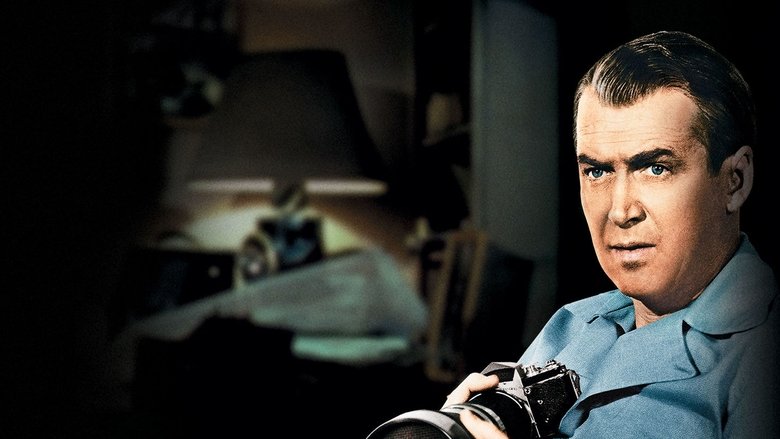
Jeff's Camera and Telephoto Lens

Meaning:

Jeff's camera equipment, particularly his telephoto lens, symbolizes his emotional detachment and his professional inclination to observe life from a distance. It acts as a physical and psychological barrier, allowing him to intrude upon his neighbors' privacy while remaining safely removed from any real involvement. It can also be interpreted as a phallic symbol, representing a form of power and penetration in his state of physical impotence.

Context:

Jeff uses his camera and binoculars throughout the film to get closer, more intimate views of his neighbors. He uses the camera's flashbulbs as a weapon to blind and disorient Thorwald during their final confrontation, turning his tool of passive observation into an instrument of self-defense.

The Broken Leg and Plaster Cast

Meaning:

Jeff's broken leg and full-leg cast are symbols of his physical confinement, powerlessness, and emasculation. His immobility is the catalyst for his voyeurism. The cast can also be interpreted as a symbol of his emotional and sexual impotence, particularly in his reluctance to commit to his relationship with Lisa. At the end, his second broken leg suggests he will be confined for even longer, perhaps forcing him to finally settle down.

Context:

Jeff is confined to a wheelchair for the entire film. His cast is a constant visual reminder of his vulnerability and frustration. In the final scene, he has a cast on both legs, ironically achieving a state of complete immobility just as his relationship with Lisa seems to have stabilized.

Mrs. Thorwald's Wedding Ring

Meaning:

The wedding ring symbolizes the institution of marriage and commitment, a central concern for Jeff and Lisa. For Mrs. Thorwald, it is a possession she would never willingly leave behind, making its absence a key piece of evidence. For Lisa, finding and wearing the ring is a symbolic act of proving her worth to Jeff and stepping into the role of a wife, albeit in a dangerous and unconventional way.

Context:

Lisa astutely observes that a woman would not go on a trip without her wedding ring. This becomes the crucial clue they seek. Lisa risks her life to sneak into Thorwald's apartment to find it, and when she's caught, she defiantly flashes the ring on her finger towards Jeff, signaling her success while also symbolically trying on the role of a married woman.

Memorable Quotes

We've become a race of Peeping Toms. What people ought to do is get outside their own house and look in for a change.

— Stella

Context:

Stella delivers this line early in the film while chiding Jeff for his obsessive spying on his neighbors, warning him that "trouble" will come of it.

Meaning:

This line serves as the film's central thesis statement on voyeurism. Stella critiques the modern tendency to pry into the lives of others while ignoring one's own issues. It's a direct challenge to both Jeff and the audience, suggesting introspection as an alternative to observation.

She's too perfect. She's too talented, she's too beautiful, she's too sophisticated, she's too everything but what I want.

— L.B. 'Jeff' Jefferies

Context:

Jeff says this to Stella while complaining about Lisa's desire to marry him. He is trying to justify his reluctance to commit by painting her as someone unsuited to his rugged lifestyle.

Meaning:

This quote perfectly encapsulates Jeff's anxieties about his relationship with Lisa and his fear of commitment. He perceives her perfection not as an asset, but as a sign of their incompatibility, revealing his own insecurities about being tied down to a life he feels is not adventurous enough for him.

You don't know the meaning of the word 'neighbor.' Neighbors like each other, speak to each other, care if somebody lives or dies! But none of you do!

— Woman with the dog

Context:

The woman screams this to the entire courtyard after she discovers that her dog has been murdered. Her grief-stricken outburst breaks the silence and forces the neighbors (and Jeff) to momentarily confront their collective indifference.

Meaning:

This quote is a powerful indictment of the isolation and apathy of the apartment complex's residents. It highlights the film's theme of a failed community, where people live physically close but emotionally distant, indifferent to each other's lives and tragedies.

A woman never goes anywhere but the hospital without packing makeup, clothes, and jewelry.

— Lisa Carol Fremont

Context:

Lisa says this to Jeff and Detective Doyle, arguing that Mrs. Thorwald couldn't have simply gone on a trip because she left behind her most essential personal items, particularly her jewelry and wedding ring.

Meaning:

This line showcases Lisa's sharp intuition and her ability to use her knowledge of the world—in this case, fashion and feminine habits—to find a crucial flaw in Thorwald's story. It's a key moment that demonstrates her intelligence is as valuable as Jeff's observational skills.

Philosophical Questions

Is it morally justifiable to invade someone's privacy for the greater good?

The film relentlessly explores this ethical dilemma. Jeff's spying begins as an immoral and intrusive hobby. His nurse, Stella, initially condemns his actions, quoting the law against Peeping Toms. However, when his voyeurism uncovers a potential murder, the moral calculus shifts. The film asks whether the potential to prevent a great evil (a murderer going free) justifies the lesser evil of violating Thorwald's privacy. It doesn't provide an easy answer, instead showing that even well-intentioned observation can lead to dangerous consequences for the observer and the observed.

To what extent does observation alter reality?

"Rear Window" suggests that the act of watching is not passive. Jeff is not merely reflecting the reality of the courtyard; he is actively constructing a narrative. He pieces together ambiguous visual cues to create a story of murder, projecting his own desire for excitement and his fears about marriage onto the figures he watches. The film makes the audience complicit in this construction, encouraging us to interpret the silent scenes alongside Jeff. This raises the question of whether we are discovering a truth or creating one through the focused, and potentially biased, act of looking.

What is the nature of community in modern life?

The film presents a cynical view of urban community. The courtyard is a shared space, yet it is populated by isolated individuals who rarely interact. A murder can allegedly take place, a dog can be killed, and a woman can be on the verge of suicide, all while the neighbors remain largely oblivious. The film questions whether physical proximity equates to genuine connection, suggesting that modern society fosters a sense of alienation where people are more inclined to watch each other from a distance than to actively engage and support one another.

Alternative Interpretations

A Feminist Critique: The Male Gaze

A prominent alternative interpretation, largely driven by feminist film theory, views "Rear Window" as a powerful illustration of the "male gaze." From this perspective, the film is not just about a man watching his neighbors, but about a patriarchal power dynamic where the male protagonist (and by extension, the male viewer) derives pleasure from looking at women who are presented as passive objects of desire or suspicion. Characters like Miss Torso are framed as pure spectacle, and even Lisa's narrative arc is seen as a journey to make herself more appealing to Jeff's male perspective. The camera's confinement to Jeff's point of view forces all viewers, regardless of gender, to adopt this male perspective, objectifying the women on screen.

The Ending as Ambiguous: Is Their Relationship Healed?

While the ending appears happy, some interpretations suggest it is more cynical and ambiguous. Jeff is asleep, now with two broken legs, rendered even more helpless. Lisa is first seen reading a book on adventure travel, seemingly conforming to Jeff's world. However, as soon as he is asleep, she puts it down and picks up a fashion magazine, Harper's Bazaar. This final action can be read in several ways. It could mean she is only temporarily placating him and will retain her own identity. Alternatively, it could suggest that their fundamental differences remain and their reconciliation is superficial, a temporary truce before old conflicts resurface. The lowering of the blind ends our view, leaving their future uncertain.

Cultural Impact

"Rear Window" is widely regarded as one of Alfred Hitchcock's greatest films and a masterpiece of the suspense genre. Its influence on cinema is immense, particularly in its exploration of voyeurism and its masterful use of a single-location setting to generate tension. The film's core concept of a protagonist observing a crime they cannot physically intervene in has been emulated and paid homage to in numerous films, including Brian De Palma's "Body Double" and D.J. Caruso's "Disturbia."

The film also had a significant impact on film theory, especially in feminist critiques. Laura Mulvey's seminal 1975 essay "Visual Pleasure and Narrative Cinema" heavily references "Rear Window" to develop her concept of the "male gaze," arguing that the film's perspective forces the audience to identify with a male protagonist who objectifies and controls the female image. The film serves as a primary text for analyzing how cinematic perspective shapes audience identification and ideology.

Released in the post-war McCarthy era, the film has also been interpreted as a commentary on the paranoia and culture of surveillance that pervaded 1950s America, where neighbors were encouraged to spy on one another. Its critical and commercial success cemented James Stewart's and Grace Kelly's status as major stars and reinforced Hitchcock's reputation as the "Master of Suspense."

Audience Reception

Upon its release, "Rear Window" was a major commercial and critical success. Audiences were captivated by Hitchcock's masterful build-up of suspense, the compelling performances of James Stewart and Grace Kelly, and the unique single-set premise. Critics praised the film for its intelligent screenplay and innovative cinematography, which effectively turned the audience into participants in the unfolding mystery. The film's themes of voyeurism were noted as both unsettling and deeply resonant, tapping into a universal human curiosity. Over the decades, its reputation has only grown, and it is now universally considered one of the greatest films ever made. While some modern viewers might critique the 1950s gender dynamics, most agree that the film's core exploration of voyeurism, suspense, and the cinematic experience remains as powerful and relevant as ever.

Interesting Facts

  • The entire film was shot on a single, massive indoor set built at Paramount Studios, one of the largest ever constructed at the time. It consisted of 31 apartments, 12 of which were fully furnished.
  • Director Alfred Hitchcock based the central crime on two real-life British murder cases: the case of Dr. Hawley Crippen (1910) and the case of Patrick Mahon (1924), both of whom dismembered their victims.
  • The character of the villain, Lars Thorwald, was made to look like producer David O. Selznick, with whom Hitchcock had a difficult working relationship on the film "Rebecca."
  • The film's screenplay is based on a 1942 short story by Cornell Woolrich titled "It Had to Be Murder." The story did not include the characters of Lisa or Stella.
  • During filming, Hitchcock communicated with the actors in the distant apartments via flesh-colored earpieces to give them direction from his position in Jeff's apartment set.
  • Grace Kelly reportedly turned down the lead female role in "On the Waterfront" to work with Hitchcock again on "Rear Window."
  • The film is the only one in which Grace Kelly is seen smoking on-screen, although Hitchcock used a clever cut to avoid showing her actually lighting or inhaling from the cigarette to accommodate her rule against it.

Easter Eggs

Alfred Hitchcock's Cameo

In keeping with his signature tradition, Alfred Hitchcock makes a cameo appearance in the film. He can be seen about 26 minutes in, inside the songwriter's apartment, where he is winding a mantle clock. This cameo is particularly clever as it places the director himself under the voyeuristic gaze of his protagonist, making him a part of the spectacle being watched. It's a meta-moment where we are, in effect, spying on the spy master.

⚠️ Spoiler Analysis

Click to reveal detailed analysis with spoilers

Frequently Asked Questions

Explore More About This Movie

Dive deeper into specific aspects of the movie with our detailed analysis pages

Comments (0)

Leave a comment

No comments yet. Be the first to share your thoughts!