Skip to content
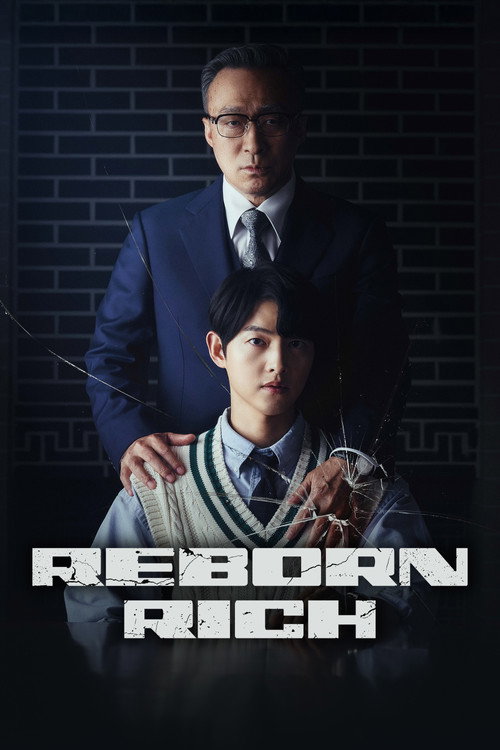
Reborn Rich
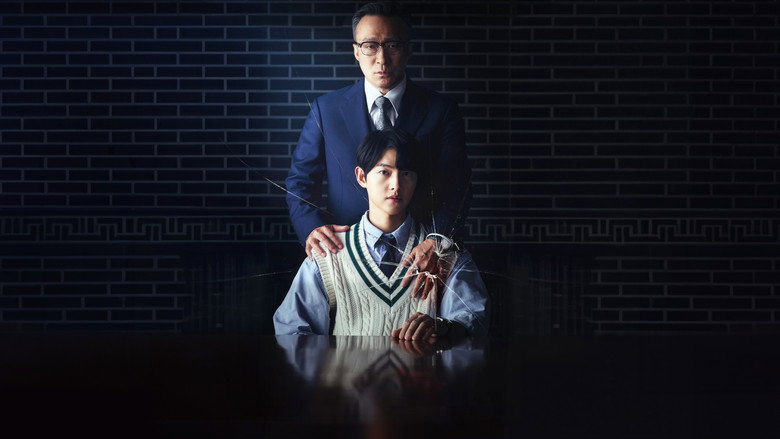
A cutthroat corporate fantasy steeped in historical suspense, where bloodlines bleed into balance sheets and a murdered pawn reincarnates as a kingmaker on an unyielding chessboard of greed and redemption.
Reborn Rich

Reborn Rich

재벌집 막내아들

"Reborn into the family who killed me."

18 November 2022 — 25 December 2022 South Korea 1 season 16 episode Ended 8.0 (120)

Cast: Song Joong-ki, Lee Sung-min, Shin Hyun-been, Yoon Je-moon, Kim Shin-rock

Drama Sci-Fi & Fantasy Systemic Inequity and Chaebol Capitalism Fate, Determinism, and the Illusion of Choice The Corrosive Nature of Greed and Succession Warfare Complicity, Guilt, and Moral Redemption The Value of Human Life vs. Capital Valuation

Overview

Reborn Rich (재벌집 막내아들) follows Yoon Hyeon-woo, a dedicated and subservient risk-management secretary working for the almighty Soonyang Group—one of South Korea’s wealthiest family-owned conglomerates (chaebols). Despite a lifetime of blind loyalty and enduring humiliating demands from the corrupt owner family, Hyeon-woo is framed for embezzlement and murdered during an overseas assignment. Instead of dying, he wakes up in 1987 transmigrated into the body of 10-year-old Jin Do-jun, the estranged youngest grandson of Soonyang’s ruthless founder and chairman, Jin Yang-chul.

Armed with three decades of future economic knowledge and an insider's understanding of the Jin dynasty's scandals, Do-jun embarks on a generational scheme to take over Soonyang and bring down the family that murdered him from the inside. Over the course of sixteen episodes spanning the late 1980s through the early 2000s, Do-jun navigates high-stakes corporate warfare, maneuvering through real-life historical events—such as the 1997 Asian Financial Crisis and the Dot-com bubble—to dismantle his greedy relatives’ succession plans while forging a complex, paternal bond with the patriarchal Chairman Jin.

The narrative weaves back and forth between past and present as Do-jun battles legal adversaries, corporate saboteurs, and lethal assassination attempts. As the generational succession war reaches its peak, the show forces its protagonist to confront the cost of revenge, the cyclical cruelty of unfettered capitalism, and the blurred lines between retribution and personal redemption.
Core Meaning

The core thesis of Reborn Rich is an interrogation of South Korea's entrenched chaebol structure and the myth of hereditary meritocracy. Through the mirrored journeys of Yoon Hyeon-woo (an exploited working-class employee) and Jin Do-jun (a privileged corporate predator), the series argues that dynastic succession places corporate power in the hands of unqualified heirs motivated purely by entitlement rather than competence.

Furthermore, the creators emphasize that true justice and redemption cannot be achieved simply by becoming the very monsters one seeks to destroy. Revenge that merely transfers monarchical corporate power from one individual to another is hollow; lasting change requires dismantling systemic impunity and holding hereditary dynasties accountable to society.

Thematic DNA

Systemic Inequity and Chaebol Capitalism 30%
Fate, Determinism, and the Illusion of Choice 25%
The Corrosive Nature of Greed and Succession Warfare 20%
Complicity, Guilt, and Moral Redemption 15%
The Value of Human Life vs. Capital Valuation 10%

Systemic Inequity and Chaebol Capitalism

The series deconstructs the post-war South Korean economic miracle by exposing the exploitation behind chaebol growth. It contrasts the expendability of ordinary working-class laborers with the unaccountable power of conglomerate owners. As Do-jun exploits macro-economic shifts to enrich himself, the story constantly questions whether ethical capitalism can exist within a system designed around monopoly and political collusion.

Fate, Determinism, and the Illusion of Choice

A recurring dramatic engine is the fixed nature of history: Do-jun repeatedly discovers that while he can change who profits or suffers, major macro-events (market crashes, strikes, and specific deaths) inevitably occur. This explores whether knowledge of the future grants true agency or merely makes one a better-informed spectator of predetermined tragedy.

The Corrosive Nature of Greed and Succession Warfare

The Jin family represents familial bonds stripped of genuine affection and reduced entirely to inheritance arithmetic. Sibling turns against sibling, children plot against parents, and loyalty is constantly renegotiated based on share percentages and voting rights.

Complicity, Guilt, and Moral Redemption

The series shifts from a conventional revenge fantasy into a psychological study of complicity. Hyeon-woo was not merely a victim of Soonyang; his blind obedience made him an enabler and silent accessory to their historic crimes. True closure comes not through crowning himself king, but through atonement and exposing the truth.

The Value of Human Life vs. Capital Valuation

Throughout the series, characters are weighed against financial ledgers. Chairman Jin and his heirs treat employees as replaceable operational costs. Do-jun’s emotional struggle centers on retaining his humanity in an environment where every relationship is calculated purely as an investment or a liability.

Character Analysis

Yoon Hyeon-woo / Jin Do-jun

Song Joong-ki

Archetype: Reborn Antihero / Tragic Reformer Key Trait: Prescient strategic calculation combined with a cool, inscrutable poker face.

Motivation

Initially driven by revenge against Soonyang and personal survival; evolves into a crusade to dismantle dynastic chaebol succession and atone for his past complicity.

Character Arc

Begins as a powerless, humiliated Soonyang fixer who buries his conscience for corporate survival. Reborn as Jin Do-jun, he transforms into a calculating financial mastermind driven by vengeance. However, as he mirrors his grandfather’s ruthlessness, he grapples with moral corruption before ultimately returning to Hyeon-woo's identity to seek systemic justice and personal repentance.

Chairman Jin Yang-chul

Lee Sung-min

Archetype: Ruthless Patriarch / Tragic Mentor Key Trait: Uncompromising industrial pragmatism and chilling business acumen.

Motivation

Ensuring the eternal supremacy and survival of Soonyang Group at all costs, superseding affection for his own children.

Character Arc

An iron-fisted, visionary industrialist who built Soonyang from nothing, believing strictly in survival of the fittest and primogeniture. Recognizing his eldest children's incompetence, he finds a worthy intellectual soulmate in his youngest grandson, Do-jun. His arc descends into tragic vulnerability as vascular dementia and delirium ravage his mind, revealing his deep terror of watching his life's work collapse.

All 4 characters and cast

Symbols & Motifs

Jeongsimjae (정심재)

Meaning:

The Jin family's sprawling estate symbolizes dynastic, feudal power and cold isolation.

Context:

Serves as the primary stage for family gatherings, backroom betrayals, and power summits where Chairman Jin asserts monarchical control over his heirs.

The Microchip / Slush Fund Document

Meaning:

Represents the hidden, illegal lifeblood of chaebol survival and the expendability of lower-class employees.

Context:

Initiates the entire plot when Hyeon-woo is tasked with retrieving offshore slush fund assets in Episode 1, leading directly to his attempted murder.

Miracle Investment (미라클 인베스트먼트)

Meaning:

Symbolizes independent financial modernization, disruption of archaic family succession, and Do-jun’s strategic leverage.

Context:

Established by Do-jun and Oh Se-hyun as an overseas-backed venture fund to systematically buy up distressed Soonyang subsidiaries during economic downturns.

The Red Diary / Voice Recorder

Meaning:

Embodies absolute truth, accountability, and the inescapable weight of memory.

Context:

Used across both timelines by Prosecutor Seo Min-young and later Hyeon-woo to capture confessions and expose the Jin family's murder conspiracies during court trials.

Automobile Crashes

Meaning:

A lethal motif for orchestrated corporate violence and the inevitability of fate.

Context:

Appears in the pivotal assassination attempt on Chairman Jin and Do-jun, and again during the fatal 2004 intersection crash that terminates Do-jun's life.

Memorable Quotes

내 자식들 중에 내 제일 사랑하는 기 누군지 아나? ... 순양이다.
— Chairman Jin Yang-chul

Context

Delivered in Season 1, Episode 10 to Jin Do-jun.

Meaning

It crystallizes the Chairman’s entire worldview: his corporate conglomerate is his true offspring, placing company survival above biological family ties.

싸움꾼한테 쓸모없는 기 딱 두 개다. 맹장하고 동정심! 그 쓸데없는 감정 끌고 전쟁터에 가믄 안 된다.
— Chairman Jin Yang-chul

Context

Spoken to young Do-jun in Episode 2.

Meaning

Highlights Jin Yang-chul’s social-Darwinist corporate philosophy and serves as the ruthless code Do-jun must navigate throughout the succession war.

All 5 quotes

Episode Highlights

Pilot

S1E1

Establishes Yoon Hyeon-woo’s degraded existence as a corporate cleaner for Soonyang, his discovery of an overseas slush fund, his execution on a cliffside by company operatives, and his sudden waking in 1987 as child Jin Do-jun.

Significance:

Sets the dramatic premise, stakes, and the revenge dynamic that powers the entire narrative.

The First Bet

S1E2

Young Do-jun advises Chairman Jin to back Roh Tae-woo in the 1987 presidential election and avoids boarding Korean Air Flight 858 based on future memory.

Significance:

Earns Chairman Jin’s trust, secures the Bundang land tract as a reward (which explodes in value), and establishes Do-jun's capital base for Miracle Investment.

The IMF Crisis

S1E6

As the 1997 Asian Financial Crisis decimates South Korea's conglomerates, Do-jun uses dollar reserves accumulated from Wall Street investments (including Amazon/Dell analogues) to launch hostile buyouts of Soonyang subsidiaries.

Significance:

Shifts the power balance permanently, positioning Do-jun as a major contender against his uncles and aunts.

The Staged Crash

S1E11

Jin Yang-chul publicly prepares to appoint Do-jun as the head of the new Soonyang Financial Holding Company, challenging primogeniture. On their way, a truck rams their sedan in an assassination attempt.

Significance:

Chairman Jin is incapacitated with delirium/dementia, forcing Do-jun into a secretive war against his plotting family while hiding the Chairman’s condition.

The Chairman's Will

S1E14

Chairman Jin Yang-chul passes away, shocking everyone by leaving Do-jun zero inheritance in the public will, but secretly transferring a massive overseas slush fund and a heartbreaking video testament acknowledging Do-jun as his true heir.

Significance:

Concludes the monumental emotional arc between Do-jun and his grandfather, fueling Do-jun’s final push to purchase Soonyang.

The Purchase of Soonyang

S1E15

Do-jun acquires the controlling shares of Soonyang Group, fulfilling his decades-long ambition. On his way to meet Min-young, a second planned truck crash kills Do-jun in 2004.

Significance:

Abruptly shatters the timeline, bringing the historical transmigration arc to a tragic, sudden conclusion.

Series Finale

S1E16

Hyeon-woo wakes up in a hospital in 2022 after surviving his gunshot wound. At the parliamentary hearing, he plays the 2004 voice recording proving that Jin Young-ki and Jin Seong-jun ordered Do-jun's murder—and that Hyeon-woo was unwittingly used as the decoy roadside blocker.

Significance:

The Jin family is forced to step down from corporate management, separating ownership from operations; Hyeon-woo joins Miracle Investment under Oh Se-hyun as a professional manager.

Philosophical Questions

Is Merit Inheritable, or Does Hereditary Power Breed Incompetence?

The narrative consistently tests whether bloodlines carry leadership capability, showing how inherited power breeds entitlement and decay.

Can Unethical Means Justify a Moral End in Capitalism?

Do-jun utilizes insider knowledge, financial manipulation, and market panics to amass power. The series questions whether his crusade against Soonyang is morally superior or merely a cleaner form of corporate plunder.

What is the True Nature of Complicity in an Exploitative Hierarchy?

Through Hyeon-woo, the show examines whether middle-management workers who "just follow orders" share moral culpability for corporate violence and corruption.

Alternative Interpretations

The series and its ending can be understood through multiple lenses:

Full ending explanation

Cultural Impact

Reborn Rich aired during a period of heightened public debate in South Korea regarding chaebol tax evasion, hereditary wealth succession, and economic polarization. The show struck a massive chord across multiple generations: older viewers resonated with the vivid, nostalgic recreations of modern Korean political and financial history (the 1987 democratic elections, IMF restructuring, the 2000 tech bubble), while younger audiences connected with the cathartic fantasy of financial literacy outwitting generational wealth.

The show fundamentally redefined business-thriller K-dramas, proving that complex discussions of semiconductor manufacturing, corporate holding structures, and private equity maneuvers could command blockbuster ratings.

Audience Reception

The audience and critical reception for the series showed distinct trends:

  • Episodes 1–15 (Near-Universal Critical & Audience Acclaim): Critics and general viewers widely lauded the series for its exceptional script pacing, detailed historical integration, and powerhouse performances. Lee Sung-min's portrayal of Jin Yang-chul was hailed as one of the finest acting achievements in K-drama history.
  • Criticism of Subplots: The romance subplot between Do-jun and Prosecutor Seo Min-young was frequently criticized as underdeveloped and distracting from the core corporate thriller.
  • Episode 16 Finale Controversy (Heavily Polarized): Episode 16 generated significant debate. Viewers invested in Do-jun's 15-episode conquest felt disenfranchised by his abrupt death and the return to Hyeon-woo in the present (perceived by some as a "coma dream" deviation from the web novel), while analytical critics defended the ending as a more grounded, thematic critique of chaebol hegemony offering systemic closure and redemption.

Interesting Facts

  • JTBC broadcasted Reborn Rich three nights a week (Friday, Saturday, and Sunday), an unprecedented scheduling strategy in South Korean prime-time cable television that accelerated viewership momentum.
  • The series finale scored an astronomical 26.9% nationwide rating, making it the second highest-rated drama in South Korean cable television history (second only to JTBC’s The World of the Married).
  • In the original web novel by San Gyung, Jin Do-jun survives, ascends to the throne as the sole Chairman of Soonyang, and completes his revenge; the TV adaptation entirely altered the finale by returning the protagonist to Yoon Hyeon-woo’s timeline.
  • The series was produced with an estimated budget of ₩30–35 billion KRW by SLL and RaemongRaein, featuring period-accurate 1980s–2000s set pieces and overseas on-location shooting in Turkey.
  • Song Joong-ki specifically accepted the dual lead role to reunite with head writer Kim Tae-hee, twelve years after their collaboration on the hit 2010 historical drama Sungkyunkwan Scandal.
  • Lee Sung-min’s masterclass performance as Chairman Jin Yang-chul earned him the prestigious Best Actor – Television award at the 59th Baeksang Arts Awards.
  • Author San Gyung and the production team drew direct inspiration from the corporate history of Samsung (founder Lee Byung-chull and Lee Kun-hee) and Hyundai Group for Soonyang’s corporate structure and semiconductor/automotive investments.

Easter Eggs

Jinyoung (GOT7) Cameo

Singer/actor Park Jin-young made a notable guest appearance in Episode 1 and Episode 16 as Shin Gyeong-min, the junior assistant who betrays Hyeon-woo on the cliffside under Soonyang’s orders.

1987 KAL 858 Flight Reference

In Episode 2, Do-jun uses his historical knowledge to urgently redirect Chairman Jin away from taking a specific commercial flight, referencing the real-life bombing of Korean Air Flight 858.

Real-World Corporate Analogues

In the drama, the Jin family battles over "Ahjin Motors" and "Hando Steel," which are transparent narrative stand-ins for the historic bankruptcy and buyout wars surrounding Kia Motors and Hanbo Steel during the 1997 IMF Crisis.

Cultural Milestones as Investment Catalysts

Do-jun finances domestic and international cultural phenomena before they occur—investing in the distribution of James Cameron's Titanic (1997), backing domestic film funds (Shiri), and predicting the South Korean national football team's historic run to the 2002 World Cup Semi-finals.

Frequently Asked Questions

Explore More About This Movie

Dive deeper into specific aspects of the movie with our detailed analysis pages

Comments (0)

Leave a comment

No comments yet. Be the first to share your thoughts!

Similar Movies