Red Shoes and the Seven Dwarfs
A vibrant fairy tale subversion blending action, romance, and comedy. Through magic heels and green dwarfs, it visually explores the contrast between societal beauty standards and the radiant power of self-acceptance and inner worth.
Red Shoes and the Seven Dwarfs

Red Shoes and the Seven Dwarfs

레드슈즈

"Your true self is the fairest of them all"

25 July 2019 South Korea 92 min ⭐ 7.7 (1,122)
Director: Hong Sung-ho
Cast: Ahn So-yi, Shin Yong-woo, Jun Jin-ah, Jeong Jae-heon, Choi Han
Animation Family Fantasy Comedy Romance Adventure
Inner vs. Outer Beauty Self-Acceptance Vanity and Prejudice True Heroism
Budget: $20,000,000
Box Office: $10,054,356

Overview

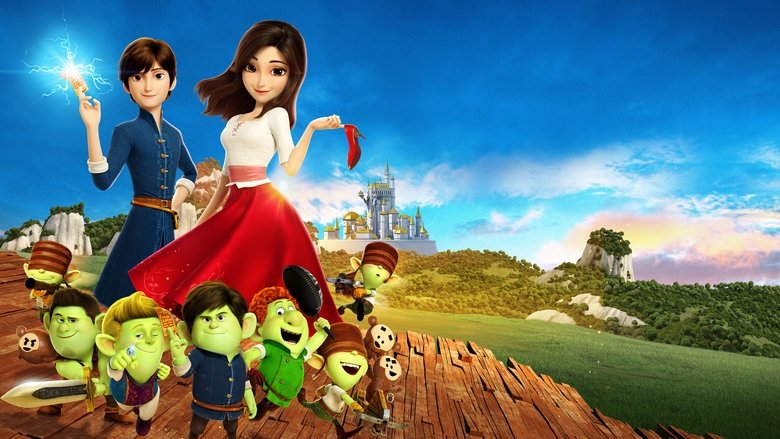
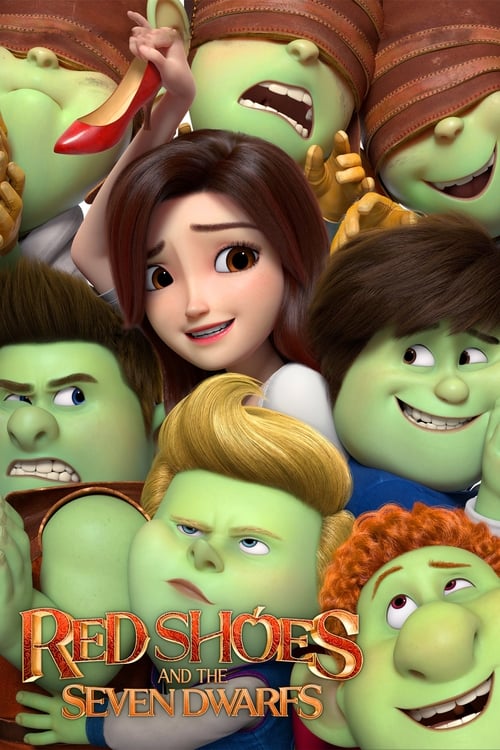
In this modern twist on the classic tale, Snow White is a strong, kind-hearted, and plus-sized princess who stumbles upon a pair of magical red shoes that transform her into a classically slender beauty. Fleeing her evil stepmother, Queen Regina, who seeks the shoes for eternal youth, Snow encounters the Fearless Seven—a group of heroic princes cursed to live as green dwarfs. The curse can only be broken by a kiss from the most beautiful woman in the world.

As the dwarfs help Snow (who they know as "Red Shoes") search for her missing father, their leader Merlin falls in love with her, struggling with his own vanity and the belief that he is only worthy when handsome. Together, they battle Regina's minions and unravel the mystery of the kingdom's disappearance.

Ultimately, the film deconstructs traditional fairy tale tropes. The characters learn that the shoes and physical appearances are illusions, discovering that true love and heroism come from seeing the person within. The journey culminates in a sacrifice that breaks the curse not through superficial beauty, but through genuine connection and self-acceptance.
Core Meaning

The director, Hong Sung-ho, aims to challenge the superficial standards of beauty prevalent in modern society. The film posits that true beauty is not defined by physical appearance or magic spells, but by kindness, courage, and self-worth.

By presenting a heroine who learns to embrace her natural body and a hero who must overcome his vanity, the film critiques the obsession with external perfection. It delivers a message of body positivity and self-love, encouraging viewers to look beyond the surface to find value in themselves and others.

Thematic DNA

Inner vs. Outer Beauty 40%
Self-Acceptance 30%
Vanity and Prejudice 20%
True Heroism 10%

Inner vs. Outer Beauty

This is the central pillar of the narrative. Snow White is treated differently depending on whether she wears the shoes, highlighting society's shallow judgment. The dwarfs, obsessed with their own lost handsomeness, must learn that their heroic spirit matters more than their looks.

Self-Acceptance

Snow White initially enjoys the "freedom" and admiration the shoes bring but eventually realizes she misses her strength and true self. Her arc concludes with her willingly abandoning the illusion of perfection to embrace her real identity.

Vanity and Prejudice

The curse on the Fearless Seven is a direct punishment for their superficiality (they attacked a fairy because she looked "ugly"). Merlin's character growth focuses on unlearning these prejudices.

True Heroism

The film redefines what makes a hero. It is not the shiny armor or the handsome face (which the princes originally had), but the willingness to sacrifice and protect others, even in a diminished form.

Character Analysis

Snow White / Red Shoes

Ahn So-yi (Korean) / Chloë Grace Moretz (English)

Archetype: The Subverted Princess / The Heroine
Key Trait: Inner Strength

Motivation

To find her missing father and save the kingdom from her stepmother.

Character Arc

Starts as a confident but concerned daughter searching for her father. She briefly falls into the trap of enjoying the privilege her magical beauty grants her but ultimately chooses her authentic self, realizing her strength comes from her real body, not the magic shoes.

Merlin

Shin Yong-woo (Korean) / Sam Claflin (English)

Archetype: The Vain Hero / The Love Interest
Key Trait: Vanity / Lightning Magic

Motivation

To break the curse and return to his handsome human form.

Character Arc

Begins as a superficial hero obsessed with his own looks and breaking the curse to be "handsome" again. Through his bond with Snow, he learns to love her for her personality and eventually sacrifices his vanity for her safety.

Queen Regina

Jun Jin-ah (Korean) / Gina Gershon (English)

Archetype: The Evil Sorceress
Key Trait: Obsession

Motivation

To obtain the Red Shoes and remain young and beautiful forever.

Character Arc

A static villain driven by an insatiable hunger for eternal youth and beauty. She spirals into desperation as she fails to retrieve the shoes.

Symbols & Motifs

The Red Shoes

Meaning:

They symbolize societal expectations of beauty, vanity, and addiction to appearance. They offer a seductive illusion that literally weighs the wearer down (metaphorically preventing them from being their true selves).

Context:

Snow White finds them on a magic apple tree. They stick to her feet and transform her body. Queen Regina desires them for immortality, representing a toxic clinging to youth.

The Green Dwarf Form

Meaning:

Represents humility and the stripping away of ego. It forces the princes to operate without the privilege of their good looks.

Context:

The Fearless Seven turn into green dwarfs whenever anyone looks at them. They only revert to human form when they are alone and unseen, symbolizing that their true selves are hidden from the world's judgmental eye.

The Mirror

Meaning:

Symbolizes truth vs. perception. Unlike the traditional subservient mirror, this one has personality and questions the Queen's motives, often reflecting the harsh reality she ignores.

Context:

Used by Queen Regina to spy on others and validate her vanity. It serves as a sarcastic commentator on the villain's obsession.

Memorable Quotes

You're the most beautiful woman in the world... whether my eyes are open or closed.

— Merlin

Context:

Spoken near the climax when Merlin is hurt and confesses his true feelings to Snow White.

Meaning:

This line marks the completion of Merlin's arc. He admits that his love for Snow is no longer based on her physical appearance (which he sees when his eyes are open) but on her essence (felt when his eyes are closed).

It's dwarves with a V!

— Merlin

Context:

Merlin correcting Regina when she disparagingly refers to them as dwarfs.

Meaning:

A comedic line that highlights the princes' pride and their insistence on being seen as distinct heroic figures rather than generic fairy tale creatures.

I don't want your jewels, only your good intentions.

— Snow White

Context:

Snow White rejecting Prince Average's shallow attempts to woo her with gifts.

Meaning:

Demonstrates Snow White's rejection of superficial wealth and her value for genuine character.

Philosophical Questions

Does physical beauty dictate personal worth?

The film challenges the Platonic equation of "Beautiful = Good" common in fairy tales. It asks whether dignity and heroism are reserved for those who fit a specific aesthetic mold, ultimately answering that true worth is an internal virtue independent of external form.

Is perception reality?

Through the curse of the Green Dwarfs (who look different depending on if they are seen or alone) and Snow's transformation, the film explores how the Gaze of the Other shapes identity. It suggests that reality is often distorted by the observer's prejudices.

Alternative Interpretations

While the primary reading is one of body positivity, some critics have offered a cynical interpretation of the ending. They argue that while Merlin learns to love Snow in her natural form, the film still relies heavily on the visual appeal of the "thin" Snow White for much of its marketing and screen time. The curse on the princes is broken, returning them to their "handsome" forms, which some argue undermines the message that looks don't matter—everyone ends up happy, but the male rewards are still conventional attractiveness.

Another reading suggests the film serves as a meta-commentary on the animation industry itself. The "Red Shoes" (false beauty) could represent the polished, artificial aesthetic of mainstream CGI films, while the "real" Snow White represents the raw, authentic storytelling that independent studios strive for but often struggle to sell.

Cultural Impact

Red Shoes and the Seven Dwarfs represents a significant milestone in South Korean animation, showcasing a technical quality that rivals major US studios like Disney and DreamWorks. It was the first fully Korean-produced animated film to receive a wide international release with a Hollywood voice cast.

However, its legacy is complicated by the 2017 Cannes marketing controversy. A billboard contrasting the tall, thin Snow White with the short, plus-sized version under the tagline "What if Snow White was no longer beautiful?" sparked global outrage and accusations of fat-shaming. This incident sparked important conversations about how body image is marketed in media. Despite this stumbling block, the film itself was generally praised by critics and audiences for actually delivering a body-positive message that contradicted its ill-conceived advertising.

Audience Reception

Audience reception was generally positive, especially among families who appreciated the wholesome message about self-esteem. Viewers praised the animation quality, particularly the character designs by Jin Kim, which felt familiar yet fresh.

However, the film faced criticism for its pacing and some reliance on slapstick humor. The marketing controversy left a sour taste for some potential viewers who never gave the film a chance. Among those who watched it, many were pleasantly surprised that the story was far more progressive and kind-hearted than the initial posters suggested.

Interesting Facts

  • The character design was led by Jin Kim, a legendary animator known for his work on Disney's Frozen, Big Hero 6, and Moana, which explains the high-quality, Disney-esque visual style.
  • The film was in production for over 10 years by the South Korean studio Locus Corporation.
  • The title and the central motif are inspired by Hans Christian Andersen's dark fairy tale The Red Shoes, where a girl is punished for her vanity—a theme subverted here.
  • A controversial marketing campaign at the Cannes Film Festival featuring a billboard that asked 'What if Snow White was no longer beautiful?' caused a backlash for body-shaming. The studio apologized and terminated the campaign immediately.
  • The triplets Pino, Noki, and Kio are a clear reference to Pinocchio, and they are mechanical/wooden inventors.
  • Prince Average, a comedic villain, is voiced by Jim Rash in the English dub and acts as a satire of mediocre entitlement.

Easter Eggs

Pino, Noki, and Kio

The triplet dwarfs are named after segments of the name Pinocchio. They are inventors who build wooden robots, referencing the puppet who wanted to be a real boy.

Arthur's Sword

One of the dwarfs is named Arthur and he struggles to pull his sword from a stone, a direct reference to the King Arthur legend and Excalibur.

Hans and the Donut

The character Hans, a chef, is a nod to Hansel and Gretel (associated with sweets). He fights using kitchen tools and pastries.

Booto Plushies

During a montage scene, Snow White walks past a booth selling plush toys of Booto, a character created by Locus Corporation, the studio that produced the film.

⚠️ Spoiler Analysis

Click to reveal detailed analysis with spoilers

Frequently Asked Questions

Explore More About This Movie

Dive deeper into specific aspects of the movie with our detailed analysis pages

Comments (0)

Leave a comment

No comments yet. Be the first to share your thoughts!