Skip to content
Reply 1988
A nostalgic slice-of-life masterpiece overflowing with bittersweet warmth, painting youth and community as a fleeting golden sunset reflected in the rain-slicked, intimate alleyways of late-1980s Seoul.
Reply 1988

Reply 1988

응답하라 1988

"The year was 1988, a time when it was chilly, but our hearts were fiery, a time when we didn't have much but people's hearts were warm."

06 November 2015 — 16 January 2016 South Korea 1 season 20 episode Ended 8.8 (219)

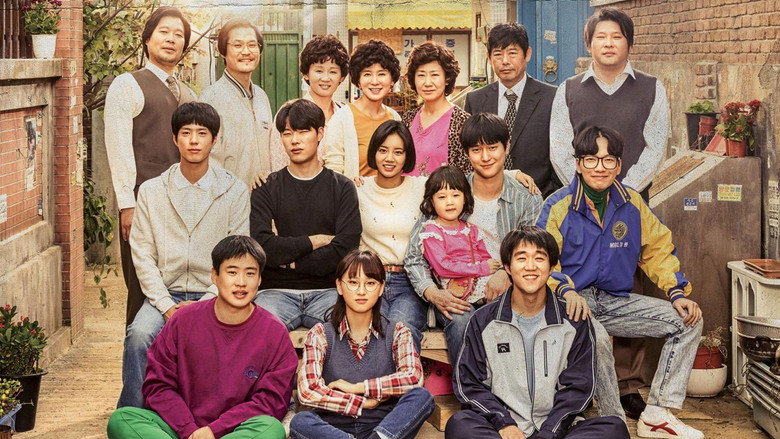
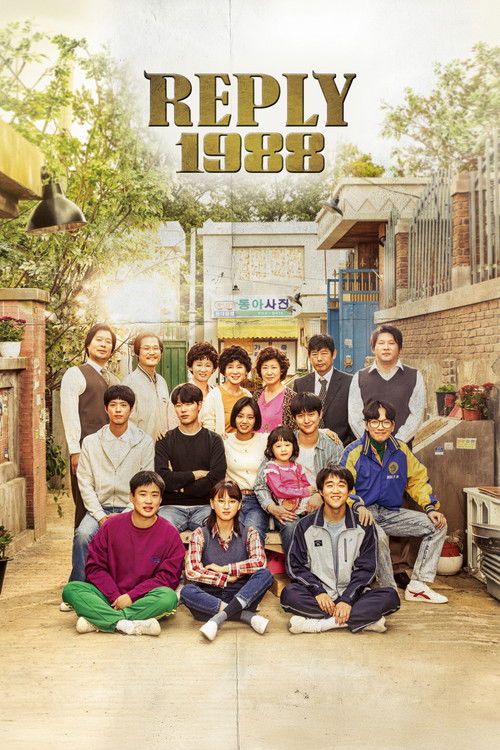
Cast: Lee Hye-ri, Ryu Jun-yeol, Park Bo-gum, Go Kyung-pyo, Lee Dong-hwi

Comedy Family Sacrifices and Unconditional Love Bittersweet Nostalgia and the Inevitability of Time Community and Shared Solidarity Active Choice vs. Passive Fate in Love Coming of Age and Self-Identity

Overview

Reply 1988 (응답하라 1988) is a 20-episode Korean television drama directed by Shin Won-ho and written by Lee Woo-jung. Set in Ssangmun-dong, a working-class neighborhood in northern Seoul, the series opens during the historic 1988 Seoul Summer Olympics. It follows five childhood friends—Sung Deok-sun, Kim Jung-hwan, Sung Sun-woo, Choi Taek, and Ryu Dong-ryong—born in 1971, as they navigate their final years of high school, first loves, academic anxieties, and the threshold of adulthood.

Unlike traditional melodramas, Reply 1988 expands its lens equally across generations, weaving the lives of the five teenagers with those of their parents and siblings. The narrative spans from 1988 through 1989, jumps to the mid-1990s, and uses present-day (2016) framing interviews with the adult lead character reflecting on her past. The overarching arc captures the quiet beauty of ordinary life: families sharing home-cooked meals across courtyard walls, mothers gathering on street benches, fathers bearing silent burdens, and young people discovering who they are.

The series traces the gradual dissipation of an era. As economic growth, modernization, and urban redevelopment reshape South Korea, the tightly-knit neighborhood community faces inevitable change. The story explores how relationships evolve over time, how quiet sacrifices shape young lives, and how the memories of a shared youth remain an enduring source of strength long after the physical environment has vanished.

Core Meaning

The central thesis of Reply 1988 is that youth and human connection derive their ultimate value from their transience. Creators Shin Won-ho and Lee Woo-jung convey that true wealth does not lie in material prosperity or individual ambition, but in the warmth of unconditional love, communal solidarity, and family.

Through its multi-generational narrative, the series illustrates that adulthood is not an absence of pain, but the quiet endurance of it for the sake of others. It emphasizes that while time relentlessly moves forward and disperses the places and people of our youth, the emotional foundation built through genuine human intimacy endures forever.

Thematic DNA

Family Sacrifices and Unconditional Love 30%
Bittersweet Nostalgia and the Inevitability of Time 25%
Community and Shared Solidarity 20%
Active Choice vs. Passive Fate in Love 15%
Coming of Age and Self-Identity 10%

Family Sacrifices and Unconditional Love

Family is depicted not as a flawless institution, but as a sanctuary built on quiet, often invisible sacrifices. Fathers swallow indignities at work to support their households, mothers sacrifice their own comfort and pride for their children, and siblings learn to navigate equity and affection. This theme evolves from teenage misunderstanding of parental strictness to adult empathy for parental vulnerability.

Bittersweet Nostalgia and the Inevitability of Time

Time is both a gentle healer and an unyielding force that closes chapters of life. The show highlights how moments that feel mundane in youth become priceless memories in hindsight. The theme deepens as characters age, move away, and witness the physical alleyways of Ssangmun-dong become empty ruins.

Community and Shared Solidarity

The alleyway functions as an extended family unit where boundaries between houses are fluid. Financial hardship, sickness, and grief are absorbed collectively. The theme evolves to show that community is an active practice of showing up for one another without expectation of return.

Active Choice vs. Passive Fate in Love

Romance in Reply 1988 subverts tropes of pre-ordained destiny. Love requires courage, timing, and clear expression rather than silent longing or indecisiveness. The theme develops through the romantic triangle, proving that timing is built from earnest choices rather than luck.

Coming of Age and Self-Identity

Each young character struggles with identity, expectations, and future dreams. Growth is portrayed not as sudden transformation, but as a series of small, honest steps—learning to accept oneself beyond academic scores or social recognition.

Character Analysis

Sung Deok-sun / Sooyeon

Lee Hye-ri

Archetype: The Compassionate Everywoman / Middle-Child Hero Key Trait: Emotional intelligence and deep empathy

Motivation

Seeking validation and affection; evolves into choosing her own path and actively giving love.

Character Arc

Begins as an insecure 999th-ranked student who feels overlooked between her brilliant older sister and prized younger brother. Over the series, she grows into a confident, empathetic flight attendant who learns that her true worth comes from her capacity to love and care for others.

Kim Jung-hwan / "Jungpal"

Ryu Jun-yeol

Archetype: The Stoic / Tsundere Guardian Key Trait: Deep loyalty masked by stoicism

Motivation

Protecting those he loves without seeking credit; evolves into learning to accept personal boundaries and timing.

Character Arc

Sarcastic and emotionally guarded on the surface, Jung-hwan secretly takes care of his family and friends. He harbors a deep love for Deok-sun but hesitates to act out of loyalty to Taek. He eventually grows into an air force pilot and finds maturity by letting go of his first love with grace.

All 5 characters and cast

Symbols & Motifs

Baduk (Go Board)

Meaning:

Represents life, strategic choices, and the creation of a home. In Go terminology, the objective is to build 'zip' (houses/territory).

Context:

Choi Taek’s professional Baduk career mirrors his personal journey of building a stable emotional home.

Communal Side Dishes (Banchans)

Meaning:

Plates of food passed across alley walls symbolize mutual interdependence, warmth, and shared survival.

Context:

Exchanged between households at the start of Episode 1.

Cassette Tapes & Radio Songs

Meaning:

Songs by Lee Moon-sae, Deulgukhwa, and Sanulrim function as emotional time capsules and channels for unspoken feelings.

Context:

Used when characters struggle to express themselves verbally.

Traffic Lights / Green Light

Meaning:

A symbol of timing and hesitation. A red traffic light becomes Jung-hwan’s excuse for missing his chance, though his real obstacle was his own internal hesitation.

Context:

Featured prominently in Episode 18.

Bonghwangdang Clock & Jewelry Shop

Meaning:

Symbolizes the steady, unhurried ticking of time and the quiet preservation of memories amid a rapidly changing world.

Context:

Owned by Choi Taek’s father.

The Golden Turtle

Meaning:

Symbolizes deep, enduring affection, patience, and a lifelong promise of protection.

Context:

Gifted by Taek to Deok-sun.

Memorable Quotes

아빠도 태어날 때부터 아빠가 아니잖아. 아빠도 아빠가 처음이니까.
— Sung Dong-il

Context

Dong-il sits outside with Deok-sun on a street bench, buying her a separate birthday cake after she broke down in tears over her family always lumping her birthday with her older sister's in Episode 1.

Meaning

Humanizes parents and sets the tone for the series' exploration of imperfect, genuine family love.

신이 모든 곳에 있을 수 없어서 엄마를 만들었다고 한다.
— Sung Deok-sun

Context

Narration in Episode 2, reflecting on how mothers discard their pride, endure humiliation, and withstand pain entirely to protect their children.

Meaning

Captures the core thematic tribute to maternal selflessness.

All 5 quotes

Episode Highlights

Hand in Hand

S1E1

Introduces the five families, the 1988 Seoul Olympics, and the famous food-exchange scene across alleyways.

Significance:

Establishes Deok-sun’s emotional conflict as a neglected middle child and Dong-il’s iconic apology.

The One Thing You Mistake About Me

S1E2

Explores adult grief during Deok-sun's grandmother's funeral, revealing how adults hold back tears until the right moment.

Significance:

Introduces the present-day (2016) interview narrative framing.

Don't Worry, Dear

S1E5

Focuses on parental protection. Features Bo-ra’s arrest during anti-government student demonstrations, where her mother begs the police in the pouring rain with bleeding feet, and Sun-woo's mother defending her dignity.

Significance:

Deepens the exploration of maternal love and parental sacrifice.

First Snow Is Coming

S1E6

Sun-woo reveals he loves Bo-ra (not Deok-sun). Jung-hwan discovers Sun-woo's crush, while Taek makes his first proactive move, asking Deok-sun to the movies on the first snow day.

Significance:

Major turning point in romance.

Meaning of Loving Someone

S1E12

Jung-hwan protects Deok-sun on a crowded bus until his arms bruise; Sun-woo and Bo-ra secretly date; Taek displays his underlying maturity.

Significance:

Highlights silent devotion across romantic storylines.

Goodbye, First Love

S1E18

Narrative climax featuring a time-skip to 1994. Jung-hwan gives his famous 'fake' confession to Deok-sun with his officer ring on the table, giving emotional closure to his feelings while admitting his hesitation lost him timing.

Significance:

Provides dramatic closure to Jung-hwan's romantic arc.

You Did Your Best

S1E19

Taek meets Deok-sun in Beijing, confirming the husband identity through their passionate kiss. Dong-il receives a heartfelt plaque of appreciation from his children upon retiring.

Significance:

Resolves major plot arcs including the husband mystery and Dong-il's career retirement.

Goodbye, Youth / Goodbye, Ssangmun-dong

S1E20

Features Bo-ra and Sun-woo's wedding, the emotional shoe-gift exchange between Bo-ra and Dong-il, the families moving away, and a farewell to youth.

Significance:

Series finale that brings closure to all families and the neighborhood arc.

Philosophical Questions

Does timing govern human destiny, or is timing created by human resolve?

Explored through Jung-hwan’s traffic-light monologue in Episode 18, showing that blaming external circumstances often masks a fear of action.

What constitutes true strength in adulthood?

Revealed through the parents, who demonstrate that real strength lies not in pride, but in throwing away pride to protect those you love.

Can progress and economic growth compensate for lost communal intimacy?

Examined in the finale as modern urban developments replace Ssangmun-dong, trading communal warmth for individual privacy.

Alternative Interpretations

The series offers several alternative readings:

Full ending explanation

Cultural Impact

Set in 1988 during a historic inflection point when South Korea hosted the Seoul Summer Olympics and experienced political democratization through student protests, the series captured a pivotal era in national history. Reply 1988 ignited the 'Newtro' (New Retro) trend across South Korea. Food brands reissued 1980s vintage packaging (such as Binggrae banana milk), 80s fashion trends (high-waisted jeans, denim jackets) made a resurgence, and original soundtrack covers of 80s classics (like Hyukoh's cover of 'A Little Girl') dominated music charts.

Recording an 18.8% audience share, it held the record for highest-rated drama in Korean cable television history for years and received praise from international media, including the BBC, as a masterpiece of slice-of-life storytelling.

Audience Reception

Critics lauded Reply 1988 for its authentic ensemble acting, masterclass writing by Lee Woo-jung, delicate balance of comedy and grief, and detailed historical accuracy. It achieved universal relatability, appealing both to the older generation who lived through 1988 and younger audiences discovering the era.

However, the reveal of Choi Taek as the husband sparked one of the most intense shipping wars in K-drama history ('Team Jung-hwan' vs. 'Team Taek'). Many viewers felt misled by early episodes that framed Jung-hwan as the traditional lead, with some criticizing the final two episodes for rushing Jung-hwan's closure. Despite finale debates, the show is widely considered a comfort-watch standard and one of the highest-rated Korean dramas of all time.

Interesting Facts

  • Before airing, television critics predicted Reply 1988 would break the streak of the franchise, but it instead recorded an 18.8% cable rating.
  • Lead actors Lee Hye-ri (Deok-sun) and Ryu Jun-yeol (Jung-hwan) began dating in real life during production and remained together publicly for six years.
  • Park Bo-gum broke down in tears during his audition while reading a line about missing his mother, reflecting his real-life loss of his mother in fourth grade, which director Shin Won-ho incorporated into Choi Taek.
  • Choi Taek's character and matches were directly modeled after legendary Baduk player Lee Chang-ho.
  • Production built a massive set in Uijeongbu, Gyeonggi Province, costing nearly 1 billion KRW (~$800,000 USD) to recreate late-1980s Ssangmun-dong architecture.

Easter Eggs

Lee Mi-yeon Meta-Joke

Lee Mi-yeon plays adult Deok-sun in 2016. In 1988 scenes, teenage Deok-sun and her family watch television commercials starring the real Lee Mi-yeon (e.g., her famous Ghana Chocolate commercial), with Dong-il joking about how pretty she is.

Reply 1994 Crossover

In Episode 18, Jung Woo (reprising his role as 'Trash' from Reply 1994) cameos as Sun-woo's medical school colleague.

Hospital Playlist Homage

In Shin Won-ho's later drama Hospital Playlist, actor Choi Moo-sung cameos as a patient who presents doctor Ik-jun with a gold turtle, explaining his son won it playing Baduk—a direct node to Taek.

Gag Concert Origins

Kim Sung-kyun's silly greetings ('Aigoo! President Kim!') were direct recreations of popular catchphrases from 1980s Korean comedy programs such as Humor No. 1.

Clues to the Husband's Identity

Subtle visual clues pointed to Taek early on: adult husband Kim Joo-hyuk's clumsiness, his smoking habit (Taek is the only friend who smoked under stress), left-handedness details, and the Beijing souvenir photo.

Frequently Asked Questions

Explore More About This Movie

Dive deeper into specific aspects of the movie with our detailed analysis pages

Comments (0)

Leave a comment

No comments yet. Be the first to share your thoughts!

Similar Movies