Skip to content
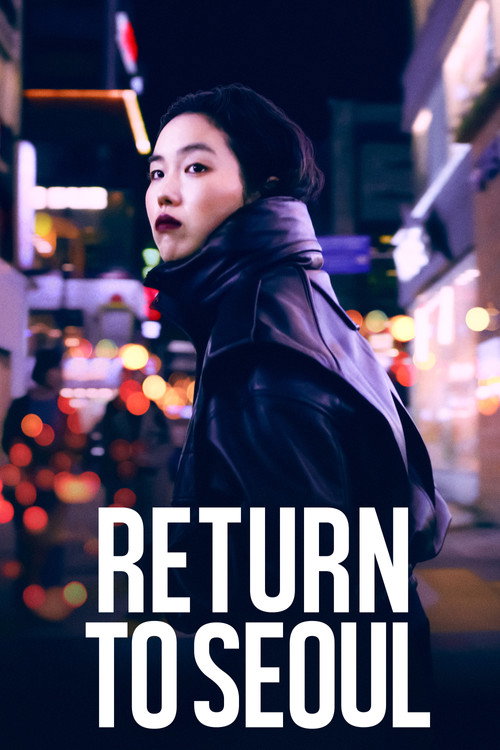
Return to Seoul
An intoxicating neo-noir character study steeped in alienation and reckless defiance, capturing a tempestuous soul navigating the neon-drenched labyrinth of Seoul like an erratic meteor refusing to enter any tranquil orbit.
Return to Seoul

Return to Seoul

Retour à Séoul

18 November 2022 Belgium 119 min 6.2 (490)

Director: Davy Chou

Cast: Park Ji-min, Oh Kwang-rok, Guka Han, Kim Sun-young, Yoann Zimmer

Drama The Fiction of "Homecoming" and Roots Bodily Autonomy and Existential Reinvention Cultural Incommensurability and Communicative Failure Guilt, Projection, and Unrequited Reconciliation
Box Office: $1,594,998

Overview

Return to Seoul follows Frédérique "Freddie" Benoît, a fiercely independent 25-year-old French woman of South Korean birth who was adopted in infancy by French parents. A sudden rerouted flight brings Freddie on an impulsive detour to Seoul—a city she has never consciously remembered and whose language she does not speak. Rather than seeking quiet reconnection, she dives headlong into the nocturnal pulse of the city, befriending a bilingual hostel clerk named Tena and impulsively petitioning the Hammond Adoption Agency to trace her biological lineage.

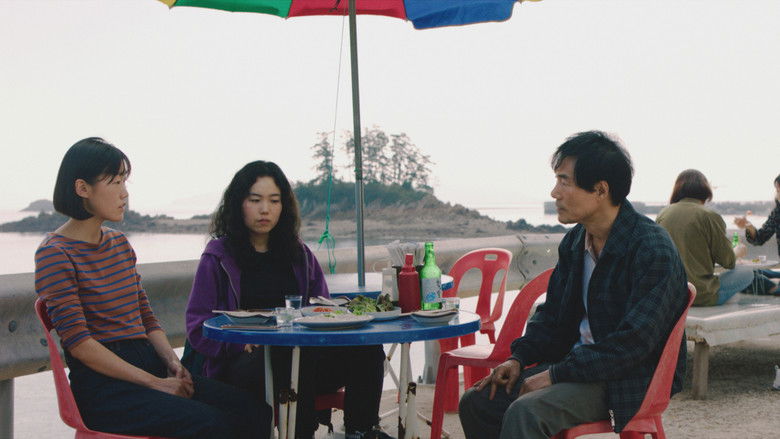
The agency initiates contact with her biological parents, eliciting completely divergent responses. While her birth mother remains elusive and repeatedly ignores requests for contact, her biological father—a remorseful, heavy-drinking man living in the coastal city of Gunsan—eagerly steps forward, weeping openly and desperate to fold her into his family. What begins as a search for origin quickly spirals away from neat melodrama into an abrasive clash of cultures, expectations, and personal boundaries.

Spanning an eight-year odyssey segmented across distinct chapters of Freddie's life, the narrative resists standard redemption formulas. Instead, it charts her volatile metamorphoses as she revisits Korea under vastly altered circumstances, testing how deeply one can fracture, reshape, and reinvent oneself against the pull of ancestral history.

Core Meaning

Director Davy Chou uses Freddie’s journey to dismantle the conventional, sentimental cinematic trope of the "homecoming adoptee". The film's central thesis is that identity is neither a fixed biological inheritance nor an easily completed puzzle; confronting one's origin does not automatically bring inner peace or psychological closure.

Chou portrays adoption and cultural dislocation not simply as wounds waiting for tearful reconciliation, but as existential conditions that breed contradiction, defiance, and continuous self-reconstruction. Freddie’s story asserts that a person's life belongs fundamentally to themselves, unbound by the patriarchal guilt, nationalistic duty, or romanticized nostalgia imposed by others.

Thematic DNA

The Fiction of "Homecoming" and Roots 30%
Bodily Autonomy and Existential Reinvention 25%
Cultural Incommensurability and Communicative Failure 25%
Guilt, Projection, and Unrequited Reconciliation 20%

The Fiction of "Homecoming" and Roots

The film deconstructs the assumption that stepping onto ancestral soil produces a magical sense of belonging. Freddie feels alien in France due to her appearance and equally alien in Seoul due to language and behavioral barriers. Korea is not an inherent home; it is an unfamiliar territory loaded with institutional red tape and estranged relatives.

Bodily Autonomy and Existential Reinvention

Freddie constantly transforms her presentation—her clothes, hair, career, demeanor, and sexuality—as an act of self-defense against being categorized or possessed. Rather than letting her past define her, she wields chameleon-like mutability as armor.

Cultural Incommensurability and Communicative Failure

Interactions between Freddie and her Korean family frequently collapse beneath the weight of translation and social etiquette. Her French directness and disregard for traditional gender or filial hierarchies clash violently with her father's paternalistic desires and Confucian propriety.

Guilt, Projection, and Unrequited Reconciliation

Freddie's biological father drowns in guilt, projecting his need for moral absolution onto her, while her mother initially avoids contact altogether. Freddie is caught between smothering affection that disregards her individuality and complete maternal absence.

Character Analysis

Frédérique "Freddie" Benoît

Park Ji-min

Archetype: Antiheroine / Wandering Outcast Key Trait: Prickly, unpredictable defiance and emotional armor.

Motivation

To test her agency against the ghost of her abandonment without surrendering her autonomy.

Character Arc

Starts as a volatile, 25-year-old traveler; pivots into a cold, transactional arms broker in her late twenties; and ultimately matures into an introspective nomad who accepts ambiguity rather than forced closure.

The Biological Father

Oh Kwang-rok

Archetype: Tragic / Repentant Parent Key Trait: Smothering sentimentality mixed with traditional patriarchal expectations.

Motivation

To absolve himself of the guilt of surrendering his child and bring Freddie into the traditional family unit.

Character Arc

Begins in a state of soju-drenched, histrionic grief and clinginess, gradually settling over the years into a quiet, sober, albeit clumsy acceptance of Freddie’s emotional distance.

All 5 characters and cast

Symbols & Motifs

The Sight-Reading Musical Metaphor

Meaning:

Mirrors Freddie's psychological defense mechanism in life—she reads people and social situations aggressively to strike before she can be wounded.

Context:

Early in the film, Freddie describes playing piano by sight-reading: assessing danger, anticipating hazards, and adjusting tempo on instinct to avoid crashing.

Soju and Pouring Rituals

Meaning:

Represents a battlefield between Korean collectivist decorum and Freddie's unyielding personal autonomy.

Context:

At Korean dinner tables where drinks must be poured with two hands to show respect and hierarchy, Freddie repeatedly defies etiquette by pouring her own drinks or demanding equal footing.

Freddie’s Dance Sequences

Meaning:

Acts as an explosive physical release of internalized rage, displacement, and somatic dislocation when verbal communication fails.

Context:

Appears in key sequences where Freddie breaks into uninhibited, almost violent solo dancing inside clubs and bars.

The Piano

Meaning:

Functions as a symbol of raw, unmediated emotional expression—a sanctuary free from linguistic mistranslation.

Context:

Appears early as a marker of Freddie's past discipline and reappears in the final scene where she plays alone in an empty guesthouse.

Electronic Correspondence and Returned Messages

Meaning:

Serves as motifs of communicative rupture, emphasizing that emotional distance cannot always be bridged by modern connectivity.

Context:

Evidenced throughout the film in adoption agency letters, unanswered SMS messages, and bouncing emails.

Memorable Quotes

Si je veux, je peux vous rayer de ma vie d'un claquement de doigts.
— Freddie (Park Ji-min)

Context

Spoken in French while drinking with Maxime and acquaintances in a Seoul bar.

Meaning

Crystallizes Freddie’s hyper-defensive independence; she warns the people around her that she can sever ties instantly without remorse, showing her armor against being abandoned again.

한국에 와서 살아야 해. 좋은 한국 남자랑 결혼하고...
— The Father (Oh Kwang-rok)

Context

The father pleads with Freddie through Tena's translation during their dinner in Gunsan.

Meaning

Captures the complete cultural and generational disconnect. Rather than understanding who Freddie is, the father attempts to reabsorb her into a rigid, heteronormative Korean lifestyle.

All 4 quotes

Philosophical Questions

Is Identity Discovered or Constructed?

The film questions whether our "true self" resides in genetic lineage and birthplace, or whether it is solely an improvised series of conscious decisions and cultural habits.

What Are the Limits of Filial Obligation?

It examines whether children owe love, respect, or forgiveness to biological parents whose unilateral choices created a chasm between them.

Can Trauma Be Bridged Without Common Language?

The film interrogates whether emotional empathy can overcome linguistic voids, or whether structural and linguistic translation inevitably distorts genuine feeling.

How It Ends

Alternative Interpretations

The Nihilistic Reading (Perpetual Exile): When Freddie’s email to her biological mother bounces back with an error notification in the final act, some viewers and critics interpret this as a declaration that closure is a myth. In this reading, Freddie is doomed to perpetual emotional rootlessness, permanently shut out from the matriarchal connection she secretly desired.

Full ending explanation

Cultural Impact

Following the Korean War, South Korea became one of the largest sources of international adoptions in the world, sending an estimated 200,000 children overseas, primarily to North America and Western Europe. Return to Seoul arrived amid an era of public reckoning in South Korea, where adult adoptees have returned en masse seeking truth, records, and accountability regarding systemic adoption procedures.

Unlike earlier sentimental diaspora or adoptee movies (such as A Brand New Life or Hollywood return-home narratives), Return to Seoul is abrasive, unsentimental, and punk-spirited. It has been widely cited by critics as a landmark entry in modern diaspora cinema that rejects easy assimilation or tearful reunification.

Premiering in the Un Certain Regard section at the 2022 Cannes Film Festival, it earned overwhelming critical acclaim. Review aggregators recorded a 97% approval rating on Rotten Tomatoes, with reviewers singling out Park Ji-min's magnetic debut performance and Chou's elliptical storytelling.

Audience Reception

The film was celebrated globally as a masterwork of modern transnational cinema—a sharp, kinetic, and emotionally uncompromising portrait of self-invention.

Audience and critic praise highlighted:

  • Park Ji-min's revelatory debut, lauded for its unpredictable energy, magnetism, and unapologetic refusal to make Freddie conventionally likable.
  • Davy Chou’s elliptical narrative structure, using temporal jumps rather than expository bridges to mirror the abrupt shifts in human development.
  • The raw, authentic portrayal of intercountry adoption free of sentimental Hollywood tropes.

Criticisms noted:

  • The abrupt time jumps and Freddie's transformation into an arms broker divided some viewers, who found the shift in tone jarring or implausible.
  • Freddie's abrasive, self-centered behavior throughout portions of the film alienated viewers looking for empathetic or redemptive character trajectories.

Interesting Facts

  • The film was directly inspired by Davy Chou’s real-life trip to South Korea in 2011 accompanying a close French-Korean adoptee friend who was meeting her biological father for the first time. Chou co-wrote parts of the screenplay with her (Laure Badufle).
  • Park Ji-min, who delivers a celebrated lead performance, had never acted before. She is a professional visual artist living in Paris. Chou scouted her through a mutual friend, and she initially turned down the role before engaging in intensive discussions that reshaped the screenplay.
  • Park Ji-min heavily pushed back against Davy Chou's initial draft, arguing that a male director's perspective risked romanticizing or misrepresenting a young woman's rage and sexuality. Chou reworked key scenes to incorporate her critical input.
  • Although Chou is Cambodian-French rather than Korean, he drew heavily from his own experience of visiting Cambodia for the first time at age 25, confronting a cultural homeland that felt both intimately linked and foreign.
  • The film was developed and debuted under the working title All the People I'll Never Be (Retour à Séoul).
  • The film made history by being submitted by Cambodia for the Best International Feature Film category at the 95th Academy Awards, successfully making the 15-film shortlist—an extraordinary cross-national milestone.
  • At the 15th Asia Pacific Screen Awards (APSA), the film won Best Director for Davy Chou and Best New Performer for Park Ji-min.

Easter Eggs

Working Title Reference

The original French title, All the People I'll Never Be (Retour à Séoul), directly underscores the theme of multiverse-like alternate realities: who Freddie would have become had she remained in Korea, been adopted elsewhere, or chosen a domestic life.

French Chanson and Korean Trot

The film juxtaposes Korean trot music and melancholic ballads with French and Western pop/rock tracks (such as songs by Freddie Aguilar and traditional folk melodies), creating an acoustic battleground mirroring Freddie's split cultural background.

Casting of Oh Kwang-rok

Oh Kwang-rok, who plays the father, is a veteran icon of Korean auteur cinema (frequent collaborator of Park Chan-wook in Sympathy for Mr. Vengeance, Oldboy, and Lady Vengeance). His presence grounds the film in Korean arthouse tradition while subverting his usual eccentric archetype into one of desperate, pathetic paternal remorse.

Frequently Asked Questions

Explore More About This Movie

Dive deeper into specific aspects of the movie with our detailed analysis pages

Comments (0)

Leave a comment

No comments yet. Be the first to share your thoughts!

Similar Movies